

The Gypsy Moths, page 1


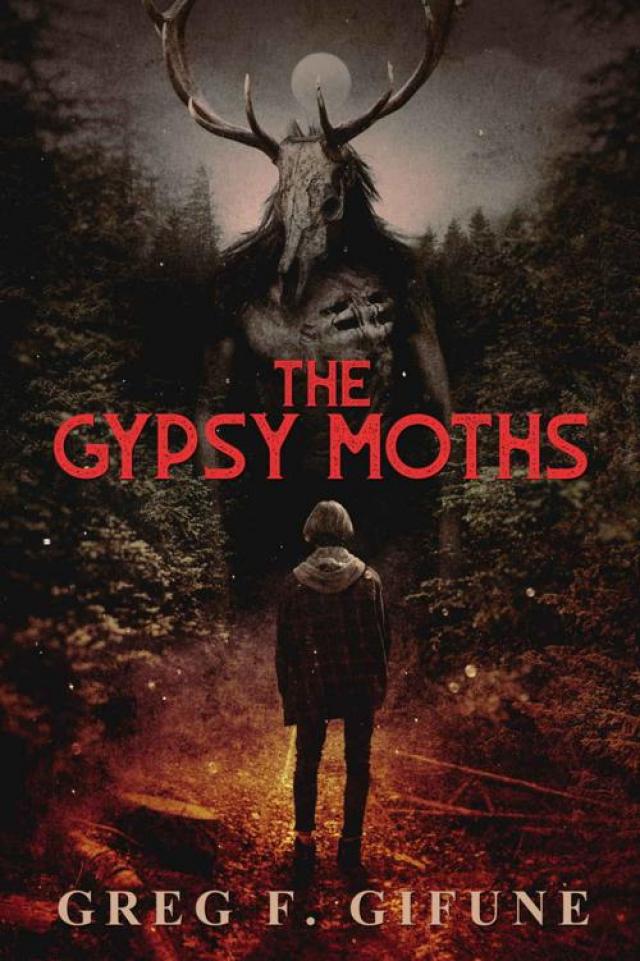
Table of Contents
The Gypsy Moths
Copyright Page
Dedication
Epigraph
Prologue
Chapter One ~2017~
Chapter Two ~Summer, 1977~
Chapter Three
Chapter Four
Chapter Five
Chapter Six
Chapter Seven ~2017~
Chapter Eight ~1977~
Chapter Nine
Chapter Ten
Chapter Eleven
Chapter Twelve
Chapter Thirteen ~2017~
Chapter Fourteen ~1977~
Chapter Fifteen
Chapter Sixteen
Chapter Seventeen
Chapter Eighteen
Chapter Nineteen ~2017~
Chapter Twenty ~1977~
Chapter Twenty-One
Chapter Twenty-Two
Chapter Twenty-Three
Chapter Twenty-Four
Chapter Twenty-Five ~2017~
About the Author
THE GYPSY MOTHS
GREG F. GIFUNE
Copyright 2021 © Greg F. Gifune
All rights reserved. No part of this book may be used or reproduced by any means, graphic, electronic, or mechanical, including photocopying, recording, taping or by any information storage retrieval system without the written permission of the publisher except in the case of brief quotations embodied in critical articles and reviews.
This is a work of fiction. All of the characters, names, incidents, organizations, and dialogue in this novel are either the products of the author’s imagination or are used fictitiously.
The views expressed in this work are solely those of the authors and do not necessarily reflect the views of the publisher, and the publisher hereby disclaims any responsibility for them.
ISBN: 978-1-950305-67-4 (sc)
ISBN: 978-1-950305-68-1 (ebook)
First printing edition: December 3, 2021
Published by JournalStone Publishing in the United States of America.
Cover Design and Layout: Mikio Murakami
Edited by Sean Leonard
Proofreading and Interior Layout by Scarlett R. Algee
JournalStone Publishing
3205 Sassafras Trail
Carbondale, Illinois 62901
JournalStone books may be ordered through booksellers or by contacting:
JournalStone | www.journalstone.com
For my father
“I wished I knew what nature’s way was, because all that was happening in our family did not seem to be natural or normal.”
—Richard Ford
Wildlife
Prologue
MUCH LIKE THE evil that sometimes fosters it, madness is a thief. It comes as shadow, memories blurred and twisted in an exhausted mind, a vague scent on a night wind or hidden within the soft laughter and whispers of those we love. It hunts in darkness, unnoticed, stealing gradually, silently and without remorse. When it’s gone, only sorrow, anger, and the unsettling realization of having been violated remains, forever haunting those who never saw it coming. Those like us. Those like me.
I suppose it’s possible that madness stalked my father prior to that spring of 1977, but I never saw any indication of that. Instead, it happened suddenly, and took him down quickly. The rest of us were collateral damage. Until then I had mistakenly assumed that might lessen the carnage for us, but soon learned victims of collateral damage often sustained as much loss as the original target.
The schoolyear was almost over and summer was already underway. I was an eighth-grader, just shy of my fourteenth birthday, and as much as I was looking forward to summer, my last before entering high school, I didn’t feel much like a kid anymore. Without warning, the roles in our family had been drastically and cruelly altered, and I knew even then we’d never get them back to the way they’d been. Wasn’t possible, my father had become someone else.
There was no going back. Not from that.
That particular day, the one I often think of when those old ghosts come looking for me, I’d been home for little more than half an hour. The entire time my father stood at the glass sliders off the den, watching the woods beyond our small backyard. It was late afternoon, and he was disheveled, unshaven, and still in his bathrobe. He hadn’t left the house in weeks, and I couldn’t be sure when he’d slept or showered last, but it was at least a few days.
“Dad,” I said for the third time. “Come away from there now, okay?”
“It’s out there,” he finally answered in an unusually rough and raspy voice. Staring straight ahead, he remained entranced by things only he could see and feel and touch and know, or even begin to understand. “They don’t think I know what’s really happening, but I do know.”
For a few weeks now, stories of a peeping tom had swept through town. Apparently a few women had called the police after seeing someone lurking near their windows, and since we had very little crime in town, it was a sensational situation everyone was talking about. The latest victim had been the music teacher at the elementary school, a single woman who lived only a few streets over from us. I assumed this was what my father was referring to, but due to his bizarre behavior of late, I couldn’t be sure. I couldn’t be sure of anything.
Using the moniker the local newspaper had given him, I asked, “Who is, the Peeper?”
“No.”
“What then?”
Unsure if he hadn’t heard my question or simply had no intention of answering it, I said, “I could make some grilled cheeses if you want.”
“Not now, son.”
“Maybe you should try to get some rest.”
“Can’t,” he muttered. “It’s there. It just doesn’t want you to see. Not yet.”
“What’s there?” I followed his gaze to the trees. “What do you mean?”
“Don’t be fooled.”
“Dad, there’s nothing there.”
“When you see it, then you’ll understand.”
“There’s nothing to see, I—”
His eyes, bloodshot and saddled with black bags, glared at me with such intensity that I stopped mid-sentence. I thought for a moment he might explode into a rage and spend the next several minutes ranting and raving like the lunatic I was terrified he’d become, but instead, his demeanor changed, as if something had occurred to him just then. Maybe he felt sorry for me. Maybe he was just scared and confused. I like to think that in that strange moment he remembered how much he loved me, because as quickly as it arrived, his anger slipped away. “When you see it,” he said, “then you’ll understand.”
I nodded wearily.
“You don’t know what’s happening,” he added. “But you will.”
Sighing, I sidled up closer to him.
“I wish you didn’t have to know,” he said, voice cracking with sorrow and helplessness. “I never meant for any of this to touch you. Please believe me, Frankie Boy. I never wanted this for you. Not you, never you.”
I put an arm around my father’s shoulder and watched the woods with him a while. Although he was a few inches taller than I, and outweighed me by at least forty pounds, for the first time in my life he’d begun to seem small to me, fragile. “It’s all right, Dad,” I told him. “Everything’s going to be okay.”
“You wouldn’t think so if you’d seen it too,” he said.
I gently rubbed his shoulder, hoping to lessen the tension in his muscles. After a moment, against my better judgement, I asked, “What does it look like?”
“Nothing friendly,” he whispered, as if fearful it might hear him.
“What’s it doing?”
“Watching the house, it—it’s just watching. For now…”
“Why is it watching us?” I asked.
My father looked at me with those sad, crazed eyes, a phantom now, fading like a memory, aloof and slowly vanishing into a netherworld of shadow and dreams. “It’s waiting.”
“Waiting for what?”
“You, son,” he said grimly. “It’s waiting for you.”
Chapter One
~2017~
HE COMES TO me like the ghost he is. Moving gracefully from behind a cluster of trees, my father stands before me. He’s been expecting me.
I wait, knees trembling, my throat dry, heart racing. It isn’t possible for him to be standing here looking so alive and vibrant. Or perhaps it’s not possible for me to be there. Either way, we remain quiet for what seems a very long time, our eyes locked as memories and nightmares pass between us. Good, bad, and everything in between, all of it important and relevant, all of it necessary. We’re alone, my dead father and I, in this dark and foreboding forest, standing in a time and place from very long ago.
My father looks like he has something important to tell me, so I wait for him to speak. But he just smiles a sad little grin of regret and affection.
They did things to us, son.
His words come to me like thoughts.
Without warning, he throws back his head, his eyes roll to white, and a blizzard of tiny winged creatures erupt from his mouth.
Fluttering and swarming around us, they form a living cloud uncontrollably drawn to flame.
But there is no flame.
There is only me, only my father, and that dark forest.
Through the writhing mass, I hear his voice, but cannot make out what he’s saying. The moths have already begun to gnaw at our flesh, intent on devouring us like defenseless leaves dangling from slowly dying trees. I can hear them eating him, feel them eating me.
I try to remember the things we used to say to each other, those things fathers and sons sometimes say. But I also think about the things we left unspoken, then and now.
In the end, I wonder if there’s much difference between the two.
Maybe there’s not supposed be.
With memories of the dream still fresh and replaying in my mind, the same dream that first came to me just days after his death and has haunted me ever since, I adjust my position in the chair, fiddle nervously with my cocktail napkin and watch the door. Although I hadn’t experienced it in a few years, the dream retuned to me the night before, perhaps because this meeting was on my mind, or maybe because wherever he was, my father was still trying to communicate with me. I gave up trying to figure these things out long ago, and have done my best to convince myself I’ve moved on to become one of those well-adjusted but elusive people you hear so much about but never actually encounter. In the end, I suppose we all lie to ourselves about how safe and sound we are to some extent. There’s nothing particularly noble at play, just basic survival along with an intrinsic desire to keep hopelessness and madness at bay. The key is to pick your spots, because like everything else in this life, it boils down to a balancing act between a tolerable, sustainable state of existence, and a wasteland of utter oblivion.
I find myself in a dive bar in Samoset, Massachusetts. Named for the first Native American to make contact with the Pilgrims of Plymouth County, Samoset is the small coastal town where my friends and I grew up. I now live in the city of Syracuse, New York, several hours away. This is the first time I’ve been back. Like much else in town, Milo’s, Samoset’s most infamous watering hole, is largely unchanged. A staple in town, it has served as the preeminent stomping ground for twenty- and thirty-somethings for three generations. Going to Milo’s was a rite of passage for townies, the place you went once you hit legal drinking age, a hangout you haunted on Friday and Saturday nights with your friends or on dates. A place that pumped out watered-down booze, cheap beer, and the tastiest bar pizzas in the area, it wasn’t unusual to find locals arguing or even brawling in the parking lot, before drunkenly staggering back inside, arms around each other and friends once more, ready for another round. When I was younger, everyone knew each other here, and there was a kind of tacit camaraderie in that, a bond that united us, including those that didn’t get along. Like a family, we could fight and terrorize each other, but if anyone else tried it, they answered to all of us.
I have my share of memories of Milo’s, good and bad, and while there are other places in town better suited to more mature patrons, this seemed a fitting place to meet, especially after all these years.
Being late afternoon, things are still fairly slow. Only a few stools at the bar are occupied, and except for mine, and another on the far side of the room where a young couple chat and flirt incessantly, the tables between the bar and pool table area are empty.
Sipping a Cutty and water, I watch the young couple, careful not to be too obvious. A man my age already stands out here, I don’t need them thinking I’m some sort of pervert. Truth is, the older I get the younger everyone else seems to be. People in their twenties look like teenagers to me, and teenagers look like little kids. At fifty-four I’m not exactly old yet, I’m just not young anymore. But here I am, watching this couple, zeroing in on the woman and thinking she’s on a one-way trip to getting her heart broken. I can tell by the way she looks at him that she’s in love, or thinks she is, and ready for the long haul. Because I don’t see the same thing in her boyfriend’s eyes, I want to warn her, tell her to dump the sonofabitch now and save herself the heartache. I have no children of my own, so it’s not exactly a parental thing, more likely just the teacher in me. I’ve taught high school for nearly thirty years, and every year, while I get a little bit older, the kids—it seems to me—get a little bit younger.
If nothing else, the couple serves as a welcome distraction from the fear that’s been rising in me since my return to town. Fear that has never truly left me, but I’ve convinced myself I had under control for a very long time now.
With a squeal, the door to the front entrance opens, spilling sunlight into the otherwise dimly lit bar, and for a moment, the old terror recedes.
Through the glare, a silhouette appears. It remains still for a second or two, then moves through the doorway and steps inside. As the door closes and swallows the sunlight, the silhouette becomes a middle-aged man with a trim build, meticulously styled short gray hair, and a closely cropped gray beard.
It’s been forty long years, but I recognize him immediately.
All the joy and sins of the past fall around us like rain, and suddenly, if only for a moment, Max and I are kids again.
A little under average height, he wears designer sunglasses, a tan linen jacket over a button-down shirt, white cotton slacks and a pair of brown huarache sandals. Slung over one shoulder is a black leather satchel. Draped in an air of unconscious importance and clothes too stylish and expensive for Milo’s, he casually removes his sunglasses. Pale blue eyes scan the area, and as they settle on me, recognition dawns in them.
Despite our shared nightmares, I feel myself smile.
Max strolls through the tables until he reaches mine. “Frankie Boy,” he says, voice whispery and a little deeper than I remember.
I stand, put my hand out. “It’s good to see you, Max.”
He shakes my hand. “I’m just so sorry it’s like this.”
“I know,” I say. “But here we are.”
“Here we are indeed.”
We stand there awkwardly a moment, then finally embrace.
Max smells of sandalwood soap and heady cologne, and in that moment, I lose him. The boy I knew so well is gone, replaced by an imposter, a middle-aged man from some other place and time.
I wonder if he thinks the same of me.
“It’s lovely to see you,” he says. “But if you don’t let go soon, people are bound to talk.”
And just like that, the old Max returns.
“Fuck ‘em,” I mutter.
“But it’s so much better when they go fuck themselves.”
I release him and, holding my smile, drift back to my chair and sit.
“It really is good to see you, Frankie Boy.” Max casually pulls the satchel from his shoulder and places it on the table. Taking the chair closest to mine, he positions it just far enough from the table to have sufficient room to comfortably cross his legs at the knee. “Does anyone still call you that?”
No one’s called me Frankie Boy in a long time. It feels good, though. My father never called me anything but. “It’s just Frank these days,” I tell him.
“Of course, that makes sense,” Max says through a wide smile, his once uneven teeth now capped and perfectly straight. “But you’ll always be Frankie Boy Molinari to me.”
And to me he’ll always be Max Gilligan, the short, chubby, blond-haired kid with the quick wit and acerbic humor who, despite his small stature, never hid who he was and never once backed down from anyone. He’d been ahead of his time in many ways, and I’d always respected that.
“Then Frankie Boy it is,” I say. “I mean, that’s who I am, right?”
“Sure, although we do change, age, evolve. Well, hopefully we evolve.”
“Not always a sure thing these days, but yes, I’d like to think so.”
He gives me a quick wink. “Just the same, deep down we’re still those boys in a way too, don’t you think?”
“I hope so.”
Max’s smile fades, but his eyes never leave me. He doesn’t have to say anything more. We know all too well what we’re feeling. And it’s all right. For now, in this old bar, in a town neither of us has set foot in for years, it’s all right.
After finding out what he’d like to drink, I head to the bar for a refill on my Cutty Sark, and a vodka and cranberry juice for Max. When I return we pretend there aren’t deeper, more pressing issues at hand, and instead engage in small talk, forcing as many pleasantries as we can stand. Whistling past a graveyard, certainly, but that’s exactly what’s necessary just now.
Though it played out very differently, like me, Max escaped our past by going to college. I went to a small school. He got into Princeton. A successful investment banker in Manhattan for decades now, he lives in a luxury apartment in Tribeca I’ve never been to, with a husband of twenty-five years I’ve never met. None of which I knew until we spoke on the phone a few days before.


