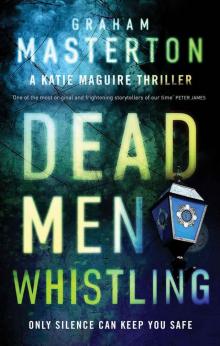
Dead Men Whistling, page 5


‘Good afternoon, everybody,’ she said. ‘I’m here to confirm that gardaí were called to Woodhill Park in Tivoli this morning and there we discovered the body of Jimmy Ó Faoláin, the CEO of Leeside Investments. He had been shot several times and it was clear that his death had been instantaneous. His body has now been removed to the university hospital where the assistant deputy state pathologist will carry out a post mortem.
‘Technical experts are examining the scene of the shooting, and forensic auditors will be looking through Mr Ó Faoláin’s accounts to see if they can give us any indication as to motive. As far as we know at this time, no threats were made against his life, and there appears to be no obvious reason why anybody should have wanted to kill him.’
‘Where exactly was he found?’ asked Dan Keane.
‘In his house, on the ground floor,’ said Katie.
‘In which room?’
‘I’m not prepared to say until we’ve carried out further tests.’
‘Well, what was he doing when he was shot?’ asked Thomas O’Neill. ‘Reading? Talking on the phone? Watching TV? Eating his breakfast?’
‘I’m not prepared to say until we’ve carried out further tests.’
‘How did his killer get into the house?’
‘We don’t know for certain yet. There was no obvious sign of forced entry.’
‘So he might have known his killer, and let him in himself? Or her, of course.’
‘It’s possible.’
‘Who found him?’
‘His girlfriend, Viona Caffrey. She’s a Ryanair stewardess. She arrived at the house after returning from Malaga and admitted herself with her own key. She called us immediately.’
‘Is she a suspect?’ asked Kieran Dennehy.
‘She’s being questioned, of course, but no. We have no reason to believe that she could have been involved in Jimmy Ó Faoláin’s killing. For the time being we’re keeping an open mind about who might have shot him, and why, but we’re confident that in due course we’ll find enough evidence to make an arrest.’
There was some coughing and shuffling of feet, but none of the other reporters raised their hand. Despite this, Katie had the strongest feeling that they were still expecting more answers from her. None of them were packing up and preparing to leave, even Fionnuala Sweeney, who had a tight deadline to meet.
‘Is that all?’ she asked. ‘Has no one any more questions?’
It was then that Thomas O’Neill lifted his ball pen and said, ‘What about the headless man?’
The lecture room fell silent. Katie looked at the expectant faces in front of her, and realized that they knew about the decapitated body that had been found in St Catherine’s Cemetery – all of them, and that was why so many of them had showed up here. What she couldn’t guess was how much they knew, or how they had found out.
She couldn’t deny any knowledge of it, but at the same time she didn’t want to make a statement until her detectives had managed to discover who the man was. Usually when a body turned up that they couldn’t immediately identify, such as a floater in the River Lee, they would put out a public appeal for any information. There was something about this case, though, that made her feel deeply reticent about giving the media any details – not that she had many details to give them.
It was the tin whistle. It had been stuck down the man’s severed neck for a reason, and she had a growing suspicion what that reason may have been. That was why she didn’t want to say anything about it, not yet. If her suspicion proved to be correct, or even half correct, she could only imagine what a catastrophe could follow. By comparison, the collapse of the walls of Jericho would be no more disastrous than a garden fence blowing over in a gale.
‘Which headless man in particular are you talking about?’ she replied.
‘Oh come on, Detective Superintendent. There’s only been the one headless man found today.’
‘So what do you know about him, Thomas?’
‘It’s yourself who’s supposed to be answering the questions here, ma’am, not me. But let’s say that I know where he was found, and I know who he is. Or was, rather.’
‘In that case you know more than I do,’ said Katie. ‘A man was found dead at St Catherine’s Cemetery this afternoon at Kilcully, and yes, he had been decapitated. Up until the time I came into this room to make my statement about Jimmy Ó Faoláin, however, I had no idea of his identity.’
‘So if I gave you a name, you wouldn’t be able to confirm if it was true or false?’
‘I wouldn’t, no. You’re correct. And it’s really far too early for me to be able to make any statements about this specific case.’
‘If I said that it was Garda Kieran O’Regan, would that surprise you?’
‘Who suggested that?’ Katie demanded.
She was beginning to lose her temper now. She always took considerable pains to make sure that her relationship with the media was friendly and constructive. There were bound to be times when she thought the press were being too critical, or too obtrusive. In spite of that, she had to rely on them to carry appeals for eyewitnesses to crimes and traffic accidents, and to warn the public about road safety and theft and drugs, and in return she gave them as many tip-offs and as many titbits of inside information as she reasonably could. But she wasn’t going to be baited.
‘I’m sorry, Detective Superintendent,’ said Thomas O’Neill. ‘I can’t reveal my source. But it’s a highly reliable source, I can assure you of that.’
Katie said, ‘Thomas – I don’t actually care if it was the Angel Gabriel himself, whispering to you in your sleep. I’ve no more comment to make, especially about unsubstantiated rumours. I’ve brought you up to date on the murder of Jimmy Ó Faoláin and that’s all I’ll be giving out this afternoon. This conference is closed.’
She switched off her microphone and stood up. Superintendent Pearse and Mathew McElvey stood up, too. Almost every journalist in the room shouted at them, and they were all shouting the same question. ‘Ma’am – was it Garda O’Regan?’ ‘That headless man – was it Garda O’Regan?’ ‘Can you tell us for sure if it was Garda O’Regan?’
Katie stalked back to the lift with Superintendent Pearse hurrying to catch up with her. Mathew McElvey started to follow her, but then turned back to the lecture room to try to calm the journalists down, although while she waited for the lift Katie could hear them still shouting.
As they rose up to the second floor, Katie and Superintendent Pearse stared grimly at each other, and they said nothing as they walked along the corridor to Chief Superintendent MacCostagáin’s office, and knocked.
Chief Superintendent MacCostagáin was standing by the window with a cup of tea. He turned around and smiled as they came in.
‘Ah, Kathleen,’ he said. ‘Michael. What’s the story?’
‘That headless feen who was found sitting in St Catherine’s Cemetery,’ said Superintendent Pearse.
‘Oh, yes?’
‘We’ve just been making a statement to the press about Jimmy Ó Faoláin but all they wanted to know about was him.’
Chief Superintendent MacCostagáin looked across at Katie. ‘I thought you were going to keep the lid on that until we knew who he was.’
‘Well, somebody’s told them,’ said Katie. ‘And not only that, somebody’s told them that it’s Kieran O’Regan.’
‘Holy Saint Patrick. Do you think that it is?’
‘I have no idea yet. The body had no head and there was nothing on him to identify him. I’ll have O’Donovan contact his family to see if he’s missing. Meanwhile I’ll be asking Bill Phinner to get the giodar on with the fingerprinting and the DNA.’
Superintendent Pearse said, ‘O’Regan’s still on indefinite leave, like, so it’s not as if we were missing him when he didn’t turn up for his shift.’
‘Did you ask the press why they think that it’s him?’ asked Chief Superintendent MacCostagáin, but before Katie could answer he said, ‘Of course you did, and of course they wouldn’t tell you.’
‘No, they wouldn’t,’ said Katie. ‘But it doesn’t matter two hoots what their code of conduct says, they can’t legally refuse to disclose who or where that information came from.’
‘I hope you reminded them of that.’
‘No, sir, I didn’t push them today because I want to confirm the victim’s identity first. Horses before carts. But I will be pushing them, believe me, especially if it turns out that it really is Garda O’Regan. They always forget that qualifying clause, don’t they, those reporters. They can keep their sources anonymous except when there’s vital public or individual interests at stake. If it is Garda O’Regan, then I’d say both of those interests are at stake, public and individual. And big time.’
‘Jesus, what a pig’s dinner,’ said Chief Superintendent MacCostagáin. He sat down and stared at his cup of tea as if he had never seen it before and was wondering how it had magically appeared in his hand.
Katie said, ‘Whoever tipped the media off about the headless body, they must have wanted it well-publicized because they contacted every newspaper, every radio station, and of course RTÉ. That makes me suspect that they were the perpetrators. If you think about it, they must have taken a fair amount of time to prepare a list of all the media they were going to get in touch with, so they probably had that list ready in advance, before the victim was killed.
‘And of course the cruncher is, how did they know it was Garda O’Regan, unless it was them who killed him? I know his picture’s been in the papers, and on the TV and all, but he had no head. If we couldn’t identify him, how could anybody else recognize who it was?
‘Then – on top of all that – there’s that tin whistle that was stuck down his neck.’
Chief Superintendent MacCostagáin looked up at her when she said that, and his expression was one of huge weariness. There was no question that the same thought had occurred to him, too, and the implications could only be guessed at. It might even signal the end of the Garda in its present form, and the early termination of his career.
‘Just one tin whistle,’ he said. ‘Who’d have thought it?’
Katie said, ‘We don’t know for sure, sir. It could mean something and it could mean nothing at all. But if it was meant as a message, I think we all have a fair suspicion what that message might be.’
‘This is breaking my melt,’ said Chief Superintendent MacCostagáin. ‘As if it wasn’t going to cause enough trouble when O’Regan stood up and gave his evidence. When was that scheduled for? I know it’s supposed to be soon.’
‘Next Thursday, so far as I know,’ said Katie. ‘It would have depended on Sergeant Duffy giving his evidence about the breathalyser tests, how long that went on for.’
‘What a mess. It doesn’t surprise me one iota that Nóirín O’Sullivan threw in the towel. I would have done the same if I’d been her. Not that I was ever asked to be Commissioner. I never had the golf.’
‘Anyway,’ said Katie, ‘this is going to go nowhere at all until we find out if it’s Garda O’Regan or not. If it is, we’ll have a rake of suspects, no doubt about that. If it isn’t, then God only knows.’
*
Katie found Detective O’Donovan in the squad room, tapping away two-fingered at his computer and eating a ham-and-tomato roll.
‘Patrick – I’d normally send out a uniform to do this, but it could be iffy and I wouldn’t want the neighbours seeing a squad car outside the house – or anybody else for that matter. You might want to take Padragain with you, too, in case there’s a shoulder that needs to be cried on.’
‘Well, let’s hope that it isn’t him,’ said Detective O’Donovan. ‘He’s a decent enough fellow. Bit of a stickler, like, do you know what I mean? Even if he was attending a murder he wouldn’t park on a yellow line.’
‘I don’t care where he parked. Right now I just want to know if he’s alive or dead.’
Detective O’Donovan stood up, took one more bite out of his ham-and-tomato roll, and then went across to take his raincoat down from the peg.
‘I’ve a fierce bad feeling about this,’ he said, with his mouth full.
‘You’re not the only one, Patrick,’ said Katie. ‘But maybe this was a tragedy waiting to happen.’
6
It had started drizzling again when Detective Michael Ó Doibhilin crossed Baker’s Road to the Halfway Bar and Lounge. He stood in the entrance brushing the rain from his bronze puffa jacket before he went inside.
The Halfway Bar and Lounge was a one-room pub at the end of a run-down terrace of shops on the Northside, next to St Mary’s Health Campus. The Drop Dead Donkeys were playing there tonight, and he could hear them shouting their way through ‘You’ll Never Beat the Irish’, with guitars and bodhrán drum and bagpipes. Over that, there was the usual roar of conversation and laughter.
He would be heartily glad when this assignment was over. It had been exciting to start with: turning up at the pub with his cover story that he had been a drugs mule for the Cavey gang in Dublin. He had claimed that things had got too hot for him there, what with the Brogans trying to muscle in on the Cavey’s drug racket, and the Garda intensifying their campaign against drug-dealers. That was why he had returned to his native Hollyhill, although he had told the Halfway regulars that he was still looking for gainful employment, especially ill-gotten-gainful employment.
After nearly two months of pretending to be Tommy Ó Frighil, though, he was bored and exhausted by having to turn up to the pub almost every night, drinking and talking about football and hurling, and returning to his flat in the small hours of the morning, stinking of alcohol and cigarettes. He had given up smoking five years ago, and smoking wasn’t allowed inside the pub, but unless he had joined Seamus Twomey and Douglas Quinn whenever they went outside in the street for a cigarette, he would have missed half of the information that he had gleaned from them about their fentanyl and spice smuggling.
He had developed a persistent cough, and his girlfriend, Eithne, had told him that if he didn’t give up smoking she would dump him. Whenever she stayed over, she complained that he came staggering in every night smelling like Stink McCrink. For the sake of security, he couldn’t explain to her where he had been, and what he had been doing, and why.
The pub door opened abruptly and one of the regulars came out, accompanied by a wave of loud music. It was Dermot O’Leary, a plumpish fellow with grey hair and glasses and a grey zip-up sweater, with a Johnny Blue already dangling between his lips.
‘Oh, there you are, boy,’ he said, so that his cigarette waggled. ‘I was thinking that maybe we wouldn’t be seeing you in tonight.’
‘I was doing the messages for my Auntie Branna. She’s just had this replaceable hip, like, so she can’t get up to the shops.’
‘So you’re a bit of a saint on the quiet, are you, Tommy? And there’s you, giving out like you’re some tough aish.’
‘Don’t tell me you ever forget your mam’s birthday,’ said Michael.
‘I wouldn’t, no, if I knew who the feck me mam ever was. I was brung up at St Vincent’s.’
‘Oh. Sorry. No offence.’
Dermot jerked his head towards the pub door. ‘Seamus was asking after you before. Said he had a bone to pick.’
‘Oh, yes? What about?’
‘You’d best ask him, like. Either that, or take tackie. You know what Seamus is like when he gets thick about something.’
‘I’ve done nothing to upset him,’ said Michael. ‘Not that I can think of, anyhow.’
Dermot shrugged, took out his lighter and lit his cigarette. ‘Up to you, boy. All I can say is, g’luck.’
Michael hesitated. He had seen Seamus Twomey when he was angry, and it was enough to make anybody shake in their trainers. Most of the time, he was louder than anybody else in the pub, with a laugh like a hysterical donkey. When he was raging, though, he became utterly silent, and his face turned expressionless. He would only have to give the slightest nod of his head and whoever had offended him would be lifted out of his sight by two or three of his gang and given a fearsome going-over. They could count themselves lucky if they suffered no more than black eyes and a broken nose and a couple of fractured ribs.
So what’s this bone that Seamus Twomey wants to pick? Does he suspect that I’m an undercover cop? If he does, and I can’t convince him beyond reasonable doubt that I’m not, I could easy be found tomorrow morning floating downriver in the Lee, after God knows what agonizing torture.
As apprehensive as he was, Michael knew that if he failed to show up, he could well be putting the whole drug-smuggling operation at risk. Dermot O’Leary would tell Seamus Twomey that he had walked away, and that would only serve to confirm Twomey’s suspicions about him.
He started coughing, mostly out of nervousness. He looked around and Dermot O’Leary was standing under the awning at the front of the pub, smoking and watching him to see what he was going to do next. The rain was pattering on the awning with a sound like rats running across an attic floor.
Michael pushed open the door and stepped inside the bar. The Drop Dead Donkeys had just come to the end of ‘You’ll Never Beat the Irish’ and were taking a break for a couple of bojonters. Despite that, the small L-shaped room was still so noisy that everybody had to shout to make themselves heard. It had a low ceiling and the walls were crowded with photographs of local hurling teams and framed red T-shirts and wooden plaques, which always made Michael feel claustrophobic.
He could see Seamus Twomey and Douglas Quinn sitting at their usual circular table on the right-hand side of the bar. On either side of them sat two of their henchmen, as well as an anorexic-looking young blonde girl with two silver rings through her lower lip and tattoos all the way down to her elbows, and Seamus Twomey’s sister Gwenith.
Michael gave them a salute as he made his way to the bar, which none of them returned. The owner’s wife, Maureen, grinned at him and said, ‘Your usual, Tommy, is it? You’re late in this evening, aren’t you?’
Maureen wore a curly black wig and a low-cut blue satin dress. She had a prominent black mole on her upper lip and Michael always concentrated on that while he was talking to her so that she wouldn’t catch him staring into the crinkled abyss of her cleavage, where a tiny Jesus dangled perilously on a golden chain.