Horseshoe Bend, page 1
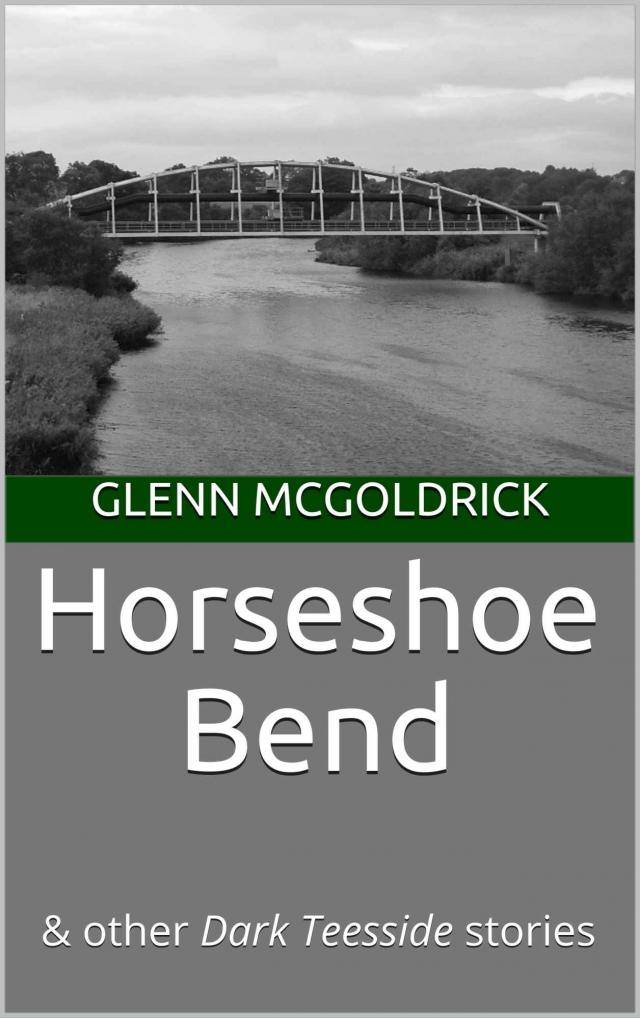


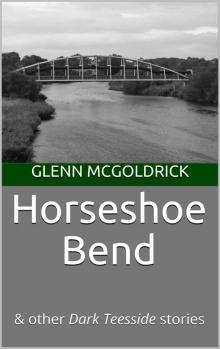
Horseshoe Bend
& other Dark Teesside short stories
By Glenn McGoldrick
Text copyright © 2017
Glenn McGoldrick
All Rights Reserved
For all you readers out there…
FREE DOWNLOAD
A young burglar is surprised to be apprehended, and even more surprised to be assigned an extra task…
Get your free copy of ‘The Wrong House to Burgle’ when you sign up to the author’s VIP mailing list.
Get started here: http://www.glennmcgoldrick.com/wrong-house-download/
Contents
Horseshoe Bend
Dark Progression
Leaving The Table
Horseshoe Bend
“I killed her,” I said to Keith last Tuesday.
He shook his head. “No, Pete. You didn’t.”
“She didn’t even want to go. I talked her into it. I killed her.”
“She drowned,” he said, finishing his pint and placing the empty glass on the table we sat at. He looked around, checking to see if there was anybody sat near us. Then he turned back to me and said, “It’s not your fault, mate.”
Sitting back in my chair, I exhaled and watched a barmaid collect glasses from a table near ours. “I’m responsible,” I said. “I killed her.”
“Jesus, Pete!” he said. “Keep your voice down.”
I stood up sharply, banging my thighs on the edge of the table. “I’ll see you later,” I said.
Leaving the Jolly Farmers, the day was bright as I walked down Thornaby Road. I stopped at the off-licence for cigarettes, eight cans of lager and a chicken sandwich.
From the shop I took the path that ran parallel to the river, stopping at a spot at the water’s edge. I took off my jacket, placed it on the grass and sat down on it. I opened a lager, took a sip, and watched the river flow slowly by.
Two men were fishing from the opposite bank, thirty metres away; there was nobody else in sight. Birds called to each other in the trees behind me, and there was a faint smell of horse manure in the air. I lit a cigarette, and thought about my conversation with Keith.
He told me I wasn’t to blame. He was my friend, and he was just trying to help. But he didn’t understand. He still had his wife – how could he possibly understand how I felt?
As the sun made its way to the horizon, I drank and smoked and ate my sandwich, reliving all the times that Sue and I had spent kayaking at this spot.
I awoke to the sound of crying, realising after a few moments that the tears were mine. Another fucking nightmare – when would they end?
Rubbing my eyes, I went to the bathroom and splashed cold water on my face and neck. I brushed my teeth to kill the taste of alcohol, and stared at my reflection in the mirror.
“Get a grip of yourself, Peter,” I said.
I went to the kitchen and made a coffee, drinking it as I stared through the window, watching the first traces of light appear in the morning sky. My thoughts drifted back to the events of the previous year…
Sue returned from work at 5 p.m. I met her in the hallway, helped her out of her jacket and hung it on the coat-stand.
“The weather doesn’t look too great,” she said.
“Come on, it’ll be fine,” I said. “Just for an hour?”
She ran her hand through her black hair and shook her head slowly, smiling at me. “Have you got the kayaks ready?”
“I’ll do it now.”
“And, Pete?”
“Yeah?”
“You’re buying me a nice bottle of wine on the way back.”
Fifteen minutes later we were on the water at Horseshoe Bend, our local spot. Sue sat behind me in our tandem kayak. The sky was grey and a light rain fell, but there was still some daylight.
“The current seems a bit quick today,” Sue said.
“Well, if it gets any worse we’ll pull in after the bend.”
The wind picked up and the rain fell harder as we approached the tight loop of the bend itself.
“Pete, I don’t like this,” Sue said.
I could hear the worry in her voice. “Well, the current’s taking us round the bend – we can’t do much about it.”
“We’re moving really fast.”
“I know, love,” I said, raising my voice above the noise of the water. “Just keep us steady for now, and as soon as we’re round the bend we can get out of this current.”
As we got to the point of the bend the water was churning, and we paddled desperately to keep ourselves upright. I looked over my shoulder at Sue, just as a large floating tree trunk crashed into our kayak and capsized us.
My lifejacket winded me as I hit the water and went under, then when I resurfaced I took a gulp of air, wiped the water from my eyes and looked around for Sue.
She was caught up in the branches of the floating trunk, her arms flailing as she tried to free herself.
“Unclip the jacket!” I called to her, as the tree trunk dragged her rapidly downstream. “Unclip the life-jacket!”
Her body was found two miles downstream in the early hours of the morning, wearing the life-jacket that was still tangled in the tree’s branches.
I spent the next six weeks drinking and losing my mind, hearing Sue’s voice in other rooms. The funeral was a blur. Other than going out to buy booze or cigarettes, I didn’t leave the house much.
Our bed felt empty to me, so I started sleeping on the sofa. The nightmares were hellish, and no matter how much I drank they returned nightly.
Keith came to visit me several times; we’d sit in the kitchen and he’d try to make me eat something. He suggested that I should think about going back to work.
“It might give your days a bit more structure,” he said.
So I went back to the casino in Middlesbrough, where I’d worked for fifteen years. The shifts could be frantic, especially on the weekends, but I soon settled back into the routine.
I was a Pit Boss, so I worked closely with Keith, who was a Senior Inspector. He had his own way of describing the very busy and annoying Friday nightshift.
“Don’t you just love Wankers’ night,” he’d say to me, as we watched crowds of twenty-somethings acting like idiots at the Roulette tables, crying like they’d been shot when they lost their small bets.
Having responsibility for making a profit on the gaming floor during my shift, my position could be very stressful – but I was glad to have something to do, glad to be out of the house, relieved to be distracted from my black thoughts.
I took extra shifts whenever they were available, figuring that it would give me less opportunity to go home and brood.
If I was working a double, I would go to the pub opposite the casino during my break, drink a couple of pints and have a snack before going back for my nightshift.
But it was stressful, especially if the tables were losing money on my shift; I would have a lot of questions from the management to answer.
And the croupiers were a pain in the backside. Some of them had only been there a few months, but they always had something to whine about.
“I’ve been on this table nearly three hours.”
“Is it my break soon?”
“Oh, my back’s killing me.”
One of the croupiers went to the management, complaining that I was always rude to him. They asked me about it, but I told them it was nothing to worry about.
But over the months there were more complaints from other staff members, and I received a couple of written warnings, then it was all over.
“We’re going to have to let you go,” the General Manager told me.
They gave me a good severance package, so I didn’t fight it.
I went to see my GP, to see if he could help me with my nightmares and restless sleep. He asked me a few questions, and concluded that I would benefit from grief counselling.
“There’s no problem that can’t be fixed by talking about it,” the counsellor told me when we first met. She was short and plump, and annoyingly cheerful.
At our third session she told me, “I need you to separate your thoughts into different coloured envelopes in your mind.”
I never went back to see her again.
So, I’ve had nobody to talk to for a couple of months now. I meet up with Keith occasionally, but we keep on having the same conversation.
“It takes time to get over something like this,” he tells me.
But it’s exactly one year since I lost Sue, and time hasn’t done a damn thing for me. It’s not like I haven’t tried.
I’m here at the spot, drinking a lager and smoking a cigarette in the afternoon sun. My car is parked up the hill, with my kayak on the roof rack.
When I’ve had enough to drink I’ll fetch the kayak and get out on the river, see where the water takes me. Maybe I’ll find her, hear her voice. I’ll tell her I’m sorry, ask her to forgive me.
Maybe she’ll take me with her. Maybe the nightmares will end.
Dark Progression
The duck floated lifelessly on its side, in weeds at the water’s edge. Its tail feathers fluttered in a light breeze. I crouched down and poked at it with a stick, nodding my head.
Standing up, I noticed a man sitting at a wooden picnic table across the river; he appeared to be watching me. I scattered the last pieces of bread on the water, but the other ducks didn’t come to eat it.
“OK,” I said. “You’re not hungry today.”
I stuffed the empty plastic bag in my pocket, and set off hom
The sky was a soft grey as I crossed the Infinity Bridge. I stopped halfway over, leaning my elbows on the safety rail, looking down on the river Tees as a light rain dimpled its surface.
I saw a man on the riverside footpath below, walking quickly. He had a dark goatee beard, and I was pretty sure it was the man who I’d seen earlier at the picnic table.
How had he got to that point so quickly? He must have crossed at the Barrage and ran. But why?
He started to climb the steps to the Infinity Bridge.
From the bridge I went left, walking towards the town centre.
I walked quickly, checking over my shoulder occasionally. He wasn’t getting any closer, but he was still there.
I stopped at the traffic lights, waiting to cross. Turning back, I saw him stop and look in the window of a bakery.
He seemed to be around my height and size, but probably a few years younger – early thirties, I guessed. Was he actually following me?
At the petrol station I circled the building, then walked back the way I’d came. When I returned to the traffic lights, I looked back; he emerged from the forecourt, and started walking my way.
Fuck. He was definitely following me. But why? What did he want? Was it about the ducks?
What was I to do? Stop and ask him what he wanted? What if there was a fight? Was it worth the risk?
I’d be better off just losing him.
I hurried to the end of the aisle, and looked through the window.
He passed on the opposite side of the street, then stopped at the roundabout. He looked around him, shaking his head.
I let out a deep breath as he turned onto Lawson Road, heading away from me. Then I heard a voice behind me, and turned to see a small Asian woman.
“What?”
“Are you going to buy that, sir?” she said, pointing at the tin of tomato soup I held in my hand.
“Erm, yes,” I said. I couldn’t even remember picking it up.
We went to the till and I paid for the soup, putting it in my plastic bag. As I left the shop, the air vent over the door felt very cool on my damp forehead.
It was almost dark by the time I got home.
As I opened my gate, I looked back and saw him coming towards me. About one hundred metres away. Shit.
I bolted down the gravel path at the side of my house and hid behind the shed. My breathing seemed very loud as I waited. I heard footsteps on the gravel, coming to a stop near me.
Before I could stop myself, I jumped out and swung my plastic bag at his head. He was looking at the garden, with his back to me. I hit him just above the right ear, the soup ripping out of the bag after impact.
He fell to the ground unconscious. When my heartbeat slowed down, I dragged him into my house.
I sat at the kitchen table, watching the rain make patterns on the window. Halfway through my second whisky, I heard screaming. I grabbed my neck-tie from the back of my chair and went downstairs.
When I switched on the fluorescent light in the cellar, he stopped screaming and looked at me.
He was sat on the floor, back against the wall, wrists tied behind him. I descended the steps and squatted next to him.
“So you’re awake, huh?” I said.
“Hey, man – what’s going on here?”
“Stop making so much noise.”
“No!” he said, shaking his head sharply. “Tell me what the-”
I used the tie to gag him, then returned to the kitchen.
Back at the kitchen table, I topped up my whisky and lit a cigarette.
What had I done? I wished I hadn’t hit him. I panicked. But once I’d done it, I couldn’t just leave him on the gravel.
And now he was tied up in my cellar. What do they call that? Kidnap? False imprisonment? It was fucking serious, whatever they called it. Not to mention hitting him on the head with a tin of soup.
I tapped my finger on the empty glass and thought about my options.
I placed a glass of water on the floor next to him, and checked the cable ties securing his wrists.
“I’m going to remove the gag,” I said. “Don’t shout or scream. OK?”
He nodded, and I lowered the tie from his mouth. He took a few deep breaths.
“Do you want some water?”
“No,” he said. “What am I doing here?”
“Why were you following me?”
He paused before answering. “I wasn’t.”
“Don’t lie to me.”
“I’m not lying. I wasn’t-”
I started to replace the gag, but he pulled his head away.
“No. Don’t,” he said. “I’ll tell you.”
“Good. Why were you following me?”
“I just thought…”
“What?”
He tried to shrug. “That you might have been killing ducks.”
“Now, whatever gave you that idea?”
“I’ve seen you at the riverside a few times, throwing bread at them.”
“So?”
“Well, I just thought…”
“What?”
He looked at the floor, and said, “I thought you’d been poisoning the bread.”
“Why would I do that?”
“I don’t know. It’s stupid. I was probably wrong anyway.”
I thought it over for a few moments. “What were you planning to do when you caught up to me?”
“I don’t know. Just talk. I hadn’t really thought it through.”
“Well,” I said, “your curiosity has put us both in a terrible position.”
A flicker of understanding lit his eyes. “What? What do you mean?”
I reached for the gag.
“No! Don’t!”
I gagged him and left.
I selected a knife from the wooden block next to the microwave, and took a shot of whisky to steel myself.
So he knew about the ducks, but that was the least of my problems. I couldn’t afford to let him go. If I handled it sensibly, then nobody would find out.
He started shaking when he saw the blade, straining to free his wrists and screaming against the gag.
“I’ll make it quick,” I said to him. And it was quick.
And surprisingly easy, too, for my first time.
The two days since have passed very quickly, and I’ve even managed to sleep well. I went to feed the ducks earlier, but they didn’t come to take the bread. It doesn’t matter.
Maybe it’s time to stop fooling around with ducks. Now that I know there are bigger thrills to be had.
Leaving The Table
The news was as bad as we’d expected. On the drive home from the hospital we hardly spoke.
I made coffee and sat next to Mary on the sofa. We sipped from our cups until she broke the silence.
“Why me, George?” she asked.
We talked, cried, and held each other, listening to the rain hit the window.
“There,” Mary says. “I think that’s it.”
I sit beside her at the kitchen table, and angle the laptop screen towards me.
“It looks good,” I say when I’ve finished reading the document.
“It should be good. We’ve been working on it long enough.”
I watch as she runs a hand through her hair. She’s sixty-eight, but there’s hardly any grey in sight.
“Stop staring,” she says.
“Yes, boss.”
“Have we forgotten anything?”
“No, I don’t think so.”
“Shall I print it?”
“Yeah,” I say. “We can always give it a final check later.”
“Look at all this crap,” Mary says, showing me the bunch of brightly coloured papers in her hands.
We’re still sitting at the kitchen table, a large garbage bag open at our feet.
“What are they?” I ask. “Restaurant menus?”
“And takeaway flyers. And taxi vouchers.”
“Bin them.”