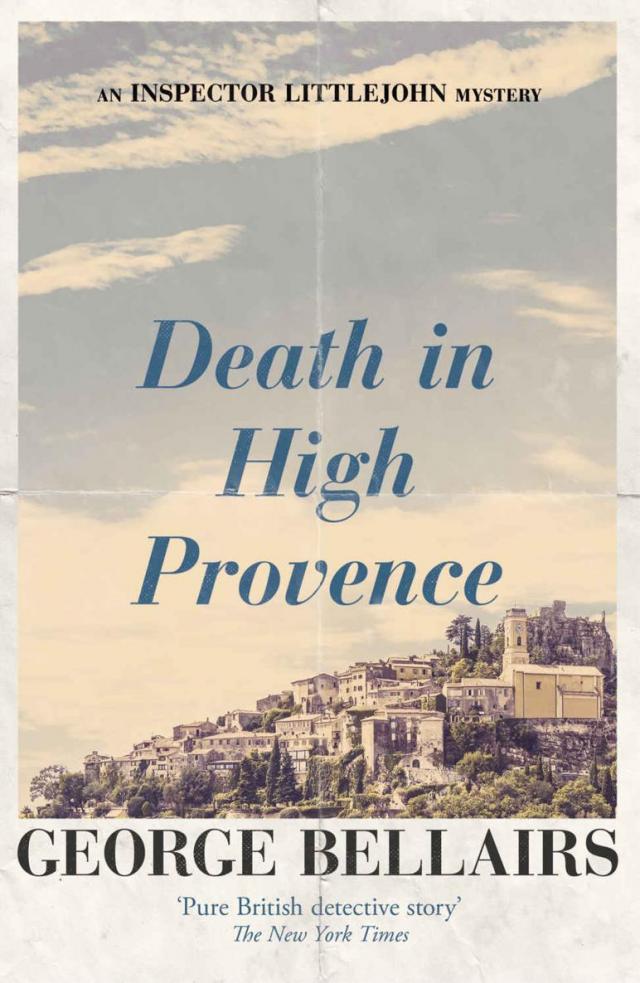
Death in High Provence, page 24


“What is the meaning of that insinuation, Littlejohn?”
The Marquis looked more interested than annoyed.
“After all, Monsieur le Marquis, there is this place to keep going.”
With a wave of his hand, Littlejohn indicated the château.
“It would not do to kill the goose that laid the golden eggs. Monsieur Charles de Barge is now, I understand, in sole charge of the banking-house of de Barge & Co., of Lyons. He has doubtless provided you with a considerable overdraft... Also, before he became heir to his uncle’s business and fortune, there were rumours in the village that you, too, sought the hand of Mademoiselle Elise.”
The Marquis tottered to his feet again and slapped Littlejohn on the back.
“I compliment you, Littlejohn! Who but an Englishman would have thought of the financial... the shopkeeper’s aspect of the case? Quite true. Charles is a very complacent mortgagee, aren’t you, Charles? If he and I had gone to gaol for our share in hushing-up crimes, others would have taken over Charles’s powers and discovered what a rotten loan the St. Marcellin mortgages were. This place would have been sold up, and the last of the noble line of St. Marcellin would have been thrown on the street.”
The Marquis took another drink and made a wry face at it.
“I love this place... It is shabby and tumbledown, but it is my home. Well... we shall be sold up in any case, now. The vultures will gather whilst I languish in gaol at Marseilles. When I’m free again it will be gone. A nursing-home... A sanatorium for wealthy trade-unionists... Who knows...? Is there nothing more to drink...? No...? Not even a drop of Aunt Hauteclaire’s gentian cordial?”
He flung his glass in the fireplace where it smashed into a hundred pieces.
“You mentioned my wishing to marry Elise, Littlejohn. We all wanted Elise, didn’t we...? Charles here, Bernard, myself, scores of suitors... And she didn’t want any of us. And now she’s dead and gone, Littlejohn, just because she preferred the Englishman. As for me... Marie Alivon wouldn’t have me for love, so I turned where there was money. Cynical, you say? But not more of a mockery than most marriages, you must surely admit... Perhaps, however, I shall come to a happy end, after all. Marie Alivon might pity me when I return from gaol, and I may even become the landlord of the Hôtel Pascal. ... It would bring a lot of business. Monsieur le Marquis de St. Marcellin et de Brômes-St. Eusèbe, landlord of the Restaurant Pascal. ... It would attract a lot of clients from the Riviera... Well, Inspector Audibert... Let us go. On our way to Digne.”
Arnaud de St. Marcellin went to gaol for twelve months. Marie Alivon visits him there and perhaps something will come of it when he returns to the village, where a company has bought the château and is turning it into a thermal establishment.
Charles de Barge was sentenced to fifteen years penal servitude. He got a good lawyer and they spun a tale about César’s threatening him during a squabble at the shooting-box. The preliminary enquiry and the trial dragged on interminably... De Barge’s time is now fully occupied in preparing his appeal. He works twice as hard as his lawyers and his cell is overflowing with legal books and documents.
The Littlejohns entertained the official French investigators to dinner before they left for home. When she heard their Christian names, Mrs. Littlejohn said her guests sounded as fabulous as the Knights of the Round Table.
Fulgence Bouchard, Clovis Audibert, Dagobert Pietri, Jérôme Dorange... And, of course, plain Thomas Littlejohn!
Marie Alivon served excellent roast goose for the meal, and when, next morning, the gander in charge of only three geese this time, again rushed to attack him, Littlejohn fled with stirrings of conscience and remorse!
Death Sends for the Doctor
George Bellairs
Death Sends for the Doctor
A murder was committed at Abbot’s Caldicott last Friday.
Superintendent Littlejohn turned over the dirty piece of paper between his finger and thumb. The message was pencilled in uneven capitals on a scrap roughly torn from the top of what might have been a magazine. The envelope was just as disreputable. Cheap, soiled, properly stamped, with the cancellation a mere smudge—the kind of angry, inky mess they make in the sorting-office when the stamp hasn’t been properly spoiled at the first go. The address was in illiterate printing as well.
SUPT. LITTLEJOHN
SCOTLAND YARD
LONDON
Whoever had written it was right up to date. Littlejohn had only been promoted three days and now he was sitting at his desk in front of a litter of congratulations from his colleagues and friends. He reached for the reference book.
ABBOT’S CALDICOTT. (Soke of Dofford, Fenshire.) Pop. 3400. London 104; Abbot’s Dofford 4; Norwich 31; Cold Staunton 4; Peterborough 34; Kegworth Ducis
7 …
Lic. Hours. w.d. 11-3, 5-10; S. 12-2, 7-10…
“Give me the Soke of Dofford police, please …”
At the other end of the line, the Chief Constable of the Soke listened, answered briefly, turned purple, and then hung up.
“Scotland Yard have had one of those blasted things as well. What the hell does Plumtree think he’s doin’? Get him on the phone right away.”
Sergeant Plumtree was drinking a cup of tea and smoking a cigarette when the telephone rang in his little police station in Upper Square, Caldicott. Before picking up the instrument, he docked his fag, pushed away his cup, sprang to attention, smoothed his tunic, and looked guilty, as though the caller were about to materialise and denounce him.
“Yes … Caldicott police …”
Plumtree was a large, fat, pneumatic-looking officer who, with the help of six constables, kept order in Caldicott. He had a bald, orange-shaped head, a large ginger moustache, a bulbous nose, a nice wife and four children, and he had been awarded a medal for gallantry in air raids during the war. Now he didn’t look very brave.
“But I’ve combed the town, sir. I assure you nobody’s been murdered. No, sir; I ’aven’t called the roll, but if there’d been a murder, I’d have been the first to know … Somebody would ’ave reported it.”
Plumtree spoke in the posh voice he used when addressing his superiors and smacked the top of his head as though punishing or stimulating his brain for slowness. He always knew exactly what to say and how to deal with a situation after the event. He called it afterwit, and it was his great cross in life.
“Yes, sir. The only person reported to us as out of town is Dr. Beharrell. He’s been visitin’ his mother on her deathbed and his assistant’s doin’ the work …”
There were loud and angry noises from the telephone.
“I’m sorry, sir, but you asked and I thought … Very good, sir. I’m doin’ my best … I said, I’m doin’ my best, sir …”
He hung up the instrument and then, in a sudden gust of rage, apostrophised it and went to the extent of shaking his huge fist at it.
“Unreasonable old devil, that’s wot you are! Silly old fool! Clever Dick! Johnny Know-all! Slow, am I? I’ll ruddy-well show you. ’ubbard! Hubbard!!”
The last word sounded all over the square and there was a response of heavy feet to it. A young, thin, aquiline and melancholy constable wearing a startled expression appeared at the door.
“You’ve taken your time over it, ’ubbard! Why can’t you come when you’re called?”
Hubbard’s lips moved as Plumtree’s afterwit began to function.
“I’d got my boots off …”
“Don’t chat back at me. Get your ’elmet on.”
The constable made a measured exit and returned wearing his official headgear. He looked mildly at the sergeant, waiting for an explanation or another rocket.
“That was the Chief ringin’ up. It seems he’s just ’eard from Scotland Yard, and they’ve also got one of those bloomin’ bits of paper saying there was a murder ’ere last Friday …”
“You don’t say, sergeant!”
“And wot might that remark mean? That what I say isn’t true? Or that you’ve gone deaf all of a sudden? Pull yourself together, ’ubbard, and for Pete’s sake, don’t stand there with your mouth open. The Chief’s ’oppin’ mad and wants immediate results.”
They both stood silently brooding on where the results were coming from.
“Let’s get cracking then. Although what we’re goin’ to do about it beats me. We can’t very well go round all the shops and houses and ask ‘Has there been a murder ’ere lately?’ And we can’t start diggin’ for bodies, because we’ve no bloomin’ idea where to dig or who to dig for. All we can do is keep our eyes and ears open, and hope… Better take a stroll over to the housin’ estate, and I’ll take the town.”
“What about Clowne?”
“What about him? You can ask him if he’s heard anythin’ unusual, can’t you? Sometimes I despair of you, ’ubbard. Try to use the few brains you’ve got …”
Sid Clowne was the bobby who occupied the police house on the new estate where the bulk of the ratepayers of Caldicott were herded in their little red brick houses. This was the most likely hunting-ground for missing or murdered persons.
“Go on, then, and get weavin’ …”
Hubbard, who, according to his colleagues, had only two speeds, damned slow and stop, turned and left without another word.
Plumtree put on his helmet, took up his stick of office, and walked solemnly out of doors.
Upper Square was the oldest part of Caldicott. It was a complete quadrangle of old grey buildings, entered from the town below by Sheep Street, which gently rose from the Kegworth Ducis road, passed through a double line of shops, widened out to become the square, and then contracted and continued thence as the Cold Staunton—Peterborough highway.
The sergeant breathed deeply and looked about him. A nice spring morning. Languid smoke rose straight upwards from the chimneys of the square and the sun, shining over the roof of the Guildhall, cast the shadows of the double avenue of trees across the houses of the west side. A blackbird was singing loudly in the sycamore a few yards from the door of the police station. Plumtree looked up at it, recognised it, and nodded at it approvingly. It had a white feather in its tail, was officially known as Whitey, and had held pugnacious and noisy possession of its present perch for three years. Plumtree was very interested in birds …
The Guildhall clock struck nine. The bell of St. Hilary’s, which stood at the top of the square, had done the same five minutes before, and now Plumtree could hear the 9.10 to Norwich leaving the station beyond the town, promptly, according to railway time. There was always bother about the time in Caldicott. Some said it was the damp, others sheer stupidity on the part of the inhabitants. The Caldicott Archers were reputed to have arrived at the Battle of Flodden ten minutes too late to enjoy the fun … Plumtree took out his own watch, a silver turnip inherited from his grandfather and which he boasted never gained or lost a second a day … Nine-sixteen …
Plumtree was sure the whole business was a hoax. A murder, indeed! This was Tuesday, and the notes had said last Friday. Not a word since. No bodies, no alarms, nobody reported missing. It was his theory that some Communist, member of the I.R.A., madman, mischievous schoolboy or enemy of the state was trying to destroy the morale of Abbot’s Caldicott, and that the best thing to do was to treat the whole thing with contempt. But the Chief Constable …
The sergeant turned right and entered the Guildhall next door. The corporation pigeons, disturbed by his heavy tread, halted in their cooing and their festooning the building with droppings like white bunting, and took leisurely to the air. The place was almost deserted. Nothing much went on there before ten o’clock when some of the councillors started to hang about and the local justices arrived for the petty sessions. It was far too large for the needs of the small town, many rooms were closed, and there was an odour of dust and dry rot always there. But it had a history of its own and was a showplace for visitors.
In the days of the medieval wool trade, Abbot’s Caldicott had been a busy and prosperous little metropolis. It was then that the Guildhall and the large church of St. Hilary had been erected, as well as most of the other buildings in the Upper Square where the wealthy merchants lived. Then, fortunes had declined … In 1928, the population of Caldicott had fallen below 1,000 and the dying little town had been scheduled to lose its borough status. It had been saved by three godsends. The establishment, almost simultaneously, of an R.A.F. depot, Cropper’s Chemicals, Ltd., manufacturing a patent cleaner called Whodunit, and Samuel’s Stockings (Caldicott), Ltd., with a large new weaving shed. The population had risen rapidly, a housing estate had grown up like a bed of mushrooms, and prosperity had returned with a bang. Now, the powers-that-be had decided to close the R.A.F. station for reasons known only to themselves, and Whodunit had gone bust. So Caldicott was starting to die all over again.
“Mornin’, sergeant.”
Fred Mold, who combined the duties of municipal caretaker, mayor’s valet, and professional cobbler, emerged from his den, half office and half bucket and brush store, and greeted Plumtree. A little wizened man with a stiff leg from the first war.
“Mornin’, Fred. Everythin’ all right?”
“Yes. Why?”
“Just wondered.”
What more could the sergeant say? Suppose he said, “you’ve not heard of any murders round here, have you?” Fred would think he’d gone off his chump. It was very awkward.
Plumtree sauntered into the open air again, and Mold followed his huge form with his spiteful little eyes until it disappeared. Then he returned to his football-pool form, clicking his tongue against his teeth.
“Plumtree’s gettin’ past it, or else a bit above himself.”
On the other side of the Guildhall, the Red Lion, an old posting-house. George Hope, the landlord, small, henpecked, and gone to seed, was just sweeping out and about to push a heap of sawdust, fag-ends and spent matches down the grid in front of the pub. When he saw Plumtree, he paused, smiled sheepishly, and went indoors for a shovel. Poor George. Plumtree felt sorry for him. He’d married a French woman who put little tables and parasols out in front of the Red Lion in summer to make it look continental, and made George do the chores whilst she preened herself among the customers.
The great church of St. Hilary, with its vicarage attached, dominated the top of the square. From the school behind it came the sound of shrill sweet voices:
His chariots of wrath the deep thunder clouds form, And dark is His path on the wings of the storm …
Plumtree went hot and cold. It reminded him of what was likely to happen if he didn’t report something to the Chief Constable soon.
Across the square, Eccles, the postman, was delivering letters. He slipped some envelopes in the letter-box of Dr. Beharrell, who practised in a large grey house, with a fine doorway at the top of four stone steps and high sash windows, opposite the police station. Morning surgery began at ten, and already a few patients were starting to trickle through the open door of the waiting-room …
One minute, the square was just as usual, quiet, serene, dignified, dominated by the bronze soldier of the first-war memorial, charging with his bayonet in the direction of Sheep Street. The next minute, the whole place had sprung to life. A large pantechnicon, which almost completely blocked the entrance to the square, arrived and, after lumbering here and there like a huge frightened animal, came to rest. The driver thrust his head out of the cab, shouted at the postman, who shouted back and pointed with his thumb. Then the van drew up at the house of Dr. Beharrell.
JEREMIAH NUTT, SONS AND NEPHEW, LTD.
PETERBOROUGH
REMOVALS
FULLY INSURED. ESTIMATES FREE BY ROAD, RAIL OR SEA.
Huge yellow letters on a black ground. The contraption seemed to fill the square.
On a flap hinged to the back of the van and supported by heavy chains, sat three men like wrestlers, their legs swinging, their expressions strong and pug-like, their short pipes all going. They were almost replicas of one another and of an elderly man who dismounted from the driving cab. He was, in turn, followed by a little wiry man, quite unlike the others, who reminded you of the runt in a litter and, compared with the rest, resembled it as well. He wore a suit made for somebody larger than himself. It was easy to recognise the dramatis personæ so boldly described on the pantechnicon.
At a signal from their parent, the three brothers peeled off their jackets, rolled up their shirt sleeves, revealing huge hairy arms, put on green baize aprons, and indicated to Nutt, senior, that they were ready. The nephew then followed suit more diffidently, disclosing sickly white arms with knobs on his elbows, and he started to beat them together as though the cold struck to his marrow.
Plumtree watching, remembered what it was all about. The aged mother of Dr. Beharrell had just died, he had been away to deal with her estate, and now he was sending some of the family furniture to his own spacious house.
Meanwhile, across the way, Dr. Beharrell’s housekeeper, a scraggy peasant-like woman, was upbraiding the removal men. They had obviously arrived too soon and she wasn’t ready for them. She was joined by a young man with a mop of red hair and big ears, who was the doctor’s assistant. He, too, seemed in a rare temper and even looked ready to try conclusions with the lot of them. This might have been interesting, for the young doctor had the physique of a Rugby full-back. Mr. Nutt, senior, opened negotiations with dignity and restraint. He was small and fat, with a good-tempered red face, and looked like a benevolent clean-shaven Father Christmas. Meeting resistance, he ordered the runt of the party to start the engine in a threat to drive away and never come back. Agreement was thereupon quickly reached, the signal was given, and the team began their job.
Plumtree stood there fascinated by it all. A small crowd had gathered, and the seats which surrounded the charging bronze soldier rapidly filled up with old men.