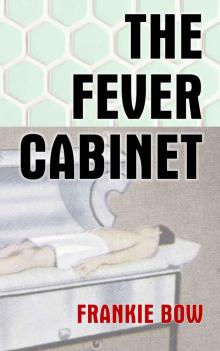
The Perfect Body, page 13
part #8 of Professor Molly Mysteries Series


Chapter Thirty
Margaret’s car was still in front of my house when Emma dropped me off. Donnie wasn’t home yet. I tried sneaking around the back. My plan was to get to the laundry room and grab a fresh shirt before Margaret saw me. But as soon as I stepped onto the back deck, there she was. She was sitting in one of the uncomfortable teak folding chairs, holding Francesca on her lap. I quickly crossed my arms to cover my chest, but as soon as I got closer I forgot about my stained shirt. Margaret’s eyes were red and shining. She’d been crying.
I quickly took Francesca from her and held the baby close to me. Our hedge had grown high enough to block the view of the graveyard, so I couldn’t see it. It was a small favor. This day was already weird enough.
“Margaret? Are you okay?
I sat next to her and popped the baby under my shirt. Francesca latched on with gusto, quickly relieving the painful pressure in my chest. Exactly the kind of thing we in the College of Commerce like to call a “win-win.”
Margaret shook her head.
“I’m so sorry, Professor,” she sniffled.
“About what? The baby’s okay. The house seems fine. What’s going on?”
She looked at me with her red-rimmed eyes.
“I’m leaving.”
“You what? Why? Did you want to talk about the pay? Maybe we could—”
“I’m moving back to the mainland,” she said.
“What? Where on the mainland?”
“Oregon.”
“But what about the CPA exam?”
“I can take the CPA exam and practice there.”
“Oh. You’re sure about this?”
She nodded.
“Okay. Well, if that’s what you want to do, then I’m happy for you. We’ll just have to adjust and plan for a smooth transition. When are you planning to leave?”
“Tonight.”
“Tonight?”
Margaret flinched.
“Sorry, Margaret, I didn’t mean to raise my voice. I was surprised, that’s all. I honestly don’t know what we’ll do without you.”
“I’m so sorry,” Margaret repeated.
“No, no, I’m not saying it to make you feel guilty. You’ve been wonderful with Francesca, and we’re going to miss you. That’s what I wanted to say. And this is all so sudden.”
“I’ll miss Francesca,” Margaret sniffled. She was staring out at the hedge, in the direction of the graveyard. “I’ll miss Hawaii. I’m so sorry, I know this puts you in a bad spot.”
“Well, is there anyone you know who might be able to take the job?” I asked. ““Do you remember the young man you told me about, who was looking for a job? You said he loved animals?”
“Keola?” She turned to look at me. “We’re moving to Oregon together.”
“Ah. Okay. So that won’t work.”
“He said if he couldn’t find another job by the last day of work, he was going to leave the islands. His last day of work was today.”
A little advance warning would have been nice, I thought.
“Is the job situation any better on the mainland?” I asked.
“Oh, the job market’s much better there. He’s already got something lined up. With a food safety testing lab. And Hawaii’s the worst state for CPAs when you count housing costs and available jobs. We’re number 51.”
“How do we rank fifty-one when there are only fifty states?” I asked.
“Washington, DC.”
Margaret burst into tears. I hesitated, debating whether to give her a hug. Neither of us really wanted that, I decided. I went inside and got her a box of tissues.
Chapter Thirty-One
Donnie, baby Francesca, and I arrived at Honey Akiona’s office exactly at two o’clock the next day. Honey had called Donnie to request a meeting and had asked him to bring me along.
Honey had moved her practice to a new office, on the bottom floor of an early 20th-century frontier-style building downtown. It was close to the Pair-O-Dice, but one street nearer to the bayfront.
Her assistant let us in to her office and we waited for a few moments. Honey finally came in, holding a manila folder.
“Aw, cute, the baby.” Honey gave Francesca a smile and rubbed the top of her fuzzy head.
“Bah!” Francesca replied with a gummy grin.
“We didn’t have anyone to watch her,” I said as I pulled the baby to my chest and draped my shirt over her. “Excuse us. The baby’s hungry.”
“No worries. This won’t take long. We got a situation.” She dropped the folder on her desk and sat down. “Bee Corcoran is dead.”
I nudged Donnie’s foot, a nonverbal “I told you so.” When I told Donnie what had happened, he had been infuriatingly skeptical. The body was probably a homeless person; there were any number of reasons Bee might not have been in her lab when we visited; the balcony railing had probably rusted out long ago.
I wasn’t happy Bee was dead, of course, but maybe next time Donnie wouldn’t be so quick to dismiss my conclusions.
“This could be a problem,” Honey continued. “Bee Corcoran could confirm when you left the table, so you could say it’s to your advantage to have her out of the way.”
“Is someone saying I killed Bee Corcoran?” Donnie asked.
“Pang might try to go in that direction,” Honey said. “Donnie Gonsalves murders his wife’s ex-boyfriend out of jealousy, then kills a key witness. Pang solves two murders for the price of one and banks a big favor for the university.”
“What do you mean, a favor for the university?” he asked Honey.
“Stephen Park’s parents are suing the university for Stephen’s death. The university would prefer to shift the blame somewhere else. Like to you, for example. Where were you yesterday morning?”
“I was at the Drive-Inn,” Donnie said. “From seven in the morning until about three.”
“How did Bee die?” I asked.
Honey opened the folder and traced her finger down the top piece of paper.
“No official cause of death yet, but probably head trauma.”
“From the fall?”
Honey stared at me.
“Do you know anything about this, Professor?”
I had no reason to keep anything from Honey. I told her everything I could remember from the previous day. She seemed to be more open-minded than Donnie had been.
“We didn’t do anything wrong, did we? I didn’t think we were trespassing or anything.” I stole a sidelong glance at Donnie.
“You say the door was unlocked?”
“To Bee’s lab? Yes.”
“You heard that someone had died, and her description sounded like your colleague. You went to her office—”
“Her lab,” I corrected Honey. “Just to check on her.”
“You went to your colleague’s workspace, to check on her. The door was unlocked. Your actions were reasonable. What about the boy who was there? Any idea who he is?”
“I’m not sure. But I think he’s Margaret Adams’s friend Keola. Margaret said he had just left his job, and the boy in the lab told us it was his last day of work.”
“Margaret Adams?” Honey raised her eyebrows.
“That’s right, I forgot. She’s your classmate. She’s been watching our daughter in the mornings.”
“She never went for her CPA? I thought she’d be working for one of the Big Four by now.”
“She’s studying for the CPA exam. In fact, she reads her study flashcards to Francesca. Puts her right to sleep. Well, she did, anyway. She—”
“Professor. Does the boy in the lab have a last name?”
“Oh. Sorry. If it’s the same person, I think his name is Keola Shiner.”
“You didn’t tell me all this last night,” Donnie said.
“I didn’t think of it. I just remembered that Margaret had told me that Bee fired him from her lab.”
“Fired?” Honey asked. “Interesting.”
“He must be on the mainland by now,” I said. “Margaret said they were going to fly out last night. That’s why we have the baby today. We don’t have anyone to watch her any more. I guess you don’t have Margaret’s forwarding address.”
“No,” Honey said. “I’d appreciate it if you have it.”
I pulled out my phone to search for Margaret’s contact information.
“I can email it to you.”
“Just write it down.” Honey pushed a legal pad across the desk to me. Then, in response to my questioning look, “I like to be on the safe side. You know what they say. Email like the whole world’s watching. And Mr. Gonsalves, we’re going to need to contact some other witnesses to your whereabouts yesterday, besides your employees. Customers, anyone else who might’ve seen you. You understand.”
As I was driving back home with Donnie, Francesca in her car seat in the back, my phone rang. It was Serena, the dean’s secretary.
“Molly,” she said, “You never got back to Dan about what office you want. I gotta get the assignments to Facilities by the end of the week. They just called to remind me cause they’re gonna put up the signs outside your door that’s why.”
“Right. I did go over there yesterday, but—”
“Yesterday?”
“Yes.”
“I heard someone found a dead body in the main building yesterday. You see anything?”
“I didn’t see a dead body,” I said, “but a security guard came into the building and chased us, me, out.”
“Nah! Really?”
“I’ll go back today and choose my office. Oh, what should I do if the doors are locked?”
“Call security and get ‘em to let you in,” Serena replied. “And call me or email me as soon as you decide. So I can cross it off my list. Don’t try to tell Dan. He’s about a thousand emails behind.”
When Serena had hung up, Donnie said,
“It’s okay. I’ll take the baby.”
“That’s nice of you to offer, but I don’t really feel good about having her at the Drive-Inn with all of the open flames and knives and things.”
“Well, in our defense, no one’s died at the Drive-Inn in the past week.”
“Yeah, good point. Okay, you and Francesca go into the Drive-Inn and try to figure out who came in to buy breakfast yesterday. Make sure you have a rock-solid alibi.”
“Do you want us to go with you?” Donnie asked. “I don’t like the idea of you going to the old hospital alone. You don’t know who’s hanging around there.”
“My office isn’t in the actual hospital.”
“It’s not?”
“Nope. We’re out back. In the Inebriate Asylum.”
“Really?”
“Yes. Really.”
“So are you going to tell your students to come to your office hours in the Inebriate Asylum?”
“That’s exactly what I’ll tell them. In fact, thank you for reminding me. I need to put it on my syllabus.
“Molly?” Donnie watched the road as he talked, so I knew he was serious now.
“Yes?”
“Please don’t go investigating anything.”
“I won’t.”
“Molly, I’m serious. Two people have already died up there. We don’t know who might be hanging around.”
“I’ll get Emma to come with me.”
Donnie gave me a sideways glance.
“Good. I think.”
Chapter Thirty-Two
Donnie dropped me off at home. I called Emma, but her phone went straight to voice mail. My friend-finder app showed Emma in the middle of Mahina Bay. Darn it. She was out paddling and might not be back for hours.
I dialed Pat Flanagan’s number. He, it turned out, was in town, and available. I hopped into my Thunderbird and drove over to the old hospital building. It was closer to my house than the main campus, I realized. One of these days, when we got our childcare situation squared away, I might even be able to walk to work.
I parked in front of the main hospital building, in the shade of a strip of jungle on the mauka (uphill) side. It would have been closer to park in the back, but I didn’t want to spend any more time back there than I had to. It was bad enough that whichever office I chose would overlook that exact area, where Stephen had died. I turned on the local NPR station and listened to the Community Calendar. It was ninety percent events happening in Honolulu, and hardly anything in Mahina.
A few minutes later, Pat’s vegetable-oil-fueled Mercedes diesel pulled up next to me, wafting a delicious french-fry scent. We exited our respective cars, locked up, and started walking.
“You okay, Molly?” Pat asked.
I nodded.
“Right before I came here, Donnie was telling me, don’t stay any longer than you have to, be careful, don’t go snooping, and I thought, oh, he’s being overprotective as usual.”
“No, in this case I can kind of see his point,” Pat said. “Come on, I want to show you something.”
We walked around the hospital to the old Inebriate Asylum. Surrounding it was untamed jungle. I could hear the roar of a river running through an unseen gorge.
“Look at the top floor,” Pat said. “The windows.”
“That’s where we were yesterday.” I shaded my eyes with my hand and tipped my head back to see.
“How many windows do you see on the top floor?” Pat asked.
“Can I count that one that’s half hidden behind the tree?” I asked.
“Yeah.”
“Four. Why?”
“There are only three rooms on this side on the top floor,” Pat said. “311, 312, and 314.”
“So one of the offices just has two windows. Hey, thank you for pointing that out. That’s the one I want. Let’s go have a look. Oh, Serena told me to call security to let us in.”
I pulled out my phone.
“I can let us—” Pat began, but I shushed him.
“No B&E today, Pat. I have to do this by the book.”
“You’re just like Darren on Bewitched,” Pat grumbled. “Not letting me use my powers for good.”
“Pat, I’m a department chair now. I have to set a good example.”
We trudged up the steps and waited. After around ten minutes, a security guard showed up. He was someone I hadn’t seen before, and none of his keys worked in any of the locks.
“That’s okay,” I assured him. “Our department is moving into this floor. I just wanted to have a look around.”
Once the guard had left us, Pat asked,
“Do you want me to—”
“Yes, please.”
Pat picked the locks and opened the doors to each room in turn: room 310 on our left, and 311, 312, and 314, all of which faced the back of the hospital building.
I thought room 310 might be a good choice, as it was the only one that didn’t look out at the back of the hospital. I was hoping it would have a view of the bay, because of its location. But I ruled it out as soon as I opened the door. In size and shape it was the mirror image of the bathroom, with the same narrow footprint, small window, and tiled green floor with a drain in the center. In the center of the room stood a rust-speckled stainless-steel contraption that looked like the offspring of an iron lung and a breadbox.
“No way!” Pat rushed to the device, grasped a handle, and lifted what I suppose you would call the lid. The device opened like an iron maiden. It seemed to be designed for an average-sized human to fit inside.
“What is that?” I hung back in the doorway, half-afraid that Pat was going to try to put me into the thing.
“It’s a fever cabinet.” Pat had his phone out and was taking pictures of the contraption from every possible angle. “This would have been considered the state-of-the-art medical care before World War 2. I wonder when they got this. Molly, have you heard of Julius Wagner-Jauregg?”
“No. Why? Did someone put him in that gizmo?”
“He won the Nobel Prize in 1927.”
“Yay?”
“For his work in pyrotherapy. The use of fever to treat disease. He used malaria to treat late-stage syphilis, which up until then had been a death sentence. He had a soldier with malaria admitted into his ward, and he decided to draw the guy’s blood and use it to infect his syphilitic patients.”
“How…innovative. Did it work?”
“Yeah. Well. Except for the fifteen percent of patients it killed.”
“Ah.”
“Oh, and don’t be tempted to celebrate him like he was some kind of hero.”
“I wasn’t going to, but okay.”
“He was a member of the Nazi party, he sterilized patients who he thought masturbated too much, and he said working women were degenerate and unable to bear children or breast feed.”
“Ha, joke’s on him. I’m a working woman and I’m like a walking dairy over here. So what does all this have to do with that human toaster oven or whatever it is?”
“Yeah, sorry for getting off topic. I’ve been doing a lot of research on early twentieth century medical treatments for this series. It kind of is a human toaster oven. The idea is to give patients the benefit of fever therapy without infecting them with malaria. They’d shut patients into this thing and raise their internal body temperature to up to 107 degrees.”
“That can’t have been pleasant,” I said. “How long did the patients have to stay in there?”
“Four to six hours at a time, for up to twenty sessions.”
I shook my head and pushed back from the doorway.
“I don’t think I want office number 310,” I said. “Let’s look at the other ones.”
Rooms 311 and 312 each had a square footprint and a large window with a view of the back of the hospital. Room 314 was similar to the other two, but had koa paneling on the wall instead of green paint.
“I think you should take 314,” Pat said. He had been quietly following me as I’d made my inspections.
“I like the wood paneling. But it seems like it’s a little narrower than the others. Unless the paneling just makes it look smaller.”
Pat took out his phone and pointed it at the far wall. Then he turned 90 degrees and did the same thing.
“You’re right, it is narrower,” Pat said. “Not from the window to the door, but about six inches wall-to-wall.”