The Good Servant, page 1


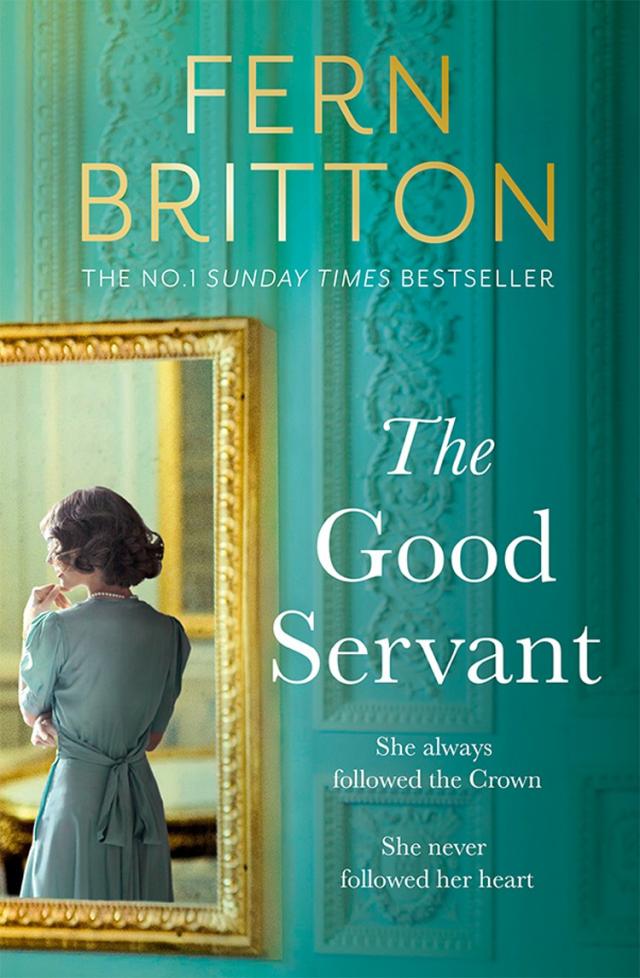
THE GOOD SERVANT
Fern Britton
Copyright
HarperCollinsPublishers Ltd
1 London Bridge Street
London SE1 9GF
www.harpercollins.co.uk
HarperCollinsPublishers
1st Floor, Watermarque Building, Ringsend Road
Dublin 4, Ireland
First published in Great Britain by HarperCollinsPublishers 2022
Copyright © Fern Britton 2022
Jacket design © HarperCollinsPublishers Ltd 2022
Jacket photographs © Nikaa/Trevillion Images (woman) and © Irene Suchocki/Trevillion Images (setting)
Fern Britton asserts the moral right to be identified as the author of this work.
A catalogue copy of this book is available from the British Library.
This novel is entirely a work of fiction. The names, characters and incidents portrayed in it are the work of the author’s imagination. Any resemblance to actual persons, living or dead, events or localities is entirely coincidental.
All rights reserved under International and Pan-American Copyright Conventions. By payment of the required fees, you have been granted the non-exclusive, non-transferable right to access and read the text of this e-book on screen. No part of this text may be reproduced, transmitted, down-loaded, decompiled, reverse engineered, or stored in or introduced into any information storage and retrieval system, in any form or by any means, whether electronic or mechanical, now known or hereinafter invented, without the express written permission of HarperCollins.
Source ISBN: 9780008225292
Ebook Edition © June 2022 ISBN: 9780008225308
Version: 2022-05-04
Contents
Cover
Title Page
Copyright
Prologue
Part One
Chapter One
Chapter Two
Chapter Three
Chapter Four
Chapter Five
Chapter Six
Chapter Seven
Chapter Eight
Chapter Nine
Chapter Ten
Chapter Eleven
Chapter Twelve
Chapter Thirteen
Chapter Fourteen
Chapter Fifteen
Chapter Sixteen
Chapter Seventeen
Chapter Eighteen
Part Two
Chapter Nineteen
Chapter Twenty
Chapter Twenty-One
Chapter Twenty-Two
Chapter Twenty-Three
Chapter Twenty-Four
Chapter Twenty-Five
Chapter Twenty-Six
Chapter Twenty-Seven
Chapter Twenty-Eight
Chapter Twenty-Nine
Chapter Thirty
Chapter Thirty-One
Chapter Thirty-Two
Chapter Thirty-Three
Chapter Thirty-Four
Chapter Thirty-Five
Chapter Thirty-Six
Chapter Thirty-Seven
Part Three
Chapter Thirty-Eight
Chapter Thirty-Nine
Chapter Forty
Chapter Forty-One
Part Four
Chapter Forty-Two
Chapter Forty-Three
Chapter Forty-Four
Part Five
Chapter Forty-Five
Chapter Forty-Six
Chapter Forty-Seven
Chapter Forty-Eight
Chapter Forty-Nine
Chapter Fifty
Chapter Fifty-One
Chapter Fifty-Two
Chapter Fifty-Three
Chapter Fifty-Four
Chapter Fifty-Five
Chapter Fifty-Six
Chapter Fifty-Seven
Chapter Fifty-Eight
Chapter Fifty-Nine
Chapter Sixty
Chapter Sixty-One
Chapter Sixty-Two
Chapter Sixty-Three
Chapter Sixty-Four
Chapter Sixty-Five
Epilogue
Afterword
Bibliography
Keep Reading …
About the Author
By the same author
About the Publisher
PROLOGUE
Buckingham Palace, 1949
George VI is on the throne. The King, his wife, and his two daughters enjoy great popularity. Princess Elizabeth has recently been married to Prince Philip. The abdication of Edward VIII – some twelve years before – has largely been forgotten, and the banished ex-king and his controversial wife are known as the Duke and Duchess of Windsor and are living in Paris.
Sir Alan Lascelles has known them all.
He is every inch a courtier. Six foot one, elegantly thin, with a centre parting in the exact middle of his scalp. He usually goes by the nickname ‘Tommy’.
There have been many royal scandals behind the scenes which could have destroyed the Crown forever, but for Tommy’s careful handling and iron fist.
You could say, he really has seen everything, and done it. A decent man and a stickler for protocol whose actions are not always popular amongst the royal household. But, by God, they know they are lucky to have him.
Today, he is sixty-two, a happily married man with three children, enjoying his job as private secretary to King George VI.
From behind his well-ordered desk in Buckingham Palace, he is reading over two court papers that the King will want to see.
It is a pleasant enough morning – until his secretary, Miss Jane Pepper-Thynne, knocks and pops her head around the door.
Tommy looks at his desk clock and smiles. ‘Elevenses already, P-T?’
‘No, sir. I mean yes, sir, but that’s not why I am here.’
His eyebrows shoot up in their quizzical way. ‘Well, then – out with it.’
‘Her Majesty the Queen wants to see you straight away. She says it’s urgent?’
‘Oh, yes?’
‘I believe it’s something to do with Miss Crawford and’ – she hesitates – ‘a book, sir.’
This is news Tommy never wanted to hear and has tried to prevent in every possible way. His neatly trimmed moustache tenses in fury. ‘Is it by chance the book I think it is?’
The Honourable Miss Pepper-Thynne squares her shoulders. ‘Yes, sir.’
Tommy drops his fountain pen on his large desk blotter and stands up. ‘I told the damned woman. I damn well told her.’ His brimming rage is so quiet and contained it makes it all the more terrifying. ‘And where exactly is Her Majesty now?’
‘In her sitting room, sir.’
He buttons his jacket and straightens his tie. ‘Heads will roll – but it damned well won’t be mine.’
What happens next is the complete destruction of one loyal woman’s character.
PART ONE
Chapter One
Dunfermline Station, March 1932
Twenty-two-year-old Miss Marion Crawford was waiting on the platform of Dunfermline station for the London King’s Cross train. Her stepfather was waiting in the car park. Her mother was standing beside her, glancing up at the station clock. ‘We are in good time at least.’
Marion had heard her mother say the same thing at least twice since they had arrived. ‘Yes, Mother.’
‘There’s nothing worse than rushing for a train.’
‘No. Look, Mother.’ Marion sighed. ‘There’s no need for you to wait with me. Go home with Dad. It’s been a long morning already, saying goodbye to all the neighbours – which, by the way, was really embarrassing.’
‘I thought you’d like a proper send-off. It was a good turnout. Even old Mr Turner waved from his window, too cold for him to come out.’
‘Too cold for everyone.’ Marion lifted one foot then the other in an effort to warm them. ‘Please, Mother, go back to the warm car. Dad will have the engine running.’
‘I’ve been colder than this and survived.’ Her mother sniffed. ‘I don’t know why your father wouldn’t come out to see you off.’
‘Because he hates goodbyes and so do I.’
Marion desperately wanted her mother to go. She needed to be alone to think. This was a big day. The biggest. She wanted to set herself straight, to think through, again, the enormous change that was about to happen in her life.
She just wanted to get to Windsor and start the job.
To find her feet.
‘You will write when you arrive, won’t you, Marion?’
‘No, I thought I’d let you worry until I come back.’ She flicked a glance at her mother, before muttering, ‘I’ll only be away for a couple of months. I have told them I have to be back for my university place.’
Her mother’s breasts gathered up under her folded arms. ‘And what happens if you’re not back in time to start university? The worry your stepfather and I have had getting you through your exams.’
Marion almost stamped her foot in desperation. ‘Of course I will be back for university. Mum, please don’t make this so hard.’
Her mother sniffed and turned her back. Both of them kept their furious thoughts to themselves.
As mothers went, Maggie was challenging. She had told her daughter only this morning that the neighbours thought Marion was distant. ‘I don’t want people thinking you are getting too grand for us here,’ she’d said.
Tall, thin and in possession of a rather plain face, Marion knew that she often came across as aloof. In her two years at Moray House, part of Edinburgh Provinc ial Training Centre, she had found it hard to make friends with her fellow students and most of her tutors. The principal had seen through her façade, though, and the end of the final term she had sought Marion out. ‘Miss Crawford, would you come to my office after lunch? I would like a word.’
When Marion was shown into Miss Brown’s sanctum, she seemed the picture of calm, though she was shaking within.
‘Do sit down, Miss Crawford.’
She took the seat in front of the desk as the older woman sat opposite.
‘I hope you have been happy here?’
‘I have, Miss Brown.’
‘You have worked hard for your place at Glasgow University. Their child psychology course is said to be the most enlightened and forward thinking of its kind. I am certain you will make a success of it.’
Marion flushed and looked down at her lap. ‘Thank you.’
‘I have had a note from the university saying it was suggested that it might be worthwhile for you to take a summer job to get some first-hand experience with children. Have you had any thoughts about that?’
‘I haven’t found anything yet.’ Marion sat forward. ‘You see, I want to help the children who need it most. If I could find something with children who have no chance in life, children who have no opportunity for a good education, children who live in such poverty that the little food they have is not helping to develop their bodies and their brains. I want to give every child a chance to learn how to read, write and know their numbers, to have at least one good meal a day at school, if not at home, to have manners so that they will never feel inferior to anyone.’ She stopped. ‘Sorry. But it does feel so important.’
Miss Brown slowly nodded. ‘Never apologize for passion.’ Her shrewd eyes scanned Marion’s face. ‘Would you be willing to work with any child, no matter their background? Just for the summer? To help a family at the other end of the social scale?’
Marion gave a small smile. ‘One whose parents want to keep their privileged offspring busy and out of their hair during the holidays?’
Miss Brown acquiesced. ‘It would be a temporary job. It would give you experience – and a nice financial benefit.’
‘Who are they?’
She was passed a sheet of paper with an embossed letterhead and an elegantly written letter beneath.
The few travellers on the London-bound platform stamped their feet against the chill and began turning up their coat collars. One or two lifted their eyes to the end of the platform, where a colony of shiny jackdaws were chattering in the bare trees.
The sound of a woman’s shoes clipped onto the platform opposite.
Marion recognized her, Lorna – an acquaintance of her mother’s, and a gossip. Marion pulled her muffler over her chin to disguise herself, but she was too slow.
‘Maggie, Marion!’ the woman called, her voice ringing over the wide divide of rails and stone chipping. ‘Marion, is it today you’re leaving us for London?’
Marion pulled her face from her scarf. ‘Good morning. Yes, indeed.’
‘You’ll have had to pack a whole new wardrobe, I suppose. Your poor mother.’
With nothing else to distract them, the bystanders trained their eyes and ears on the conversation.
Marion’s mother called back, unnecessarily loudly, ‘Off to London, aye!’ She seemed delighted to have captured an audience. ‘Everything in her case is new. I made two skirts and three blouses just this last week. Kept me busy, Lorna.’
‘You must be so proud of her, Maggie.’
Marion wanted to clamp her gloved hand over her mother’s mouth, but she was too late.
‘I’ve always been proud of her, Lorna – even when she was all moonfaced over the Prince of Wales. She’s still got those scrapbooks she made of him – hundreds of pictures cut from the papers and magazines.’
‘Mum!’ Marion felt tortured, but her mother carried on.
‘And even though I am not a Royalist, the Duke and Duchess seem decent enough people.’
The waiting travellers were hooked.
Lorna shouted back, ‘And those two bonny wee Princesses! To think that your Marion will be looking after them! She might even bump into the Prince of Wales himself. Who would have imagined that? I wouldn’t come back if I were her.’
Maggie shook her head vehemently. ‘No, no, no. She has her place at Glasgow. Nothing will stop her coming back.’
The rails began to hum and twang, bringing a warning that the London train was approaching.
Marion bent down to pick up her case and whispered, ‘Mother, everyone is listening. Please stop.’
Lorna shouted back, ‘Marion, make sure you write to your mother every week and let us all know how it is going.’
Marion shot her mother a pleading look, which Maggie ignored. ‘I will let you know, Lorna, as soon as Marion can write.’
Marion turned to her mother and whispered wretchedly, ‘Mother, for God’s sake, shut up.’
Her last words were drowned by the incoming whoosh, hiss and squealing brakes of the train.
‘Now, Marion Crawford, there’s no need for attitude from you. Here, let me get the porter to help you.’
‘Mother, please. I can do it myself.’
‘You stop your snappiness, madam. I am trying to help you.’
‘I know, Mother.’ Marion sounded whiny and hated herself for it. ‘I am grateful, really, but please.’ She took the handle of her case and heaved it onto the train.
‘This is the way it’s going to be, is it?’ Maggie whispered furiously. ‘Just because you’ve got a job with royalty, doesn’t mean you’re better than the rest of us.’
Marion kept her head down, focusing on her case, in fear of letting slip the tears brimming in her eyes. ‘Mum, it’s just a temporary job.’
Her mother reached for her hanky, her anger subsiding. ‘I will miss you so much.’
‘I’ll miss you too.’
The guard’s whistle blew shrill, making both women jump.
‘All aboard please, ladies.’
Marion lifted her bag and stepped up into the carriage. Her mother reached up for a last hug. ‘I love you and I am very proud of you. You know that.’
‘I love you too, Mum.’
The stationmaster blew his whistle again and slammed Marion’s door.
Then the train began to move.
‘Now don’t be shy with them!’ Maggie called up through the open window. ‘Let me know you arrived safely – and please, grow your hair back again!’
Marion blew a kiss. Walking along the narrow corridor, she peered inside each compartment until she found an empty one. Her mother had walked along the platform to follow her and was now standing below the window, wiping her tears, waving. Marion knew it was cruel, but she forbade herself to look at her. Right now she needed to calm herself. She arranged her case on the rack and folded her coat neatly on its top. The train jolted and began to move forward. Outside, Maggie moved too, knocking on the window. Marion now acknowledged her and waved back guiltily.
‘Bye, Mother,’ she mouthed. The train was picking up speed and Maggie was running out of platform. The last sight Marion had was of Maggie fluttering her hanky and crying.
She sat down with a sigh of relief. At last, she was free to concentrate on all that had happened since Miss Brown had slid the letter across her desk to her.
The older woman had watched as Marion read the letter quickly, then a second time, more slowly, taking in all it offered. It was from Lady Elgin of Broomhall. She wanted a history teacher for her seven-year-old son, Andrew, Lord Bruce. There were three younger children – Lady Martha, Lady Jean and the Honourable Jamie – who would wish to join in more suitable lessons, as and when.
She put the letter down. ‘The Elgins?’
‘Yes.’
‘I am sorry, Miss Brown, but no. I don’t approve of inherited wealth. These children do not need me. They will do fine without me.’
Miss Brown leant her elbows on her desk and steepled her fingers. ‘Lord Elgin is a decent man. He cannot help his birth into good fortune, but you can learn a lot from him and his family.’
Marion was not inclined to think so. ‘In what way?’
‘It is important to see all the colours in the rainbow, Marion, even if there are colours you really don’t like. Without blue, there would be no green; without red, no purple. Poverty and wealth can be brought closer together if one understands the other. Do you see what I am getting at? The wealthy can help the poor financially, while the poor can educate the wealthy in finding the small joys of life and humility. Isn’t that what you would like to achieve?’