

The Baker Street Phantom, page 1


Open the next Singleton & Trelawney Case
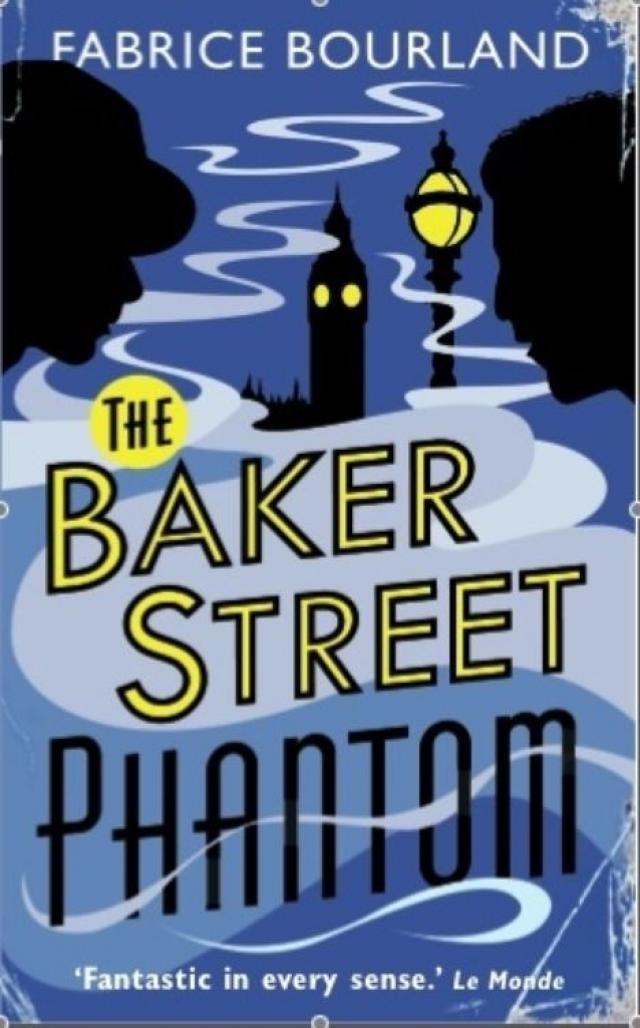
THE BAKER
STREET PHANTOM
FABRICE BOURLAND
Translated by Morag Young
To Véronique, Félix and Rosalie
CONTENTS
Title Page
Dedication
Foreword by the Publisher
I Extract from an Article in the Toronto Daily News, 26 July 1932
II A Most Unexpected Visit
III Introducing James Trelawney and Your Narrator
IV A Most Unexpected Visit (Continued)
V Another Murder in London
VI A Visit to 221 Baker Street
VII More Crimes in the East End
VIII A Surprising Spiritualist Séance
IX James Reviews the Case
X A Little Reading Never Hurt Anyone
XI A Night in the East End
XII We Learn Why and How
XIII Return to Baker Street
XIV A Few Hours’ Well-Deserved Rest
XV The Search for the Piccadilly House
XVI At Highgate Cemetery
Epilogue
Note to the Reader
Notes
About the Author
Copyright
‘If I don’t kill him soon, he’ll kill me.’
Sir Arthur Conan Doyle to Silas Hocking in the summer of 1893, reported in New Age magazine in 1895
‘He must go the way of all flesh, material or imaginary.
One likes to think that there is some fantastic limbo for the children of the imagination, some strange, impossible place where the beaux of Fielding may still make love to the belles of Richardson, where Scott’s heroes still may strut, Dickens’s delightful Cockneys still raise a laugh, and Thackeray’s worldlings continue to carry on their reprehensible careers.’
Sir Arthur Conan Doyle
Preface to the original edition of The Case-Book of Sherlock Holmes, 1927
‘There was a small doctor dwelling near me, small in stature and also, I fear, in practice, whom I will call Brown. He was a student of the occult … From what I learned I should judge that the powers of the society to which he belonged included that of loosening their own etheric bodies, in summoning the etheric bodies of others (mine, for example) and in making thought images … But their line of philosophy or development is beyond me. I believe they represent a branch of Rosicrucians.’
Sir Arthur Conan Doyle, Memories and Adventures, 1924
FOREWORD BY THE PUBLISHER
I received the incredible story you are about to read in the post a few weeks ago. The manuscript came with a letter written on the elegant ivory notepaper of a legal practice in Northampton. In the letter William Barnett, a partner at Barnett & Hartmann, told us that he was the son of John W. Barnett, a solicitor who had died in March the previous year at the age of ninety-one. We were of course familiar with John Barnett who for many years had been the executor of Andrew Fowler Singleton, the famous detective and author who died in April 1972. Our publishing house had dealt with him several times in that capacity.
William Barnett told us that he had recently been going through his father’s affairs. In the attic of the vast family home, he had discovered a suitcase containing an impressive collection of papers and notes of all kinds, some of sentimental value only, and a number of carefully arranged folders. The first, of a faded green, was captivatingly entitled ‘The Baker Street Phantom’. Inside was a manuscript of two hundred typed sheets, which, at first glance, bore all the hallmarks of a new investigation by Mr Singleton.
The find immediately raised unanswerable questions: why had his father let the manuscript lie rotting at the bottom of a suitcase when, immediately after Andrew’s death, he had been involved in distributing his unpublished work? Was it an unfortunate oversight or had he deliberately chosen to let it sink into oblivion? In other words, was its authenticity in doubt?
William had immediately immersed himself in the text and admitted in his letter to us that he had never read anything so disconcerting in his life.
Believing that he was neither sufficiently familiar with Andrew Singleton’s work nor adequately au fait with the science of spiritualism to determine the credibility of what he had read, William decided to send us the extraordinary manuscript on the basis that, since its creation, our illustrious house had published a number of the author’s cases. He would leave us to judge whether it should be published or not.
I have to admit that the decision to publish was not taken lightly. What was the story really? A tale retrospectively telling the first adventures of one of the best and most endearing amateur detectives of the twentieth century? If that were the case, and if it were true that events had occurred as described, we would find ourselves faced with a phenomenon with unimaginable consequences, which would resurrect ancient beliefs in the creative power of the imagination and make us consider the monsters created in the brains of our authors in a different light. Perhaps, however, it was pure fiction, deliberately unrealistic and unlikely, entirely invented by the author to give himself the opportunity to express himself more freely and candidly? As we read it, the most surprising aspect of those arresting pages was that Andrew Fowler Singleton chose to dwell on himself, his past, his childhood and his first encounter with his faithful associate, something he had never done in the rest of his work.
If it were established that this enlightening tale was just a product of his imagination, it would be unique in the author’s work. It has been proved on a number of occasions (to the satisfaction of all, we hope) that both the traditional cases he pursued, which were limited to tangible reality, and the numerous affairs which led him to the edge of human logic and reason were all actually investigated by Andrew Singleton himself.
Unlike Arthur Conan Doyle, one of his literary heroes, Singleton really was a sleuth. We know that the illustrious British author, in a desire to right wrongs, successfully took on the case of George Edalji (found guilty in 1903 of killing livestock at several farms in Staffordshire) and the case of Oscar Slater (sentenced to life imprisonment in 1909 for murdering his landlady). In each case, having struggled to establish the truth, Conan Doyle managed to have the verdicts overturned and the two prisoners released. But those cases had none of the complexity and ingenuity of those devised by the creator of Sherlock Holmes in his stories. Moreover, later attempts to help the police find an anonymous individual in 1921 and Agatha Christie in 1926, when she mysteriously disappeared one evening in December and was not heard of for eleven days, ended in bitter failure. In both cases, with the help of a medium, Horace Leaf, Conan Doyle had attempted to put into practice the psychometric technique used in some of his fantastic tales: diagnosing the circumstances of the tragedy with varying degrees of precision by allowing the medium to touch an object which had belonged to the person who had disappeared.
As regards our manuscript, clearly deception remains a possibility. The style could easily be that of the detective but, it might be argued, what could be easier than imitating a style of writing? On the other hand, absolutely nothing in the events in question or their chronology indicates that there was any cheating. Of course, it will be pointed out that it is difficult to check whether the article in the Toronto Daily News, dated 26 July 1932, was invented by the author as the paper’s archives were all destroyed in a fire in 1947. However (and we have checked ourselves), accounts of the Hamilton group’s spiritualist meetings are easily accessible.
Nonetheless, even if the authenticity of the document is recognised, many aspects of the manuscript remain unclear. In particular, it appears to be impossible to determine with precision the date it was written. If we exclude the idea that it was written just after the events related (mention is made in the last lines of the manuscript of the death of Jean Leckie in 1940 and, earlier on, the death of James Trelawney, the faithful associate, killed by the Nazis a few weeks before their surrender), there is nothing to indicate whether it was written in the 1950s or 1960s, say, or whether it was written later still, during the last months of the author’s life when he was enjoying his well-deserved retirement at his cottage near Halifax in Nova Scotia, dedicating his days and nights to his two favourite activities: reading and writing.
The fact remains that, after much reflection on the part of all of our directors, we finally agreed that it was important to make this story public.
We trust that we have taken the right decision. Now it is for others to decide.
Stanley Cartwright, 23 March 2007
I
EXTRACT FROM AN ARTICLE IN THE TORONTO DAILY NEWS, 26 July 1932
HULLABALOO IN SPIRITUALIST CIRCLES
Winnipeg’s spiritualist community is proud of the fact that it includes one of the world’s foremost experts in psychic research. Over the course of just a few years, Dr Thomas Glendenning Hamilton, formerly an MP for the province of Manitoba and today chairman of the Manitoba Medical Association, has built up a formidable reputation thanks to his spiritualist work.
Dr Hamilton’s interest in psychic phenomena began fourteen years ago. He was introduced to the field by one of his university colleagues, Professor Allison. His personal experience then expanded through one of Mrs Hamilton’s friends, Elizabeth Poole, a remarkably talented medium of Scottish extraction. Dr Hamilton understood that the subject represented a new and infinite field of experimentation for a young scientist such as himself. He immediately began to carry out his research with unfailing sincerity a nd rigour, something that has always been unanimously saluted by his colleagues on all sides.
Seven years after he began organising regular séances with Miss Poole, Dr Hamilton managed to obtain his first so-called ‘psychograph’ or spirit photograph. This process rests on the theory that a photographic plate can be developed to reveal not only the person posing in front of the camera but also the form of a spirit, invisible to the naked eye and whose presence is only revealed once the picture has been developed. Other photographs followed and met with great success here in Canada, and also in the United States and Europe. Spiritualists consider them to be unimpeachable proof of the survival of the soul after death.
However, it should be noted that the ‘teleplasm’ (the term used for the substance which materialises) photographed by Dr Hamilton only represented anonymous spirits, ordinary men and women who had not known fame during their lifetimes.
Through Elizabeth Poole, contact was made with the Scottish writer Robert Louis Stevenson, the English explorer David Livingstone and the French astronaut Camille Flammarion between 1923 and 1927. But communication with these illustrious figures was limited to automatic writing where a medium writes messages for the living while in a trance, dictated by spirits. Their bodies had never been captured on a photographic plate.
However, according to Dr Hamilton himself, this time everything points to it being the spirit of Sir Arthur Conan Doyle, the great British writer, creator of the Sherlock Holmes character, who established his presence on several occasions during a series of meetings organised in spring and early summer. The face of that fervent supporter of the spiritualist cause was photographed on 27 June at a special séance, which will henceforth figure in the annals of psychic science.
Thanks to the surprising success of these experimental meetings, the status of the city of Winnipeg has suddenly been raised to that of Boston, London, New York and Paris, the traditional capitals of spiritualist research.
Dr Hamilton will resume his work in September. At this rate, the last shadows surrounding that invisible kingdom might well be removed soon and it will finally be possible to establish positively and definitively that the human soul does indeed survive after the physical death of the body.
We are grateful to Dr Hamilton for giving us an account of the séances of recent weeks, exclusively for readers of the Toronto Daily News. He has also entrusted us with extracts from his notes taken during the meetings where, amongst other things, the incredible dialogues between flesh-and-blood individuals and elusive spirits from the other side are transcribed. They give us a more precise idea of the materialisations and, for our most suspicious fellow citizens, allow us to judge the degree of seriousness and meticulousness the Winnipeg group has applied to its experiments.
SCRUPULOUSLY ORGANISED SÉANCES
In order to help readers picture the meetings more easily, we should specify, before going into details, that the meetings are held in a specially furnished room on the second floor of Thomas G. Hamilton’s home in the centre of Winnipeg: ten wooden chairs are arranged in a circle around a solid rectangular table made of unvarnished wood, a gramophone is placed on a shelf at the back of the room and there is a wooden spirit cabinet. In two corners, opposite the psychic cabinet, a collection of photographic and stereoscopic devices with different kinds of lenses, as well as magnesium lamps used for the flashes, are permanently ready to be operated from a distance thanks to an ingenious system of remote triggers.
As Dr Hamilton has indicated, communications of this level were only possible thanks to the presence of three peerless mediums with so-called ‘physical effects’, that is to say the ability to produce ectoplasm, the semi-solid substance which leaves the body of the living in certain circumstances and which serves to clothe ethereal entities. In this instance they were Miss Mary Marshall, referred to in the accounts of the séance under the pseudonym Dawn; her sister-in-law Mrs Susan Marshall, referred to under the pseudonym Mercedes; and a young man who has asked to remain anonymous and who was referred to as Ewan.
As well as the mediums and Dr Hamilton, the other individuals present at the séances were W. B. Cooper, the well-known businessman; H. A. Reed, a telephone engineer for Manitoba Telephone System which contributed towards the supply and technical maintenance of the photographic and phonographic equipment; James Archibald Hamilton, Dr Hamilton’s brother; Dr Bruce Chown, a paediatrician at Winnipeg Children’s Hospital; Lillian Hamilton, Dr Hamilton’s wife; and the businessman John D. MacDonald.
SÉANCE OF 6 MARCH 1932:
WHERE IT ALL BEGAN
In spiritualist terminology, a spirit guide is the spirit of a deceased person who communicates with the living during a séance through the lips of an entranced medium and acts as an intermediary for contacting other spirits. To improve the quality of communication, Dr Hamilton often works with several mediums, which means that the same guide can express him-or herself through two or three different mediators in turn during a séance. In addition, for convenience it has become usual to refer to a spirit guide by attaching his name (if known) to that of the medium whose voice he is borrowing. So, in the following exchange Walter-Dawn refers to the entity known as Walter who is speaking through the medium Dawn. But Walter can suddenly decide to express himself through the medium Ewan or the medium Mercedes. He will therefore then be referred to as Walter-Ewan or Walter-Mercedes.
During the séance on 6 March (the 296th in the series of materialisations), the Hamilton group established contact for the first time with an entity claiming to be the spirit of Arthur Conan Doyle. That day, an excellent differentiated mass was recorded on a photographic plate.
The following is taken from the notes recorded during the séance:
Ewan becomes entranced.
Walter-Ewan: ‘Mercedes, sit on the other side of the cabinet beside Dawn. Don’t let go of Dawn’s hands.’
Mercedes, fully conscious, seats herself near the cabinet. The next half-hour is taken up with nonsense talk between Dr Chown and a Ewan trance-personality. The cameras have been ready since before the séance began.
At 9.30 Walter asks Dr Chown if he is ready to take a picture.
At 9.31 Dawn stands, bows three times, raises her right hand, holds it over her breast and speaks in a deep voice in the quiet deliberate manner characteristic of the control Black Hawk.1
Black Hawk-Dawn: ‘Good evening, friends. Pale Face (Walter) has been with you and is still here. He is doing something for you and hopes that conditions will be satisfactory. I have just been asked to make the medium stand on her feet. She will be seated as soon as you get the message. I think from what I can see that it will not be long …’
(The entity ceases to dominate the medium.)
At 9.43 Dawn (entranced) very quietly says: ‘One, two, three, four!’
The flash is fired on the fourth count. The exposure seems to have a very marked effect on her for she breathes very heavily. At 9.47 she again counts up to four.
Dr Chown: ‘Sorry, we were ready for only one flash.’
Walter-Dawn: ‘Oh, I thought you were ready for two. Place the medium on the floor, please.’ (Ewan is placed on the floor.) ‘Thank you. How long would it take you to get ready?’
Dr Chown: ‘Sorry, I can’t do another tonight. We should have received some new plates. Dr Hamilton has ordered them but I don’t know when we’ll get them.’
Walter-Dawn: ‘Well, at least we have one picture.’
Dr Chown: ‘If we get one good exposure we will be very grateful.’
The photographic plate very clearly reveals ectoplasm about eight or ten inches in length leaving the medium’s mouth and flowing down towards the ground. At the top of this whitish mass, two points can be distinguished in the shape of relatively well-formed eyes with slightly dilated pupils. Darker points can be seen in each eye. The outline of white mass is well defined on the left eyebrow, while on the right eyebrow it is broken by a shadow above the outer corner of the eye. At the bottom of the ectoplasm one can make out an imperfect face with a head of hair.


