Beautiful Mine, page 1
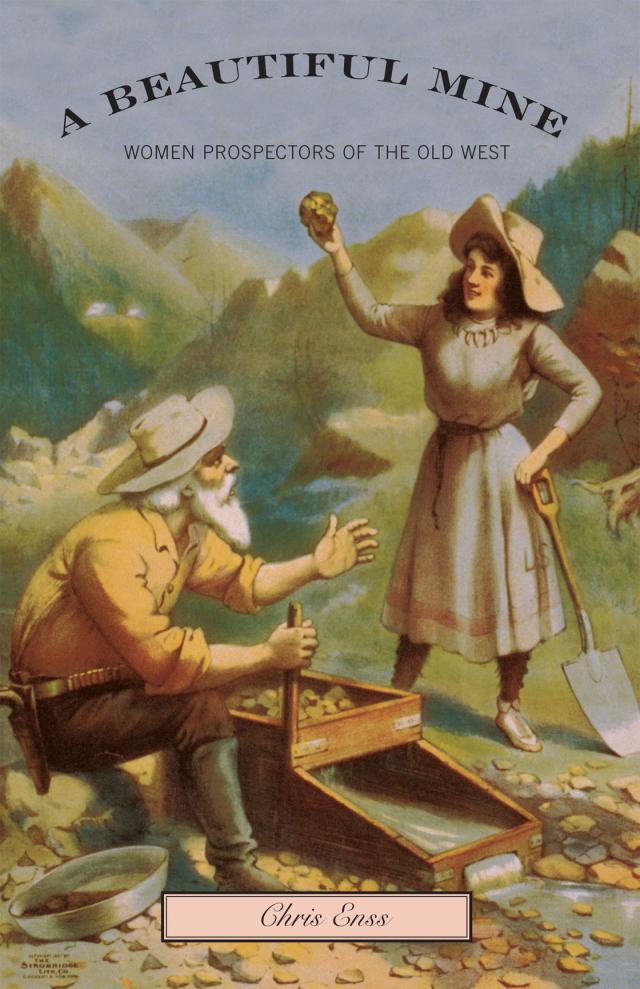


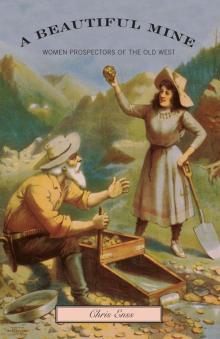
A BEAUTIFUL MINE
WOMEN PROSPECTORS OF THE OLD WEST
Chris Enss
T W O D O T®
GUILFORD, CONNECTICUT
HELENA, MONTANA
AN IMPRINT OF THE GLOBE PEQUOT PRESS
To buy books in quantity for corporate use or incentives, call (800) 962–0973 or e-mail premiums@GlobePequot.com.
A · T W O D O T® · B O O K
Copyright © 2008 by Chris Enss
ALL RIGHTS RESERVED. No part of this book may be reproduced or transmitted in any form by any means, electronic or mechanical, including photocopying and recording, or by any information storage and retrieval system, except as may be expressly permitted in writing from the publisher. Requests for permission should be addressed to The Globe Pequot Press, Attn: Rights and Permissions Department, P.O. Box 480, Guilford CT 06437.
TwoDot is a registered trademark of The Globe Pequot Press.
Text design by Lisa Reneson
Library of Congress Cataloging-in-Publication Data is available.
ISBN 978-0-7627-4372-8
Printed in the United States of America
10 9 8 7 6 5 4 3 2 1
For Patti Ferree, who, like Nellie Cashman, is a smart businesswoman and shows compassion to everyone, including prisoners wrongly accused.
CONTENTS
Acknowledgments
Introduction
Baby Doe Tabor: Queen of the Matchless Mine
Ellen Nay: Founder of the Ellendale Mines
Dame Shirley: Miner on the Feather River
Nellie Cashman: Toughest of the Lady Sourdoughs
Gertrude Peckwith: Prospector at the Golden Empire Mine
Frances Williams: Founder of the Coaldale Mining Company
Lillian Malcolm: Prospector in the Silver Peak Mountains
Josie Pearl: Owner/Operator of the Juanita Mine
Charley Hatfield: Miner at Colorado’s Pikes Peak
Ethel Berry: Miner Bride of the Klondike
Frances Allen Noyes: Miner on Candle Creek
Ferminia Sarras: Nevada’s Copper Mining Queen
Glossary of Mining Terms
Bibliography
ACKNOWLEDGMENTS
I am indebted to the many librarians who help to make history books like these possible. Every biographer of a person of an earlier era owes much to the adequacy of libraries and the skill of the librarians. I am particularly grateful to Joyce M. Cox, the head of reference services at the Nevada State Library and Archives in Carson City. She was gracious, kind, and infinitely patient. She made available files, old letters, scrapbooks, and newspaper articles about many of the women miners who lived and worked in Nevada.
Invaluable in the research efforts were historians Ed Tyson, with the Searls Historical Library in Nevada City, California, and Kathleen Correia at the California State Library History Room. The staff of archivists at the Denver Public Library, the Arizona Historical Society, the Vancouver Public Library, and the Glenbow Museum in Calgary, Alberta, Canada were also generous with their time and assistance.
Special acknowledgments are due to my editor, Erin Turner, for her thoughtful counsel on this and other books I have been blessed to pen, and to my publisher Globe Pequot Press for the opportunities they have given me.
INTRODUCTION
“This morning the gold fever raged so high that I went again to dig with the rest but got very little gold. Came home tired tonight. Still in good spirits.”
—Prospector Lucena Parsons, August 1851
Aparade of prospectors trudged up and down the dusty foot-paths through a rustic mining camp at the base of California’s Sierra Mountain Range near Gold Canyon. The hills around the bustling burg were clothed in Douglas fir trees, and a line of rocky bluffs peered down on the busy Argonauts hurrying about. Some carried pans and picks and shovels; others shook rockers back and forth in a nearby stream. One of the miners diligently sifted through gravel and deposited a handful of gold nuggets into a leather pouch tied tightly to a rope belt around the waist. Perspiration beaded across the prospector’s forehead; the ambitious worker removed a floppy brimmed hat to dab the sweat away, revealing a mass of black hair piled into a bun. The hard-working woman brushed the dust off her calico shirt, tucked her trousers into her boot socks, and returned to her job.
The presence of a woman miner among a sea of male prospectors was rare but hardly a distraction for those in a fever for gold or silver. As the woman passed by the other miners on the way to her tent, the majority of men continued on with their work, offering her little more than a glance. The few who took a moment to contemplate a female in their midst tipped their hats and nodded to her. She smiled politely back at them, focused more on the profitable results of the day’s labor than anything else.
It is estimated that less than five thousand women were a part of the horde that flooded California in the gold rush of 1849. The sin-filled, hell-raising mining camps welcomed with open arms the women who sold their bodies by the hour, respected the wives and daughters who cared for their spouses and fathers, and merely tolerated ladies who worked outside the home in occupations other than prostitution and cooking. The mine field was the least likely place one would think to find a woman in the mid-1800s, but adventurous females possessing the same passion for riches as their male counterparts dared to subject themselves to countless hardships and personal recriminations to locate their own strike.
Not only was mining an unconventional role for women, it was also a hazardous, back-breaking job that involved wading in and out of cold streams and riverbeds picking through sand and gravel, and hoisting mounds of earth to the surface in bucket and wheel excavations. Most women miners were willing to tolerate any hardship to find a fortune and even developed a fondness for the work, while others questioned their decision to venture into the career at all. In 1851, would-be miner Louise Clappe admitted her misgivings about the profession in her journal. “I am sorry I learned the trade,” she wrote, “for I wet my feet, tore my dress, spoilt a pair of new gloves, nearly froze my fingers, got an awful headache, took cold and lost a valuable breastpin, in this my labor of love.”
Lady prospectors like Nellie Cashman and Ellen Nay couldn’t envision life without mining. They trekked over rugged terrain, enduring below-freezing temperatures in the Alaskan wilderness and scorching heat in California’s Death Valley in order to reach outcroppings rumored to hold a treasure of yellow nuggets. Baby Doe Tabor of Colorado inherited her gold mine but sank every dime she had into the diggings, oftentimes sacrificing food and heat in the process.
Ethel Berry lived in a small cabin with dirt floors and flour sack curtains and panned for gold by lamplight before making a wealthy discovery. Miner and author Dame Shirley witnessed the struggle and sometimes the death of ambitious miners and their families, and she translated a prospector’s endeavors into a series of detailed and moving magazine articles that were read by Argonauts from Monterey to Death Valley.
Convinced women could not withstand the difficulties associated with mining, a number of male prospectors agreed to tolerate their company until they gave up and went home. “I’ve seen one or two females digging and panning, but it won’t amount to much,” forty-niner Caleb MacDonald wrote in his journal in early 1850. “They’ll head back to civilization when winter sets in.”
Nevada prospector Josie Pearl was one of the first lady miners to prove that women had staying power. “Gold is devilish stuff and mining is a beautiful way of life. It gets into your blood and you can’t leave it alone, and Lordy! I should know if anyone does! Why, I’ve been worth $100,000 one day and the next day I’ve had nothing and had to go to work for $30 a month in some mining camp. You know, I can do practically anything I make up my mind to do.”
Years of hard working and privation paid off for lady miners like Dr. Frances Williams of Nevada. Her claims yielded more than $2 million in gold ore. Downieville, California, resident Gertrude Peckwith, however, never made a substantial find. Luck didn’t care if the digger was a man or a woman—it favored anyone who worked as hard as fourteen hours a day, seven days a week.
From the moment the first cry of “Gold!” echoed over the plains, women prospectors followed the news west. From Fairbanks, Alaska, to Cripple Creek, Colorado, lady miners labored long and hard to develop digs, pulling from the earth mineral deposits ranging from silver to coal. In the process, lady miners dug out for themselves a unique place in history.
BABY DOE TABOR: QUEEN OF THE MATCHLESS MINE
“The bride is a veritable beauty—blonde, with face and form alike almost ideal in their lovely proportions.”
— Washington Post, March 3, 1883
Ashabby-looking prospector emerged from the dark, weathered entrance of the Matchless Mine in Leadville, Colorado, and straightened his stooped shoulders. He dropped his pickax beside a rusty ore cart and rolled and lit a cigarette. His weary face was set in a scowl as he surveyed the mountains rising precipitately around the well-worked diggings. The smoke from the chimney of a nearby shack rose into the air and drifted towards him. As he watched the smoke swirl and evaporate into a vibrant blue sky, an elderly woman charged out of the building into the cold.
Seventy-five-year-old Baby Doe Tabor was dressed in layers of torn, threadbare garments that dragged along the ground. Her woolen hat sat just above her azure eyes, and she wore a ragged leather boot on one foot and a cluster of rags, bound by a strip of material, on the other. As she made her way toward the miner a slight smile stretched across her hollowed c
Baby Doe’s late husband was Horace Tabor, the Silver King. He made and lost a fortune in mining. At one time the country around her was swarming with workers who pulled millions out of the diggings where she lived. It had been more than thirty years since the mine had yielded anything but dust and rock. Baby Doe stayed on the property because of a deathbed promise she made to Horace. “Never let the Matchless go if I die, Baby. It will make millions again when silver comes back.”
She had implicit faith in her husband’s judgment and in the Matchless, but she was alone in her belief. The only men who would agree to venture into the mine in 1929 were drifters or one-time hopeful prospectors. Baby Doe persuaded them to dig in exchange for shares in the potential find.
The disheveled miner took a look around, gathered up his few belongings, and tramped through the snow out of camp. Baby Doe’s eyes followed the prospector until he disappeared into a grove of pine trees. “Hang on to the Matchless,” she whispered to herself. “Horace told me it would make millions again.”
The poverty and degradation that Baby Doe experienced in her last few years on earth were in direct contrast to the time she spent as the wife of a mining mogul. Born Elizabeth Bonduel McCourt in 1854 to a family of moderate means in Oshkosh, Wisconsin, she maneuvered her way around Colorado’s high society until she met a man who would liberate her from her lackluster background. Her parents were Irish immigrants from County Armagh who had escaped the turmoil in their own country and initially settled in Utica, New York. They had fourteen children, many of whom died in infancy.
Elizabeth’s angelic face, golden locks, and striking blue eyes set her apart from the other children. Elizabeth’s father, a tailor and the owner of a clothing store, doted on her. Oftentimes he brought the girl to work with him and customers raved about her beauty. On more than one occasion businessmen would ask if her father wasn’t afraid “someone would steal her away.” Baby Doe thrived on the attention of the male clientele and learned at a young age how to manipulate them into giving her whatever she asked for.
Elizabeth’s stunning looks continued to improve as she got older. At fifteen she was 5'2" with long, blonde hair, a robust figure, and sun-kissed porcelain skin. Men of all ages hovered around her like frantic bees at a hive. She received several marriage proposals but refused the sincere suitors in favor of pursuing a career on the stage. She was also determined to wed a man of great wealth.
The bold teenager dismissed the admonitions of her brothers and sisters to behave sensibly, abandon the notion of acting, settle down. Although there were a few respected actresses in the late 1870s, for the most part female thespians were considered to be just a slight step above prostitutes. Elizabeth didn’t care what “polite society” thought of her. She was driven by an independent spirit her father had nurtured and her dreams of fame and money.
In December 1876, Elizabeth participated in a skating contest hosted by the Congregational Church. Boldly sporting a skirt that revealed her calves, she gracefully twirled through a routine, exciting the male onlookers and enraging female audience members. At the end of the competition, Elizabeth had captured a first place ribbon and the heart of handsome socialite, Harvey Doe.
Elizabeth was attracted to Harvey for a variety of reasons, not the least of which was the fact that he was heir to a mining dynasty. William Harvey Doe Sr. owned a substantial number of mining claims in Colorado. Doe also owned a lumber business in Oshkosh and had returned with his son to check on his investment at the same time the skating event was being held. Harvey was quite smitten with Elizabeth, and her parents found the young man charming and personable. Mrs. Doe, however, objected to her son spending time with a girl she considered to be a “daring exhibitionist.” Harvey disregarded his mother’s complaints about Elizabeth’s parents’ financial standing and her view of the girl as a “social climber.” He proclaimed his love for Elizabeth and proposed marriage.
Elizabeth’s recollection of Harvey’s proposal was that it was the first such invitation that had “moved her deeply.” According to what she shared with a friend in the 1930s, Harvey was different from the other men in town who sought her affections. “He would come over to play the piano for all my family in the evening, seeming to love us all. He would join in the general fun without trying to monopolize me, like other men.”
On June 27, 1877, Harvey and Elizabeth were married at her parents’ home. Immediately after the ceremony the couple boarded a train bound for Denver, Colorado. Harvey Doe Sr. planned for his son to take over the mining property in nearby Central City.
Once the newlyweds had finished honeymooning they would embark on a life in the gold fields of Pikes Peak. Elizabeth’s father-in-law made arrangements for her and her new husband to reside at a posh hotel called the Teller House. The inn was elegant and decorated with the finest European furniture and rugs.
Elizabeth was enthusiastic about her new home, and the luxurious living conditions were precisely what she had envisioned for herself. She was also enchanted with the activity at the Fourth of July Mine where Harvey worked. The sights and sounds of the miners descending into the diggings and reappearing with chunks of earth that might be gold stirred her desire for outrageous wealth.
At the time Baby believed the opportunity to amass a fortune could only be realized through Harvey’s efforts. Doe Sr. wanted his son to earn his profits and reputation the same way he had: by working in every area of the mining development, from collecting ore to operating the stamp mill. Harvey, however, wasn’t interested in manual labor and preferred anyone else to do the work. Elizabeth was far too ambitious to leave the future of her financial status to a lazy husband and quickly took command of the property and limited income. After moving their belongings out of the expensive hotel where they had been living and into a small cottage, she organized a crew of Cornish miners to work at the Fourth of July Mine.
Some of the prominent town leaders with whom Elizabeth was acquainted advised her to have a shaft dug into the mine before winter fully set in. Joseph Thatcher, president of the First National Bank, and Bill Bush, owner of the Teller House, were two men whose opinion she respected the most. They urged her to do the digging herself if necessary.
Motivated by his wife’s drive, Harvey finally bent to her will and joined in the work. The first shaft the pair sank proved to be unsuccessful; there was no high-grade ore in that section of the mine. Elizabeth was not going to give up. She convinced her husband and their employees to drive a second shaft. Dressed in one of Harvey’s old shirts, a pair of dungarees, and a cap, Elizabeth toiled alongside the men.
In early October 1878, the editor of a mining newspaper in Central City was traveling through the busy area when he noticed the petite young woman lifting timbers and hauling tailings to a nearby pile. An article in the next edition of the paper included news about the woman prospector:
I next reached the Fourth of July lode, a mine which has not been worked for several years, but started up some months ago under the personal supervision of the owner, Mr. W. H. Doe and his wife. The young lady manages one half of the property while her liege lord manages the other. I found both of their separate shafts managing a number of workmen, Mr. Doe at his which is seventy feet, and his wife, who is full of ambition, in her new enterprise, at hers which is sunk sixty feet. This is the first instance where a lady, and such she is, has managed a mining property. The mine is doing very well and produces some rich ore.
Briefly it seemed that Elizabeth and Harvey were striving together for a common goal. The pair diligently worked their claim, leaving the mine only to collect supplies in town. Historians speculate that it was during one of those trips when Elizabeth acquired the name by which she would be more commonly known. Rough, outspoken miners congregated outside saloons and mercantiles, talking with one another and swapping stories about their prospecting adventures. As Elizabeth passed by the men on her way to purchase food and various odds and ends, one man called out, “There goes a beautiful baby.” The handle suited her diminutive frame and delicate features and from that time on she was referred to by most as “Baby Doe.”