Death in Kensington (Augusta Peel 1920s Mysteries Book 8), page 17


‘So you lost your temper with Cedric Langley, just as you had with Lola Parker,’ said Augusta.
Daphne nodded. ‘I wish now I had just left. But I was filled with rage. I was furious. When I took the scarf, I knew it wouldn’t take much to overpower Cedric. Not if he wasn’t expecting it. So I went back to his living room. He was sitting in his chair having a cigarette. He didn’t see me enter the room, he wasn’t expecting me. If he’d seen me, I’m sure he’d have been able to fight me off. But I saw my opportunity to shut him up once and for all. Now he can’t laugh at me anymore.’
‘You did a good job of convincing everyone you left Cedric Langley before he was murdered,’ said Philip. ‘You told us you were at his flat for twenty minutes, is that true?’
‘Yes, it’s true. I attacked him, then I left.’
‘And then you met your mother for a shopping trip?’
Daphne nodded. Augusta found it extraordinary she could have carried on with her plans as normal after committing such an atrocity.
Philip turned to Isabella Chatsworth. ‘How was your daughter when you met her at three o’clock that day?’
Mrs Chatsworth gave a sniff. ‘Very quiet. I knew something was wrong.’
‘And you didn’t want to tell us that?’
‘Of course not! I’d do anything to protect my daughter!’
‘Miss Chatsworth did a good job of throwing everyone off the scent when she sent herself a scarf with a threatening note,’ said Augusta. ‘And for good measure, she sent one to Miss Kingsley, too. She hoped that by doing so, everyone would look elsewhere for the suspect.’
‘It was a clever move,’ said Joyce. ‘And it almost had us all fooled.’
‘But not quite,’ said Philip. ‘It didn’t fool Augusta.’
‘That’s because Miss Chatsworth made quite a show of coming to my shop to show me the scarf and the note,’ said Augusta. ‘She was a little too keen to show it to me.’
‘She tried a little too hard?’
‘Yes. That was the mistake she made.’
Chapter 54
‘So my worst fears are confirmed,’ said Lady Hereford. Augusta sat with her in her suite at the Russell Hotel. ‘There was I trying to defend my great-niece, and she was a murderer all along! You must think me very foolish, Augusta.’
‘No, I don’t think that at all, Lady Hereford. Daphne is a member of your family. No one wants to think a member of their family is capable of something like this.’
‘Yes, I suppose that’s what made me blind to her,’ said Lady Hereford. ‘But when you look at it, my niece, Isabella, is very odd indeed. Perhaps it’s not her fault. Perhaps it’s my sister’s fault. We always called Agnes the black sheep of the family. And maybe that was because of my father. He was odd as well. I loved him very much, of course. But there was word of insanity in his family. Sadly, I wonder if Daphne has inherited that.’ She paused and stared out of the window over Russell Square. ‘There’s probably no use trying to understand why Daphne did this,’ she said. ‘When things like this happen, we want a proper explanation, don’t we, Augusta? And I think sometimes there isn’t a proper explanation for why people do these things. And that can be difficult to accept.’
Augusta nodded. ‘Daphne was driven by envy and shame. They’re natural emotions, but most people are able to live with them. Now and again, you come across a person who can’t cope with their emotions. They can only manage by harming other people. I don’t know what the reasons for that can be. They’re probably many and varied. One thing I have learned is you can never quite predict who might act like that. Whether it’s a stranger, a friend, or even a member of your own family. You can never be completely sure.’
Chapter 55
‘Harriet bought The Mayor of Casterbridge,’ said Fred when Augusta returned to her shop.
‘Excellent! Did you give her a discount?’
‘Yes. I reduced it to two shillings for her.’
‘Well done, Fred.’
‘And I also…’ He trailed off.
‘Also what?’
‘Asked her if she would like to go to the theatre with me.’
‘Oh! And what did she say?’
‘She said yes. So we’re going to see The Gipsy Princess at the Prince of Wales Theatre this weekend.’
‘I’m sure you’ll have a lovely time.’
Philip descended the stairs. ‘I’ve just got off the telephone to Detective Inspector Morris,’ he said. ‘He interviewed Lord and Lady Whittington and established that Mr Briggs was the man who’d loaned them Sunset at the Temple of Artemis. The painting has been seized and returned to Lord Montpelier. Lord and Lady Whittington feel thoroughly embarrassed by the entire affair. They had no idea the painting was stolen. Briggs and several of his men have been arrested. Briggs isn’t talking yet, but some of his men are, and Morris has located some more of the stolen artworks. So it was nice we could help him in the end, wasn’t it?’
Augusta nodded. ‘It’s excellent news. And your family is out of danger now.’
‘They are. I’m going to take a trip to Bognor Regis this weekend and see them.’
She tried not to think of him spending time with his wife. ‘That’s a good idea, Philip. I’m sure they’ll be pleased to see you.’
‘Perhaps.’ He smiled. ‘I hope so, anyway. And there’s more good news. Eddie Miller has been arrested for pestering a young lady at his workplace, Lyon’s factory at Greenford.’
‘Good,’ said Augusta. ‘He seems to make a habit of doing that. I hope he’s locked up for it.’
‘Me too. Have you got any plans for this weekend, Augusta?’
‘No. But I shall keep Lady Hereford company. She’s still very upset about Daphne.’
‘I’m not surprised. Well, if you’d been at a loose end, I would have suggested you come with me down to Bognor. You’ve never met my wife, Audrey, have you?’
‘No. That would be…’
‘Nice?’
‘Of course. I hope you have a good time, Philip.’
The End
Historical Note
In the early twentieth century, fashion models were called mannequins and were often friends and clients of the designer or in-house seamstresses. I chose not to use the word mannequin to describe the models in this book because I associate it too much with the plastic mannequins in clothing stores! With the rise of haute couture in 1920s Paris, the model profession gained importance. Commercial publishing grew quickly at this time and the latest fashions were modelled by society girls and actresses in publications such as Vogue. Women such as Hannah Lee Sherman and Marion Morehouse were early ‘supermodels’, paving the way for many women to pursue modelling as a career. Fashion photography flourished at this time, pioneered by photographers such as Edward Steichen and Adolphe de Meyer.
There were several successful lady fashion designers in the early twentieth century: Lanvin, Elsa Schiaparelli, Sonia Delaunay, Hilda Steward and Gabrielle (Coco) Chanel. The character of Vivien Kingsley was inspired by them and their lives (I’m assuming they were more likeable!). Chanel was establishing herself as a couturiere in Paris in the early 1920s. Her brief affair with the exiled Grand Duke Dmitri Pavlovich of Russia around this time is an inspiration for the storyline between Vivien Kingsley and Nikolai Volkov.
Holland Park Rink in west London was opened by the American Rink Co in December 1909. According to an edition Sporting Life from 24 December 1909, the rink was the ‘largest in the world erected for roller skating’. It had over 75,000 feet of floor space and the skating area was made of the ‘finest Michigan maple’. It was a fashionable venue in Edwardian times, with aristocratic roller skaters being pictured on the pages of Tatler magazine. The rink was also used for other sporting events and shows - including fashion shows. After WWI, the rink appears to have been mainly used for dog shows and boxing matches. The venue declined in popularity during the 1920s and closed in 1928. It was used as a garage for a while before being demolished to make way for a hotel in 1973 - today it’s the Hilton London Kensington.
Kensington’s large, elegant townhouses have long made it a desirable area for the wealthy. Kensington Palace was the birthplace and childhood home of Queen Victoria and continues to be a residence for members of the royal family. Kensington is also renowned for its museums, including the Victoria and Albert Museum, the Natural History Museum, and the Science Museum.
Holland House was built in 1605 by the diplomat and politician, Sir Walter Cope. At that time, its Kensington location was rural and the entire estate was five hundred acres in size. King James I and King William III were visitors. Over the centuries, much of the land was sold off for development. London’s rapid growth during this time must have made the land very valuable.
During the nineteenth century, famous visitors to the house included Lord Byron, Charles Dickens, Benjamin Disraeli and Sir Walter Scott. The last major event at the house was a debutante ball held in 1939 for Rosalind Cubitt, the mother of Queen Camilla. The ball was attended by George VI and Queen Elizabeth. The following year, the house was destroyed by incendiary bombs during the Blitz in WWII.
The ruined building was preserved and sold to the London County Council in 1952. The remaining land became Holland Park, which is now a popular public space with a cafe, restaurant, play areas and an open-air theatre. The park lends its name to the Holland Park area of Kensington.
Spitalfields, in east London, became a haven for French Huguenots fleeing religious persecution in the seventeenth century. The refugees brought silk weaving skills with them and transformed the area into a hub of the silk industry. The Spitalfields silk weavers were renowned for their intricate designs and high-quality fabrics, which became highly sought after in London’s fashion scene. In the nineteenth century, the industry faced challenges, such as competition from imported silks and industrialisation. By the late nineteenth century, buildings had fallen into disrepair and the area was blighted by poverty. Many of the weavers’ houses were demolished as the area was redeveloped during the twentieth century. In recent years, the area has gentrified and many of the remaining weavers’ houses have been beautifully restored. There are conservation efforts underway to preserve the rest.
Sunset at the Temple of Artemis is a fictional painting. And the painter R C Riverhouse is fictional too.
The Temple of Artemis - or the Temple of Diana - was one of the Seven Wonders of the Ancient World. Located in the ancient city of Ephesus (in present-day Turkey), it was dedicated to the goddess Artemis. The temple was renowned for its grandeur and architectural beauty and underwent several reconstructions because of destruction by natural disasters and arson. An expedition sponsored by the British Museum rediscovered the site of the temple in 1869. Fragments of the temple are today displayed at the museum and a few fragments remain at the original site.
The Dockland Murder
An Augusta Peel Mystery Book 9
In the bustling heart of London's docklands, a prominent shipping magnate is found dead. When Scotland Yard calls on Augusta Peel, she realises she has a puzzling connection to the case.
As she delves deeper into the labyrinthine alleys and shadowy warehouses of the docks, Augusta must use her skills and courage to untangle the mystery before the killer strikes again.
Find out more here: mybook.to/dockland-murder
Also by Emily Organ
Penny Green Series:
Limelight
The Rookery
The Maid’s Secret
The Inventor
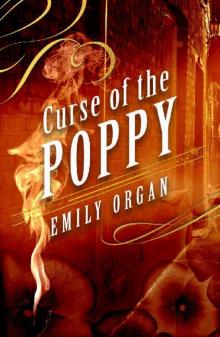
Curse of the Poppy
The Bermondsey Poisoner
An Unwelcome Guest
Death at the Workhouse
The Gang of St Bride’s
Murder in Ratcliffe
The Egyptian Mystery
The Camden Spiritualist
Churchill & Pemberley Series:
Tragedy at Piddleton Hotel
Murder in Cold Mud
Puzzle in Poppleford Wood
Trouble in the Churchyard
Wheels of Peril
The Poisoned Peer
Fiasco at the Jam Factory
Disaster at the Christmas Dinner
Christmas Calamity at the Vicarage (novella)
Writing as Martha Bond
Lottie Sprigg Travels Mystery Series:
Murder in Venice
Murder in Paris
Murder in Cairo
Murder in Monaco
Murder in Vienna
Lottie Sprigg Country House Mystery Series:
Murder in the Library
Murder in the Grotto
Murder in the Maze
Murder in the Bay
Thank you
Thank you for reading this Augusta Peel mystery, I really hope you enjoyed it!
Would you like to know when I release new books? Here are some ways to stay updated:
Like my Facebook page: facebook.com/emilyorganwriter
Follow me on Goodreads: goodreads.com/emily_organ
Follow me on BookBub: bookbub.com/authors/emily-organ
View my other books here: emilyorgan.com
And if you have a moment, I would be very grateful if you would leave a quick review online. Honest reviews of my books help other readers discover them too!
Emily Organ, Death in Kensington (Augusta Peel 1920s Mysteries Book 8)