Time Risk: A Time Travel Novel, page 14
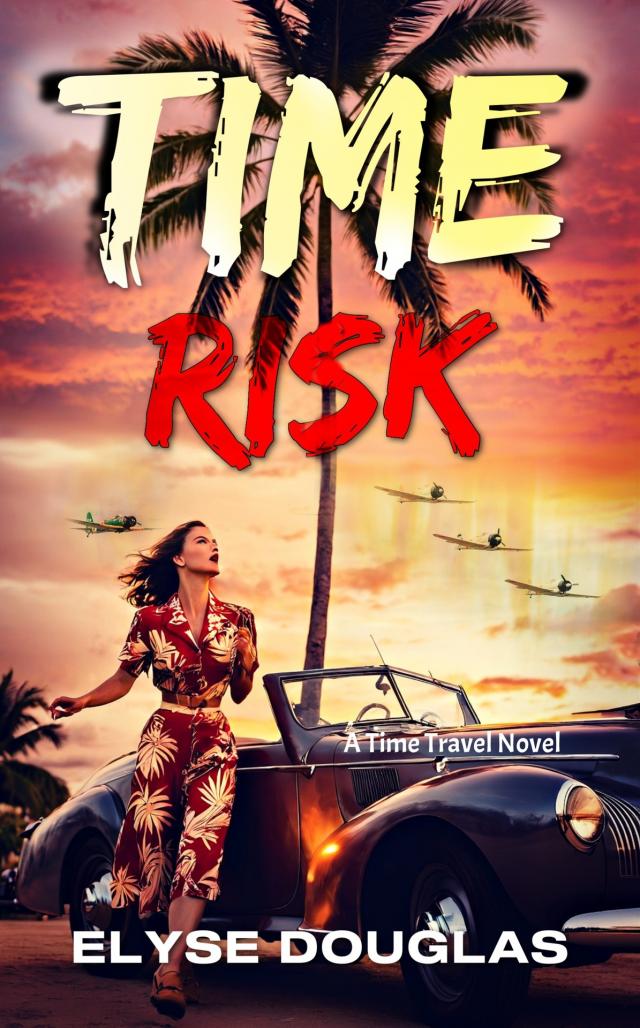


Rachel lifted her eyes from the newspaper. “No, Lorraine. I haven’t been so fortunate.”
“But you will find the right boy someday, Rachel. I’m just so sure of it. You’re so very attractive, and there are so many handsome officers in Hawaii. I know you’ll have a good time while you’re here.”
Rachel almost laughed at Lorraine’s words ‘the right boy,’ but she didn’t. She figured it was one of those 1940s expressions.
Rachel slowly got to her feet. “Thank you, Lorraine.”
Lorraine’s disappointment showed. “You don’t have to leave so soon, do you?”
“Yes, I do. I lost track of time, and I have to meet some friends. Thank you for this. It was so good to meet you and Andrew. Sorry I missed your husband.”
“Well, then let me call you a taxi. They usually come pretty fast because we’re so close to Hickam.”
While Lorraine made the call, Rachel returned to the front door and stood next to her suitcase, head down, eyes closed. From her research, she knew that the housing complex where Lorraine lived would not be bombed. Most likely, Lorraine would watch in horror as the Japanese airplanes flew over on Sunday morning, dropping their bombs, but she and Andrew would not be harmed. After the attack, they’d be evacuated, along with other women and children, to the University of Hawaii.
Despite the questions about destiny, and the obstacles that were surely to come, Rachel set her mind on what she’d been hired to do: she would try her best to save David’s life.
CHAPTER 27
Lieutenant Commander T. J. Rowe sat behind his office desk at the Pearl Harbor Naval Base, where he was stationed at the 14th Naval District Intelligence Office, a key location for naval intelligence operations in the Pacific. His large wooden desk held a typewriter, a secure telephone, and a radio receiver for monitoring transmissions.
The desk was cluttered with documents, maps, and codebooks. Filing cabinets along the walls were filled with intelligence reports and intercepted communications. A map of the Pacific dominated one wall, marked with pins and notes indicating Japanese fleet movements and other key intelligence.
The Honolulu Star-Bulletin was spread out on his desk. He stared down at Greg Stone’s photo, and he was meditative and tense. Over six feet tall, athletic and muscular, Rowe had probing blue eyes, a thin, tight mouth that seldom smiled, and brown short hair beginning to show a few streaks of gray at the temples, which he despised. He’d aged since his wife Emily’s death, and he felt it. He felt ten years older, despite his fit body and sharp mind.
Detective Sergeant Joe Kawai of the Honolulu Police Department would be arriving at any minute, and Rowe was uncharacteristically anxious about the meeting.
Rowe despised Stone and his articles, viewing them as self-serving and dangerous, but his death had been a shock. Stone had exposed too many secrets and accused the military of incompetence, arguing that the Hawaiian Islands were vulnerable to foreign attack and that the military was ignoring its own intelligence.
Although Stone’s articles held some truths, they were not helpful or constructive. Instead, they stirred public fear and distrust, undermining the military’s efforts and potentially aiding enemy spies.
Rowe’s superiors wanted Stone discreetly threatened and driven off the island. To accomplish this, Rowe had hired two local men to rough him up—not to kill him—but to scare him, warn him, and demand he leave Hawaii for the mainland. The stakes were too high, and spies were everywhere: Japanese nationals and Japanese Americans, Japanese businessmen, diplomatic personnel, tourists, and even locals who might sympathize with Japan or be coerced into providing information. This included employees in strategic areas like docks, military installations, and communications.
Additionally, fishing vessels and merchant ships operating around the Hawaiian Islands were likely being used for espionage, gathering information on ship movements and harbor defenses. Paranoia was running rampant.
So, was Stone’s death an accident or a murder? Rowe’s superior officers wanted answers. And they wanted them fast. They had grilled him for over an hour, demanding to know if one of his hired goons was responsible for Stone’s death. Lieutenant Commander Rowe had to say, “We’re looking into it, but, at this time, I just don’t know.”
And who was the woman who had so utterly beaten those two experienced fighters in Wahiawa, sending them to the hospital? Her name was Rachel Hunt. She’d had dinner with Stone the night before, so several witnesses had testified, and then she had vanished. There wasn’t any photograph of her, and none seemed to exist. Why couldn’t his department locate her? Something didn’t smell right, and Rowe was running out of time.
Thomas James Rowe, known as T. J. to his friends and colleagues, was born in the historic port city of Charleston, South Carolina. Growing up in a family with a long maritime tradition, he spent his childhood exploring Charleston harbor, developing a love for the sea. His father, a retired Navy captain, and his mother, a history teacher, instilled in him a sense of duty, commitment, and patriotism.
After graduating from high school, T. J. Rowe received an appointment to the United States Naval Academy in Annapolis, Maryland. At the Naval Academy, he majored in engineering and minored in foreign languages, particularly Japanese and German. He graduated in the top ten percent of his class in 1927, earning his commission as an ensign.
Ensign Rowe’s first assignment was aboard the USS Nevada, where he served as a junior officer. His proficiency in languages and cryptography soon caught the attention of his superiors, leading to his transfer to the Office of Naval Intelligence (ONI) in Washington, D.C., in 1930. There, he underwent specialized training in intelligence and cryptography.
Over the next decade, Rowe’s skills in intelligence gathering and cryptographic analysis earned him rapid promotions. By 1937, he had reached the rank of lieutenant commander and was known for his analytical acumen and strategic thinking. His work included decoding, intercepting communications from foreign spies, and developing intelligence reports critical to naval operations.
In early 1941, recognizing the growing threat in the Pacific, the Navy assigned Lieutenant Commander Rowe to Pearl Harbor, Oahu, as part of the Naval Intelligence unit. His primary responsibilities included overseeing intelligence operations, monitoring Japanese naval movements, and improving local cryptographic capabilities.
He arrived in Hawaii in March 1941, alone. His wife of only three years had been killed in a skiing accident in 1938, while on vacation in Colorado with her family. T. J. was on his way to join them when he’d heard the news. He’d never truly recovered, and since that time, he’d thrown himself into his work with a vengeance. His work was his life. The country and its protection were his family.
Rowe quickly adapted to his new role in Oahu, building a network of informants and working closely with Army intelligence counterparts, as tensions in the Pacific were heating up. He seldom took the time to enjoy the beauty of the islands, only occasionally relaxing on Waikiki Beach and exploring the local culture. Not a religious man, especially after his wife’s death, he was also known to work on Sundays.
A knock on his door seized Rowe’s attention. “Come in.”
An ensign opened the door and Detective Sergeant Kawai entered.
Rowe stood, leaving his desk to meet Kawai with an outstretched hand. “Hello, Detective Sergeant Kawai. Thank you for coming.”
The two men shook hands and Kawai said, “Lieutenant Commander Rowe, thanks for the invitation.”
Rowe gestured to a chair. “Please, have a seat. In the past, I have worked with some of your colleagues, so I’m pleased to meet you at last.”
“I hope our department can help,” Kawai said, easing down in a wooden chair.
Lieutenant Commander Rowe returned to his desk chair and sat, looking at Detective Sergeant Kawai with patient expectation. “I hope you can, too. I don’t like the timing of Greg Stone’s death, and I don’t like the circumstances surrounding it. I’m anxious to hear what your department has learned.”
CHAPTER 28
Detective Sergeant Kawai wore a linen suit, a crisp white shirt, and a blue striped tie, knotted tight to his thick neck. Kawai was a compactly built man in his early 40s, standing at 5’7”, with a round, tanned, handsome face, and shrewd, piercing eyes that missed nothing. His short black hair, always neatly combed to the side with a precise part, hinted at his disciplined nature, and his overall aura conveyed a silent message: “I’ve seen the world and its underbelly, so don’t even try to surprise me.”
“Can I get you anything, Detective Sergeant? Coffee or tea?”
“No, thank you.”
“Alright, let’s get straight to business. Tell me what you can about Greg Stone’s death. What was the cause of death? What time did it happen?”
Kawai readjusted himself in the chair. “Mr. Stone had reportedly been drinking heavily, and his pockets were empty and his wallet, found beside him, was also empty. According to the medical examiner, Mr. Stone was killed by blunt force trauma to the back right side of his head. The weapon could have been a metal pipe, a wooden club, or even the butt of a gun. Given that it happened around 11:30 p.m. in the back parking lot, it suggests the possibility of a robbery gone wrong, a targeted attack due to his investigative work as a reporter made to look like a robbery, or an altercation with someone he was meeting secretly who also wanted the attack to appear as a robbery. The time and location don’t necessarily indicate premeditation, but the alleged murder took place in darkness and in the seclusion of the parking lot.”
“Who found the body?” Rowe asked.
“A sailor and his girlfriend, looking for a place to do what sailors and their girlfriends do in dimly lighted back parking lots at night.”
“Any leads or clues?”
“We’ve cordoned off the area and are performing the usual. Forensics are collecting physical evidence, including blood, hair, fibers, and they’re searching for the potential murder weapon. And we are continuing to interview patrons who were at the Tavern, who may have seen Mr. Stone with the person or persons who killed him. We have four people of interest that we are particularly interested in.”
Rowe leaned forward, his expression eager. “And what about the woman who had been seen with him earlier? Her name is Rachel Hunt. We found her name written in the Edgewater Hotel register. She left a fake address in Cleveland that didn’t check out.”
“Yes,” Kawai said. “One of the hotel staff mentioned seeing her leave the hotel early Thursday morning, but she hasn’t been seen since. We’re expanding our search to the entire island and coordinating with other law enforcement.”
Rowe folded his hands. “You mentioned there are four people in particular that you’re interested in.”
Kawai pulled a leather notepad and pencil from his inside pocket, opened it, and read his notes. “Yes, four men. I have interviewed them. Two are dock workers at Honolulu Harbor. Their alibis checked out. They said Stone wanted in on their poker game that was going on in the back room of the Tavern. They said he pulled out a wad of bills, and they let him in. They said he was irritable and wanted a double scotch. A waitress brought him a Scotch, and he gave her five dollars, and said keep the change. The Scotch cost fifty cents. Two of the other players were sailors from the USS Arizona. I spoke to them before I came here, and they confirmed everything the two dock workers said. One sailor stated that,” and then Detective Sergeant Kawai consulted his notes. “‘… Stone won two hands and raked in over fifty dollars. Then he lost two hands at over fifty dollars, and he quit the game.’ The sailor said, ‘Stone left, and none of the four knew where he went.’ They all said he was intoxicated, but still alert and good at playing cards. They said, when he left them, he still had his wad of money with him. They watched him shove it into his pocket. One of the sailors said, ‘He was stupid for showing he had that wad of dough on him. He was just asking to get rolled.’ All four men stayed playing poker until after twelve.”
Rowe nodded, then asked, “So Stone left the game on his own?”
“Yes.”
“Did he tell any of the four men where he was going?”
“He said he was going to the bar.”
Detective Sergeant Kawai flipped through his notebook and stopped. “There is one thing that I found interesting. While the five of them were playing and talking, Stone learned that the two sailors were from the USS Arizona.” Again, Kawai referred to his notes. “Stone stared at the two sailors with bloodshot eyes, from over the top of his cards. Then he said to them, ‘Get off your ship early Sunday morning, by seven. Hell… don’t go back to your ship at all on Saturday night. Go AWAL if you have to. Listen to me, boys, and don’t go back to your ship. I’m a reporter, and I have a good source. The best source. A source no one would believe… not even me. But don’t be on the Arizona on Sunday morning.’”
Kawai glanced up and met Rowe’s narrowed eyes.
“Is there more, Detective Sergeant?” Rowe asked.
Kawai wiped away a perspiration mustache with his finger, lowered his eyes to the notebook, and continued. “According to both sailors, just before Stone tossed in his last losing hand, he pushed himself up on shaky legs, pointed a finger at them and said, ‘The Japs are coming Sunday morning, boys, and they’re going to attack Pearl Harbor. Don’t be there. Tell all your pals and don’t be on your ships.’”
After a long, chilly silence, Lieutenant Commander Rowe picked up a pencil and twirled it in his fingers. They heard planes flying overhead from Hickam Field, and there was a whistle blast from a ship somewhere out in the harbor.
“Words of a drunken man?” Detective Sergeant Kawai asked.
Rowe put down the pencil and reached for his silver cigarette case. He popped it open and offered a cigarette to Kawai, who held up a hand in refusal.
After lighting his smoke, Rowe pushed back from his desk and stared out his windows toward the Pearl Harbor fleet. “As I’m sure you know, Detective Sergeant Greg Stone had been a vocal critic of Naval Intelligence, publishing scathing articles that questioned our operations and decisions. Sometimes he went too far when he included top secret information in his articles. He and his paper were warned on several occasions. Naturally, we kept an eye on him. Last night, as sometimes these things go, the security officer who was supposed to be tailing Stone came down with some kind of flu, and he was unable to find a replacement.”
Rowe laughed darkly. “Isn’t that how wars are lost? A guy with the flu goes home to bed, and there’s nobody else to mind the store?”
Kawai was uncertain if he should laugh, so he didn’t. He put his eyes on his notebook.
“So, here we are,” Rowe said, pausing before adding, “Do you have anything on Rachel Hunt?”
CHAPTER 29
Detective Sergeant Kawai sat up, while Lieutenant Commander Rowe waited, running a hand along his jawline.
Kawai said, “We know little about Rachel Hunt, Lieutenant Commander. We don’t know where she comes from, what her occupation is, or when or how she arrived in Hawaii. We know she had dinner with Greg Stone last night and that the reporter Victoria Gilbert joined the couple for a short time.”
“We spoke to Miss Gilbert this morning, and she stated that the three of them made small talk, and that Miss Hunt shared nothing personal. Miss Gilbert stated that she knows nothing about what happened to Greg Stone after she returned to her table, and she has a solid alibi for where she was for the rest of the night, which I don’t need to mention here.”
“There were other witnesses at the restaurant who noticed the couple, but…” Kawai lifted a hand and let it fall. “Now Miss Hunt has vanished. We are checking every hotel, bungalow rental, and boarding house. We also have a police artist sketching her, based on descriptions from the waiter and other serving staff who saw Rachel at the Halekulani Hotel, but they have conflicting recollections. The Edgewater Hotel desk clerk has not been helpful either. She doesn’t seem to remember anything or anyone, and it is obvious that even if she did recall anything, she’s the skittish type and wouldn’t talk.”
Rowe considered whether to share his information about Rachel and decided he should. “We are also looking into Miss Hunt’s background. So far, we’ve come up empty. No solid leads. We were tailing her for a time, but she lost us. Another indication she has something to hide. She has no clear history, and no obvious ties to any local or mainland organizations. It’s as if she dropped in from thin air, and we both know that everybody comes from someplace, unless they’re hiding something—or many things.”
Rowe took a long drag on his cigarette and blew a cloud of smoke up toward the slowly rotating ceiling fan. “I’m going to level with you, Detective Sergeant, and what I’m going to say will not leave this room. It will be said in complete confidence. You will not write it down or share it with anyone.”
“Understood,” Kawai said, closing his notepad.
Rowe took another puff on his cigarette, then crushed it out in an amber glass ashtray. “We have been tailing Stone for some time, for national security reasons. On Tuesday, he went north of the island to examine the defenses there, and to talk to people who he shouldn’t have been talking to. He had been warned several times not to talk to various people that we have confirmed as Japanese spies and local sympathizers. Thursday morning, he caught a bus, and was returning to Honolulu, so the bus driver recalled. On that bus, he met Rachel Hunt. We don’t know if this was the first time they had met or not. They sat together. I’d hired two local men to follow Stone, so they followed the bus in their car. Also following was one of my men. Stone left the bus at Wahiawa, probably to get something to drink. The two hired men approached Stone and pulled him aside into an alley. They were instructed to only threaten him; maybe rough him up a bit. No more than that. Just a bloody nose.”