

Lost Coast Literary, page 1


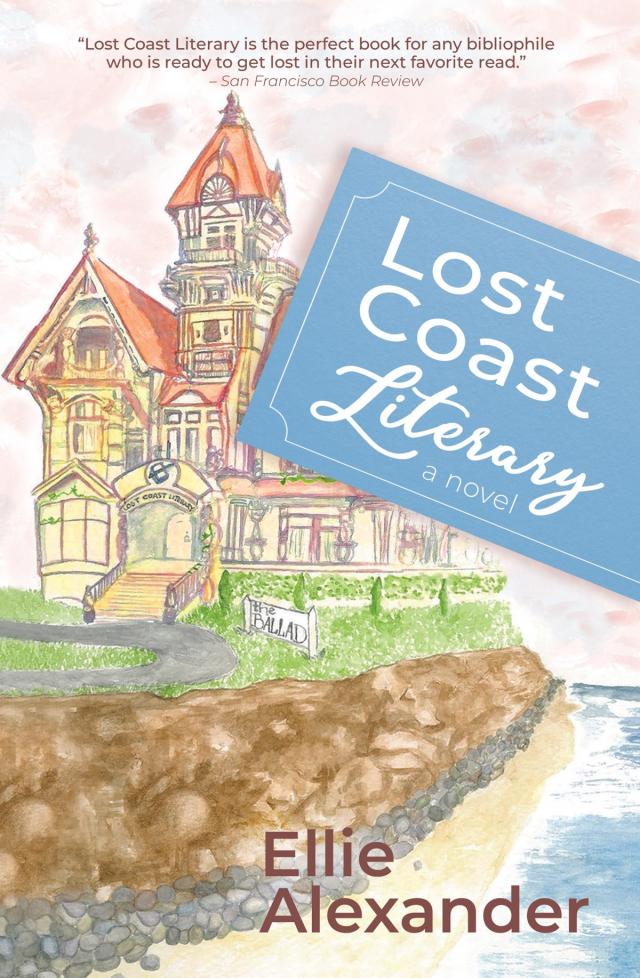
Praise for Lost Coast Literary
“You will cherish this story for its lush description, engaging characters, gasp-worthy twists, and touch of magic. Lost Coast Literary is a heartwarming reminder of life’s mystery and a must-read for book lovers.”
Angela M. Sanders, author of the Witch Way Librarian Mysteries
“I absolutely could not put this book down. The descriptions of everything from the bookish decor of "The Ballad” to the wonderful people of the town and their many activities had my nose stuck in this book from cover to cover…Lost Coast Literary is the perfect book for any bibliophile who is ready to get lost in their next favorite read.”
Kristi Elizabeth, San Francisco Book Review
“Ellie Alexander is a book lover’s book lover, and her passion shines out through every page of her latest novel, Lost Coast Literary.”
Jennifer deBie, Rosie’s Book Review
“It’s a grown-up fairy tale, with a touch of classic iterate vibe, like Jane Eyre or The Secret Garden, only lighter…it will wrap you up in a world that feels both comfortably familiar and completely original.”
K.B. Wilson, General Fiction Reviews
Lost Coast Literary
Ellie Alexander
Published by
Sweet Lemon Press LLC
LOST COAST LITERARY
Copyright © 2022 by Katherine Dyer-Seeley
All rights reserved.
* * *
No part of this book may be reproduced in any form or by any electronic or mechanical means, including information storage and retrieval systems, without written permission from the author, except for the use of brief quotations in a book review. For information, address Sweet Lemon Press, LLC, PO Box 790 Ashland, OR 97520.
* * *
Library of Congress Control Number: 2022900070
* * *
This is a work of fiction. All of the characters, organizations, and events portrayed in this novel are either products of the author’s imagination or are used fictitiously.
* * *
Cover illustration by Jennifer Anne Nelson
Cover design by Gordy Seeley
For every reader who has found themselves transported to magical places through the pages of a book and in the process discovered who they were always meant to be.
Contents
Chapter 1
Chapter 2
Chapter 3
Chapter 4
Chapter 5
Chapter 6
Chapter 7
Chapter 8
Chapter 9
Chapter 10
Chapter 11
Chapter 12
Chapter 13
Chapter 14
Chapter 15
Chapter 16
Chapter 17
Chapter 18
Chapter 19
Chapter 20
Chapter 21
Chapter 22
Chapter 23
Chapter 24
Chapter 25
Chapter 26
Chapter 27
Chapter 28
Chapter 29
Chapter 30
Chapter 31
Chapter 32
Epilogue
Acknowledgments
Discussion Questions
About the Author
Also by Ellie Alexander
Chapter One
Jane Eyre? Jane Austen? Eyre or Austen? I picked up the matte cerulean phone case with a slate gray silhouette of Jane Eyre on the front, her bustled skirts and narrowed waist filling the soft leather cover, along with what was arguably one of the most recognized quotes from Brontë’s classic: There is no happiness like that of being loved by your fellow-creatures. You can’t go wrong with Brontë but then again, my Emma phone case was more traditionally bookish with its vintage watercolor design in romantic pink. Blushing rose vines, pastel butterflies, and pretty ribbons in a filigree pattern gave the Emma phone case the upper hand. Plus today, I was totally vibing on Austen. It had to be Austen.
That’s the one. Don’t overthink it.
I grabbed the case from the incurably tippy IKEA bookshelves my roommates and I had assembled while drinking not one, but three bottles of cheap Layer Cake red wine. Because twenty-four pages of instructions translated from Swedish to build a basic bookshelf called for more than one bottle of wine. As I removed the case from the top shelf, the entire rickety structure came crashing down. My most beloved possessions, hardcover collections of Sir Arthur Conan Doyle, Anne of Green Gables, and both Brontë sisters thudded to the floor.
Damn. I don’t have time for this.
I can’t be late. Not today.
I shoved the phone case, now with my phone in it, into my bag, ignoring the multiple missed calls and voicemails from my estranged uncle. At barely four hundred square feet my apartment couldn’t accommodate so much as a dishtowel out of place, but the butchered shelves would have to wait.
BROKE THE SHELVES. WILL FIX LATER. SORRY.
I shot off a text to my roommates, grabbed a copy of the most recent book I’d been working on, a stack of reader’s reports, and two prick-your-finger sharp purple pencils, and stepped over the carnage.
You can deal with that later, I reminded myself as I checked my appearance in the hallway mirror one last time. A single strand of my penny-colored hair had escaped from my ponytail. I tucked it in place and readjusted my olive glasses. I’d found the funky style at the California Antiquarian Book Fair. They were the perfect talisman for today.
I locked the door and hurried to the elevator. Fortunately, in the five months that I’d been in New York the one thing I had gotten used to was the subway system. I raced to catch my train, ending up breathless and starting to sweat as I ducked into the cramped compartment just before the doors closed. I rushed to grab the last empty seat on a hard, red plastic bench. A trickle of sweat dripped down the base of my neck. Great. The last thing I needed was a sweat-stained blouse.
The sweltering humidity and sulfur aroma of warm eggs made my nerves even more frayed. I glanced around trying to trace the source of the eggy smell. It didn’t take long to discover that the woman seated next to me was making quick work of an egg salad sandwich. People who eat anything involving hard-boiled eggs on the subway should not be trusted. I inched away, sucked in a breath, and rummaged through my bag for a tissue to dab my neck.
The woman finished her smelly sandwich. She wadded plastic wrap into a ball and turned toward me. “You look nervous, hon.”
“Yeah?” I chomped on my bottom lip. A hint of waxy coconut lingered on my tongue. There went my lip-gloss. “I have a big meeting at work.”
“Ah. I see.” She tossed the plastic wrap in her oversized bag and pulled out a carton of knock-off Oreos. “Want one?”
I shook my head.
She ripped the package open and devoured a cookie. “You have the greenest eyes I’ve ever seen and you look very professional. I’m sure you’ll do great.”
“Thanks.” I bit my lip harder, raking my lip-gloss with my teeth. Why did strangers feel the need to chat? Small talk had never been my forte, as the honorable Miss Austen would say. With one exception. Books. If anyone brought up the topic of books or asked me my favorite read, I gushed like a thirteen-year-old girl. It was a serious problem. Ironically, my tendency to blabber over my latest book crush failed me in the dating department. The mere mention of Margaret Atwood or Amy Tan always sent dates scrambling for an excuse to make a quick exit.
“Where do you work?” she asked in a raspy voice. Given the stink of cigarettes lingering in the crowded compartment, I guessed my seat mate’s throaty quality was due to years of smoking. No one in Silicon Valley smoked. Well, that’s not true. No one admitted to it. That was one of the things I appreciated most about the city. Not the smoking, but the fact that no one seemed to care about what other people thought. And the smell. New York had a fragrance of stale cigarettes, street-side pretzels, and gritty hope. Silicon Valley smelled like the desperation of start-ups clinging to the last of their venture capital, smartcars, and aquamarine swimming pools that went unused.
“Publishing.” I pressed my hands on my tailored black slacks, trying to force my leg to stop shaking. “I’m pitching a novel that I totally fell in love with at our sales meeting this morning. I’m going to absolutely die if I don’t get to acquire this manuscript.”
“Speaking of dying, I thought publishing was dead. Amazon and all that.” She glanced to an advertisement for Amazon Prime above the handrails.
“Hopefully not. Otherwise I picked the wrong time to change careers.” I scooted to my left to make room for a family moving toward the exit doors. I didn’t bother to provide the woman seated next to me with a dissertation as to why publishing was thriving.
It was hard to imagine that a little over five months ago, I’d been living in Silicon Valley working at a soulless startup as a technical writer. The money was good, but editing pages and pages of mind-numbing, tech-heavy language and processing it into digestible, user-friendly content did nothing for my bookish tendencies. I’d minored in creative writing in college, but had followed Dad’s advice to get a steady well-paying job. Look how well that had turned out.
No salary was worth the utter burnout I felt at twenty-nine. That’s why one day last spring after eight hours in a windowless conference room hearing phrases like “let’s circle back on that” or “I don’t have the bandwidth” uttered at least a dozen times, I did something rash. Something slightly out of ch aracter. Something I had dreamt about, but never actually imagined following through on. I cashed in my savings and signed up for the Columbia Publishing Program. It wasn’t cheap. The six-week intensive and move to New York had basically depleted my bank account, but I didn’t care.
Honestly, even if I hadn’t landed my dream job of being an assistant editor, I would have been fine working in the mailroom. Just the thought of being surrounded by books and people who love them made me smile. I still couldn’t believe I was here. I, Emily Bryant, was in New York and about to pitch my first book at a major publishing house. Someone pinch me, please.
I was nervous about the meeting, but I didn’t have a shred of doubt that I’d made the right choice. The only thing that made me worry was the fact that I was almost a decade older than most of my peers. My classmates at Columbia had gone straight from undergrad through the program and were launching their publishing careers in their early twenties. I hadn’t envisioned living in a minuscule apartment with two roommates at almost thirty or basically starting over, but if I had stayed in Silicon Valley, I never could have lived with myself.
Don’t go there, Emily. I reached for my bag and pulled out my worn copy of Bridge to Terabithia and one of my favorite purple pencils. I felt a familiar calm return to my body as I crossed out a line and made a new note in the margin. Editing centered me. I had re-edited this copy many times, but it didn’t stop me from trying to find new ways to manipulate the story.
“You can’t do that.” The egg salad woman peered over my shoulder, invading my personal space. She looked as if she were ready to swipe the pencil out of my hand. “You can’t write in a book.”
“Yes, I can. It’s my book.” What I didn’t tell her was that I had been re-writing book endings for as long as I could remember. It had become a hobby of sorts, or depending on interpretation, an obsession. Mom used to say that there was no reason to settle for an ending you didn’t like. After she died, creating new endings had become my last point of connection with her. She would have agreed that there was no reason for Leslie Burke to die in Bridge to Terabithia. Instead of drowning in the creek, she could have swum to safety or been rescued. I refused to accept that books, even the most revered literary works, couldn’t be altered and improved upon.
My phone buzzed. I inched away from the woman, who swapped her crumbly cookies for a pack of Marlboro lights. She clutched them tight as the train rumbled toward the next stop.
I glanced at my screen. The text was from the same number I’d been ignoring for a week. Last year, I’d made the mistake of not only following my uncle’s Instagram account, but giving him my cell.
HI EMILY. IT’S UNCLE DANNY. SORRY TO DO THIS IN TEXT. HAVE LEFT DOZENS OF MESSAGES BUT HAVEN’T HEARD BACK. I HAVE SOME BAD NEWS. GRANDMA HAS PASSED. NEED YOU AND YOUR DAD TO COME TO CASCATA ASAP. SHE LEFT YOU THE BALLAD.
“What?” I gasped out loud. My neck prickled cold with damp sweat. My grandmother was dead, and she had left me a poem, a stanza?
The train lurched as it screeched to a hard stop. Another text bubble appeared on my screen.
THERE ARE SOME STIPULATIONS IN HER WILL—INCLUDING YOU COMING TO CASCATA IN ORDER TO INHERIT THE BALLAD.
That’s right. The Ballad. I hadn’t heard that name for years. Her estate, like every grand house, had its own unique identity.
“Hope they don’t see you destroying books in your meeting,” cigarette woman said in a warning tone, as she tucked a cigarette between her teeth and hurried off the train.
I stared at the gray text bubble on my screen. Gertrude was dead? And, even more surprising, she had left something—anything—to me?
Why?
The trickle of sweat transformed into a pool as if someone had just pushed me into the deep end. It was all too much. Gertrude. The heat. Humidity. Too many bodies packed together. The lingering reek of egg salad. A kid two seats away blaring K-pop on his phone.
I wanted off the train.
I needed off the train—now.
My stop was still five stations away.
Another text dinged.
HAVE TRIED TEXTING AND CALLING YOUR DAD TOO, BUT NO RESPONSE. KNOW THIS IS TERRIBLE TO TELL YOU IN TEXT BUT WE NEED A FACE-TO-FACE. CAN YOU TALK TO YOUR DAD?
Yeah, like that would happen. I breathed in short bursts, sucking in air like it was about to run out.
I stared at Danny’s text, trying to stop my fingers from trembling.
Dad hadn’t spoken to Uncle Danny, Gertrude, or anyone else on his side of the family since I was eight years old. Neither had I. My memories of leaving Cascata were fuzzy at best.
The last time I’d been in Cascata was over twenty years ago. To this day, even a mention of Humboldt Bay or the beach made the veins in Dad’s forehead bulge to the point of nearly bursting.
The origin of my family’s falling-out had always been a mystery. A mystery that only revealed itself in snippets of untrustworthy memories. My therapist had once tried to reassure me that my spotty memories of my early childhood were normal. “A coping mechanism,” she had called it. My brain’s way of protecting me from the trauma of grief. Of course, in the same sentence, she had shared her concerns about my tendency to blur fiction and reality. Followed by a kind, yet firm, reminder that spending less time inside the pages of books and more connecting with the people around me might serve me better.
I hadn’t heeded her advice, but I had learned that it was better to pretend like my family simply didn’t exist. And, really, they didn’t. Gertrude hadn’t bothered to show up for Mom’s funeral. That had been the turning point for me. Who doesn’t come to her daughter-in-law’s funeral? Who leaves her young granddaughter alone to grieve?
We might have shared the same DNA, but that was the extent of our relationship. In fairness I was probably tainted by Dad’s perspective, but I didn’t want to go to Cascata, and I certainly didn’t want any part of an estate.
CAN’T TALK. ON MY WAY TO WORK. CAN I CALL YOU LATER? I’M SURE WE CAN SETTLE THE ESTATE REMOTELY.
Three animated dots appeared as Danny typed his response.
NOT REALLY A CHOICE. YOU HAVE TO COME. THE WILL SPELLS EVERYTHING OUT. THERE ARE SOME SPECIFIC REQUIREMENTS FOR YOU TO INHERIT THE PROPERTY. NEED YOU TO COME IN PERSON.
Crap. I let out a long sigh, barely noticing the overhead speaker announcing my stop. I gathered my things and held on while the train slowed.
Why now? This was a plot twist I would have loved in fiction. Not in real life.
I didn’t have time to stress about this. This pitch meeting could mean the difference between being stuck writing reader’s reports and rejection letters for another year or working on my own book for the first time.
Thanks a lot, Universe, I thought as I stepped off the train and turned toward uptown. The air was burdened with late August heat. Warm, ripe garbage piled along the sidewalk waiting to be collected and whisked away to a rotting piece of land on the outskirts of the city. Tourists queued for drippy ice cream cones and snapped endless selfies.
I power walked through the crowds. I had two blocks to pull myself together and make sure I didn’t completely sweat through my new blouse.
You can do this, Emily. I breathed deeply and squared my shoulders.
The publishing house was located in an old Art-Deco building adjacent to the park. Every time I stepped into the lobby, my knees went weak. It was a thing of bookish beauty. An arched open stairwell cut from Italian marble led to an atrium on the second story where books stretched as far as my eye could see. A mosaic tile waterfall in cascading shades of blues cut through the marble floor. I wanted to break out in a happy dance as I scanned framed first edition copies and current bestsellers on display in clear, curved glass cases backlit with halo-like golden lights. The reception desk was flanked by towering vases filled with fragrant white lilies and gardenias.


