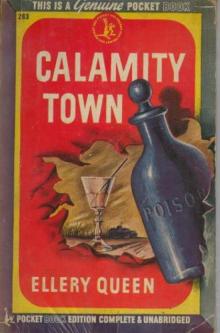
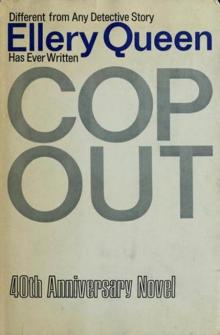
Queen's Ransom, page 79



Now they could look back on the four weeks just past and see what had undoubtedly happened. Cazalis had out-smarted himself. Ellery pointed out that in murdering his wife’s niece and insinuating himself into the Cat case as a psychiatric consultant Cazalis had seriously hobbled himself. He had not foreseen the demands on his time; he had failed to take into account the white light in which he would have to operate. Before his murder of Lenore Richardson he had had only to deceive a submissive, trusting wife; is semi-retirement, he had moved very nearly at will and in satisfactory shadows. But now he was crippled. He had made himself accountable to officialdom. He was linked with a board of fellow-psychiatrists. Colleagues were communicating with him about their patients. His failing health was causing Mrs. Cazalis to take sharper notice of his activities. And there was the little family matter involving the Richardsons which he could scarcely ignore.
“He strangled Stella Petrucchi and Donald Katz under difficulties,” said Ellery. “Conditions were not as favorable to him in those two murders as in the previous ones. Undoubtedly he had to run bigger risks, invent more lies to account for his absences at least in the Katz case; how he managed it in the Petrucchi case, especially on the night of the murder itself, after the Cat Riot, I’d love to know. It’s reasonable to suppose that his wife, the Richardsons, began to ask embarrassing questions.
“Significantly, it’s those three who’ve gone to Florida.
“Hesse saw Mrs. Cazalis ‘arguing’ with Cazalis at the gate to the train. It’s an argument that must have started days ago, when Cazalis first suggested the Florida trip. Because it’s a certainty Cazalis was the one who suggested it, or who saw to it that the suggestion was made.
“I’m inclined to think he worked it through his sister-in-law. Mrs. Richardson was his logical tool. In her Cazalis had an excellent argument for his wife, who must have been hard to persuade: Della could stand a rest and a change of scene after what had ‘happened,’ she leaned heavily on her sister, and so on.
“However Cazalis managed it, he got the Richardsons to leave town and his wife to accompany them. Unquestionably he explained his inability to go with them on the double ground of his remaining patients and his promise to the Mayor to clean up his end of the investigation.
“Anything to get his wife and in-laws out of the way.
“Anything to give himself freedom of movement.”
Jimmy said. “There’s still the maid.”
“He’s given her the week off,” said the Inspector.
“And now they’re all out of the way,” nodded Ellery, “he has unlimited opportunity and mobility, and the Cat can really go to work on the delightful problem of Marilyn Soames.”
And he did. Cazalis went to work on Marilyn Soames as if getting his noose around her throat was of the utmost importance to his peace of mind and he could no longer hold himself in.
He was so eager he was careless. He went back to his shabby topcoat and old felt hat; he added a motheaten gray wool muffler and scuffed shoes; but otherwise he neglected to alter his appearance and it was child’s play to keep track of him.
And he went hunting in daylight.
It was evident that he felt completely sure.
He left his apartment early on Tuesday morning, just after Detectives Hesse and MacGayn took over from Goldberg and Young. He left by way of the service entrance, slipping out into the side street and walking rapidly toward Madison Avenue as if his destination lay westward. But at Madison he veered south and walked all the way down to 59th Street. On the southeast corner he looked casually around. Then he jumped into a parked taxicab.
The taxi headed east. Hesse and MacGayn followed in separate cabs to minimize the danger of losing him.
When Cazalis’s cab turned south on Lexington Avenue the detectives tensed. It kept going south but as it did it worked its way farther eastward until it reached First Avenue.
It went straight down First Avenue to 28th Street.
Here Cazalis’s taxi made a four corner turn and drew up before Bellevue Hospital.
Cazalis got out, paid his driver. Then, briskly, he began to stride toward the hospital entrance.
The cab drove off.
Immediately Cazalis stopped, looking after the cab. It turned a corner, heading west.
He retraced his steps and walked rapidly toward 29th Street. His muffler was high around his neck and he had pulled the snapbrim of his hat over his eyes as low as it would go without looking grotesque.
His hands were in the pockets of his topcoat.
At 29th he crossed over.
He walked past 486 slowly, looking the entrance over but without stopping or changing his pace.
Once he looked up. It was a four-story building of dirty tan brick.
Once he glanced back.
A postman was trudging into 490.
Cazalis continued to amble up the street. Without pausing he strolled around the corner to Second Avenue.
But then he reappeared, coming back at a fast clip, as if he had forgotten something. Hesse barely had time to step into a doorway. MacGayn was watching from a hallway across the street, out of sight. They knew that at least one of the detectives assigned to guard Marilyn Soames was in 486, probably at the rear of the downstairs hall, in the gloom behind the staircase. Another was on MacGayn’s side of the street somewhere.
There was no danger.
No danger at all.
Still, their palms were sweating.
Cazalis strode past the house, glancing in as he passed. The postman was now in the vestibule of 486, slipping mail into the letter boxes.
Cazalis stopped before 490, looking at the number inquiringly. He fumbled in an inner pocket and produced an envelope which he consulted elaborately, glancing from time to time at the house number above the entrance, like a collector of some sort.
The postman emerged from 486, shuffled up the street, turned into 482.
Cazalis walked directly into 486.
Detective Quigley in the hall saw him look over the letter boxes.
He studied Soames box briefly. The paper name plate bore the name Soames and the apartment number 3B. There was mail in the box. He made no attempt to touch the box.
Quigley was having a bad time. The mail was delivered at the same time every morning and it was Marilyn Soames’s habit to come downstairs for it within ten minutes of the regular delivery.
Quigley fingered his holster.
Suddenly Cazalis opened the inner door and walked into the hall.
The detective crouched in the blackest corner behind the stairs.
He heard the big man’s step, saw the thick legs pass and disappear. He did not dare to make the slightest movement.
Cazalis walked up the hall, opened the back door. The door closed quietly.
Quigley shifted his position.
Hesse ran in and joined him under the stairs.
“In the court.”
“Casing it.” Then Hesse whispered, “Somebody coming down the stairs, Quig.”
“The girl!”
She went into the vestibule, unlocked the Soames box.
Marilyn wore an old bathrobe; her hair was in curlers.
She took out the mail, stood there shuffling letters.
They heard the snick of the rear door.
Cazalis, and he saw her.
The men said afterward they expected the Cat case to be written off then and there. The setup was ideal: the victim in the vestibule in a bathrobe, bound to come back into the gloomy hall in a matter of seconds; no one about; the street outside almost deserted; the court for an emergency getaway.
They were disappointed. Hesse said, “Hell, he’d probably have tried to drag her behind the stairs, the way he did O’Reilly over in Chelsea. Where Quigley and I were parked. The crazy bastard must have had a premonition.”
But Ellery shook his head. “Habit,” he said. “And caution. He’s a night worker. Probably didn’t even have a cord along.”
“I wish we had as standard equipment X-ray eyes,” mumbled Inspector Queen.
Cazalis stood there at the end of the hall, pale eyes burning.
In the vestibule Marilyn was reading a letter. Her flattish nose, her cheekbones, chin, were tacked against the glass of the street door.
She stood there three minutes.
Cazalis did not move.
Finally, she opened the inner door and ran upstairs.
The old boards rattled.
Hesse and Quigley heard him let his breath go.
Then Cazalis walked down the hall.
Dejected. Furious. They could tell by the slope of his thick shoulders, the mauls of his fists.
He went out into the street.
He was back after dark, watching the entrance of 486 from a hallway across the street.
Until a quarter of 10.
Then he went home.
“Why didn’t you jump him?” cried Jimmy McKell. “And end this Grand Guignol? You’d have found a cord in his pocket!”
“Maybe we would and maybe we wouldn’t,” said the Inspector. “He’s trying to fix her habits. This may go on for a couple of weeks. She’s a toughie for him.”
“He’d certainly have one of those cords on him!”
“We can’t be sure. We’ll just have to wait. Anyway, an actual attack will put him away. A cord might slip. We can’t risk anything.” Jimmy heard Ellery’s teeth grinding.
Cazalis prowled about the neighborhood all day Wednesday; with the night, he settled down in the doorway across the street again.
But at ten minutes to 10 he left.
“He must be wondering if she ever leaves the house,” said the Inspector that night, when Celeste reported.
“I’m beginning to wonder myself,” rapped Ellery. “Celeste, what the devil is Marilyn doing?”
“Working.” Celeste sounded muffled. “On a rush job for one of her playwright customers. She says she won’t be finished with it till Saturday or Sunday.”
“He’ll go nuts,” said the McKell voice.
No one laughed, least of all the quipster.
Their nightly meetings in the dark had taken on the weightless flow of dreams. Nothing was real but the unreality they watched. They were conscious only occasionally that the City ground and grumbled somewhere below. Life was buried under their feet; they marked time above it, a treadmill experience.
On Thursday he repeated himself. Only this time he gave up at two minutes past 10.
“Later each night.”
Jimmy was fretful. “At this rate, Ellery, he’ll be seeing Celeste leave the house. I won’t have that.”
“He’s not after me, Jimmy.” Celeste was sounding shrill.
“It’s not that,” said Ellery. “It’s the regularity. If he spots Celeste coming out every night at the same time, he may get curious.”
“We’d better change the time, son.”
“Let’s do it this way: Celeste, those third-floor windows are in the Soameses’ front room, aren’t they? The room where Stanley is?”
“Yes.”
“From now on don’t leave until 10:15, and then only under certain conditions. Is your wristwatch accurate?”
“It keeps very good time.”
“Let’s synchronize.” Ellery struck a match. “I have 10:26 exactly.”
“I’m about a minute and a half off.”
He struck another match. “Fix it.” When she did, he said, “From now on be at one of those front windows every night between 10:10 and 10:15. We’ll meet you, starting tomorrow night, somewhere along First Avenue in the immediate neighborhood—tomorrow night let’s make it in front of that empty store near the corner of 30th.”
“We met there Sunday night.”
“Yes. If between 10:10 and 10:15 you see a light flash three times from one of the doorways or alleys across from 486—we’ll use a pocket pencil flash—that will mean Cazalis has left for the night and you can come down and make your report. If you see no signal, stay upstairs. It will mean he’s still around. If he should leave between 10:10 and 10:25 you’ll get the signal between 10:25 and 10:30. If there’s no signal is those five minutes, he’ll still be around; stay put. We’ll operate on the same system till he leaves. Watch for a signal every fifteen minutes. All night if necessary.”
By MacGayn’s 5 P.M. report Friday Cazalis had still not left his apartment. It puzzled them. He did not leave until dusk. Friday night it was necessary to keep Celeste waiting until 11:15. Ellery flashed the signal himself and trailed her to the rendezvous.
“I thought that flash would never come.” Celeste was white. “He’s gone?”
“Gave up a few minutes ago.”
“I tried to get a call in all afternoon and evening but Stanley was demanding and fidgety today—he’s much better—and Marilyn stuck to her typewriter… He phoned a little after 1 P.M.”
They pressed around her in the dark.
“Paul Nostrum again. Apologized for having stood her up at the Astor, said he was taken sick suddenly and that he’s been laid up till today. He wanted her to meet him… tonight.” Celeste was trying to sound steady. “I’ve been leaping.”
“What did Marilyn say to him?”
“She refused. Said she was all tied up on a special piece of work and he’d have to get somebody else. Then he tried to date her.”
“Go on!” Inspector Queen’s voice was shaky.
“She just laughed and hung up.”
Jimmy drew her away.
“He’s getting impatient, Dad.”
“That maid of his comes back Monday.”
They milled a little.
“Celeste.”
Celeste came back, Jimmy protesting.
“How much did she actually tell him about the work she’s doing?”
“She said she couldn’t possibly be finished before tomorrow night, probably Sunday, and then she’d have to deliver it—” Celeste caught her breath. Then she said in the queerest way, “Deliver it. She did say…”
“This weekend,” said Ellery.
The Saturday sky was overcast; a glum rain fell intermittently on the City all day. It stopped at dusk and a fog settled over the streets.
The Inspector cursed and passed the word around: he did not consider an act of God sufficient for failure to keep their man covered. “If necessary, take chances. But stick with him.” He added, gratuitously: “Or else.”
It was a bad day.
The whole day was bad. During the morning Detective Hesse was seized with cramps. MacGayn put in a hurry call. “Hesse has to knock off. He’s writhing. Step on it, he’s all alone over there.” By the time Hagstrom reached Park Avenue MacGayn was gone. “I don’t know where,” gasped Hesse. “Cazalis came out at 11:05 and walked off toward Madison, MacGayn covering him. Put me in a cab before I foul myself up.” It took Hagstrom over an hour to locate MacGayn and his quarry. Cazalis had merely gone to a restaurant. He returned to his apartment immediately afterward.
But a little past 2 found Cazalis leaving in his working clothes, by way of the court. He headed for East 29th Street.
Then, shortly before 4 o’clock, Marilyn Soames walked out of 486. Celeste Phillips was with her.
The two girls hurried west on 29th Street.
The fog had not yet come down; it was still drizzling. But the sky was threatening to black out.
Visibility was poor.
Cazalis moved. He moved in a glide, very rapidly. His hands were in his pockets. He kept to the opposite side of the street. MacGayn, Hagstrom, Quigley, the Queens, Jimmy McKell followed. Singly, in pairs.
Jimmy kept mumbling. “Is Celeste out of her mind? The fool, the fool.”
The Inspector was mumbling, too. A rather stronger characterization.
They could see Cazalis’s rage. It told in his pace. He would lunge ahead, then walk, then trot, then come to a dead stop. As he followed the girls his head thrust itself forward.
“Like a cat,” said Ellery. “There’s the Cat.”
“She’s out of her mind,” whispered Jimmy.
“She’s out of her mind!” Inspector Queen was close to tears. “We set him up—we set him up all this time. His tongue is hanging out. He’d have tried it in this bad light sure. And she…”
The girls turned into Third Avenue and entered a stationery store. The man in the store began wrapping reams of paper, other articles.
It was growing quite dark.
Cazalis was beyond caution. He stood eagerly in the rain on one of the corners of Third Avenue and 29th Street before a drugstore window. The lights came on as he stood there, but he did not move.
The head was still thrust forward.
Ellery had to hang on to Jimmy’s arm.
“He won’t try anything while Celeste is with her. Too many people on the streets, Jimmy. Too much traffic. Take it easy.”
The girls came out of the store. Marilyn carried a large package.
She was smiling.
They walked back the way they had come.
For a moment, fifty feet from the tenement, it looked as if Cazalis were going to take the plunge. The drizzle had thickened and the girls were running for the vestibule, laughing. Cazalis gathered himself, actually jumped into the gutter.
But a car drove up to the curb before 490 and three men got out. They stood on the opposite pavement, shouting to one another in the rain, arguing hotly about something.
Cazalis stepped back. The girls disappeared into 486. He walked heavily down the street, stepped into a hallway opposite the Soames building.
Goldberg and Young arrived to take over from MacGayn and Hagstrom.
They worked in close, for the fog had descended.
Cazalis lingered all evening, not moving except to change hallways when someone headed for the one he occupied.
Once he chose Young’s, and the detective was within fifteen feet of him for over a half hour.
A few minutes after 11 o’clock he gave up. His bulky figure plunged along in the fog, chin on his breast. They saw him pass from their own observation post near Second Avenue and, a few seconds later, Goldberg and Young.
The three vanished going west.
With some grimness, Inspector Queen insisted on flashing the all-clear signal to Celeste himself.
The meeting place for the night was a dim-walled bar-and-grill on First Avenue between 30th and 31st Streets. They had used it once before; it was crowded, smoky, and mindful of the rights of man.
“He strangled Stella Petrucchi and Donald Katz under difficulties,” said Ellery. “Conditions were not as favorable to him in those two murders as in the previous ones. Undoubtedly he had to run bigger risks, invent more lies to account for his absences at least in the Katz case; how he managed it in the Petrucchi case, especially on the night of the murder itself, after the Cat Riot, I’d love to know. It’s reasonable to suppose that his wife, the Richardsons, began to ask embarrassing questions.
“Significantly, it’s those three who’ve gone to Florida.
“Hesse saw Mrs. Cazalis ‘arguing’ with Cazalis at the gate to the train. It’s an argument that must have started days ago, when Cazalis first suggested the Florida trip. Because it’s a certainty Cazalis was the one who suggested it, or who saw to it that the suggestion was made.
“I’m inclined to think he worked it through his sister-in-law. Mrs. Richardson was his logical tool. In her Cazalis had an excellent argument for his wife, who must have been hard to persuade: Della could stand a rest and a change of scene after what had ‘happened,’ she leaned heavily on her sister, and so on.
“However Cazalis managed it, he got the Richardsons to leave town and his wife to accompany them. Unquestionably he explained his inability to go with them on the double ground of his remaining patients and his promise to the Mayor to clean up his end of the investigation.
“Anything to get his wife and in-laws out of the way.
“Anything to give himself freedom of movement.”
Jimmy said. “There’s still the maid.”
“He’s given her the week off,” said the Inspector.
“And now they’re all out of the way,” nodded Ellery, “he has unlimited opportunity and mobility, and the Cat can really go to work on the delightful problem of Marilyn Soames.”
And he did. Cazalis went to work on Marilyn Soames as if getting his noose around her throat was of the utmost importance to his peace of mind and he could no longer hold himself in.
He was so eager he was careless. He went back to his shabby topcoat and old felt hat; he added a motheaten gray wool muffler and scuffed shoes; but otherwise he neglected to alter his appearance and it was child’s play to keep track of him.
And he went hunting in daylight.
It was evident that he felt completely sure.
He left his apartment early on Tuesday morning, just after Detectives Hesse and MacGayn took over from Goldberg and Young. He left by way of the service entrance, slipping out into the side street and walking rapidly toward Madison Avenue as if his destination lay westward. But at Madison he veered south and walked all the way down to 59th Street. On the southeast corner he looked casually around. Then he jumped into a parked taxicab.
The taxi headed east. Hesse and MacGayn followed in separate cabs to minimize the danger of losing him.
When Cazalis’s cab turned south on Lexington Avenue the detectives tensed. It kept going south but as it did it worked its way farther eastward until it reached First Avenue.
It went straight down First Avenue to 28th Street.
Here Cazalis’s taxi made a four corner turn and drew up before Bellevue Hospital.
Cazalis got out, paid his driver. Then, briskly, he began to stride toward the hospital entrance.
The cab drove off.
Immediately Cazalis stopped, looking after the cab. It turned a corner, heading west.
He retraced his steps and walked rapidly toward 29th Street. His muffler was high around his neck and he had pulled the snapbrim of his hat over his eyes as low as it would go without looking grotesque.
His hands were in the pockets of his topcoat.
At 29th he crossed over.
He walked past 486 slowly, looking the entrance over but without stopping or changing his pace.
Once he looked up. It was a four-story building of dirty tan brick.
Once he glanced back.
A postman was trudging into 490.
Cazalis continued to amble up the street. Without pausing he strolled around the corner to Second Avenue.
But then he reappeared, coming back at a fast clip, as if he had forgotten something. Hesse barely had time to step into a doorway. MacGayn was watching from a hallway across the street, out of sight. They knew that at least one of the detectives assigned to guard Marilyn Soames was in 486, probably at the rear of the downstairs hall, in the gloom behind the staircase. Another was on MacGayn’s side of the street somewhere.
There was no danger.
No danger at all.
Still, their palms were sweating.
Cazalis strode past the house, glancing in as he passed. The postman was now in the vestibule of 486, slipping mail into the letter boxes.
Cazalis stopped before 490, looking at the number inquiringly. He fumbled in an inner pocket and produced an envelope which he consulted elaborately, glancing from time to time at the house number above the entrance, like a collector of some sort.
The postman emerged from 486, shuffled up the street, turned into 482.
Cazalis walked directly into 486.
Detective Quigley in the hall saw him look over the letter boxes.
He studied Soames box briefly. The paper name plate bore the name Soames and the apartment number 3B. There was mail in the box. He made no attempt to touch the box.
Quigley was having a bad time. The mail was delivered at the same time every morning and it was Marilyn Soames’s habit to come downstairs for it within ten minutes of the regular delivery.
Quigley fingered his holster.
Suddenly Cazalis opened the inner door and walked into the hall.
The detective crouched in the blackest corner behind the stairs.
He heard the big man’s step, saw the thick legs pass and disappear. He did not dare to make the slightest movement.
Cazalis walked up the hall, opened the back door. The door closed quietly.
Quigley shifted his position.
Hesse ran in and joined him under the stairs.
“In the court.”
“Casing it.” Then Hesse whispered, “Somebody coming down the stairs, Quig.”
“The girl!”
She went into the vestibule, unlocked the Soames box.
Marilyn wore an old bathrobe; her hair was in curlers.
She took out the mail, stood there shuffling letters.
They heard the snick of the rear door.
Cazalis, and he saw her.
The men said afterward they expected the Cat case to be written off then and there. The setup was ideal: the victim in the vestibule in a bathrobe, bound to come back into the gloomy hall in a matter of seconds; no one about; the street outside almost deserted; the court for an emergency getaway.
They were disappointed. Hesse said, “Hell, he’d probably have tried to drag her behind the stairs, the way he did O’Reilly over in Chelsea. Where Quigley and I were parked. The crazy bastard must have had a premonition.”
But Ellery shook his head. “Habit,” he said. “And caution. He’s a night worker. Probably didn’t even have a cord along.”
“I wish we had as standard equipment X-ray eyes,” mumbled Inspector Queen.
Cazalis stood there at the end of the hall, pale eyes burning.
In the vestibule Marilyn was reading a letter. Her flattish nose, her cheekbones, chin, were tacked against the glass of the street door.
She stood there three minutes.
Cazalis did not move.
Finally, she opened the inner door and ran upstairs.
The old boards rattled.
Hesse and Quigley heard him let his breath go.
Then Cazalis walked down the hall.
Dejected. Furious. They could tell by the slope of his thick shoulders, the mauls of his fists.
He went out into the street.
He was back after dark, watching the entrance of 486 from a hallway across the street.
Until a quarter of 10.
Then he went home.
“Why didn’t you jump him?” cried Jimmy McKell. “And end this Grand Guignol? You’d have found a cord in his pocket!”
“Maybe we would and maybe we wouldn’t,” said the Inspector. “He’s trying to fix her habits. This may go on for a couple of weeks. She’s a toughie for him.”
“He’d certainly have one of those cords on him!”
“We can’t be sure. We’ll just have to wait. Anyway, an actual attack will put him away. A cord might slip. We can’t risk anything.” Jimmy heard Ellery’s teeth grinding.
Cazalis prowled about the neighborhood all day Wednesday; with the night, he settled down in the doorway across the street again.
But at ten minutes to 10 he left.
“He must be wondering if she ever leaves the house,” said the Inspector that night, when Celeste reported.
“I’m beginning to wonder myself,” rapped Ellery. “Celeste, what the devil is Marilyn doing?”
“Working.” Celeste sounded muffled. “On a rush job for one of her playwright customers. She says she won’t be finished with it till Saturday or Sunday.”
“He’ll go nuts,” said the McKell voice.
No one laughed, least of all the quipster.
Their nightly meetings in the dark had taken on the weightless flow of dreams. Nothing was real but the unreality they watched. They were conscious only occasionally that the City ground and grumbled somewhere below. Life was buried under their feet; they marked time above it, a treadmill experience.
On Thursday he repeated himself. Only this time he gave up at two minutes past 10.
“Later each night.”
Jimmy was fretful. “At this rate, Ellery, he’ll be seeing Celeste leave the house. I won’t have that.”
“He’s not after me, Jimmy.” Celeste was sounding shrill.
“It’s not that,” said Ellery. “It’s the regularity. If he spots Celeste coming out every night at the same time, he may get curious.”
“We’d better change the time, son.”
“Let’s do it this way: Celeste, those third-floor windows are in the Soameses’ front room, aren’t they? The room where Stanley is?”
“Yes.”
“From now on don’t leave until 10:15, and then only under certain conditions. Is your wristwatch accurate?”
“It keeps very good time.”
“Let’s synchronize.” Ellery struck a match. “I have 10:26 exactly.”
“I’m about a minute and a half off.”
He struck another match. “Fix it.” When she did, he said, “From now on be at one of those front windows every night between 10:10 and 10:15. We’ll meet you, starting tomorrow night, somewhere along First Avenue in the immediate neighborhood—tomorrow night let’s make it in front of that empty store near the corner of 30th.”
“We met there Sunday night.”
“Yes. If between 10:10 and 10:15 you see a light flash three times from one of the doorways or alleys across from 486—we’ll use a pocket pencil flash—that will mean Cazalis has left for the night and you can come down and make your report. If you see no signal, stay upstairs. It will mean he’s still around. If he should leave between 10:10 and 10:25 you’ll get the signal between 10:25 and 10:30. If there’s no signal is those five minutes, he’ll still be around; stay put. We’ll operate on the same system till he leaves. Watch for a signal every fifteen minutes. All night if necessary.”
By MacGayn’s 5 P.M. report Friday Cazalis had still not left his apartment. It puzzled them. He did not leave until dusk. Friday night it was necessary to keep Celeste waiting until 11:15. Ellery flashed the signal himself and trailed her to the rendezvous.
“I thought that flash would never come.” Celeste was white. “He’s gone?”
“Gave up a few minutes ago.”
“I tried to get a call in all afternoon and evening but Stanley was demanding and fidgety today—he’s much better—and Marilyn stuck to her typewriter… He phoned a little after 1 P.M.”
They pressed around her in the dark.
“Paul Nostrum again. Apologized for having stood her up at the Astor, said he was taken sick suddenly and that he’s been laid up till today. He wanted her to meet him… tonight.” Celeste was trying to sound steady. “I’ve been leaping.”
“What did Marilyn say to him?”
“She refused. Said she was all tied up on a special piece of work and he’d have to get somebody else. Then he tried to date her.”
“Go on!” Inspector Queen’s voice was shaky.
“She just laughed and hung up.”
Jimmy drew her away.
“He’s getting impatient, Dad.”
“That maid of his comes back Monday.”
They milled a little.
“Celeste.”
Celeste came back, Jimmy protesting.
“How much did she actually tell him about the work she’s doing?”
“She said she couldn’t possibly be finished before tomorrow night, probably Sunday, and then she’d have to deliver it—” Celeste caught her breath. Then she said in the queerest way, “Deliver it. She did say…”
“This weekend,” said Ellery.
The Saturday sky was overcast; a glum rain fell intermittently on the City all day. It stopped at dusk and a fog settled over the streets.
The Inspector cursed and passed the word around: he did not consider an act of God sufficient for failure to keep their man covered. “If necessary, take chances. But stick with him.” He added, gratuitously: “Or else.”
It was a bad day.
The whole day was bad. During the morning Detective Hesse was seized with cramps. MacGayn put in a hurry call. “Hesse has to knock off. He’s writhing. Step on it, he’s all alone over there.” By the time Hagstrom reached Park Avenue MacGayn was gone. “I don’t know where,” gasped Hesse. “Cazalis came out at 11:05 and walked off toward Madison, MacGayn covering him. Put me in a cab before I foul myself up.” It took Hagstrom over an hour to locate MacGayn and his quarry. Cazalis had merely gone to a restaurant. He returned to his apartment immediately afterward.
But a little past 2 found Cazalis leaving in his working clothes, by way of the court. He headed for East 29th Street.
Then, shortly before 4 o’clock, Marilyn Soames walked out of 486. Celeste Phillips was with her.
The two girls hurried west on 29th Street.
The fog had not yet come down; it was still drizzling. But the sky was threatening to black out.
Visibility was poor.
Cazalis moved. He moved in a glide, very rapidly. His hands were in his pockets. He kept to the opposite side of the street. MacGayn, Hagstrom, Quigley, the Queens, Jimmy McKell followed. Singly, in pairs.
Jimmy kept mumbling. “Is Celeste out of her mind? The fool, the fool.”
The Inspector was mumbling, too. A rather stronger characterization.
They could see Cazalis’s rage. It told in his pace. He would lunge ahead, then walk, then trot, then come to a dead stop. As he followed the girls his head thrust itself forward.
“Like a cat,” said Ellery. “There’s the Cat.”
“She’s out of her mind,” whispered Jimmy.
“She’s out of her mind!” Inspector Queen was close to tears. “We set him up—we set him up all this time. His tongue is hanging out. He’d have tried it in this bad light sure. And she…”
The girls turned into Third Avenue and entered a stationery store. The man in the store began wrapping reams of paper, other articles.
It was growing quite dark.
Cazalis was beyond caution. He stood eagerly in the rain on one of the corners of Third Avenue and 29th Street before a drugstore window. The lights came on as he stood there, but he did not move.
The head was still thrust forward.
Ellery had to hang on to Jimmy’s arm.
“He won’t try anything while Celeste is with her. Too many people on the streets, Jimmy. Too much traffic. Take it easy.”
The girls came out of the store. Marilyn carried a large package.
She was smiling.
They walked back the way they had come.
For a moment, fifty feet from the tenement, it looked as if Cazalis were going to take the plunge. The drizzle had thickened and the girls were running for the vestibule, laughing. Cazalis gathered himself, actually jumped into the gutter.
But a car drove up to the curb before 490 and three men got out. They stood on the opposite pavement, shouting to one another in the rain, arguing hotly about something.
Cazalis stepped back. The girls disappeared into 486. He walked heavily down the street, stepped into a hallway opposite the Soames building.
Goldberg and Young arrived to take over from MacGayn and Hagstrom.
They worked in close, for the fog had descended.
Cazalis lingered all evening, not moving except to change hallways when someone headed for the one he occupied.
Once he chose Young’s, and the detective was within fifteen feet of him for over a half hour.
A few minutes after 11 o’clock he gave up. His bulky figure plunged along in the fog, chin on his breast. They saw him pass from their own observation post near Second Avenue and, a few seconds later, Goldberg and Young.
The three vanished going west.
With some grimness, Inspector Queen insisted on flashing the all-clear signal to Celeste himself.
The meeting place for the night was a dim-walled bar-and-grill on First Avenue between 30th and 31st Streets. They had used it once before; it was crowded, smoky, and mindful of the rights of man.