The Faery Reel, page 1


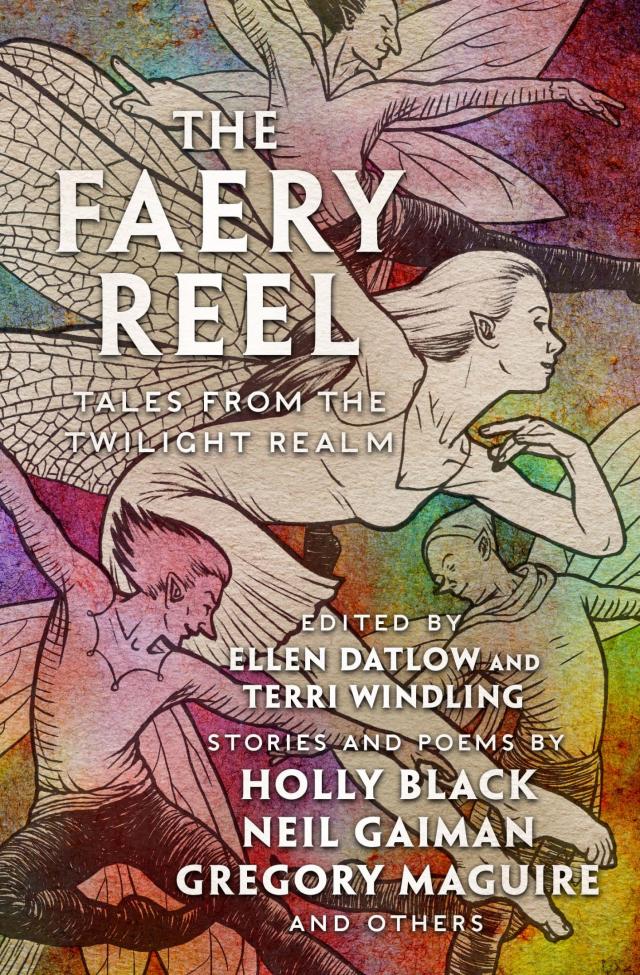
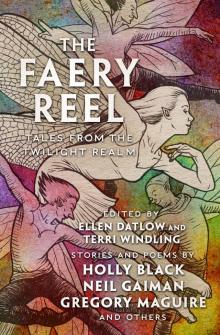
The Faery Reel
Tales from the Twilight Realm
Edited by Ellen Datlow and Terri Windling
Introduction by Terri Windling
To Merrilee Heifetz, who was “midwife to the fairies” (to borrow the words of an old folk tale), or at least to this book about them. Thank you, Merrilee, for all you’ve done for this book and so many others
—E.D. & T.W.
Introduction: The Faeries
Terri Windling
Where do faeries come from? Folklorists, philosophers, historians, mystics and others have debated this question for centuries. No one really knows how faeries originated—unless it’s the faeries themselves, and they’re not telling. What we do know is that tales of the faeries can be found on every continent around the globe, and that belief in the existence of the “Hidden People” is surprisingly widespread today.
Some scholars see the vestiges of pagan religions in tales about the faeries—who are, they say, the diminished remnants of once powerful gods and goddesses. Other scholars insist that faeries are really just the early, indigenous peoples of each land, who may have been viewed as magical and otherworldly by conquering tribes. Many people once thought that faeries were fallen angels who’d been ejected from Heaven but weren’t quite wicked enough for Hell, or else that they were the wandering souls of children who’d died unbaptized. Some read the following words from the Bible as proof that God had created the faery race in addition to mankind: “And other sheep have I that are not of this fold.” (John 10:16). The most widespread belief, still prevalent today, is that faeries are simply nature spirits and thus as ancient as wind and rain. In this view, they’re the manifestations of the living spirit in all organic matter.
In the 15th century, an alchemist named Paracelus divided faeries into four elemental groups: sylphs (air), gnomes (earth), undines (water), and salamanders (fire). They are made of flesh and blood, he said, and procreate like human beings but are longer lived than man and do not possess immortal souls. In the 17th century, a Scottish minister named Robert Kirk wrote that faeries “are of a middle nature betwixt man and angel,” with “light changeable bodies, like those called astral, somewhat of the nature of a condensed cloud, and best seen at twilight.”1
In the 19th century, the physiology of faeries was of great interest to the Spiritualists2, who divided them into two basic types: nature spirits tied to features of the landscape (a river, a pool, a copse of trees), and higher spirits who lived on an astral plane between flesh and thought. In the early 20th century, a Theosophist3 named Charles W. Leadbeater developed an elaborate system of faery classification inspired by Darwin’s theory of evolution. Leadbeater maintained that faeries live on an astral plane divided into seven levels. He believed the faery race to be the original inhabitants of England, driven to its margins by the invasion of mankind; and he drew elaborate diagrams showing how the faeries had evolved. His chart began with mineral life and then rose upward through water and earth, and through seaweed, fungi, and bacteria. Further up the evolutionary ladder he showed how faeries developed through grasses and cereals, reptiles and birds, sea flora and fauna, until they matured into nature spirits linked to each of the four elements. But evolution didn’t stop there; these nature spirits would in turn evolve into sylphs, then devas, and then into angels. On the top rung of the ladder the faeries would become what he called “solar spirits,” where they’d join with evolved humans in a more enlightened age.4
Another Theosophist, Edward Garner, argued that faeries are allied to the butterfly genus, and are made of a substance lighter than gas which renders them invisible to human beings (except clairvoyants). The function of faeries in nature, he said, is to provide a link between plants and the energy of the sun. He wrote that the “growth of a plant which we regard as the customary and inevitable result of associating the three factors of sun, seed, and soil would never take place if the fairy builders were absent.”5 Franz Hartmann, a medical doctor, believed that faeries have a role in human psychology, explaining that “the spirits of nature have their dwellings within us as well as outside of us, and no man is perfectly master of himself unless he thoroughly knows his own nature and its inhabitants.”6
While the Spiritualists, in their journals and lectures, argued how many faeries could fit on the head of a pin or swim through the higher astral plane, unlettered country people were taking great pains to avoid the faeries’ notice. Charms, talismans, and spells were used to keep troublesome faeries at bay—to chase them away from the house, the livestock, newborn children, and unmarried girls. Although faeries had been known to give aid to mortals, more often they were seen as irksome creatures, quick to take offense and dangerous when riled. Faery bargains were notoriously tricky things and faery treasure was often cursed. Mortals who stumbled into Faeryland could end up trapped in that realm forever, or emerge from it aged and withered, even though it had seemed like little time had passed. Faeries were blamed for soured milk, blighted crops, and barren cows; for illness, madness, birth defects and other mysterious ills. Even good faeries followed rules and taboos that could be unfathomable to humans—thus it was wise to be scrupulously polite and to treat all faeries with great caution. Folklore is filled with cautionary tales outlining the perils of faery encounters. Do not eat faery food, they say, or you will be trapped in Faeryland. Avoid using a faery’s name, and don’t ever tell them your own. Don’t bargain with the faeries, or join their dances, or spy on their courtly revels. Wear your shirt inside out and carry iron to avoid abduction.
Many stories tell of faeries who steal human children, particularly newborn babies, and sometimes adults as well, particularly midwives and musicians. When babies are snatched, a faery changeling is left behind in the child’s cradle. In some tales the changeling is just a piece of wood “glamoured” to look like a child; in others it is a sickly faery baby, or an old and peevish faery. The young human changelings who are spirited away to Fäerie will be petted and cosseted for awhile—until the faeries grow tired of them. Then the humans are banished from the realm (for which they’ll pine from that day forward), or else kept on as household slaves for the rest of their mortal lives. Some say the faeries are required to pay a blood-tithe to Hell every seven years, and that they steal mortals for this purpose so as not to sacrifice one of their own. A human knight named Tam Lin was destined to be the tithe in one old tale, until his true love tricked the Faery Queen into releasing him on All Hallows Eve.
Some faeries can be alluring creatures—but woe to those who seek their kisses, for few amorous encounters between faeries and mortals ever come to good. A harp player named Thomas the Rhymer kissed the Faery Queen under the Eildon Tree, then paid for each of those kisses with seven years of servitude in Fäerie. Thomas was one of the lucky ones, because many hapless lads and maidens sickened and died after twilight encounters with sweet-talking lovers who turned out to be faeries in disguise. There are stories in which faeries wed with mortals, but such marriages rarely turn out well—whether it is a woman with a faery husband or a man with a faery bride. Irish seal-people who marry human men and women always return to the sea, and Japanese fox faeries make dangerous brides, stealing the life essence from their husbands. The children born of such unions are often lonely, melancholic creatures, too mortal to live comfortably in Fäerie and too fey for the human world.
Some faery lore makes a clear divisions between good and wicked types of faeries—between those who are friendly to mankind, and those who seek to cause us harm. In Scottish tales, good faeries make up the Seelie Court, which means the Blessed Court, while bad faeries congregate in the Unseelie Court, ruled by the dark queen Nicnivin. In old Norse myth, the Liosálfar (Light Elves) are regal, compassionate creatures who live in the sky in the realm of Alfheim, while the Döckálfar (the Dark Elves) live underground and are greatly feared. Yet in other traditions, a faery can be good or bad, depending on the circumstance or on the faery’s whim. They are often portrayed as amoral beings, rather than as immoral ones, who simply have little comprehension of human notions of right and wrong.
The great English folklorist Katharine Briggs tended to avoid the “good” and “bad” division, preferring the categorizations of Solitary and Trooping Faeries instead. She noted that the faeries in either group “may be evil, dealing death or sickness to every man and creature they pass on their way, like the Sluagh of the Highlands; they may steal unchurched wives from child-bed, or snatch away unchristened babes leaving animated stocks (pieces of wood) or sickly children of their own in their place, or they may be harmless and even beneficial—fertility spirits watching over the growth of flowers or bringing good luck to herds or children.” Solitary Faeries are generally those associated with a certain location: a bog, a lake, the roots of a tree, a particular hill or household. The Trooping Faeries, by contrast, are gregarious creatures fond of hunting, feasting, dancing, and holding court. “This is perhaps particularly true of the British Isles,” writes Briggs, “though in France, Italy, Scandinavia and Germany there are the same tales of dancing, revelry and processions.”7
Other folklorists divide the faeries by their element, rather than by their temperament—harking back to Paracelus’ classification system of earth, air, water, and fire. Faeries associated with the earth are the most numerous type in tales the world over. Earth elementals include those who live in caves, barrows, and deep underground, and who often have a special facility for working with precious metals—such as the Coblynau in the hills of Wales, the Gandharvas of India, the Erdluitle of northern Italy, the Maanväki of Finland, the Thrussers of Norway, the Karzalek of Poland, the Illes of Iceland, the various silver-smithing Dwarves of Old Norse legends, and the Gans of the Apache tribe in the American southwest. Forest faeries and tree spirits are also associated with earth—such as the shy Aziza of West Africa, the Mu of Papua New Guinea, the Shinseen of China, the Silvanni of Italy, the Oakmen of the British Isles, the Skogsra of Sweden, the Kulaks of Burma, the Hantu Hutan of the Malay Peninsula, the Bela of Indonesia, the Patu-Paiarehe of the Maori, and the Manitou of the Algonquin tribe in Canada. Other earth faeries guard standing stones, such as the tiny, web-footed Couril of Brittany, or thrive in desert sands, such as the Ahl Al-trab of Arabia.
Faeries associated with the air element include various winged faeries and sylphs, and those whose realms are in the sky. Air faeries are less common than earth faeries in the oldest faery stories, though they’ve become the most popular type in modern faery paintings and children’s books. Examples of air faeries include the luminous Soulth of Ireland, the Star Folk of the Algonquin tribe, the Atua of Polynesia, the Light Elves of Old Norse legends, and the Peri of Persian lore, who sleep on clouds and dine on perfume. Faeries who account for weather phenomena, such as mistral winds, whirlwinds, and storms, are associated with the air element, including the Spriggans of Cornwall, the Vily of Slavonia, the Vintoasele of Serbia and Croatia, the Rusali of Romania, and the mischievous Folletti of Italy.
The most common type of fire faery is the salamander, an elemental spirit much prized by Renaissance alchemists. Also associated with fire are the Djinn, the wicked faeries of Persian lore, and the Drakes (or Drachen), fire faeries found in the British Isles and western Europe who resemble streaking balls of fire and smell like rotten eggs. Luminous, will-o-the wisp type fire faeries are famous for leading travelers astray—such as the Ellylldan of Welsh marshland, the Teine Sith of the Scottish Hebrides, the Spunkies of southwest England, Le Faeu Boulanger of the Channel Islands, the Candelas of Sardinia, and the Fouchi Fatui of northern Italy. The various faeries who guard hearth fires are also associate with this element—such as the Gabija of Lithuania and Natrou-Monsieur of France. The Muzayyara are fiery, seductive faeries in old Egyptian tales; and the Akamu is a particularly dangerous fire faery found in Japan.
Water faeries are divided between those who live in the sea and in fresh water. Sea faeries include all mermaids and mermen, seal people, and sirens of various kinds, including the Selchies (Selkies) of western Europe, the Daoine Mara and Fin Folk of Scotland, the Merrows of Ireland, the Nereides of Greece, the Havfreui of Scandinavia, the Mal-de-Mer on the coast of France, and Groac’h Vor, a Breton mermaid. Fresh water faeries live in rivers, lakes, pools, fountains, bogs and marshes, or are water elementals who can live anywhere fresh water is found. Like all faeries, some are gentle creatures and some are exceedingly treacherous. Water faeries include all the dangerous nixies and kelpies found in English rivers, the Dracs in the river Seine in France, the Merewiper in the river Danube in Germany, the Hotots of Armenia, the Judi of Macedonia, the Cacce-Halde of Lapland, the Kludde of Belgium, the Jalpari of India, the Manii of Italy, the Fuath of Ireland, the Laminak of Basque folklore, the Kappa of Japan, the sweet-voiced Nakk of Estonia, and the bashful Nokke who appear only at dusk and dawn in Sweden.
Although (as the brief list above indicates) faeries are known all around the world, nowhere are they quite so varied and populous as they are in the British Isles—which is probably why we find so many of them in English literature. Faeries can be found in many of the courtly Romances of the medieval period—although they’re rarely named as such, “faery” being a relatively late term. These ancient stories are filled with faery-like men and women who wield magic, live in enchanted palaces, forge magical weaponry, and bewitch or beguile innocent mortals—such as the Lady of the Lake who gives Arthur his magical sword, Excalibur. The tales of the King Arthur and his court are particular rife with faery-like beings, especially in the Welsh and Breton traditions—as are the splendid Lays of Marie de France, written for the English court sometime around the 12th century. In the 14th century, the Wife of Bath in Chaucer’s Canterbury Talesspeaks wistfully of an elf queen and her merry court in the old days of King Arthur, when “al was this land fulfild of fayerye”—as opposed to the Wife of Bath’s own time, when faeries were rarely seen.
A 15th century French Romance called Huon of Bordeauxwas popular among English readers. This sprightly story of King Oberon, Queen Mab, and assorted knights of the faery court is notable for providing inspiration for the faery plays of William Shakespeare. Shakespeare seems to have been well versed in traditional English faery lore, for he borrowed liberally from this tradition to create the faeries who quarrel, scheme, and cavort in A Midsummer Night’s Dreamand The Tempest. Along with “Queen Mab” from Mercutio’s famous speech in Romeo and Juliet, these are the best known and most influential faeries in all English literature— which is why diminutive faeries “no bigger than an agate-stone on the fore-finger of an alderman” are better known today than their human-sized cousins found in many older stories. Faeries are also the subject, of course, of Edmund Spenser’s long poem, The Faerie Queene, written in the late 16th century—although Spenser’s faery court owes more to Italian Romance than to homegrown English faery legends.
In the 17th century, faeries inspired Michael Drayton’s Nymphidia, the Court of Fayre, a satirical work featuring King Oberon, Queen Mab and a hapless knight named Pigwiggen. A series of poems in Robert Herrick’s Hesperides also feature King Oberon, and also have a satirical edge, but this is a darker, more sensual look at Faeryland than Drayton’s. In the 18th century, the faeries appear in Alexander Pope’s arch tale, The Rape of the Lock; and also, covertly, in Gulliver’s Travels, the great satire by Jonathan Swift, for Swift used many elements of faery lore to create his tiny Lilliputians.
It was in the same century that Bishop Thomas Percy began to collect old English folk ballads, which he published in an influential volume called Reliques of Ancient English Poetry. Without Percy’s labors, many old poems and ballads might have been lost forever—he rescued one important manuscript from a cottager who was using it to light the fire. Percy’s work had a notable influence on the writers of the German Romantic movement, who in turn influenced such English Romantics as Samuel Taylor Coleridge, Robert Southey, Percy Bysshe Shelley, and John Keats. All of these writers wrote faery poems, but the ones that are best known today are Keats’ evocative “Lamia” and “La Belle Dame Sans Merci”. By the end of the 18th century, many writers were publishing tales and poems about the faeries, including Tom Moore, Thomas Hood, Allan Cunningham, and especially James Hogg. Known as “the Ettrick Shepherd,” Hogg was a working shepherd for most of his life, as well as a writer of stories and poems that drew upon Scottish legends.
James Hogg’s good friend Sir Walter Scott was another writer who’d been greatly inspired by the ballad collections of Bishop Thomas Percy. Scott’s fiction is permeated with the faery lore of his native Scotland, and he was an influential figure in the early 19th century folklore movement. Scott’s Minstrelsy of the Scottish Border preserved such important faery ballads such as “Thomas the Rhymer” and “Tam Lin,” and did much to educate readers about the value of Scotland’s folk heritage. In addition, Scott gathered around him a group of poets and antiquarians determined to preserve the old country tales of a nation that was rapidly urbanizing. Scott was fond of faery lore in particular—for he’d believed in faeries in his youth, and never entirely lost faith in “things invisible to mortal sight.”