Premeditated Myrtle, page 1
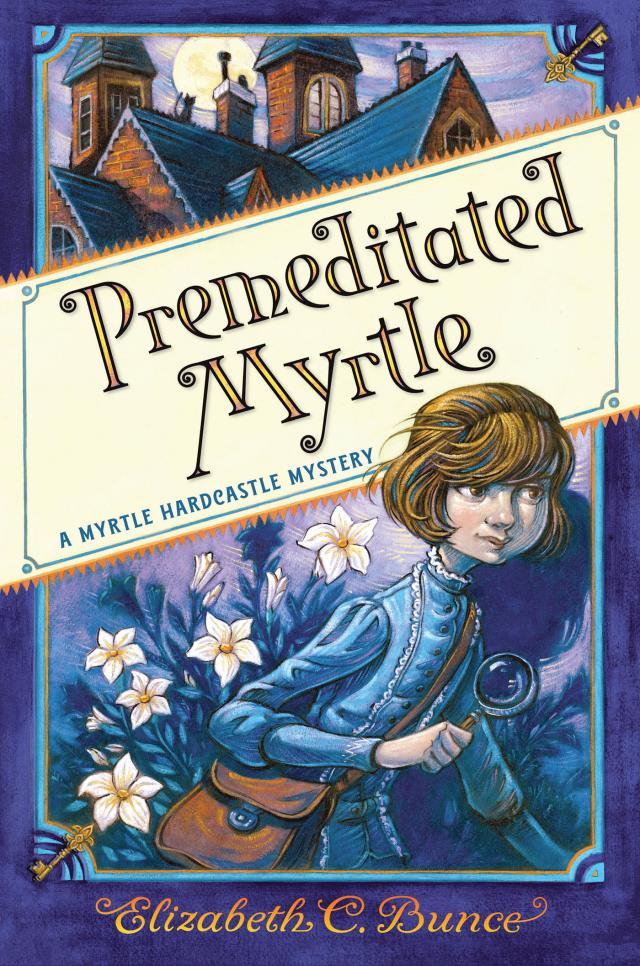


For Sophie:
look what you started.
Contents
1: Corpus Delicti
2: Red Graves
3:Trial by Jury
4: Post-Mortem
5: Actus Reus
6: Acute Toxicity and Prolonged Exposure
7: Witness Statements
8: Aggravating Factors
9: Plea Bargaining
10: Gainful Employment
11: Res Ipsa Loquitur
12: Incriminating Evidence
13: Reasonable Doubt
14: Lilium Febricula
15: Accessory After the Fact
16: Undue Influence
17: Conflict of Interest
18: Motive, Means, and Opportunity
19: Appearance of Impropriety
20: Evidence of Bad Character
21: Nihil Dicit
22: Ex Parte Communication
23: Prosecutorial Discretion
24: Summary Judgment
25: Questioned Documents
26: Dispute Pending Elsewhere
27: In Absentia
28: Self-Incrimination
29: Periculum in Mora
30: Let the Master Answer
31: Summations and Closing Arguments
A Note from the Author
Acknowledgments
1
Corpus Delicti
A true Investigator is a master of the art of Observation, paying keen attention to his surroundings. Even the least significant piece of evidence may prove the key to unraveling the truth.
—H. M. Hardcastle, Principles of Detection: A Manual for the Amateur and Professional Investigator, 1893
“Correct me if I’m wrong.” My governess, Miss Judson, strolled into the schoolroom, her sharp bootheels clicking like a telegraph. “When I persuaded your father to order that telescope, it was with the express understanding it would be used for studying the night sky.” She gave an altogether too cheery yank on the curtains, flooding the room with sun.
Adjusting the focus, I was rewarded with a clearer view of my target. Morning, very fine, I wrote beside my earlier notes. Light rain overnight. “I am Observing objects at a distance,” I said. “Which is the purpose of this device.” Subjects: The residence (and residents) of 16 Gravesend Close, Swinburne. Commonly called Redgraves.
Miss Judson bent over the casement beside me, chin nestled in her light brown hand. “Well. How foolish of me. Because it looks like you’re spying on the neighbors.”
“That, too. Look!” I pointed across the lane (with my own rather sallow hand), where a delicate blue butterfly had alit on the hedge. “Celastrina argiolus.”
“Don’t try to distract me. Wait—” She straightened, a crease forming between her eyebrows. “Is that the police wagon?” The crease turned to a genuine scowl. “Myrtle?”
I covered the telescope with its special cloth. “Why do you always look at me like that? I didn’t do anything!” I bit my lip. “Well, I may have summoned the police.”
“To Miss Wodehouse’s? What on earth for?” Miss Judson hurried to the schoolroom door, grabbing her cape on the way out.
“Are we going over there?” I scrambled off the window seat and gathered up my things: my notebook and bag, my magnifying lens, my gloves, and the little specimen collection kit with the tweezers, pins, and tiny sample jars.
“I think we’d better. Get your coat. And you can explain to me—so I can explain to your father—whatever could have compelled you to call the police on the gentlewoman next door!” Pausing in the doorway, she gave me a dubious look. “It’s not the bit about her cat again.”
“Of course not!” I scurried to catch up. Miss Judson in a hurry was a force to be reckoned with. “Well, mostly not. She started it.”
She whirled on the stairs, hand on the polished banister. “Explain.”
I had a lot of practice at this. “I didn’t see her this morning,” I began.
“Miss Wodehouse?”
“No, Peony—well, not Miss Wodehouse, either. And then Mr. Hamm didn’t show up for his rounds.” Mr. Hamm was the groundskeeper at Redgraves, and his 6:15 check of the fountains and birdbaths, Peony the cat at his heels, was his first order of business every morning. He tended the south lawn by 6:40 at the latest. Often he was supervised by Miss Wodehouse, earning nothing but scorn and criticism from the spry old lady. Clean up those leaves. I don’t want the delphiniums touching the daisies. And keep that cursed cat out of my sight!
I may have Observed them once or twice.
“And then I saw something strange.”
Miss Judson watched me expectantly, arms folded, fingers tapping the elbow of her neat tweed suit. This was the tricky bit to explain. I had aimed the telescope somewhere that was Strictly Off-Limits that morning, and I knew as much. But it was the cat’s fault. When I didn’t see Mr. Hamm, I did what any good Investigator would do. I looked for clues—and I found some.
“The pot on Miss Wodehouse’s balcony was overturned—that great heavy planter thing—and Peony was digging in it. You know how Miss Wodehouse hates it when the cat disturbs anything, especially her flowers, so I tried to shoo her away.”
“Please tell me your attempt involved smoke signals, or perhaps telepathy.”
“Now you’re being ridiculous. I used my slingshot.”
Miss Judson closed her eyes. “This tale gets better and better.”
“I hit the French doors, and a pane broke—only a little one! I’ll pay for it with my allowance. Mr. Hamm always keeps spares. But nobody came out.”
She leaned against the banister, looking ever so slightly relieved. And intrigued. “That is strange. Not even her maid?”
“Not for ages. And then she just poked her head round the door, and made sure it was closed and the curtains drawn. She looked nervous.” The word I’d used in my notes was furtive, but Miss Judson occasionally accused me of getting carried away.
“And that’s when you called the police.”
I turned my toe against the rose on the carpet. “Not exactly. I thought they might all be sick—you remember the Holyrood arsenic poisoning last year—so I went over to check on them.”
“Oh, dear Lord.”
“That maid killed six people.”
Miss Judson crouched beside me on the stairs. “Myrtle. This is really going too far. I’m starting to worry about you. You can’t honestly think little Trudy—or anyone at Redgraves—did something so”—she groped for a word—“incredible.”
“No.” Although arsenic murders had been on the rise again lately. “But something was wrong over there. I knocked and knocked, and no one answered. Mr. Hamm wasn’t home, either.”
Miss Judson pursed her lips and gazed past my head. I could tell she was sorting through possible responses. “And it didn’t occur to you to tell anyone?” she finally said, somewhat faintly.
She remembered as well as I did what had happened the other times I’d mentioned my concerns to adults, so I didn’t bother answering.
“Very well.” She rose briskly. “Let’s go. Your father will be up soon, and we’d best be back for breakfast by then, so he can ship me straight back to French Guiana.”
Redgraves was next door, but we had to cross our lawn and the lane, and then go down the street to reach the front of the great house, where the police carriage was parked. The constable with the coach tipped his helmet to us as he patted the horse’s neck, but I didn’t recognize him. Otherwise, Redgraves was eerily quiet.
“Where’s the cat?” I hissed, and Miss Judson shushed me. Straightening her smart little hat, she marched up the massive stone front steps and rang the bell, which clanged through the quiet morning, disturbing a roost of pigeons in the portico. When no one answered the door, I wandered away, looking for Peony or any other evidence of last night’s occurrences. A brick footpath flanked by bare earth twined through the flowers. Firmly impressed into the dirt were footprints leading around to the back of the house.
“Where are you going? Myrtle!”
The trail disappeared when the path turned into a well-manicured lawn, but I saw muddy scuffs on the brick terrace surrounding the conservatory.* The conservatory roof was Miss Wodehouse’s balcony, which I could see from the schoolroom windows. I studied the scuffs, trying to determine what might have gone on here.
“Myrtle! Wait for me!” Miss Judson hastened to my side, careful not to disturb the mud. Or maybe just not step in it. “Oh, well done. Footprints!”
“Those are Mr. Hamm’s.” I pointed to the larger footprints, showing the horseshoe-shaped mark from the gardener’s metal heel plates. But the other set—
“And those are Peony’s!” Her voice was triumphant.
“Those are squirrel prints.” I eyed her sidelong. “You’re supposed to be teaching me biology.”
“I got caught up in the moment. Well, those other ones aren’t Miss Wodehouse’s, or Trudy’s, either. They’re too big”—she hovered her own foot nearby for comparison, skirts held up—“and they look like a man’s shoe.”
“Did you bring your sketchbook?”
She blinked at me. “I didn’t realize we’d be gathering evidence—oh, never mind. No.”
I knelt down and got out my collection kit, using the tiny s patula to take a sample of the soil beside one of the prints. Miss Judson did produce something impressive: she handed over a retractable measuring tape, so I could take down the prints’ dimensions. “I know you have one of these,” she said, a hint of smugness in her voice. “If those prints are Mr. Hamm’s, then he was out here. At some point.”
“It rained last night,” I said. “But the soil is too hard to take prints now.” I stepped firmly in the nearby earth and left only the barest impression. “These must have been made hours and hours ago. Around midnight, I’d say.”
“Is that right, little lady?” boomed a hearty voice behind me. Miss Judson and I stood up and whirled around. “Why, if it isn’t young Myrtle, the lawyer’s girl!”
“Good morning, Inspector Hardy,” I said. My favorite policeman on the Swinburne constabulary, Inspector Hardy was with the brand-new Detective Bureau, which I hoped to join when I was old enough. Assuming I didn’t go to London and work for Scotland Yard. I gave a little curtsy. “Thank you for coming so swiftly.” I’d had to run down to the telephone kiosk at the tram stand to contact the police, since Father didn’t see the necessity of having service installed in our home. There was an entire list of modern things Father hadn’t seen the need for, and Miss Judson repeatedly admonished me to be thankful that the Education of Young Ladies of Quality was not among them.
“You called us, then? Station desk said some little boy, playin’ a prank.”
I tugged on the hem of my dress, which was stubbornly refusing to grow too short for me. Before I could answer, Miss Judson spoke up.
“Yes, I’m sorry, Inspector. I think Myrtle saw something that concerned her, and she got carried away. We didn’t mean to cause any trouble.”
“Oh, you’ve not done, no worries.” Inspector Hardy doffed his uniform hat and scratched his balding head. “We are having a bit of a go with the locals, though, if you know what I mean.”
A young man about Miss Judson’s age was lurking about the conservatory door, smoking a cigarillo.* I glanced about for dropped stubs. I couldn’t see the man’s feet, but he might have left the second set of footprints.
“You there! Are you just about done, then?” His voice was nasty and impatient. “I’d like to get this over with before the neighborhood gawkers come out in droves. Oh, I see the pack is closing in already.” He turned on his—invisible—heel and slammed the door.
“Who was that?” I demanded.
“Oh, some nephew or something of the—” Inspector Hardy hesitated. “What was it you called about, then, Miss Myrtle?”
Nephew? I didn’t know Miss Wodehouse had any relatives. Of course, if I had an aunt like Minerva Wodehouse,* I would make myself scarce as well. Returning my attention to Inspector Hardy, I delivered my first official report. “At approximately six forty-five this morning I suspected something was wrong at Redgraves. Miss Wodehouse and her groundskeeper, Mr. Llewellyn Hamm, typically work in the garden every morning, but neither appeared for work today.”
“Nor the cat,” Miss Judson murmured. She was glancing skyward beneath the brim of her hat, so it was quite impossible to guess what she was thinking.
“Eh? Cat?” asked Inspector Hardy.
Miss Judson gave a tiny shake of her head and gestured for me to continue. I repeated the account I’d given Miss Judson (minus the Holyrood poisonings, but stressing the irregular routine at Redgraves that morning). “So I decided I ought to summon help.”
“Again, I’m very sorry for all the bother,” Miss Judson put in. “Will you tell Miss Wodehouse that it won’t happen again?”
I nodded firmly. I’ll admit the consequences of upsetting Miss Wodehouse had not been foremost in my mind. “Unless it’s a matter of life and death,” I vowed.
Inspector Hardy gave me a solemn look. “Well, then,” he said, “it’s a good thing you called us.” Just then, the conservatory doors opened once more, and two more constables came out, carrying a litter. Miss Judson squeezed my hand, hard, as we saw what was borne on the stretcher. It looked like a body, completely covered in a black sheet.
“Aye,” Inspector Hardy said. “It’s the old lady, rest her soul. She died last night.”
2
Red Graves
In the case of suspicious deaths, it is critical to examine the crime scene, interview witnesses, and collect evidence as swiftly as possible. Time is indeed of the essence.
—H. M. Hardcastle, Principles of Detection
We were late for breakfast. Inspector Hardy kept us there a little longer, asking questions whilst skillfully evading mine, though he did inform us that Miss Gertrude Guildford, housemaid at Redgraves, had discovered her mistress’s body in the bathtub when she went to rouse her that morning. I answered thoroughly (Inspector Hardy must have already had a long day; he was looking rather weary by the end of my account), but my mind was awhirl. Where was Mr. Hamm? What had become of Peony? Who’d been prowling about Redgraves in the middle of the night? Where had this “nephew” come from? Why had Miss Wodehouse taken a bath at night, when everyone knew that Trudy ran the bath for her at half past ten in the morning, after the gardening?
I’d have stayed to help with the investigation, but Miss Judson kept giving her watch pointed glances. Father wasn’t as strict as some parents, but he would certainly expect his daughter and her governess to be at home for breakfast, not out consorting with police constables. Besides, I was eager to get home, not just to share the news of Miss Wodehouse’s mysterious and sudden demise with Father, but because the morning meal was a critical part of my day. It was the one time Father, Miss Judson, and I were sure to be together, engaged in ordinary, domestic activity; making it my singular opportunity for Father to see the three of us as I did: as a family.
But Father was distracted, as usual, and didn’t notice that Miss Judson and I were tardy, let alone that we’d already been out and about. He was hunched over the table, his plate surrounded by a sea of paperwork, a half-forgotten slice of toast dangling from his fingers.
“The new trial’s starting today, isn’t it, Father?” It was my favorite sort of case, a murder, although this one was not all that interesting, just some street thugs who’d got into a tavern brawl.
“And finishing, if all goes well,” he answered, catching his toast a moment before it dropped jam on an affidavit.* “Why don’t you come down for a visit? We’ll have lunch after. Make an outing of it.” He gave me a warm smile.
“Can I sit in the gallery and watch the proceedings?” Father rarely allowed me to come to court with him because the Magistrates and other Solicitors thought children were distracting. But I’d read every single word about his cases ever published in the Swinburne Tribune, as well as done my own studies of his law books, so I could discuss the finer points of jurisprudence with him. That hadn’t actually happened—yet—but I was ready.
“I think Myrtle would enjoy that,” Miss Judson put in. She was applying butter to her own toast with a practiced and efficient hand, not the least blob in danger of escaping.
“Mmm?” Watching Miss Judson, Father seemed to have forgotten the conversation that was taking place. “That’s settled, then.” He rose, gathered up his papers, and gave me a quick kiss atop my head. “Your hair’s wet. Have you been out in the rain?”
I shot Miss Judson a look, but Father disappeared before either of us could reply. If Miss Judson let out a sigh of relief, it was a very subtle one.
Dear Reader, kindly permit me a pause to properly introduce one of the Key Players in this narrative, my governess and confidante, Miss Ada Eugénie Judson. As you will have already Observed, Miss Judson was an exceptionally composed individual, with a cool head in a crisis*—qualities certainly useful in the governess of an aspiring Investigator. The daughter of a French Guianese nurse and a Scottish minister, she was of average height, neat and practical in dress, with the deep complexion of her Caribbean heritage. Fearing that their daughter would fall afoul of some Dread Tropical Disease, her parents had sent young Ada off to boarding school in England. (I supposed no one had told Mr. and Mrs. Judson about typhus, smallpox, tuberculosis, and cholera. As well as occasional bouts of plague, not to mention the unmentionable afflictions I was not supposed to know about. As a Young Lady of Quality.)