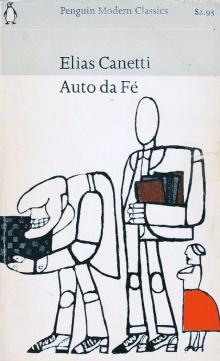
Notes from Hampstead, page 6


Every sharp mind soon oppresses us, makes us ashamed, as if we had broken a promise. But regardless, every mind properly exists for itself, even an “inferior” one that hasn’t quite reached such refinement.
She said that even the English can show grief about death and gave me many examples of mourning for dogs.
Since he went into mourning he no longer knows who his friends are.
This aversion to modern literature that you don’t like to admit—an aversion to modern man.
Memoirs of the Florentine world traveler Carletti. He started at age eighteen as a slave trader with his businessman father in the Cape Verde Islands, sailed with his first cargo to Cartagena and then to Panama, Lima, Mexico, Manila, Japan, and Macao, where his father died. He met another Florentine there, in whose company he spent more than a year. Then he journeyed back via Ceylon and India, and near Saint Helena his ship was captured by Dutch pirates and taken to Zeeland. There he fought in court for years to reclaim his stolen possessions but met with little success, and finally, fifteen years after he left, he returned to Florence, where he told the grand duke about his journey. He saw much that was interesting, but his narration seems somehow pale, warmed-over: the thing that interested him the most was prices. A true merchant, and the forerunner of today’s tourists, who mainly record and convert the prices in foreign countries. Having lost all his journals, he reports everything from memory: he still has all the prices in his head, citing them everywhere, and it is quite possible that they were the chief point of interest for his grand duke as well.
All that’s left of him are bones—but the noise they make! The bustle, the bother, the disturbance! With them alone he wants to accomplish what his flesh never could: his bones should grow rich and famous.
The oracle: he loves his own confusing inconsistency. He has succeeded in making an art of it. He fears nothing so much as losing it. He is his own cog in the wheel of time, and puts all his hopes in his inconsistency. Eventually, maybe, half sentences will have some kind of meaning.
He keeps people in subjugation, the better to despise them. These fools, who still believe or are bound to some belief, give him the strength to keep up the ragged show of confusion. For each one of them he has a word prepared, one that doesn’t fit with any other. He maintains that no man has ever understood what another has said; if men only understood this, they would be better off. But as it is, they hang on every strange word and poison their lives with whatever they suppose it means. He likes to listen when others miscommunicate. It delights him to recreate their helplessness. They suspect that he might hear confession, but he won’t hear anyone alone. If two people come and confess to each other simultaneously, however, he is all ears. His patience is infinite when they reveal to him their confusion. Then he smiles, friendly and cheering, saying over and over, “And then? And then?” Nothing bores him, nothing seems too long, so long as what he hears satisfies his passion to know.
It has happened that four or even eight people have appeared before him at once. He doesn’t refuse them; he is particularly attracted by the fact that they think they know one another and come as a group. He notes very quickly where their lines of division run and discreetly sets himself up as the ringmaster of their disunity. Some, who expect the opposite of him, are against him: these he quickly silences. It is so easy to expose their abysmal absurdity, and in one another’s presence they are even more easily shamed. He records his triumphs in short, nasty phrases.
What do the clever know of how much effort and cunning it takes not to succumb to the paranoia that is his natural tendency. How stubbornly he must struggle against his integrity, as others do against disintegration; how tireless and artful he has to be in distracting his mind so that it doesn’t focus on madness and evil; how he must divide himself up a thousand times to have enough breath to take in the world; how he tortures those he loves, because he loves them more intensely; how careful he must be not to see through things, because this destroys them for him; how he must keep on fighting death, the enemy, for only it has the universality to contain everything he hates.
F. sees reason in everything that is. Every institution makes sense; deftly his thought will find and administer its justness. He is peaceable and gentle; he doesn’t like fighting. Instead of weapons he relies on institutions. He compares but never attacks—there are so many sides to every issue that there is nothing left to attack. Tolerance keeps him away from religion: priests are as repugnant to him as soldiers. And he will say so of the former, but on the latter he is silent. He is ashamed of his cowardice but rather proud of his tolerance.
At home he is the opposite of a father. Certainly he loves his children, but he despises the authority every father has and he is reluctant to make use of it.
Books are his great passion: their appearance, their publication dates, prices, authors, reviews, and contents. Somehow he knows them, even if he can’t read them, since his profession doesn’t leave him much time for reading.
He really knows pictures and loves many of them with an awkward tenderness.
He is so loyal to the dead that they can never really disappear. He moves back toward them; they light up within him like pictures. In his eyes there is a grief that he will never give words to. But it was always there, even before their deaths, as if he had always known.
He is reserved, but he needs others who are not. In his youth, he was ill-used by moralistic pronouncements. So, while he hates intolerance, he has the acutest moral reactions to people.
He is tall and very thin; his limbs move about like snakes and drape themselves around chairs and other furniture. They are never still, constantly arranging themselves in new patterns.
Old friends are exciting, for we can know an infinite amount about them and see it all right there at once, and it seems to be more than could ever fit into one person.
Disturbing, this overflow in people we know for a long time—we could drown in it.
But we seldom think of all we know about people. We have forgotten most of it, and what remains is false, so we are as fresh for them as on the first day.
Memorial days: where misunderstandings intersect.
I am sick of these conversations with myself. I want to direct the conversations of others.
The “Notes” make most suspect the notion that everyone chooses something completely different for himself and then copies what someone else chose.
It’s against his nature to be a critic—he is too grateful.
Astounding, when things we recited to ourselves so often suddenly turn out to be true.
Hatred of destruction of any kind becomes dangerous itself: as reverence for everything that exists, the best as well as the worst.
You have to attack yourself so devastatingly that it’s really not fun. Without serious injuries that leave scars, you shouldn’t be allowed to get up again.
The animals he uses to ornament his thoughts curse him in silence.
Probably all satirists are one and the same person.
The evil eye I had no longer interests me. But I am enchanted when I read others who have it.
1966
Someone who can say nothing out loud without its coming true.
Contempt for one’s fellows must be balanced with self-contempt. If the latter prevails, then the writer is lost: he will destroy himself like Gogol. If the former prevails, the result is a prophet: arrogantly certain in his belief, he is a threat to the world, and thus ecstatically he helps bring about its destruction.
Finding the right balance.
Through the novels I finally allow myself to read, I animate the thousand figures and situations slumbering uneasily within me. Every book worth reading touches on a different part of life. I must do this, I tell myself today; I must write about that, I say tomorrow. Where should I begin, with so much waking at once? But still, if more quietly, I feel the suspicion that it is not right to work on something that was just my life. Isn’t it really unimportant who is recalling? And are sheer memories worth preserving, as if they could stand for the memories of others? And so one longs for the time when nothing was experience as yet, when everything was intuition. Only the poets who died young—Büchner, Trakl—maintained the purity of their expectations. For all the others, expectations were gradually transformed into experience. In this one respect it can be said that Kafka always stayed the same; from the beginning he had the integrity and wholeness of his old age, and he was spared the fate of getting young later on.
But that is exactly what has happened to me. I had the wisdom of old age in the intuitions of my youth. Now, at sixty, I am catching up with the foolishness of youth.
Perhaps this is the odd excitement I should be writing about, but it feels uncanny to me and I don’t trust it. And I haven’t yet found the formal medium that would serve as a legitimate structure for it.
Perhaps I am striving too much for a lost unity; perhaps—even in my work—I should let my self disintegrate into its component parts.
As soon as I concern myself with one of these parts, I have hardly begun when the others quickly announce themselves: “We are here too. Remember, you are writing a forgery if you leave us out.” And so I am scared off and keep waiting for a way to open up so as to handle them all at once.
Good old would-be father of the race! Wanted to have five hundred sons and got only one, himself…
He reveals himself as a member of all existing parties, collecting them, always finding new ones.
“Folklore” sounds like a parrot that belongs to everyone at once, to all the “folk.”
More talkative in solitude.
To see how writers are derived from specific painters, a new branch of literary criticism.
Thus we see that every name has the potential to become famous, as long as it doesn’t exceed a certain number of syllables.
Dante’s project appears to me to be ever more monstrous. Who could emulate him and call together the names of our time before such a bar of justice as his poem is? Today the hardest thing to manage is merely to judge oneself, and how proud one is just to succeed honestly in that!
No one has the integrity and trustworthiness of a judge anymore.
The judge is suspect even to himself. We don’t believe that he is a judge; we don’t believe he isn’t ashamed of it. This shame is the creation of Kafka.
If it really matters to you, get mad when you say it, or say nothing. Take off your gloves, and don’t come on too softly: it should wake you up, after all.
I so long to get free of the things that have stamped me and all the thinkers of our time and to ponder death as “impartially” as if I were a man of the previous century.
With friends we should keep an old-fashioned kind of distance, as if the telephone did not exist.
The people we don’t miss we have seen too much of; there’s nothing more to be done about it.
She speaks from the navel.
What if it were all just an overture and no one knew to what?
He sank three times, but to no avail—no one saw him. The fourth time he stayed up and no one saw him then either.
He wrote down everything God reported to him, hot off the press.
What a poet doesn’t see never happened.
A stranger: when he opened his mouth wide to yawn, I recognized him.
You are distinguished by an almost mythic pedantry; you need your monstrous exaggerations to be true.
He was a mountain and erupted. He was a tree and toppled. He was a lion and lost heart.
How much we think and will never comprehend!
Word associations: only interesting if you leave out five of six connecting links.
She laughs as if some one were tickling her, not in the right places but just slightly off.
The kindly schoolmaster who steals from his students but always just from the best.
The wiseguy from New York. He can’t speak a word of English.
Literature of leaps and literature of steps.
Wales. I’ve been in strange and beautiful places the last five days, being shown much and seeing a good deal more. The ancient language, which I did not understand but heard everywhere, has a stubbornness and strength. But in order to save it—it is waging a desperate fight for survival—the people who speak it are constantly aware of it. They point with pride to every famous man who came from their midst, saying, “He was one of us,” and perhaps it does not really matter what he was famous for. Words mean everything to them—more than a sacred scripture, they have a sacred tongue. They cling to every scrap of land that is still theirs, they cling to their dead.
I didn’t hear any preaching in this language. Occasionally, when in longer conversations I would get excited, I felt the heightened attention of others, as if they sensed some link in me to their preachers.
The most wonderful things were the call of the curlews and the huge trees in the garden.
The humility of trees: that we can plant them, that they grow at our behest, where we want them to be.
My friends showed me everything, their entire history, from the cloister at the university in Bangor, where they met, to the little registry office in Bala, where they got married, to the village houses where Eirwen lived during the war, waiting for her husband’s leave, to the country road where late one night, extremely pregnant, she got caught in a thunderstorm.
The ancient farm of their friends who spoke English only with effort. The clock inside always an hour ahead. The eighty-year-old farmer, hands spotted with paint, coming home after nine from a sheepshearing at a neighboring farm. He had worked all day; they had shorn a thousand sheep.
Earlier, at supper, his son-in-law tells stories, with the emphasis of a Japanese actor; he has a face like a fox, but his eyes are piercing and kindly like those of a saint.
His exceedingly fat wife runs out of the kitchen, in rapid succession tosses various dishes onto the table, and before the guest has quite finished what was on his plate, hops up, insisting clumsily in her high-pitched voice that he help himself right away, eat, eat.
Afterwards she hauls out of the top drawer photographs that show the family members in all combinations. We are expected to become friends with each picture.
Her husband, who is missing both his thumbs, puts on his cap and disappears to fetch the old man, who is still at work. After a while he brings him in, a sturdy man with a mustache: he makes me think of pictures of old Georgian men; will he get to be 120 as well? He deserves to.
The couple’s young son, his grandson William, slender and dark, comes into the house, so now we have a short visit with the whole family. Even the boy speaks broken English, or does it just sound that way?
The whole family walks with us across a few fields, asking us quite formally to come again, even me, the foreigner, and everyone waves a long time.
Before dinner, Megan, the wife, shows us the “Chapel.” It is on the farm, a few meters from the house, which dates from the fourteenth century. The chapel is simple and plain, a tablet on the wall, dedicated to Megan’s great-grandfather, who was the minister here:
Born 1805
Born again 1825
Died 1849
Just behind the chapel, a little churchyard, almost all the headstones slate. The immediate and extended family have been buried here for a hundred years.
So the farm contains everything: the living, the animals, the chapel, the dead; and the old language is spoken always.
Your actual affection for people overcomes you when they are no longer around.
How scrupulously the participants in his seminar dissociate themselves from Kierkegaard! As if that were necessary for such zeroes!
Structures bore me; they are foisted upon us.
I spent many hours listening to people speaking in Wales. All I understood was a name now and then. While with them, I was happy (I often feel confined with people whom I understand). The enormous latitude for conjecture in the field of a completely foreign language. False interpretations, errors, nonsense thoughts. But also expectations, overestimations, promise.
Foreign languages as oracles.
People I haven’t seen for a long time: I forget that they have died.
Imagine you are living back in your grandparents’ day and have thought up everything to do with life today, without knowing it yourself.
Animals: we are more dependent on them than they on us: they our history, we their death. When they no longer exist, we will invent them all with effort out of ourselves.
Strike: Everyone decides never to leave their houses again. From this moment on, no door, no window is ever opened.
That is how they were found, three thousand years later, intact skeletons in intact houses, the only civilization that was ever known completely.
The bull bowed down before the matador and turned its back on the red cape.
He granted the bull its life and was torn to pieces by the mob.
He regrets nothing. He regrets everything. He regrets being seen doing so.
You are almost like the English; you always use the same words. But they are yours.
Don’t say it’s too late: how can you know you don’t still have thirty years to begin a new life? Don’t say it’s too early: how can you know that you won’t be dead in a month and that other people won’t fashion lives for themselves out of the ruins of yours?
If I were made of steel, it would provoke her. I am made of words.
Whoever speaks with himself day after day, over and over again, is impressive: the power of journals.
Poems in alien surroundings have more effect on me. In inappropriate surroundings they affect me the most, for only there are they totally isolated.
I have to see many people to be alone, and it’s important that I mean nothing to them.
When I dislike people, I get gruff and tough. In the presence of those I love I am nothing. Every effect I have on others transforms me into a fool.
At peace with everyone whom we have escaped.
The sycophant tries with every means to conceal how much he values the scrap that has fallen to him.