Dog Dish of Doom, page 2


My business was sporadic—you have to build a reputation for yourself. Luckily, I had a mentor, Lou Romano, one of the few animal-only agents working Broadway. Lou had actually done a Learning Annex lecture that only I and three bored twentysomethings attended, and I had dominated the question-and-answer session afterward. I’d given him my card, and occasionally Lou would throw me a bone, like when a local car agency needed a dog or cat for a TV ad. The national spots, which made tons of money, he kept for himself. Lou was a sweetheart, but no fool.
Little by little, my clients started to get work, and that gets you word of mouth. Now, five years in, I’d inherited some of Lou Romano’s clients when he passed away. Apparently he’d been recommending me from the time he’d gotten the diagnosis he knew would turn out badly for him. A gent to the very end. Literally.
I pulled up to the driveway of my little house in Scarborough, New Jersey, a forty-minute drive from the George Washington Bridge. Sure, I still had thirteen years to go on the fifteen-year mortgage, but I had two bedrooms, a kitchen, a living room, a “den” (converted dining room), and a little backyard. Not bad for a beginning.
Right now, it was a little crowded. Mom and Dad, between gigs on the cruise ship, were in residence, working on their act. Dad was writing new material and Mom was keeping limber with ballet and tap classes a couple of times a week. It was April, and they figured to be back on the boat by June (although the phone hadn’t rung yet, which was worrying), so it was important to keep those creative muscles stretched and healthy. I knew the drill.
I wasn’t entirely prepared for the scene I found when I walked into the living room, though: Mom was at the spinet piano they’d bought for me (so they could rehearse and entertain when they were in town) playing “Over the Rainbow” for a lady of about eighty years, sitting in a wheelchair with a younger woman, dressed in medical scrubs, standing next to the TV table. Dad was sitting backward on one of my kitchen chairs, a baseball cap on his head (Staten Island Yankees) and a clipboard in his hand. The lady was singing enthusiastically, if not entirely melodically.
I knew better than to interrupt; I made my way around my own coffee table as if I were afraid I’d awake a sleeping giant. Finally, I got to Mom, who could play and converse at the same time. “Okay, I give up—what’s going on?” I asked.
“We’re holding auditions,” she answered. Sure. That explained it.
“For what?” The sweet lady in the wheelchair was doing her best to sound like a twelve-year-old girl from Kansas, and it was possible she was getting the Kansas part down, but the rest was, well, not in her wheelhouse.
“Dad has agreed to write and direct a revue for the Scarborough Senior Center,” Mom said. Her tone was not judgmental; she wasn’t acting like I should have known. “We want to see what kind of talent we have available to us.”
“And this lady?” I asked.
Mom gave a half nod to one side. “Maybe she can tell jokes,” she said.
The song ended, mostly because Mom stopped playing (our guest had more or less given up on singing a few lines earlier, but looked pleased), and Dad made some marks on the form he had on his clipboard. “Very nice, Vanessa,” he said. “We’ll be in touch.”
No sooner was Vanessa out the door than a tall African American man was standing in the doorway. He had white hair, what was left of it, and carried sheet music. I didn’t want to know.
“I’m taking the dogs for a walk,” I said to no one in particular, and went into the kitchen, where I knew I’d find my two pals.
Steve, the dachshund, was cowering in a corner, traumatized by the commotion around the house and, worse, the loud piano playing. I went over to him first and stroked his fur, then scratched him behind his ears. He perked up, wagged his tail, and followed me to the door, where Dad had put up a baby gate to keep the dogs out of the living room.
Eydie, my rescued greyhound, was standing at the gate, barely acknowledging my presence. She was appalled at having to stay out of the living room, since there were people there who clearly had not been treated to her company. She wanted badly to correct that error.
Instead, I got the two leashes and led them both out the kitchen door to the backyard. I have a chain-link fence around the yard, but that’s just for the times when the dogs want to go out on their own. On our walks, we traverse the neighborhood.
I resisted the urge to check in on a couple of clients, especially Trent and Louise, and concentrated instead on living in the moment. That’s always been a problem for me.
The dogs were happy to be out on such a fine day, so we walked for a long time. I find it relaxing to walk with them; they don’t ask for very much and they never talk back. “You should have seen the owners I had to deal with today,” I told them as we walked past the borough hall. “You wouldn’t believe me if I told you.” I did not mention how lucky they were to have been adopted by someone as wonderful as me; I felt that should remain unsaid. I am nothing if not modest.
We stopped for a moment while Eydie decided to sniff a particular patch of grass more carefully than most, then moved on. We got to the main drag of Scarborough, West Roosevelt Avenue, and walked up toward the Carvel, which was not a logical destination with two dogs, but a sort of perfect goal, since I knew it was exactly a half mile from my house. Turn around, go back, complete the mile.
“Do you guys think I should drop the Barclays?” I asked the dogs. “I mean, they seem really sort of creepy, but Bruno is such a nice dog.”
“I don’t know,” said a low voice, almost a growl. “Do you think they’re being mean to the dog?”
I turned to see Sam Gibson behind me. Sam, who runs Cool Beans, the local coffee shop—which just sells coffee and pastries—was wearing an apron and an amused expression. “Ruh-row, Ray,” he said. “Rooks rike rouble.”
“You’re incredibly amusing, Sam.” Steve went over and sniffed Sam’s leg. He loves Sam. Eydie, being a little less obvious in her feelings, licked his hand discreetly.
“You know, talking to your dogs is one of the first signs, Kay.” Sam said.
“Of what?”
“Needing someone else to talk to.” Sam asked me out once, and I turned him down because I had a client meeting. He’d been hinting he might do so again, and I thought I might have to have another client meeting. I like Sam, but not that way. He’s so … Sam.
“You’re never lonely when you have a dog,” I told him. “Or two.”
He chuckled, probably taking the hint and deciding to postpone any talk of dating for another time when he imagined I’d be more receptive. “You need anything while you walk?” he asked. “Iced coffee? Bottle of water?”
“No thanks, I’m good.”
“You say that, but can you prove it?” He was gone before I could answer.
Scarborough is the kind of town where you don’t know everybody, but you always know somebody. I wasn’t in the mood to talk to people, so the dogs and I decided (after a quick conference) to head home the back way, off main streets where we were less likely to be engaged in conversation. The dogs didn’t feel like talking either.
When I’d gotten into the agency business, it was largely because I love animals. But I hadn’t considered the fact that the clients (dogs, cats, parrots, and, one time, a pig) would come with human owners. I don’t do as well with people.
It’s not that I don’t like people; I grew up in a resort hotel and got to know the staff and some guests, and found them all fascinating. But people always seem to have me at a disadvantage, as if they all know the rules and haven’t bothered to tell me. I’ve learned to negotiate contracts and I know how to talk to people in a business atmosphere, but one-on-one interaction with people I don’t know very well has always been a challenge for me.
We got back to the house without any further incidents and I gave Steve and Eydie treats when we walked inside. The auditions in my living room seemed to have been concluded for the day; there was no more piano music and no unfamiliar faces I could see.
The dogs and I breathed a sigh of relief.
“I’ve been thinking,” I told Dad while we made dinner that night (Mom is an awful cook and knows it, so she was putting the living room back together). “You and Mom have been spending more time here lately.”
“It’s because the cruise ship doesn’t book acts until the last minute these days,” Dad explained. “We’re not cutting-edge, but I’m going to write us a new act and we’ll get back out there, I promise you.”
I have been told that a person is supposed to tear, not cut, lettuce for a salad. I do not subscribe to this theory, as a knife is much quicker and requires less touching of food. “That’s not what I’m trying to say, Dad. I love having you guys around. But this is a pretty small house, and you don’t have the freedom you need. How can you rehearse a new act in that living room? It’s too small.”
Dad looked up from the pasta he was stirring. “You want us to get our own place?” he asked. “I’m not sure if we could…” I knew they didn’t have enough money to buy a house. They’d spent a good deal of their savings putting me through college, and hadn’t completely recovered yet.
“No, not exactly. I’m thinking maybe I should start looking for something bigger. With a separate apartment for you guys, like a mother/daughter house. Then you could still stay here when you’re not working, but you could feel like you had your own place.”
Dad rested the wooden spoon he’d been using on a cutting board next to the stove. He came over to me and gave me a hug, which I hadn’t expected. Some lettuce landed on the floor. Steve walked over, tail wagging, sniffed it, lost interest, and walked back to his bed next to the pantry. He stretched out and yawned. No meat. What was the point?
“You’re a good daughter,” Dad said.
“Well, I have good parents.” I’d been thinking about a larger house for six months. The agency was doing pretty well, and home prices had stayed fairly low. The problem was, that meant I’d get less for this place, and that might make a new purchase more difficult. I’d have to talk to a real-estate agent.
If dealing with strangers was as easy as dealing with my parents, life would be a lot easier. We spent that evening eating and talking—and laughing at some of Dad’s new jokes for the cruise-ship act. Mom said a couple of the auditions for the senior-center show were actually very impressive, and she thought the show, to be staged in a month, had a chance to be something special. We enjoyed one another’s company well into the night.
And the next morning, I found out Trent Barclay had been murdered.
CHAPTER THREE
I don’t usually wait by the phone for a client to call, but that morning I was anxious about Bruno’s chances in Annie because a hit Broadway show pays nicely and suddenly I was thinking about a move to a larger home. Yeah, it’s all about the art, but a girl’s gotta make the mortgage payment too.
After putting together some scrambled eggs and toast—I’m not the most creative cook on the planet, especially at eight in the morning—I sat down with a cup of coffee at the minuscule kitchen table I’d bought thinking it would be cozy, when in fact it just squeezed into the corner of the room I needed it to fit.
I had not, of course, made any breakfast for my parents. They are veteran show-business professionals, and as such don’t wake up before eleven a.m. at the earliest. This has been going on for all of their adult lives, and there is no point in trying to change it now, even if I wanted to.
So, with my phone out on the table for maximum call-receiving speed, I was reading the New York Times before moving on to Backstage, which admittedly I read on my laptop now. The Times still gets delivered in actual paper form because I am respectful of enduring institutions, even the ones that will probably die out in ten years so we can read our news on a three-inch screen. I will hold out on reading any publication on my phone for as long as I can, and then I will inevitably cave in and squint at the news every morning, tailored to my preferences, as it would be an awful thing if I just stumbled across an article on a subject I hadn’t expected. Progress is a funny thing.
The phone didn’t ring, but the Times shook me up pretty well.
A small article, barely three paragraphs, on page A26 (where once again efficiency had reduced the Metro section to three pages) just happened to cross my eye because the headline included the word “dog.” It’s second nature now, a professional talent cultivated over years.
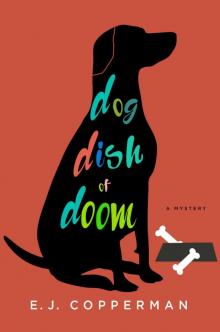
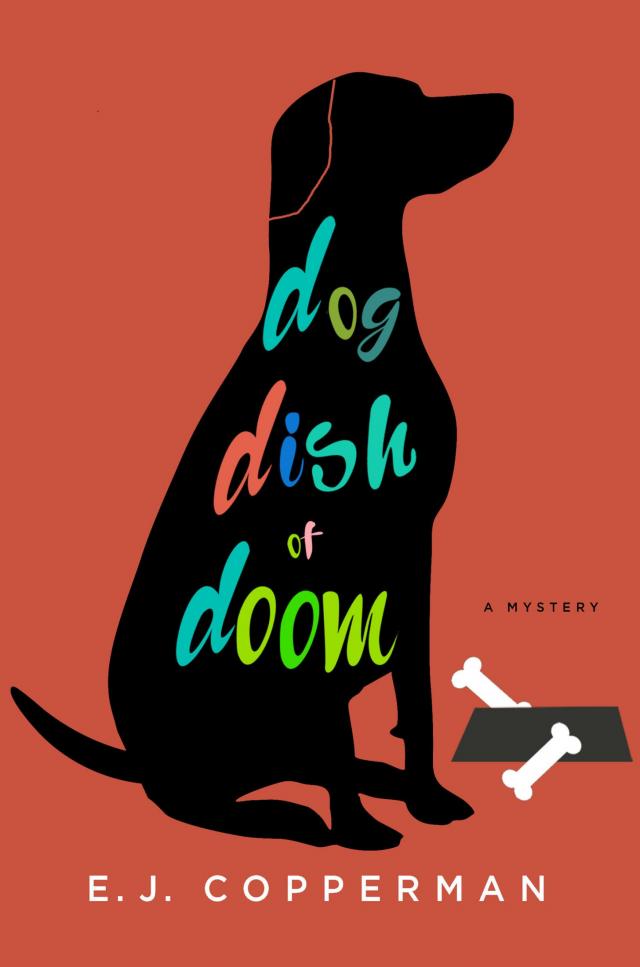
MANHATTAN MAN FOUND WITH FACE IN DOG DISH, it read.
It took just a few seconds for me to read through the description of the incident, in which a man described as a “local entrepreneur” had been found dead in his SoHo apartment, facedown in a dog’s water bowl.
Only in the second paragraph did the reporter mention two pertinent facts: (1) The man had been stabbed in the back with a carving knife and landed in the dog’s dish; and (2) His name was Trent Barclay.
The noise I made in my throat was so instinctive and unusual that I didn’t immediately recognize it as coming from me. But Eydie heard it and walked over to see what was wrong (and to see if there was any bacon with the eggs and toast). Steve, having heard my guttural gargling, looked worried and curled up a little tighter in his dog bed.
Without thinking, I petted Eydie on the head while my mind reeled. Maybe the paper was wrong. (Confronted with horrible news, like when my grandfather died, my initial response is to assume that some awful mistake has been made. So far, that has never been the case.) Maybe Trent wasn’t dead. Maybe it was the wrong Trent Barclay (surely there must be dozens of Trent Barclays in the Manhattan phone book, if there still is a Manhattan phone book).
Maybe my chance to place Bruno in a great big Les McMaster musical hadn’t just splashed into a dog dish in SoHo.
Yeah, I admit it: My concern was about my business, and not about poor Trent. For one thing, I hadn’t known the man for very long, and had interacted much more with his dog than with him. Besides, Trent was kind of a jerk.
But the fact was that now I was sizing up the little kitchen I had and thinking maybe Mom and Dad could just get another extended gig on a cruise ship and I didn’t have to think about a bigger place.
My mind didn’t exactly clear, but I realized I had to form a plan of action. First, I picked up the phone and found Trent in my contacts. I called his number. It was not a huge surprise when the call went straight to voicemail. Probably a lot of people were calling Trent to tell him he was dead.
Failing that, I dialed Louise. Again, it didn’t exactly shock me when her line wasn’t answering either. But since the tiny Times article didn’t mention anything about Trent’s wife being discovered in Bruno’s crate, there was a somewhat better chance she’d get back to me, so I left a message.
“Hi, Louise. Um…” (What do you say to a woman whose husband just got stabbed in the back—literally—and did a face-plant into the dog’s water bowl?) “I, um, read about Trent, and I’m so sorry to hear it. Please give me a call back and let me know if there’s anything I can do for you or Bruno, okay? I just feel awful about it and hope there’s something I can do. So give me a call back as soon as you can.”
I disconnected, then immediately pushed the button to redial Louise’s number. “Um, Louise? This is Kay Powell. I don’t think I said that before. So, um, call me.” I hung up because I couldn’t think of a way to make myself sound even stupider.
Now what? Who do you call when your client ends up murdered and humiliated at the same time? Is there a proper mourning period during which a victim’s dog can’t actually go out on auditions? You don’t see that sort of thing in advice columns, and the Times doesn’t have an advice column anyway. Or a comics page. Two of the paper’s few failings.
When you get really upsetting news, there’s a strange impulse to immediately share it with someone else. For one thing, it makes the news seem realer, somehow. For another, you get sympathy (if that’s what you’re looking for) and a sense of control, since you now have power over the information and get to decide about its dissemination.
The problem was that at the moment, I didn’t have anyone to tell about Trent Barclay’s murder.
Sure, I could have told Mom or Dad, but they were asleep and I hate to wake anyone, especially two old hoofers whose bones creaked a little before they limbered up for the day. They’d have sympathy for me, all right, but first they’d have to remember what it was like to be awake. No, telling my parents could wait until later.
I hadn’t made a horde of friends in Scarborough since I’d moved here. Sure, there was Sam and one or two others who ran businesses in town, but they were acquaintances, even if Sam hoped otherwise. I had clients, but they were generally nonverbal and their owners were not the type of people I’d found especially ingratiating. Trent and Louise were not atypical of the “stage parents” my clients tended to have.
My college and law school friends were scattered about the country, and it’d sound weird for me to contact them out of the blue to tell them a total stranger had gone facedown in a two-inch dish of water.
I’d basically decided to get on Facebook and tell any of the random 126 people with whom I was “friends” there about Trent when the doorbell rang. Knowing Mom and Dad could essentially sleep through a marching-band competition held in their bedroom, I took my time getting to the front door and looked through the convenient peephole while the bell rang a second time.
A woman in business clothing, tall and of Latin descent, stood there looking far too stern for a Jehovah’s Witness. She looked, in fact, like a bill collector, but I wasn’t aware of any delinquencies in my payments. So there was no choice but to open the door.