Million Dollar Outlines, page 21


—As you create each plot line for your character, make sure that you include your villain on your plot chart. Ask yourself over and over again, what is my villain going to do to block other characters? How will my protagonists foil each other? If you don’t have a villain, then what is nature (or another character) going to do to block your protagonist? Your goal here is to have your characters get involved with one another as much as possible. They think about each other, talk about each other, and move against each other.
—Look at archetypal plot elements and at elements that might resonate with other works or life. Do you want to include such things in your novel? If so, tag your plot lines in appropriate places to remind you to include those elements.
—Look at the plotting tools in your arsenal. Ask which ones you would like to use. Plot in your arguments, reveals, timebombs, reversals, dilemmas, doubling, haunting, foreshadowing, and any other tools that strike your fancy. If there is one that you haven’t thought of using, try thinking of ways that you might fit it in. In particular, look at the “Hourglass of Evil,” and consider how that insight might make you want to change your outline.
—As you plot, themes will begin to arise, particularly as a protagonist must fight his or her inner demons. Think about those themes and decide if you will need to insert scenes to expound upon them. For example, let’s say that you are dealing with a protagonist who suffers from greed. You might ask yourself, what scenes do I need to add, or partial scenes do I need to change, to expose this character’s flaw? How will I show growth? Ultimately, how will I redeem the character?
—Set goals for your story. If there is a piece of writing that you particularly admire, consider how you might beat it. For example, let’s say that you have always thought that the battle for Helm’s Deep in The Lord of the Rings is the coolest you’ve ever seen. Figure out how to beat it. Or maybe you think that the prologue to The Wheel of Time is the most gripping you’ve ever seen. Figure out how to beat it. This might require you to create certain scenes that you didn’t at first anticipate.
—Considering the age and sex of your protagonists, look at the emotional beats that you need for scenes. Do you need to create scenes that arouse a sense of wonder? Do you need instances of romance or mystery? As you figure out which of these emotional beats that you need to add, brainstorm ways that you might include them in your outline.
—By now, you will have filled in many pieces of your “story puzzle.” You should have a good plot chart, one with the highs and lows mapped. Go through it and begin describing each scene. Tell who the viewpoint character will be, using Orson Scott Card’s information from Characters and Viewpoint as a guide. This means that the character in the most pain will probably be your protagonist, but powerful characters of any kind might fit that bill. Describe the action that takes place in the scene, and describe the setting. Throw in dialog or lines that excite you. When you finish, you should have a long document—sixty or even a hundred pages—that acts as a map for your novel. When you’ve got an extended outline, you’re ready to begin writing.
—Maybe you don’t feel like writing at first. That happens. Often, we feel overwhelmed the immensity of the task of creating a novel. Use a writing exercise—such as the description, duality, or the argument exercise—to get things moving for the day. The chapter will usually come together pretty quickly. There are quite a few exercises that might help. For example, try looking in the dictionary for a word that you never use. Consider how it might be used in a sentence in your work. That will often get you started on a scene.
—Once the novel is started, if you get a couple of chapters in and don’t feel like writing, consider whether you’ve made a false move. Did you end a conflict too soon? Did you have a character act in a way that feels false? If so, you might need to back up a step and edit out mistakes or make changes before you move on.
—If you just don’t want to write because you feel that you’ve gone cold on the manuscript, then go back and re-read what you’ve done—maybe for the past forty pages. Make editing changes as you go. By the time that you’ve edited a chapter or two, you’ll normally feel ready to move forward.
—Read for inspiration. Very often, reading the works of others for a limited time, say half an hour in the morning, will not only get you into the mood to write, it might inspire new ideas on how to handle your own story. Music or art will often do the same.
Learn more on how to improve your writing and enhance your stories from David Farland’s other writing books.
About David Farland
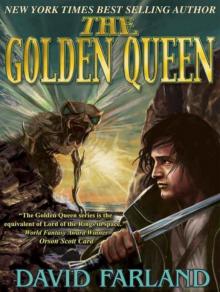
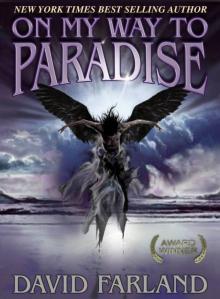
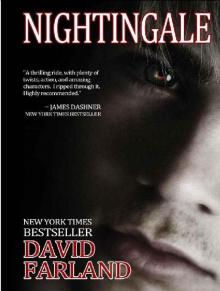
David Farland is an award-winning, international best-selling author with over 50 novels in print. He has won the Philip K. Dick Memorial Special Award for “Best Novel in the English Language” for his science fiction novel On My Way to Paradise, the Whitney Award for “Best Novel of the Year” for his historical novel In the Company of Angels, and he has won over seven awards—including the International Book Award and the Hollywood Book Festival, Grand Prize—for his fantasy thriller Nightingale. He is best known, however, for his New York Times best-selling fantasy series The Runelords, which will soon be made into a graphic novel and, likely, a movie.
Farland has written for major franchises such as Star Wars and The Mummy. In the video game industry, he has been both a designer and a scripter and was the co-leader on the design team for StarCraft: Brood War.
As a writing instructor, Farland has mentored dozens who have gone on to staggering literary success, including such #1 New York Times Bestsellers as Brandon Mull (Fablehaven), Brandon Sanderson (Wheel of Time), James Dashner (The Maze Runner) and Stephenie Meyer (Twilight).
Farland judges L. Ron Hubbard’s Writers of the Future, perhaps the largest worldwide writing competition for new fantasy and science fiction authors. He has worked in Hollywood greenlighting movies and doctoring scripts. He set the Guinness World Record for the largest single-author, single-book signing.
Dave is also one of the founding instructors of the Superstars Writing Seminars with bestselling authors Kevin J. Anderson, Brandon Sanderson, Rebecca Moesta, Eric Flint, and James Artimus Owen, superstarswriting.com
David Farland has been hailed as “The wizard of storytelling” and his work has been called “compelling,” “engrossing,” “powerful,” “profound,” and “ultimately life-changing.”
Other WordFire Press Books
Be sure to check out the growing list of other great WordFire Press titles at:
wordfirepress.com
David Farland, Million Dollar Outlines