

The Shape of My Eyes, page 1
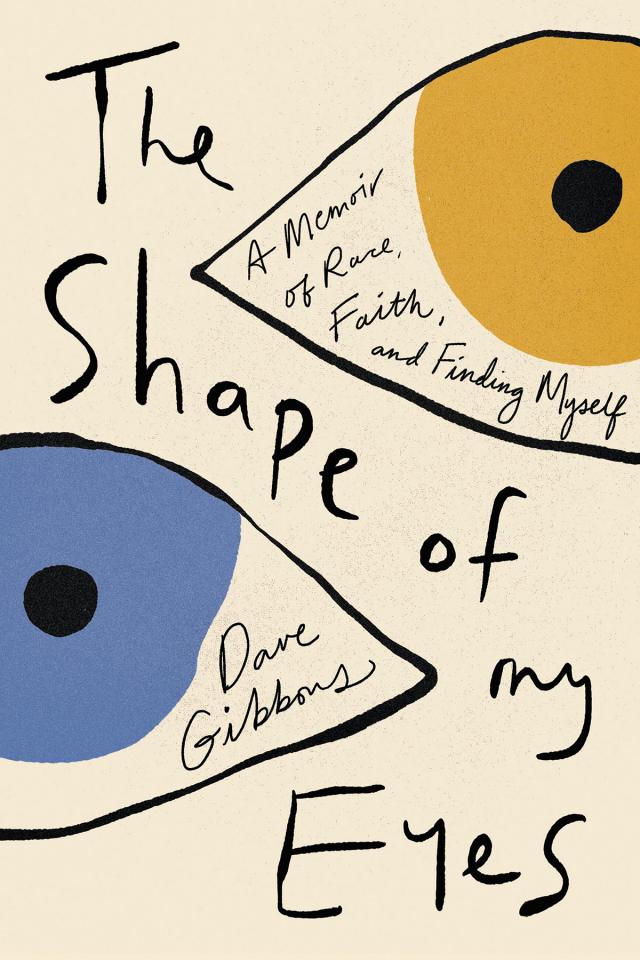


Copyright © 2024 by Dave Gibbons LLC
Cover design by Faceout Studio, Amanda Hudson
Cover copyright © 2024 by Hachette Book Group, Inc.
Hachette Book Group supports the right to free expression and the value of copyright. The purpose of copyright is to encourage writers and artists to produce the creative works that enrich our culture.
The scanning, uploading, and distribution of this book without permission is a theft of the author’s intellectual property. If you would like permission to use material from the book (other than for review purposes), please contact permissions@hbgusa.com. Thank you for your support of the author’s rights.
Worthy
Hachette Book Group
1290 Avenue of the Americas, New York, NY 10104
worthypublishing.com
twitter.com/worthypub
First edition: July 2024
Worthy is a division of Hachette Book Group, Inc. The Worthy name and logo are registered trademarks of Hachette Book Group, Inc.
The publisher is not responsible for websites (or their content) that are not owned by the publisher.
Worthy Books may be purchased in bulk for business, educational, or promotional use. For information, please contact your local bookseller or the Hachette Book Group Special Markets Department at special.markets@hbgusa.com.
The poem “Night” by Kevin Schaal has been reprinted with permission of the author.
Scripture taken from the New King James Version®. Copyright © 1982 by Thomas Nelson. Used by permission. All rights reserved.
Print book interior design by Bart Dawson
Library of Congress Cataloging-in-Publication Data
Names: Gibbons, Dave, 1962– author.
Title: The shape of my eyes : a memoir of race, faith, and finding myself / Dave Gibbons.
Description: First edition. | New York : Worthy, 2024.
Identifiers: LCCN 2023051887 | ISBN 9781546003236 (hardcover) | ISBN 9781546003250 (ebook)
Subjects: LCSH: Gibbons, Dave, 1962– | Clergy—United States—Biography. | Korean Americans—Biography. | Christian biography—United States.
Classification: LCC BR1725.G437 A3 2024 | DDC 280 [B]—dc23/eng/20240126
LC record available at https://lccn.loc.gov/2023051887
ISBNs: 9781546003236 (hardcover), 9781546003250 (ebook)
E3-20240525-JV-NF-ORI
Contents
Cover
Title Page
Copyright
Dedication
Prologue
Chapter One: Between Two Worlds
Chapter Two: Nature Boy
Chapter Three: The Valley of the Sun
Chapter Four: Fists of Fury
Chapter Five: Saved by a Short-Haired Jesus
Chapter Six: Origin Stories
Chapter Seven: Lost in Translation
Chapter Eight: 한 Han—a Collective Pain
Chapter Nine: Alone
Chapter Ten: Rocky Mountain High
Chapter Eleven: Twenty-Five Seconds
Chapter Twelve: Grits and Gravy
Chapter Thirteen: 눈치 Nunchi-a Dark Premonition
Chapter Fourteen: Hit and Run
Chapter Fifteen: No Interracial Dating
Chapter Sixteen: 쌍꺼풀 Sangapul—“Double Eyelids”
Chapter Seventeen: Forgiving Dad
Chapter Eighteen: 1 + 1 = 3
Chapter Nineteen: A Haven for Misfits
Chapter Twenty: Beyond the Uniform
Chapter Twenty-One: One Last Kiss
Chapter Twenty-Two: Same Same
Chapter Twenty-Three: This Is Me
Chapter Twenty-Four: Epiphany
Chapter Twenty-Five: The Promise Fulfilled
Epilogue
Acknowledgments
Discover More
About the Author
Praise for The Shape of My Eyes
Dedicated to those searching for home
Explore book giveaways, sneak peeks, deals, and more.
Tap here to learn more.
Prologue
An uneasiness rose inside me. My heart started racing and a cold sheen of sweat traced its way down my forehead. The very air seemed laden with a sense of dread.
I didn’t want to go anywhere, and I didn’t want to see anyone. In a mere hour, people would be showing up to hear me speak at our church’s twentieth-anniversary celebration. The pressure to deliver a spectacular talk, mixed with disappointment about not having our own property at this stage of our existence, stirred an emptiness in me.
Maybe I’d feel better once I got to church. I tried to convince myself that I’d had this feeling before, and it had been okay. I considered trying to make myself go, but it really felt different this time. I just I couldn’t do it. I called one of the staff, my voice shaky.
“Abe, I don’t think I can come today. I’m not feeling well.”
I couldn’t tell him how I was really feeling. I considered what people would think of me if I didn’t show up and how I would explain this dark place that I found myself in.
I can’t reveal all my anxiety.
I was used to being the strong one.
Abe was caught off guard, but assured me that he’d take care of things.
“You okay, Dave?” he asked.
“Yes, I think so. Thanks, Abe.” I didn’t want to say anything more. All I knew was that I wasn’t well.
I’d never missed an event like this before. I was dependable. I consistently met deadlines and expectations. My personal credo was that just showing up is a large part of “crushing it” in the world. Abe had never heard me sound like this in the twenty years we had known each other, and I’m sure he was baffled as to why I needed the rest of the morning to try and pull myself together.
I didn’t understand it, either.
As I lay in the sanctuary of my bed, trying to make sense of what was happening, I realized that the anniversary celebration for our church was clearly unearthing feelings and expectations I had buried. Our church is not a normal church. We are culturally diverse and young. We pride ourselves on being a church for those who don’t usually like church. And even though outwardly it appeared that our unique community was successful, I was constantly struggling not having our own facility or property to call our own. We had moved locations dozens of times. We could boast that we were a Southern California megachurch, but in reality, our real impact in the city or in the world seemed minuscule. I had been told I would need to raise an enormous amount of money for the facility of our dreams. These were the immediate, more tangible things I could point to catalyzing these intense feelings of panic.
Panic.
There it was.
Was I having a panic attack? I pulled out my laptop to google my symptoms. Disorientation. Nausea. Sweating. I was having a panic attack. I realized this had happened to me before, but I had never recognized it as a full-fledged panic attack. I thought it was some type of normal nervousness or the kind of fear that envelopes everyone occasionally. Just a case of heightened anxiety.
I knew it was going to take some time for me to unravel this moment of revelation. I knew that moment that there were deeper things about my past that were unresolved.
My life had always been oriented toward the future. That’s how I was taught as a child. Things like the Rapture, Jesus’ second coming, heaven, and the afterlife are a part of my daily cycle of meditations. When I started consulting and launching some companies, I was future oriented as well. Entrepreneurs are rewarded and celebrated for being visionary, for being ahead of others in predicting future trends and movements. So naturally this became my life orientation, my identity: the visionary and futurist leader.
What I was experiencing this morning had little to do with the future. It dealt with my past. My parents. My religion. The clashing of cultures. The dichotomy of East and West. Race and heritage. Unexpected pain. And my eyes. The myriad of people, events, and cultural experiences chosen for me were not of my volition.
There was something else. Since I’d become a spiritual guide, my ears had been opened to the anguish of countless tragedies and traumas. These stories and whispered secrets had taken residence in my soul. They had done something to me. Their effect was hard to perceive at the time because I was entirely focused on listening and understanding others’ pain. I was not yet cognizant of what hearing those stories was doing to me.
I was experiencing a very real phenomenon called vicarious trauma, where experts say you can take a significant percentage of the trauma of others into your own body. When someone shared their pain with me, it would stay with me for days, even weeks. Back when I started pastoral work, I would line up my counseling all in one day. I soon learned that I would be wrecked for days after these sessions. Digesting the suffering and trauma took a toll on me every time I listened to someone who was hurting.
What do you do with a wife’s pain as she talks about her husband’s sexual abuse of their daughter as he quietly sits next to her, looking down at the floor with shame?
What do you do with all the anger and worry when you’re called to intervene in a marital dispute? The wife answering the door, still breathing heavily from an intense argument, sweating and crying, with a deep gash across her forehead. The wound is still fresh, white, and starting to bleed. How does someone make sense of that?
Where do you place the anguish from the pain of seeing a young couple in the emergency room holding their lifeless daughter in their arms?
Vicarious trauma is real.
Even on that Sunday morning, I understood there was unfinished work processing my past that had unearthed this panic attack.
I knew there was more to it than my experiences as a pastor. I already understood on some level that the root cause had to do with my own family. With my Korean mom and Midwestern American father, and the merging of their cultures that is in my DNA. The fusion of their stories, their marriage, their suffering, and their secrets is embedded in me.
I’m Dave Gibbons. A Korean American. I look 100 percent Korean. Yet my father is white and my mom Asian. I’m married with four beautiful children. I’ve traveled to many places in America and spent a lot of time in Asia and South America. I love to eat bibim-naengmyeon, cold noodles mixed in a spicy gochujang-based sauce mixed with vegetables, yet love my hamburgers, too. It’s fun exploring cultures, but home to me can be anywhere my family and friends are. I think laughter is healing and holy. I do work that makes me look like an extrovert, but I’m an introvert who loves being by himself for long periods of time. I work in multiple worlds, from the religious realm to the arenas of business, professional sports, and entertainment. I’m unusual to some people because I’m a pastor and I also lead a business where I consult, write, and speak. I love working with creative and thoughtful people in diverse cultures and spheres. My advisement work has been with venture capital companies, hedge fund managers, professional athletes, and entertainers. That’s my work. But over time, all this work with people simply exposed things in my personal life that needed deeper examination. This book examines the awkward and hazardous dance of finding myself in the midst of cultures, family, and religion. Yes, religion. The topic of conversation often hard to discuss without a fight. My hope is that sharing my journey into the roots of evangelical, American Christianity will shed light and understanding into a culture that has become a political and economic juggernaut. My intent is not to belittle the culture or anyone associated with it. I became a part of it and was certainly caught up in the zeitgeist of it all.
To be candid, writing this book was an opportunity to reexamine my beliefs and perspectives. Narratives of old stories I told had new meaning when I took the time to sit in a scene and thoughtfully consider the sounds, the characters involved, and the details of how each person would respond in that specific situation. Since this is a memoir, this is my perspective. This book has gone through multiple versions and countless pep talks. I took the liberty to change some names and several events slightly to safeguard the privacy of those who inhabit these pages and to fill in the gaps of my memories. I hope that in my story you might find a piece of your own story.
So here we go. My earliest story begins in Seoul, South Korea.
CHAPTER ONE
Between Two Worlds
In Korean culture, a child’s first birthday is marked with exuberant celebration. In the past many children did not survive their first year. If they did, their first birthday—called dol (돌잔치)—was celebrated with a party to commemorate that the child had made it despite the harsh conditions of the war-torn country. I was born into this divided nation on February 28, 1962, when families were torn apart due to the Korean War: Parents from children. Brothers from sisters. Husbands from wives. The thirty-eighth parallel divides the North and the South, and still remains this way today.
The Armistice between North Korea and South Korea was signed nine years before my birth. I was designated as a mixed-race baby—the type of baby who might have been thrown into a trash can or left at the door of an orphanage just a few years earlier. US soldiers would have relations with the Korean women, and unwanted children became part of the fruit of postwar Korea. The shame and social stigma associated with these children would be unbearable, and women abandoned their babies in great numbers.
Fortunately, I was part of the next generation of postwar children. My father, an Air Force man, arrived in Seoul soon after the Korean War. I had an American father who wanted me and a Korean mom who was treated lovingly by her American husband. When I was born in Seoul, I became the embodiment of East and West to my mom and dad. The best of both worlds. A symbol of hope to my father, who didn’t have a dad, and my mom, who like my dad, grew up in poverty. I became part of a rising tide of misfits coming out of the Korean War who had parents of both Asian and American descent.
A Korean child’s first birthday is celebrated with an array of traditional Korean meats and side dishes, stacks of fruit, and dduk—special rice cakes. The baby is dressed in the finest hanbok—traditional Korean clothes made of colorful silks and linens. Guests bring gifts of money and rings made of pure gold. The highlight of the party is not the baby smashing the birthday cake but the first birthday baby grab known as doljabi (돌잡이). A tray of specially selected items is carefully positioned in front of the baby, and everyone waits in anticipation until the baby crawls and chooses one. Whichever item the child grabs is said to symbolize the baby’s future career or fate. Each item has a different meaning. Some represent jobs, and some represent skills or a particular lifestyle. There’s a traditional set of items, but these days it seems anything goes, as people add toy golf clubs to represent a golf teacher or a pro golfer or add a computer mouse to symbolize a programmer or maybe a professional video game player or a paintbrush for the future artist. The degree of how seriously each family considers the baby’s choice varies from family to family, but the selection of items and their meanings are special to each family.
The items used by most households back in my day were money, signifying that the child would be wealthy; food, meaning they would not go hungry; a pencil, meaning they would become a scholar; and thread, which was believed to symbolize that they would live a long life. On my first birthday, I was all about the money.
My parents said that photographing me on this momentous occasion was hilariously difficult. My round head, a third of the size of my whole body, kept tilting to one side, with the rest of my body following. I resembled a Jell-O figure, wiggly and floppy. I would be positioned upright ever so gently on a crisp, white bedsheet, erect for a few seconds, then promptly fall over, oblivious of the photographic requirements. My proud Korean mother laughed so hard, she cried.
대브 Daebu was what they called me. It’s an affectionate Korean way of pronouncing my name, David. Many Korean American boys in my generation were called David or John or Sam. Boys in Korea are treasured and desired; women are given a higher status if they have a son instead of a daughter. They had thought I was going to be a girl, so they had a set of girl clothing ready and planned to call me Karen. My parents gave me, and eventually my brother, Doug, a common American name so that we would be more embraced and not ridiculed. My older sister, Chong, from my mother’s previous partner, stood out, but they made sure to give us boys names that Americans wouldn’t have difficulty pronouncing or wouldn’t find humorous. By giving us names like David and Doug, my parents were trying to assimilate us into an American segregated culture, which systemically had difficulty with interracial marriages and outsiders.
The black-and-white pictures of Mom and Dad together in these early years capture their joy, promise, and hope. Their relationship was strong, their affection for one another tender. Constant kisses and hugs, gentle touches were common in our house. They danced and laughed together constantly. I never saw them argue. Not even a harsh stare or a disappointed glance. Our home felt safe, stable, and filled with anticipation of better things to come. I relished how our family was the envy of so many of my peers. They’d often say, “Man, I wish I had your parents. You’re lucky.”
In those early years, I could never have imagined how things would change.
My father rarely talked about his childhood, except to share his passion for baseball and fishing. He blossomed as a baseball player and became a good pitcher during high school. We knew that he was born in Missouri and raised in Flint, Michigan, but we didn’t know anything about those places. We also knew that he had three older brothers, and that his own father had died of a health condition when Dad was just two years old. He was raised by a single mom, but he never talked about what it was like to grow up without a father. There was never a mention of the extreme poverty he grew up in or the challenges of life without a supportive dad. He rarely spoke about his mom, brothers, or father. But Dad was like my mother in that way. Their childhood and pasts weren’t discussed. Right after he graduated from high school, he joined the Air Force and was assigned to the US Eighth Army Compound, Yongsan Garrison, North Post, an American military base in Seoul, South Korea.


