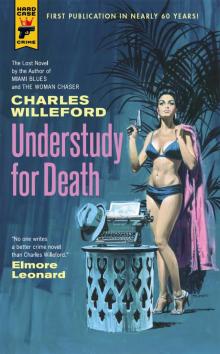
Writing & Other Bloodsports, page 17


(And get it over with);
Stamp out reality;
Pray for sex;
Familiarity breeds;
Chaste makes waste;
If at first you don’t succeed,
Cheat; and
Use erogenous zone numbers.
IN LIGHTEST AFRICA
East of Luanda,
Marching like tyrannosaurs
Above the mud-thatched huts,
A file of great transmission poles
Advances through the bush
HI HO, the candle flickers,
Mosquitoes break the mood.
Now the encampment,
And the soft-breathing
African night in sable folds
Far away, an eerie cry.
A hyena is searching
In the darkness
HI HO, the candle flickers.
Mosquitoes break the mood.
Tonight the haze of distant fires
Obscures the moon.
This is the time of the burning bush.
HI HO, the candle flickers.
Mosquitoes break the mood.
If you read these lines in their original prosaic setting, and if you missed the poetic, emotional impact at the time, aren’t you glad I found them?
The Name Above the Title
(1971)
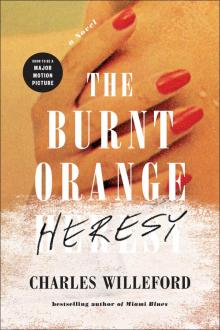
When my advance copy of my new novel arrived, my son took one look at the dustjacket, and shook his head.
“Too bad,” he said. “This time, I thought you were going to make it.”
“What do you mean?” I said. “I’ve already sold the movie rights.”
“Your name. Look at your name. Until your name on a novel is the same size type as the title, or larger, you really haven’t made it as a novelist.”
“Nonsense.”
“Maybe so, but not psychologically. And when you’ve really made it, they just print your last name only, and in type three times as large as the title. Look at Hemingway, Mailer. . . .”
“I don’t want to talk about them.”
“Of course not, Dad, your name is in type twice as small as the title.”
“You major in American Studies at the University of Miami, and now you’re a literary critic.”
“I know what I know.”
“But this is my twelfth novel, and if I haven’t made it as a novelist now, when will I make it?”
“When your name is above the title, and in type twice as large as the title, then—”
“Never mind. I’ll pass your suggestion on to the Contract Committee of the Author’s Guild.”
And I have.
Only His Analyst Knows Why He Writes
(1972)
“How do you get a novel published?”
I am asked this question about 15 times a year. In the beginning, when people first began to query me about it, I answered them at some length. I soon discovered that the question was rhetorical, or academic, and that most people were merely curious. They wanted to find out for the same reason that they ask surgeons how they perform vasectomies.
However, a surprising number of people write novels, and they actually want to know. In brief, then, here is the answer. You may be interested whether you have written a novel, are writing one, or whether you are merely curious about the process.
First, write the novel. It should be about 70,000 words in length, typed double-spaced, and preferably on 16-weight bond paper. It may go to a good many publishers before being accepted—if it is accepted at all—and tough heavy paper will save you a retyping job. The original manuscript may get lost, so be sure to keep a carbon copy.
If you are worried about your syntax, spelling, commas, and so on, and don’t want to take the trouble to learn the mechanics of English, you can get a high school English teacher to proof your manuscript with a blue pencil for $100. (Teachers always need the money, and they will be glad to get the work.) You must emphasize, however, that you merely want the grammar corrected—not a rewrite. A novel rewritten by someone else is no longer your work, and your “persona” will be destroyed by alien hands.
The next step is harder, because you have to be objective about something that has taken you a year, or even longer, to write. Compare your novel manuscript with a recently published novel. If it is as good, or better—and you aren’t kidding yourself—then by all means, start sending it out.
A list of publishers who publish novels may be found in The Writer’s Market. This book is revised annually, and you can read it in the reference room of any public library. The editors explain what kinds of novels they publish, and the kinds that they do not. So it would be a waste of your time to send a sex novel to a publishing house that only issues juveniles.
Send your manuscript first class postage, and include postage for its return in the event that it is rejected. You should also enclose a self-addressed postcard, stating “Your manuscript has been received, and you will have a report in about ____ days.”
When the card is returned, your mind will be relieved that the publisher got the manuscript, and you won’t have to worry about it until the number of days filled in by the editor are up.
Because publishers receive a great many manuscripts, and because all of them are read, except for the obviously illiterate, it usually takes from two to four months before you get your manuscript back with a printed rejection slip. It isn’t necessary for you to include a letter with your manuscript, unless you give instructions to have it returned by Railway Express instead of by first class mail. If six months pass, and you don’t hear from the publisher, you should write and ask him about it.
What are your chances for getting a first novel published?
Frankly, they are not very good. Bear in mind that the first novel you write is a learning experience. Taylor Caldwell wrote eight novels before she got one published (and long ones, too). Peyton Place was the 17th novel Grace Metalious wrote—it took her longer to get the hang of it, I suppose.
Every year there are about 800 novels published; of these, about 10 percent, or 80, are first novels. In comparison, our medical schools crank out about 6,000 doctors every year. It is much easier for you to become an MD than it is to become a published novelist. The average doctor will earn about $30,000 a year within three years following his graduation from medical school. The average novelist will not make $30,000 in his entire lifetime; in fact, he will usually earn his living by some other means.
Nevertheless, if you are a doctor, you will have to spend your days talking to people all day, and most of them will be sick; whereas, as a novelist, you can sit in your boarding house room all day, and talk to yourself.
Publishers, on the average, accept one novel for every 200 submitted through the mail. This figure includes those novels written by established writers which have been submitted directly to a senior editor by a literary agent.
When a person knows the odds against him, what makes him write a novel in the first place? This question is much too complex to answer here. Besides, only his analyst knows for sure, and he isn’t supposed to tell anyone.
But the mechanics of getting a novel published, as I have outlined them here, are simple enough to follow. One final word: If you know truly that the novel you have written is a good one—and you have thousands of published novels to compare it with—keep sending it out. Keep sending it out. Keep sending it out. . . .
Don't Kill Your Wife—Please!
(ca. 1965)
A few years ago when I served a brief stint as an associate editor at Alfred Hitchcock’s Mystery Magazine, one of my jobs was to read the daily in-flow of over-the-transom manuscripts. The average was about 35 stories a day. In addition to these unsolicited stories, we received four or five stories a day from literary agents. The stories submitted by agents, which we considered pre-screened, were read first, of course, but none of the over-the-transom stories were ever returned unconsidered, although most of them were quickly and easily rejected.
We needed at least 16 stories a month, and received, on the average, some 800 stories a month. Out of the 800, it was almost impossible to find 16 publishable stories. One month, we had to use four stories by one professional writer, using three different pen names to avoid detection. During my three months as associate editor, I was appalled at the poor quality of the stories submitted, including most of those that were sent in by agents.
Stories written in ink or in pencil were returned unread, although I did read a story all the way through once that had been written in blood. The author of this story threatened to kill me if it wasn’t published, but in as much as he enclosed an SASE I considered it an empty threat.
Single-spaced typed stories were rejected without being read, and if there were three or more errors in grammar and mechanics on the first page, the story was also returned with a rejection slip. This draconian rejection policy was based upon the idea that if a writer was too unprofessional to learn Basic English or to double-space his stories, his story was probably unprofessional as well. I don’t think we ever rejected a story by William Saroyan, who single-spaced his stories and never left any margins, but if Saroyan had submitted a single-spaced story, it would have been rejected. We didn’t have the time or the staff to re-type stories for the printer.
Next, the joy of anticipation.
A neatly-typed double-spaced story, with clean typewriter keys, on 16-weight white bond; a grabber for an opening sentence; and a plot that was developing clearly on the very first page. . . .
At this point I stopped reading. I tried to figure out the ending from the information on the first page. After pondering for awhile and coming up with a plausible or logical ending to the story, I turned to the last page. If I had been fooled; if I had guessed wrong, I then read the entire story. And if I had been fooled legitimately (no cheating), this story went into the tiny pile for reading by the other two readers. All three of us voted on an acceptance, but one vote didn’t mean the story was rejected—two did. If I wasn’t fooled by the ending, the story was usually rejected. Not always, of course, because there were other considerations—characterization, wit, brightness, diction, unusual idea, and so on. But most of these predictable stories were rejected because the readers of AHMM were mystery fans. They read mystery stories because they wanted to be fooled.
Out of the 35 unsolicited stories we got in the mail each day, at least 15 of them dealt with one idea. The idea was this: A husband or wife decides to kill his wife or her husband for the insurance money. So when I read a story that began, “Alyce Delaney fingered her paring knife and frowned at her husband’s bobbing Adam’s apple as he gobbled down his third piece of apple pie,” I groaned.
Just think for a minute: 15 out of 35 stories dealing with the demise of a mate for the insurance money—every day, five days a week. Almost half of the submissions dealt with this one idea. It tells us something about marriage in America, doesn’t it? And it also tells us that your chances of getting a mystery story published with this kind of murder is negligible to the point of being non-existent. Out of the 16 stories AHMM needs to fill out the “book,” only one of them can be a husband/wife or wife/husband murder-for-profit tale, and it will have to be an unusually good story. And believe me when I tell you that every mystery magazine is already overstocked with this kind of story.
The only other point I want to make here is this: Expend as much care in the writing of a mystery story as you would if you were writing a story for the Atlantic or Harper’s. A well-written story of any kind is invariably published somewhere, and editors will never have enough of them.
What Book Covers Tell You
(1986)
Out of curiosity, I checked recently and discovered that during the last 15 years I had reviewed more than 750 books. As I reflected on this small, eclectic library, I realized that I remembered more about the dustjackets than I did about what was inside those covers.
If you cannot tell everything about a book by its cover, you can tell a great deal, and some things about the cover are infallible guides to what lies inside.
For example, when Saul Bellow published Herzog, it was an immediate bestseller. At the time, I was lecturing at the Carillon Hotel in Miami Beach. The recreation director told me when I was hired to provide a little culture to those guests who desired sedentary entertainment and didn’t want to spend their evenings in the bar.
I prepared a lecture on Bellow. I found that the guests all knew something about Bellow, and many of them brought copies of the novel to the lounge. No one, however, I discovered during the question-and-answer period following the lecture, had read the book.
It was too hard too read, they complained, too baffling, and the words were too long. They had bought Herzog because it was a bestseller and it seemed like a good idea to bring a bestseller along on vacation. Herzog, like Dr. Zhivago, was one of the most unread bestsellers of the 1960s. But I had read it, and because I could explain it, the audience was grateful because now they would never have to read it.
Later I discovered that New York publishers, who also knew that practically no one who bought Herzog could read it all the way through, were equally baffled by its success. They then decided that Herzog sold well because of its light blue jacket (with the smudgy overlay of a darker blue blotch). This particular shade of blue then became known in the trade as “Herzog blue.” For the next few years, almost every new novel coming out of New York had a blue dustjacket. Today, Herzog blue has found its regular niche. If you buy a new novel that has a Herzog blue dustjacket, you will read a story—with little or no plot—about a miserable, middle-aged man who is embittered with his life.
By looking at the author’s photo on the flap on the back of the jacket, it is also possible to tell whether the writer is an established professional, or a young novelist with a first book (age has nothing to do with “young”; a man 45 years old with a first novel is still called a “young novelist”). If the author’s picture was taken by his wife (see photo credit in agate type), he is a young novelist. This photo opportunity is the bone young writers throw to their wives for putting up with their tantrums while they labored over their first books.
Superstar novelists, Graham Greene for example, have dustjacket photos by Karsh. But if the photo is by Jill Krementz, you can rest assured that the novel is either by Kurt Vonnegut or another established professional, and you will not be unduly disappointed by the book. The word has been out for a long time now, however, and I don’t know how long this fact will hold as a truism. Krementz is so much in demand nowadays, I fear that sooner or later a few shoddy novels will slip through.
Established women writers have their dustjacket photos taken by Richard Avedon, and he makes women look good, but an established male writer would be foolish indeed to have his photo taken by Avedon (see his photo of Eisenhower).
You can also tell a lot about the book by the name of the book jacket designer. If it’s by Roy Kuhman, for example, the chances are seven-to-one that you will be unable to fully understand the book’s contents. On the other hand, if you have 50 books on your home library shelves with jackets by Kuhman, you will get a reputation for erudition from your friends.
The title of the book, unhappily, rarely gives the reader a clue to what is inside. That is because most book titles are changed from the author’s title, which usually makes some kind of a connection. Editors change titles because they like alliteration. The late Grace Metalious called her best-selling novel The Blossom and the Flower, which made sense, in a way, but the editors changed the title to Peyton Place, which didn’t give potential readers a clue as to the steamy contents.
Perhaps the only valid clue in the title as to the readability of a novel is the word count. A two-word title usually indicates that this will be a better book than a novel with a one-word title, and a four-word title is better than one with three words. But there are too many exceptions to make this rule infallible.
However, if you are faced with a choice of 20 books, and you don’t know which one to read first, it is a fairly good rule of thumb to select a novel with a two-word title, that has a dustjacket photo by Jill Krementz, and has not been designed by Roy Kuhman—so long as the book jacket isn’t colored Herzog blue.
New Forms of Ugly:
The Immobilized Hero In Modern Fiction
(1964)
Publisher's Note
In February of 1964 Charles Willeford turned in his Master’s Thesis, entitled New Forms of Ugly: The Immobilized, Hero in Modern Fiction. That text, slightly revised and updated (e.g., changing ‘Negro’ to ‘black’), was published in a signed, limited edition of 350 copies by me in 1987. In February of 1967, Willeford gave an address to the English Club of the U. of Miami entitled “The Burnt Orange Heresy & the Immobilized Writer,” which essentially covered the same ground that his Master’s Thesis had three years previously, couched in the language of a lecture instead of a written work. It seems to me that both the introduction of the lecture, up to the point where the subject matter coincides with the material in New Forms of Ugly, and the lecture’s grand finale with its wonderful last paragraph (and sentence), give a truly Willefordian frame or “parentheses” around the body of the New Forms of Ugly text, and that is how I’ve presented them here.
(Introductory part of the English Club address, Feb. 15, 1967)
The big new rock and roll sound in America today is the San Francisco sound, the Bay Sound. This is loose, discontinuous music for dancing; and the dancers maintain a distance from each other of approximately ten feet. In addition to the audio assault on the central nervous system, the cacophonous big Bay Sound is disconcerted by those Stanley Kowalsky colored lights going, baby, and Andy Warhol b&w low-budget party films projected continuously on walls, ceilings and wiggling backsides. The pace is unstructured, unpatterned, and thoughtfully unproductive.