

The Moth, page 4
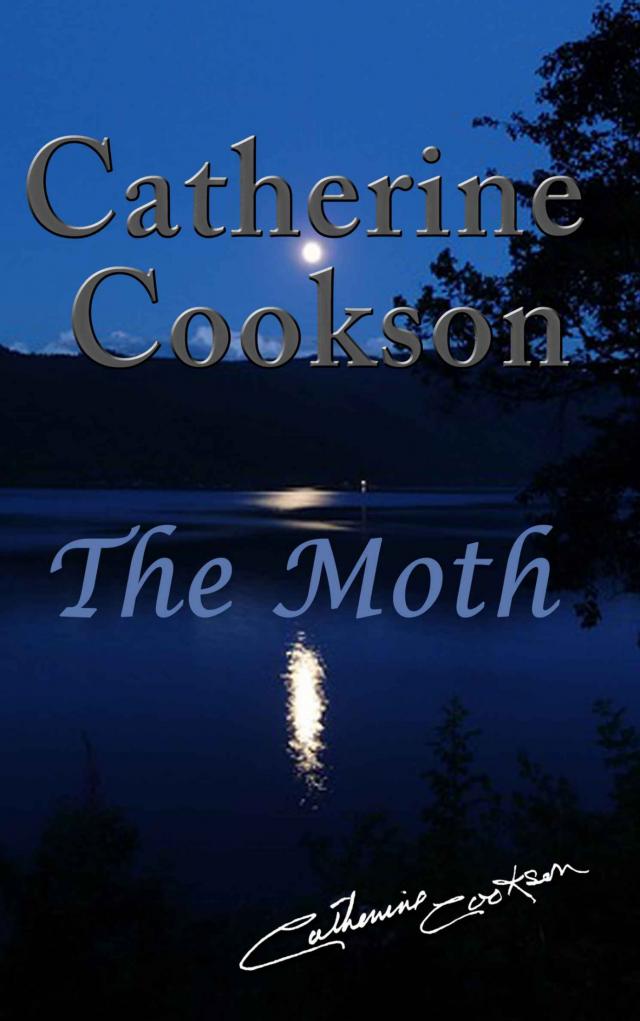


How long he sat lost in a kind of new wonder he could never remember, he only knew that the scene would be imprinted on his mind for life: this water set in a glade of trees. At least, that is how it appeared to him for apart from this stretch of beach the rest of the lake was encompassed by the dark belt of trees and a much smaller belt of larches and low shrubs like that through which he had come.
It was at the moment he was reluctantly telling himself he had better make a move but that this wouldn’t be his last visit here, no not if he knew anything, that his body suddenly stiffened, in fact he felt as if someone had cut off his breath permanently while allowing his mind still to work, for he was asking himself if he was drunk, yet at the same time denying the suggestion. Granted he had had four pints of beer that day and that was twice as much as he usually drank, for he was no drinker, a couple on a Sunday being his limit. But this in a way had been an unusual Sunday, and it was now ending with him seeing things . . . imagining things.
Again his mind contradicted him: he wasn’t imagining what he was seeing, and he was seeing a thing coming along by the edge of the water. It had emerged from the belt of dark trees and now, the moonlight full on it, it floated seemingly a foot or more from the ground.
God Almighty! He put his hands behind him on the stone as if in an effort to push himself up and run. But there they remained, his back arched, his head lying between his shoulders as if someone had dealt him a blow under the chin.
The thing was coming at him, nearer: it had wings, it looked like an enormous bat, only grey in colour.
It wasn’t until the thing was about ten yards from him that he saw it wasn’t floating but had feet, and that what he had taken for wings were arms, because they had sort of folded now and instead of being held in line with the body were outstretched towards him.
Again he muttered, ‘God Almighty!’ And then the thing or creature stopped before him an arm’s length away, and stared at him. And he stared at it.
He was looking into a face peering out of a grey hood. It was so strange he could find no words to describe it: the eyes were oval shaped – he couldn’t see their colour; the eyelashes appeared dark and sweeping; the skin of the face was pale; the nose small, very small; but the mouth was wide, the lips thin, but well shaped; they were apart and he could see the tongue resting gently as if it were on her lower teeth. He had never seen a face like it in his life. He couldn’t say it was beautiful or pretty or plain, for it possessed some quality that he could not, at the moment, define. And then she spoke.
‘Why, hello!’ she said. The fact that she had spoken as one would when surprised on meeting a friend in a strange place sent a shiver down his spine, and in this moment he realised that he had never experienced fear in his life before. There was no-one he had been afraid of, not even at school among the teachers, and there had been some hard nuts there. And he had never been afraid of physical hurt; he’d had enough fights in his early youth; and even while he was serving his time he had punched out a number of battles behind the sheds after work. Through nothing or no-one had he ever experienced the feeling of fear; but he was experiencing it now, as if he were in touch with a creature that wasn’t of this world, not an angel or a ghost, but something strange which didn’t look as if it belonged here. What was she? . . . Who was she?
He was given the answer with her next words, for she said, ‘I thought you were Jimmy.’
Jimmy? Jimmy? The name rang a bell. Jimmy. The drunk in The Bull that had been dismissed, he was called Jimmy. He had been given the push because they thought he was interfering with the daughter of the house . . . Thorman’s Moth, the one who was a bit barmy. That’s what he had said, wasn’t it? Yet not quite.
‘What is your name? Isn’t it a lovely night? Isn’t the moon wonderful?’
When, with the movement that suggested not that she was walking on legs but was floating again, she came and sat down beside him, he moved as if he had been stung. Bringing his arms forward and his back up straight, he created a space between them on the shelf of rock and was about to rise when she spoke again. ‘Please don’t be afraid.’
He stared at her fully now. All her features were exposed to the moonlight and he saw into her eyes and the deep, deep perplexed sadness lying within them. And when she said, ‘I won’t hurt you,’ he felt inclined to let out a loud laugh: this fragile, ethereal creature hurting him! Aye, that was the word that described her; aye, he had hit it, ethereal. Yes, that’s what she was, without substance. That was the meaning of it, wasn’t it? without substance. Yet she was alive: she was a young girl, she had a body . . . what there was of it, because her cape had now fallen apart and to his embarrassment he saw the thinness of her body through a garment that could only be a nightgown.
If he had seen her like whilst in Jarrow, he would have termed her as thin as a shaving . . . a wood shaving. His father had had a name for thin women, bust and arseless, yet even the thought applied to this creature seemed in a way blasphemous.
‘Won’t you speak to me?’
‘Aye. Yes, miss.’ His voice had a cracked sound. ‘But . . . but I must admit, you kind of gave me a start.’
‘Oh.’ Her eyes lost their sad expression and the corners of her lips moved upwards and she made a sound which in the ordinary way would have been called a laugh, but it was so unusual that it didn’t come under that heading; then she said, ‘You sounded just like Jimmy. But . . . but not quite. It was the tone of your voice not the words. Jimmy’s words were mumbled. Roland said it was because he was a common man . . . Did you know Jimmy?’
He paused before he answered, ‘No, no, miss; I . . . I never knew Jimmy.’
She looked away from him now and over the water; then she said, as if to herself, ‘Why are some men called common and others . . . er . . . uncommon?’ Then she added, ‘Do you know?’ And to this he replied, ‘I think the word common is applied to workmen, and the other kind are called gentlemen.’
‘Oh, yes, yes.’ She nodded at him now, a smile on her face again. ‘Agnes would have given me an answer like that.’
‘Agnes?’
‘Yes. Agnes understands most things. She can always explain things; except the moon. She doesn’t like the moon. I’m sorry she doesn’t like the moon because I love the moon. Look’ – she pointed – ‘it’s sunk into the lake, yet it’s left its light behind.’
He looked to where the reflection of the moon lay still in the water and he thought, What a strange thing to say, it’s left its light behind. But then she was a strange creature, not quite right in the head; yet not mad, just a bit touched he would say. What a pity! It was a shame unto God that such a creature should be touched in the head.
She was talking again, softly now, her voice scarcely above a whisper, her eyes directed towards the water as she said, ‘Agnes once told me a story about the moon. She said, once its reflection touches the water it turns to gold; but you must never try to steal it, for if you did the night would lose its smile.’ And she turned and looked at him as she ended, ‘It’s the only smile the night has, is the moon.’
Eeh! By! What strange talk. Yet in a way it sounded beautiful.
‘And you know what the stars are?’
‘No, miss.’
‘Well, the stars are tears that the moon has shed down the years. Agnes said that; she made a poem about it. Will you hold my hand?’
He jerked to his feet as her fingers clutched his. They were cool and smooth and thin, and he found himself actually shaking, but with her hand still in his he said, ‘I . . . I think you should be making your way back home, miss. Don’t you think so?’
‘No, not yet; there’s company. I promised Agnes I would stay in my room. But I drew the curtains and looked out of the window and there it was.’ She pointed with her other hand up towards the moon that was now slightly covered by small white scudding clouds, and she went on, ‘I cannot help it, when the moon is out I must come out too . . . I am not mad.’
He gulped in his throat. ‘No, I’m sure you’re not, miss,’ he said.
‘Agnes knows I’m not mad, and so does Dave.’
‘Is Dave your brother?’
‘Oh, no. Dave is an old servant and Peggy is his wife. She always says they brought me up. Funny that, isn’t it? I mean, funny words, brought me up. I think about words. Where did they bring me up to? Up to where?’
Robert stared at her, speechless. Part of her mind might be unhinged, but there was certainly a part of it that did some delving, if he knew anything. As she had said, it was a funny term, brought me up, but it was a colloquial term. It was a shame unto God about this poor creature . . . But he mustn’t think of her as a creature, she was a young girl, a strangely beautiful young girl. He was now seeing her as beautiful: the hood had slipped back from her head and was showing hair that was like fine silver threads. Topping another face, it would have depicted age, but on her it appeared like a halo of light around her, for it was loose and the ends of it were lost beneath the shoulders of the cloak.
‘What is your name?’
‘Robert, miss. Robert Bradley.’
‘Oh, it’s a nice name, strong.’
‘You think so?’ He smiled gently at her.
‘Yes.’ She nodded her head. ‘I know a lot about names, at least some names. I have three brothers: they are called, Arnold, Roland and Stanley. I don’t like them.’
‘You don’t like their names?’
‘No, not the names, I don’t like my brothers.’
What could he say to that? What he said was, ‘What is your name, miss?’
‘Millicent. But people who like me call me Millie.’
‘I . . . I should think everybody likes you.’
She stared at him for a moment; then slowly her mouth widened into a smile while her eyes took on an expression that he could only term as sad. And there was a sort of break in her voice as she said, ‘No, they don’t. My father doesn’t like me.’
Oh, dear. Oh dear. Poor soul. On an impulse he put out his other hand and now grasping both of hers he pressed them gently while shaking them up and down and saying with unforced gallantry, ‘Well, all I can say, miss, he hasn’t any taste and he doesn’t know a good thing when he sees it.’
‘Oh, you are nice.’
As her body leaned towards him while her feet remained on the ground, he suddenly loosed hold of her hands and sprang back from her, not because of her close proximity but because over her shoulder he could see running towards them from out of the shrub two figures, one carrying a stick. She too sensed their presence for now she swung round, murmuring, ‘Oh, Agnes.’
Before he could gather his wits about him he was being confronted by an elderly man brandishing a club-headed walking stick at him, and in a natural reaction he thrust up his forearm in front of his face and cried at the assailant, ‘You bring that down on me and you’ll find yourself on your back, as old as you are.’ And the man hesitated, his arm still held up, the stick wavering in his hand.
The girl was now struggling in the arms of a young woman and crying, ‘Don’t hurt him, Dave. He’s nice. He’s nice. I thought it was Jimmy.’
The old man lowered his arm to his side, then growled, ‘What are you doin’ here?’
What was he doing here? He had come to see the water and this is what he said: ‘I saw the gleam of water from the road. I just came to have a look at it.’
‘You are trespassing. I suppose you know that?’
He turned and looked at the young woman. She was over medium height and she, too, was thin, but it was a different thinness from the girl’s. This must be the sister Agnes. She had a nice voice, although there was a haughty note in it, and he answered her, saying, ‘I suppose I am, but I never thought about it. The place looked . . . well’ – he jerked his head impatiently – ‘rough from the road, broken railings and such. Nothing much private about it. And I was sitting looking at the water there’ – he thumbed in the direction of the lake – ‘when the young miss came upon me. And I can assure you she’s come to no harm in my company.’
‘Who are you, anyway?’ It was the man speaking. ‘You’re not from around here, are you?’
He looked the man straight in the eyes and he answered in a similar tone, saying, ‘It all depends upon what you mean by around here. I’m from the hamlet, near Lamesley. My uncle’s the carpenter.’
‘Bradley, John Bradley?’
‘Yes, John Bradley.’
‘Oh, well.’ The old man’s tone seemed slightly mollified, but he went on, ‘You’re a bit out of your way. And anyhow, you should know what’s private and what isn’t, even if the boundary’s broken.’
‘I suppose there’s an excuse for me: I’ve only been in the countryside a week; I’m from the town. But I’ll make sure in future.’
‘You do that.’
‘Are you going?’
He turned and looked at the girl who was still being held firmly by her sister, and he said quietly, ‘Yes, miss, I’m going. But it’s been nice to meet you.’
Quickly the young woman swung the girl round and began to lead her, not without some resistance, towards the belt of trees.
However, the old man did not immediately follow but stood staring at Robert. ‘I’d get on your way,’ he said.
‘I’m going.’ Robert’s voice was almost a growl now, and he added, ‘If you’re as concerned for her as you seem to be, why do you let her roam in her condition?’
‘You mind your own damn business and get!’
He did not immediately obey the command but stood his ground defiantly for some seconds more; then when he did walk away it was with a slow step. And the old man watched him until he was out of sight before he, too, turned and hurried towards the woodland.
Three
In the thicket of the trees Agnes Thorman drew her sister to a halt and, looking at her, she spoke in a tone that denied the softness and pity in her eyes as she said, ‘How could you, Millie! You promised me. How could you! And company in the house.’
‘I’m . . . I’m sorry, Aggie, but . . . but it was the moon.’ She turned her eyes upwards to where the moon was apparently being chased by the small scudding white clouds, and she went on, ‘I . . . I drew the curtains. I know I shouldn’t, but I did nothing wrong, I didn’t go on to the road. I promised you, didn’t I? I promised you.’
‘You promised me you would stay in bed.’
‘Oh, Aggie!’ The slim form now fell forward and was enfolded in her sister’s arms and Agnes Thorman, looking over the girl’s shoulder, gazed almost helplessly at the dark bole of a tree as she wondered for the countless time what was to become of her, this dear, dear creature who had not been made for this world but for some place where the spirit could soar freely, where lies and subterfuge were unknown, where one spoke one’s thoughts aloud, and one’s thoughts were always pure.
She was seven years old when Millicent came into the world and seemingly from that day she had become her mother, for her own mother had had little to do with her upbringing. Even when the child was taken into her presence, she would hold her in such a way as to make her cry. It was as if she were pressing the infant back into herself. Afterwards she would refuse to see her for months on end; and Nanny Watson would have the care of her, have care of them all, of Arnold who was a year younger than herself and of Roland a year younger than Arnold, and of Stanley a year younger than Roland.
From the time Millicent was born Agnes could recall that the feeling in the house changed. Before that she could remember the sounds of gaiety floating up to the nursery from the parties going on downstairs; there always seemed to be parties going on downstairs. And there had been so many servants flitting about both inside and outside of the house that she couldn’t remember all their names.
It was many years later when she realised who had paid for all the parties and the large staff. Her mother’s father, Grandfather Barrington, had lived with them for as long as she could remember. But he had died three months before Millicent was born and it was this fact, not unlinked with the birth of Millicent, that had wrought such great changes in the house.
Agnes knew now that her father had married her mother not for her beauty alone but because she was a rich man’s daughter. What he didn’t know, however, was that the rich man had lived up to his income for years, and instead of leaving his daughter a wealthy woman, what he bequeathed to her was a scandal caused by his debts and the revealing of dubious dealings which, had he remained alive, might have led to his being sent to the prison.
She could recall how the staff in the house had been cut: like a scythe going through summer corn, they all seemed to fall away in one day, leaving only Dave and Peggy Waters inside, together with their daughter Ruthie, and little Betty Trollop who worked in the kitchen. Outside, three of the four gardeners went, leaving only Arthur Bloom. Three of the stable hands were also dismissed which meant that Greg Hubbard had to muck out the horses and feed and groom them. But then, the number of horses was greatly reduced. Ben Cullen the lodgekeeper and his wife went with the rest, and their house had stood empty since.
No three men could hope to keep the place as spruce as nine had done. This place where they were standing now had once been a part of the rose garden, but saplings had been allowed to take root until now it had the appearance of a miniature jungle. Agnes sighed as she stood patting Millie’s hand. Life was difficult and it would get more so if she didn’t make a stand. She must make a stand, and soon, very soon. She was tired of responsibility; she herself wanted a shoulder to lean on, a husband’s shoulder. She had been engaged for three years now, and it could go on for another three if she didn’t do something soon. It had been her intention to speak tonight, then this had happened . . .


