Breakable Things, page 18


“It’s complicated.” This wasn’t a lie.
“I don’t get it.” Your friend should have been born a Parisian. She is fine-boned and neurotically exacting with her attire, a chain smoker who balances a predilection for nicotine with a reverence for salads, too ephemeral, you think, to ever be touched by grief. You can’t imagine her crying over anything. “You’ve not spoken to your dad for six years.”
Your throat clenches. “It’s—it’s hard to explain.”
“I guess it could be disassociation.” She continues, relentless, smoke pluming from between professionally whitened teeth. “From all the years of not seeing him, and from being physically removed from your home. You’ll be fine. It’s just shock.”
Shock? You close your mouth around the word. Shock. It didn’t taste like shock. In your mind, shock is astringent, sharp. Like lime, like stomach bile, a flavor that wrenched and appalled. What you feel is softer, a carbon monoxide haze, subtly lethal, seeping into your lungs and your blood. It dulls you, whatever it is, flattens your world into mono-dimensionality, into perfect greys.
Not shock, you think.
“No.” Your friend pinches together immaculately painted brows. “It’s definitely shock.”
You spasm, lurch in your seat, realizing at last that you had spoken, not subvocalized. In your embarrassment, you assemble a laugh, unevenly syncopated, a quavering ha-ha that you use then to segue into flightier topics, rearranging the conversation about your friend instead of the grief that sits waiting like your father’s apparition six tables down.
“Go away.”
Your father only stares as you crumple against the steam-slick wall, as you contract into a ball on floor, hands in your hair. Somewhere in the last five days, he lost his fear of proximity, replaced it with an intensity that both frightens and depresses you. Now, he squats an inch from your face. As you look between the kelp-tangle of your hair, you see him reach out, long fingers stretched to brush your cheeks.
“Go away!”
Your scream erodes his silhouette, reduces him to ashes on an ocean wind, to a shimmer in the cold fluorescent light, and then, like he never existed in the first place, a delusion given substance by an ill-attended grief, he is suddenly and irrefutably gone.
You pointedly ignore his reflection in the laptop screen: his skin is missing, his torso gapes like a mouth, the ribs gleaming teeth-like against the wet mass of his innards. Intestine drool from the base of his breastbone, a spiral of nesting pinks.
Preta. Er Gui. Hungry ghost.
You type in fresh search terms, hoping to triangulate a solution, or at least an explanation for the haunting, an origin story from which you can exorcise some form of reprieve. But Wikipedia only has riddles.
Hungry ghosts were driven by intense emotional needs in an animalistic way. Hungry ghosts were lessons. Hungry ghosts were victims.
One source suggests that hungry ghosts are manufactured by loneliness, forgotten souls made destitute by unfilial children. But your father had not wanted an altar, had hated the idea of being tethered to a specific point, rooted in the earth. His remains are long gone, (don’t think about that, don’t think about how they only told you about his death when it was too late) disseminated into the sea. He had wanted to be forgotten. (Don’t think about the last time you spoke, not at his father’s funeral, but over the phone before you ran away and made yourself a better life.)
So, how could he hold you accountable? (Don’t think about the times he made you talk him out of killing himself, putting the weight of his life into your teenage hands.)
Desperate, you look up myths from different countries, Irish poltergeists and Native American lore, Egyptian afterlife, even the storied weirdness of Abrahamic religions, which prescribes very specific routes for the dead.
The dead go to hell. The dead do not. The dead wait in their coffins for Kiamat, haunted by everything they’ve done wrong. The dead become addled on the grace of God. The dead do not come back.
The hours come, leave, systematic as a funeral procession. Eventually, you realize it is four am and you’ve nothing to show for your efforts, only a landfill of tabs. Exhausted, you decide at last to discard faith, begin investigating the circumstances that midwife hallucinations. Maybe, it’s all in your head. Maybe, maybe—
Your father announces disagreement with a scream that detonates your Retina screen. You cry out, arms and face striated by glass, bolt from your desk, but he does not relent. He follows you across the house, into the yard, back to the living room where you cower under a thin blanket. He screams at you from outside the fabric, full of an inchoate madness, so close that you taste salt, smell rot, feel the damp chill of the ocean floor.
He screams until the sun rises, until light cuts bands of gold across your shivering, sweat-soaked flesh.
The cacophony becomes a nightly ritual.
You last another forty-eight hours before you decide to escape to your best friend’s apartment. However, your father chases you there too. His voice breaks every window, every piece of electronic, every picture frame on the mantle, every sliver of glass.
“What the hell is going on?” Your best friend emerges from his bedroom, eyes sleep-bruised, terror-hollowed, in time to see the kitchen cabinets tears themselves open. Cutlery and plates launch into walls, a cascade of bent steel and shattered porcelain. The air glints bright with shrapnel.
“My dad—” You begin, but he does not hear you, too busy dialing up emergency services to babble about electromagnetic pulses, conspiracies grounded in some truth of science.
You grab your bags. You run.
Don’t think about all the times your father hurt you.
Don’t think about all the times he dragged you from bed to discuss the minutiae of your failing family, demanding that you made sense of his infidelities, your mother’s fury.
Don’t think about the lashings; the bruises that striped your legs, your arms, your back.
Don’t think about the way he made his want for suicide your fault, the way he described the days that would come after, always broken, always jagged, always digging into your skin, like a reminder that this was always your responsibility, your failure.
Don’t think about the way you cried. No, don’t.
Don’t.
Don’t.
Don’t.
“You made him our problem in life,” says your auntie, smugness anchoring in the harbour of her throat. “Now that he’s dead, he’s yours.”
She ends the call before you can vivisect her willingness to accept your claim, her insouciance, her delicate pleasure, or ask if they’d perhaps hired someone to tether your father to you. You press your head against the payphone, the black plastic cool and slightly sticky. Outside the booth, your father is exposed vein and naked muscle, palms flat against the glass.
You call again. It’s been two weeks. You don’t remember the last time you’ve slept in more than gasps. The last time you spoke to your best friend, he told you to see a therapist, to sort yourself out, own up to the destruction you’d caused instead of blaming it on a dead man.
(You paid for the damages. You did not pay for an hour on a stranger’s couch, escorted by your father’s spectre.)
“Ask your mother,” your auntie purrs, picking up the phone after the sixth ring. She hangs up, even as your father begins to moan.
Don’t think about the way your mother stroked your hair as she stared at the wall, eyes full of drowning, voice full of hurt. Think instead about her promise to always protect you, her she-wolf grin as she stood guard over you.
Don’t think about the way she sang under her breath, plaintive as a child. Don’t think about what your father might have done. Don’t think about why she almost drowned you, and how you’re dragging his ghost to her door, years after she tore herself free.
Think instead about release.
“When a parent dies, his sins go onto their children.”
“That’s not fair, mom. I—” You tighten your grip around the mug. Your father is sitting beside your mother, invisible, no longer human, just muscle and meat. “It’s not my fault.”
“But it is your burden,” your mother continues, serene. Too serene, you think, savage, as you jealously process how soft she’s become, how voluptuously restful. “You’re his flesh and blood.”
“I didn’t ask to be.”
“I know. But that doesn’t change anything.”
You sip your Milo, feel anger tense your neck. For the first time, you’re not afraid, not subsumed by guilt. You’re furious. How was this fair?
“How do I stop this?”
“You could try calling a Taoist priest, or a Catholic priest, or whichever religious person fits your purpose.” Your mother twitches an indifferent shoulder. “They might be able to get rid of him.”
A thrum of hope, but it is only a murmuration, a twinge of hurt, subtle as the first signs of cardiac arrest. “What happens to him after that?”
There is no kindness in your mother’s eyes, not even judgment, only that cool practicality that’s become synonymous with her person, almost indistinguishable from cruelty. “What you do care? You’ve only ever wanted him gone.”
The words die in your lungs.
She hires you someone, anyway. She is your mother and she loves you even if she never tells you that.
You find this out in the morning after you awaken and startle at the knowledge you had slept, deeply and peacefully, unaccosted for the first time in recent memory.
“How much—”
“Doesn’t matter,” your mother waves your concern away. You look over the cliff of her shoulder, see your father standing in her bedroom, slightly more human than you recall. Guilt impales your gut: you wonder what bargain she struck for your silence, what price she paid again. “He’ll fix it.”
“Mom—”
“Go,” a whisper, fierce, feral, full of fire.
The exorcist is a pudgy man with tortoise-shell glasses and a kind mouth, thinning hair that keeps unnecessarily long. He doesn’t ask stupid questions or supply worse platitudes, simply gets on with business, every question phrased calmly, efficiently.
“How long has your father been haunting you?”
“A little over two weeks.”
“Has his appearance changed in this time?”
“Yes.”
“Less human?”
You don’t look. You’ve learned better. He’s grown savage in the last night or so, a thing of corners, screaming into your face when you least expect it. “Yes.”
In the corner, you hear the drip, drip, drip of pooling gore.
“How much less?”
You don’t miss a beat. “A lot.”
The exorcist nods. “You were his favorite child?
You consider this for a minute, evaluate the jumble of memories, fading watercolors puddling through your fingers. There are no specifics, no moments you can point to and declare yes, this was when he loved me. All you have are apparitions.
“I guess.”
“Mm.” The exorcist nods to himself, reads off a bestiary of causes, an armament of solutions, all completely, unmistakably final. “So, which would you prefer?”
You run a tongue over your upper lip. “I’ll—I’ll call you back tomorrow.”
You don’t.
Your aunt was right. He is your ghost, always has been, since the day he walked out of the house so many years ago, already a spectre, a ghost of an idea.
Instead, you go home and you shut off every light in the house. You wait until there are only streetlamps outside, until the night is black and vicious, oozing tropical heat. And then:
“Papa?”
Something in the darkness stirs, a textured sound you cannot quite place, a shifting that could be the susurrus of sinew, or the migration of tissues over fat, or wet footsteps dragging along the carpet.
“I love you,” you tell the emptiness, the bruise-black dark. The words sound small and vulnerable in the waiting dark, almost child-like, completely inadequate. The silence eats them whole.
“I love you,” you repeat, the second word snagging fishbone-sharp in the roof of your mouth. “I loved you so much, papa. And I am so, so sorry I didn’t say it enough. Didn’t call you on your birthday, didn’t tell you I forgave you. Didn’t forgive you. I’m sorry I stayed angry for so long. I’m sorry I didn’t—”
Wet breath against your cheek, a charnel stink. You persevere, however, clenching teeth against the fear that pulsates through you.
“I’m sorry I didn’t say I love you enough. I’m sorry I kept running. I love you. I love you so much.”
Your father says nothing, does nothing. Only stands there a bone’s width from your skin, still, silent, and forever out of reach.
publication history
“How Selkies are Made” is original to this collection.
* * *
“Don’t Turn on The Lights” originally appeared in Nightmare Magazine #61, 2017.
* * *
“A Leash of Foxes, Their Stories Like Barter” originally appeared in Lightspeed Magazine #111, 2019.
* * *
“Radio Werewolf” originally appeared in Fireside Fiction, March 2017.
* * *
“Recite Her the Names of Pain” originally appeared in Sword and Sonnet, 2018.
* * *
“Kiss, Don’t Tell” originally appeared in Pseudopod #563, 2017.
* * *
“An Ocean of Eyes” originally appeared in The Dark #8, 2015.
* * *
“The Truth That Lies Under Skin and Meat” originally appeared in Gamut, August, 2017.
* * *
“Mothers, We Dream” originally appeared in Cutting Edge: New Stories of Mystery and Crime by Women Writers, (Joyce Carol Oates, ed.) 2019.
* * *
“A Secret of Devils” originally appeared in Cast of Wonders, #276, 2017.
* * *
“Goddess, Worm” originally appeared in Uncanny #14, 2017.
* * *
“A Priest of Vast and Distant Places” originally appeared in Apex Magazine #106, 2018.
* * *
“The Games We Play” originally appeared in Clockwork Phoenix Vol. 5, (Mike Allen, ed.) 2016.
* * *
“For the Things We Never Said” originally appeared in Daily Science Fiction, Nov. 10, 2016.
* * *
“She Who Hungers, She Who Waits” originally appeared in Beneath Ceaseless Skies, #248, 2018.
* * *
“Monologue by an unnamed mage, recorded at the brink of the end” originally appeared in Uncanny, #25, 2015.
* * *
“You Do Nothing but Freefall” (with A. Maus) originally appeared in Lightspeed #94, 2018.
* * *
“The Ghost Stories We Tell Each Other Around Photon Fires” originally appeared in Gamut, Jan. 2017.
* * *
“The Quiet Like a Homecoming” originally appeared in Lightspeed Magazine #93, 2018.
* * *
“And In Our Daughters, We Find a Voice” originally appeared in The Dark, #18, 2016.
* * *
“In the Rustle of Pages” originally appeared in Shimmer #25, 2015.
* * *
“Bargains By the Slant-Light” originally appeared in Apex Magazine, Oct. 2018.
* * *
“Some Breakable Things” originally appeared in The Dark, #16, 2016.
acknowledgements
Thank you, first and foremost, to Angela Slatter, who helped look over These Deathless Bones, and who, in many way, was instrumental in all the successes that followed. You’re a brilliant writer, a selfless teacher, and I still re-read Finnegan’s Field like clockwork. (If you’re reading this and you’re thinking what should I start with, you should absolutely check out All the Murmuring Bones, which is probably one of my favorite gothic works ever.)
* * *
Thank you to Ellen Datlow. For your grace, for your friendship, for the gift of your editing. I will always be in awe of how you can shift through the dross and find the gleaming heart of a story inside.
* * *
Thank you to Mouse for being my first reader, for everything, for being you. Thank you to Michael Curry, my darling agent, for always having my back. Thank you to my editor, Michael Kelly, for everything you’ve done to help me during a difficult time and for the gorgeousness you put into the world.
about the author
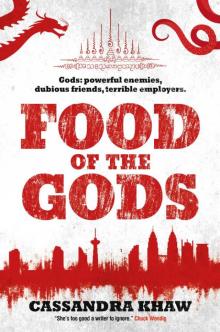
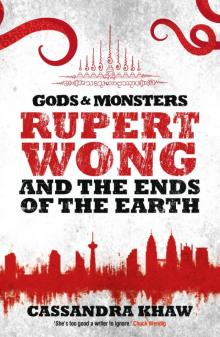
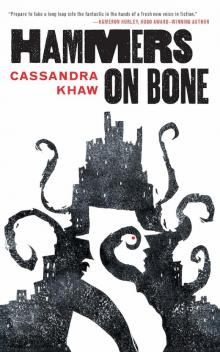
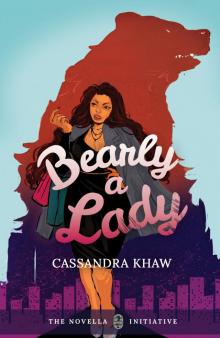
USA Today bestselling author Cassandra Khaw’s books include, Hammers on Bone, a British Fantasy Award and Locus Award finalist; The All-Consuming World, one of the Washington Post’s best science fiction, fantasy and horror books of 2021; and their most recent novella, Nothing But Blackened Teeth, a Japanese haunted house story described as “sharp, playful, and nasty as hell,” which was published by Tor Nightfire in late 2021.
* * *
Their short fiction can be found in a myriad of places, including The Magazine of Fantasy & Science Fiction, Lightspeed, Tor.com, Nature, The Dark, and Beneath Ceaseless Skies. Khaw is also an award-winning game writer who has worked on games such as She Remembered Caterpillars (German Game Awards Best Children’s Game 2017), Wasteland 3, and Rainbow Six: Siege. They currently reside in Montreal with two gigantic cats, and can be found on Twitter and Instagram at @casskhaw.