


Build-in Book Search

The Lover's Dictionary
David Levithan
Literature & Fiction / Young Adult / Gay & Lesbian
Two people meet, fall in love, move in together, and then the story begins. A grand New York romance told through dictionary entries, it opens an intimate window into the couple's space, giving a name to their everyday struggles, giving us an indelible and deeply moving portrait of love in our time.
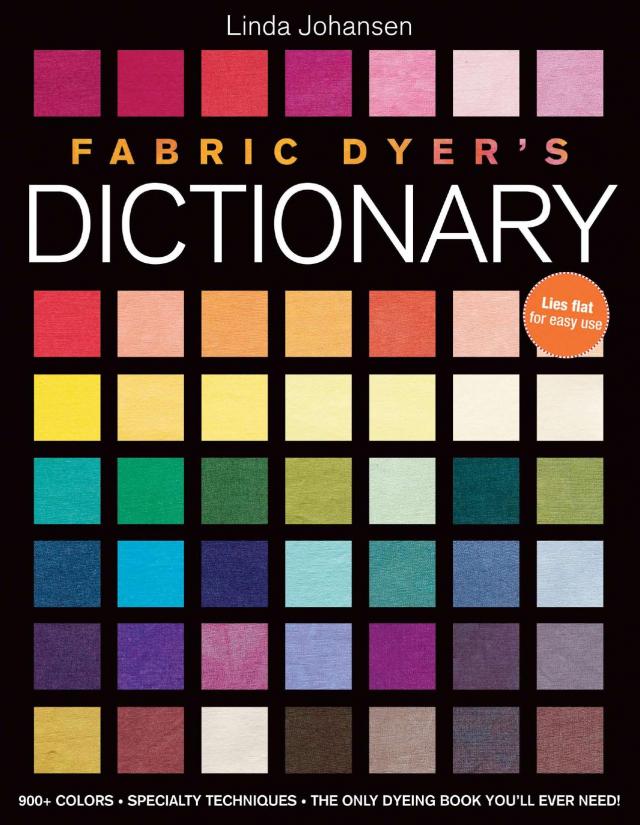
Fabric Dyer's Dictionary
Linda Johansen
900+ colors • Specialty Techniques • The only dyeing book you'll ever need!

The Dictionary of Demons
M. Belanger
This premium-hardcover, limited edition of one the world's most important books on demonology has been expanded to include even more fascinating details about even more demons. Ever since the publication of the original book, author M. Belanger has been collecting material for this expanded, tenth-anniversary edition. The addition of new articles, demons, appendices, and art make the bestselling Dictionary of Demons into an even more comprehensive resource. You will discover an expanded introduction, special extended articles, an update to the Decans of the Zodiac, additional entries on demons that were not previously included, and dozens of new illustrations. These additions explore the roots of demonology, comparative mythologies, and the influence of important source texts. Compiled from intensive research on notorious and obscure sources from the Western grimoiric tradition, The Dictionary of Demons is one of the most complete compendiums of demonic names...

The Dictionary of Lost Words
Pip Williams
In The Dictionary of Lost Words Pip Williams combines her talent for historical research with beautiful storytelling.
She has delved into the archives of the Oxford English Dictionary and found a tale of missing words and the lives of women lived between the lines.
In 1901, the word 'Bondmaid' was discovered missing from the Oxford English Dictionary.
This is the story of the girl who stole it.
Esme is born into a world of words.
Motherless and irrepressibly curious, she spends her childhood in the 'Scriptorium', a garden shed in Oxford where her father and a team of dedicated lexicographers are collecting words for the very first Oxford English Dictionary.
Esme's place is beneath the sorting table, unseen and unheard.
One day a slip of paper containing the word 'bondmaid' flutters to the floor.
Esme rescues the slip and stashes it in an old wooden case that belongs to her friend, Lizzie, a young servant in the big house.
Esme begins to collect other words from the Scriptorium that are misplaced, discarded or have been neglected by the dictionary men.
They help her make sense of the world.
Over time, Esme realises that some words are considered more important than others, and that words and meanings relating to women's experiences often go unrecorded.
While she dedicates her life to the Oxford English Dictionary, secretly, she begins to collect words for another dictionary - The Dictionary of Lost Words.
Set when the women's suffrage movement was at its height and the Great War loomed, The Dictionary of Lost Words reveals a lost narrative, hidden between the lines of a history written by men.
It's a delightful, lyrical and deeply thought-provoking celebration of words, and the power of language to shape the world and our experience of it.
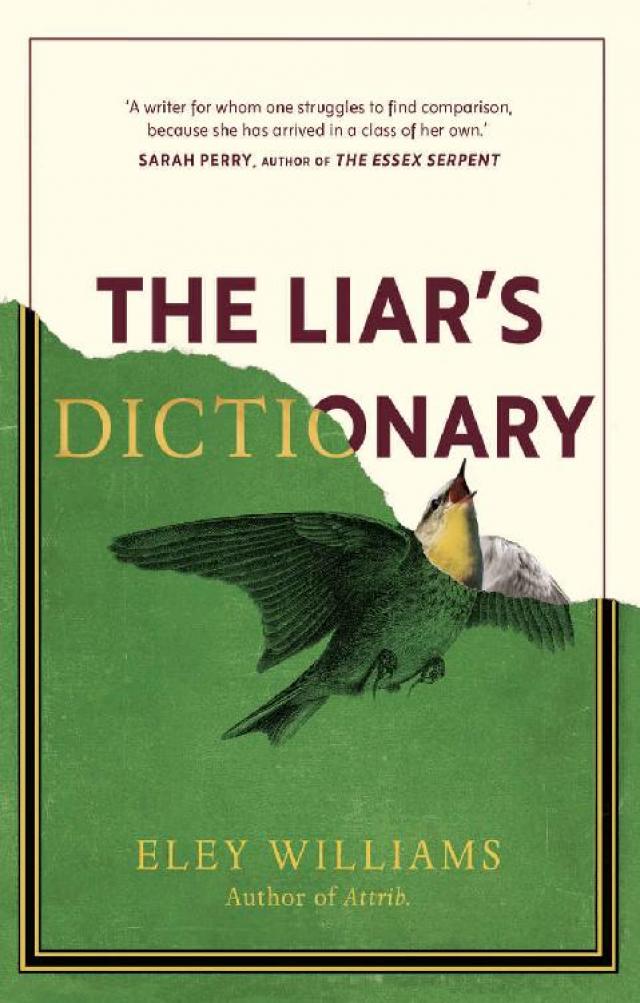

Historical Dictionary of Chan Buddhism
Youru Wang
The popular name for Chan Buddhism, in the West, is Zen Buddhism, as it was Japanese scholars who first introduced Chan Buddhism to the West with this translation. Indeed, chan is a shortened form of the Chinese word channa, rendered from the Sanskrit word dhyāna, which denotes practices of the concentration of the mind through meditation or contemplation. Although rooted in the Indian tradition of yoga, which aims at the unification of the individual with the divine, meditative concentration became integrated into the Buddhist path to enlightenment as one of the three learnings (sanxue) of Buddhism. Early Buddhist (or the so-called Hinayana Buddhist) scriptures include the teachings on four stages of meditation, four divine abodes, four formless meditations, the tranquility (samatha) and insight (vipassanā) meditations, and so on. Early Buddhist communities commonly practiced these meditations, along with the moral disciplines and the study of the scriptures and doctrines....
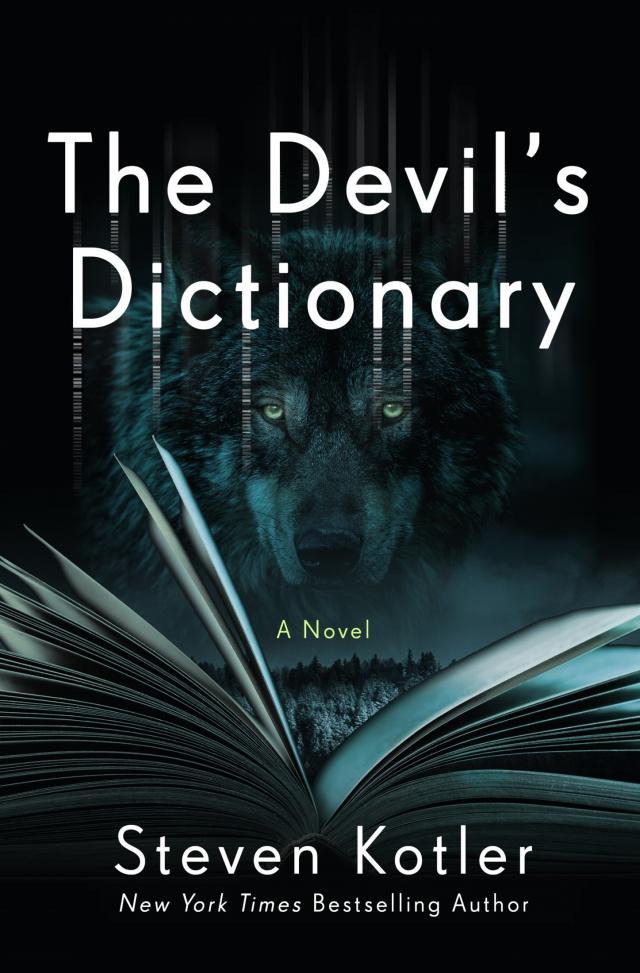
The Devil's Dictionary
Steven Kotler
New York Times bestselling author Steven Kotler's follow up to Last Tango in Cyberspace, a near-future thriller about the evolution of empathy in the tradition of William Gibson and Neal Stephenson.Hard to say exactly when the human species fractured. Harder to say when this new talent arrived. But Lion Zorn, protagonist of Last Tango in Cyberspace, is the first of his kind—an empathy tracker, an emotional forecaster, with a felt sense for how culture evolves and the future arrives.It's also a useful skill in today's competitive business market.In The Devil's Dictionary, when a routine em-tracking job goes sideways and em-trackers themselves start disappearing, Lion finds himself not knowing who to trust in a life and death race to uncover the truth. And when the trail leads to the world's first mega-linkage, a continent-wide national park advertised as the best way to stave off environmental collapse, and...

The Dictionary of Lost Words : A Novel (2020)
Williams, Pip
In The Dictionary of Lost Words Pip Williams combines her talent for historical research with beautiful storytelling. She has delved into the archives of the Oxford English Dictionary and found a tale of missing words and the lives of women lived between the lines. In 1901, the word 'Bondmaid' was discovered missing from the Oxford English Dictionary. This is the story of the girl who stole it. Esme is born into a world of words. Motherless and irrepressibly curious, she spends her childhood in the 'Scriptorium', a garden shed in Oxford where her father and a team of dedicated lexicographers are collecting words for the very first Oxford English Dictionary. Esme's place is beneath the sorting table, unseen and unheard. One day a slip of paper containing the word 'bondmaid' flutters to the floor. Esme rescues the slip and stashes it in an old wooden case that belongs to her friend, Lizzie, a young servant in the big house. Esme begins to collect other words from the Scriptorium that are misplaced, discarded or have been neglected by the dictionary men. They help her make sense of the world. Over time, Esme realises that some words are considered more important than others, and that words and meanings relating to women's experiences often go unrecorded. While she dedicates her life to the Oxford English Dictionary, secretly, she begins to collect words for another dictionary - The Dictionary of Lost Words. Set when the women's suffrage movement was at its height and the Great War loomed, The Dictionary of Lost Words reveals a lost narrative, hidden between the lines of a history written by men. It's a delightful, lyrical and deeply thought-provoking celebration of words, and the power of language to shape the world and our experience of it.
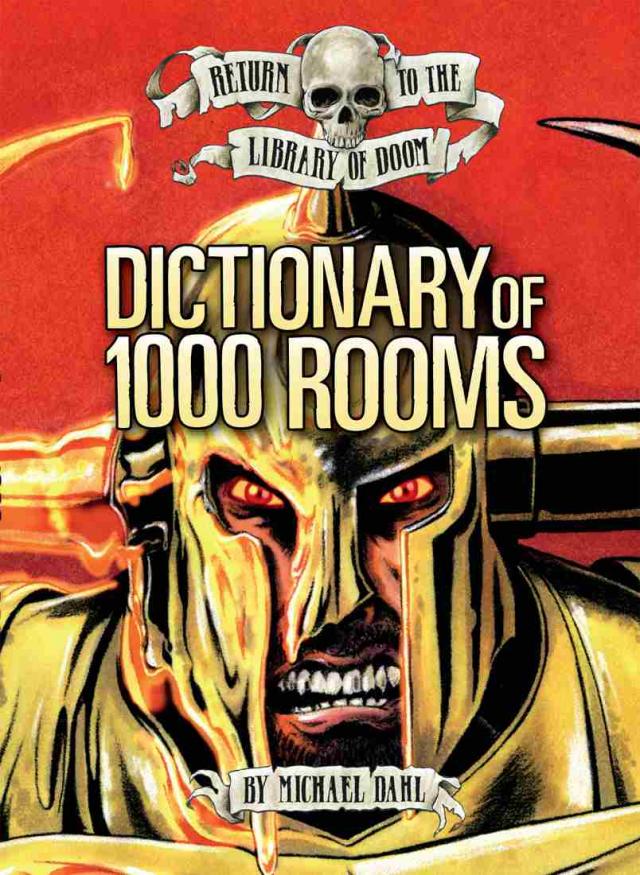
Dictionary of 1,000 Rooms
Michael Dahl
The Librarian's pages are missing. Can he defeat the Wordsmith to save them?

The Devil's Dictionary, Tales, and Memoirs: The Devil's Dictionary, Tales, and Memoirs
Ambrose Bierce
Short Stories / Nonfiction / Poetry
A veteran of some of the bloodiest battles of the Civil War, Ambrose Bierce went on to become one of the darkest and most death haunted of American writers, the blackest of black humorists. This volume gathers the most celebrated and significant of Bierce's writings. In the Midst of Life (Tales of Soldiers and Civilians), his collection of short fiction about the Civil War, which includes the masterpieces "An Occurrence at Owl Creek Bridge" and "Chickamauga," is suffused with a fiercely ironic sense of the horror and randomness of war. Can Such Things Be? brings together "The Death of Halpin Frayser," "The Damned Thing," "The Moonlit Road," and other tales of terror that make Bierce the genre's most significant American practitioner between Poe and Lovecraft. The Devil's Dictionary, the brilliant lexicon of subversively cynical definitions on which Bierce worked for decades, displays to the full his corrosive wit. In Bits of Autobiography,...
A veteran of some of the bloodiest battles of the Civil War, Ambrose Bierce went on to become one of the darkest and most death haunted of American writers, the blackest of black humorists. This volume gathers the most celebrated and significant of Bierce's writings. *In the Midst of Life (Tales of Soldiers and Civilians)*, his collection of short fiction about the Civil War, which includes the masterpieces "An Occurrence at Owl Creek Bridge" and "Chickamauga," is suffused with a fiercely ironic sense of the horror and randomness of war. *Can Such Things Be?* brings together "The Death of Halpin Frayser," "The Damned Thing," "The Moonlit Road," and other tales of terror that make Bierce the genre's most significant American practitioner between Poe and Lovecraft. *The Devil's Dictionary*, the brilliant lexicon of subversively cynical definitions on which Bierce worked for decades, displays to the full his corrosive wit. In *Bits of Autobiography*, the series of memoirs that includes the memorable "What I Saw of Shiloh," he recreates his experiences in the war and its aftermath. The volume is rounded out with a selection of his best uncollected stories. Acclaimed Bierce scholar S. T. Joshi provides detailed notes and a newly researched chronology of Bierce's life and mysterious disappearance.


The New Crochet Stitch Dictionary
Nele Braas
This is the ultimate collection of crochet stitch inspiration! 440 stitches are presented in color, each with a sample swatch of the fabric and charted instructions with notes and detailed chart keys. Divided into ten chapters by the type of stitches, such as shells, waves and chevrons, openwork, cables and textures, and even borders and granny squares, this collection boasts a vast variety of stitches, well organized and presented in an easy-to-use fashion. You'll reference this indispensable resource again and again!
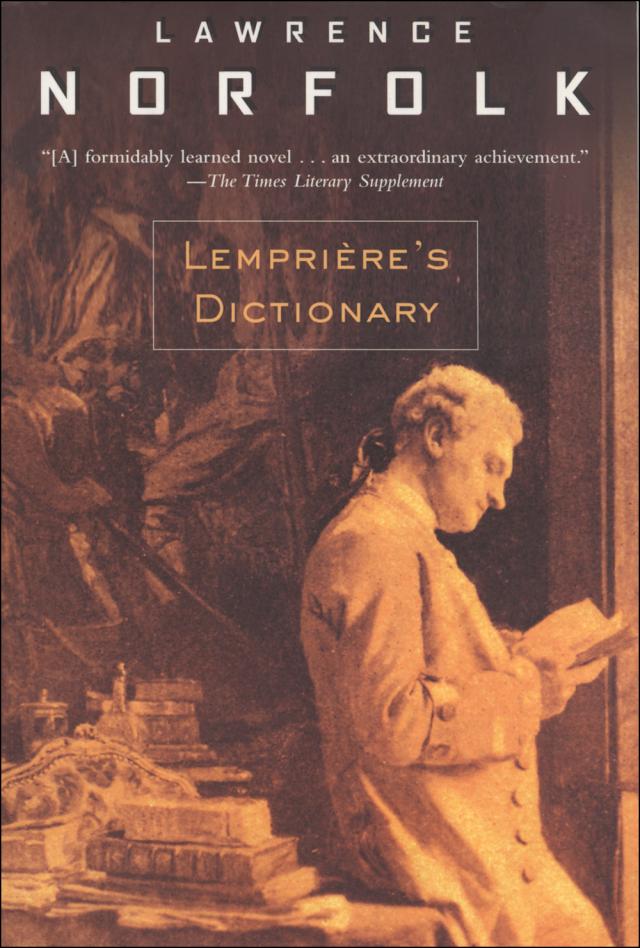
Lemprière's Dictionary
Lawrence Norfolk
An international best-seller and winner of the Somerset Maugham Prize, Lempriere's Dictionary is the debut novel from Lawrence Norfolk, one of England's most innovative, internationally acclaimed young authors. In eighteenth-century London, John Lempriere works feverishly on a celebrated dictionary of classical mythology that bears his name. He discovers a conspiracy against his family dating back 150 years. Told with the narrative drive of a political thriller and a Dickensian panorama of place and time, this astonishing tale encompasses the Great Voyages of Discovery, multinational financial conspiracies, and a motley cast of scholars and eccentrics, drunken aristocrats, whores and assassins, and octogenarian pirates, all brilliantly depicted across three continents and the world of classical mythology.
It is 18th-century London and John Lempriere, a young scholar, is writing a dictionary of classical mythology in an attempt to exorcise the demons raised by his father's violent and bizarre death. While tending to his father's business affairs, Lempriere discovers a 150-year old conspiracy that has kept his family from its share of the fabulously wealthy East India Company. But as John begins to untangle the years of mystery and deceit, people begin to die, in ways that mirror the very myths he is researching....
An international best-seller and winner of the Somerset Maugham Prize, Lempriere's Dictionary is the debut novel from Lawrence Norfolk, one of England's most innovative, internationally acclaimed young authors.
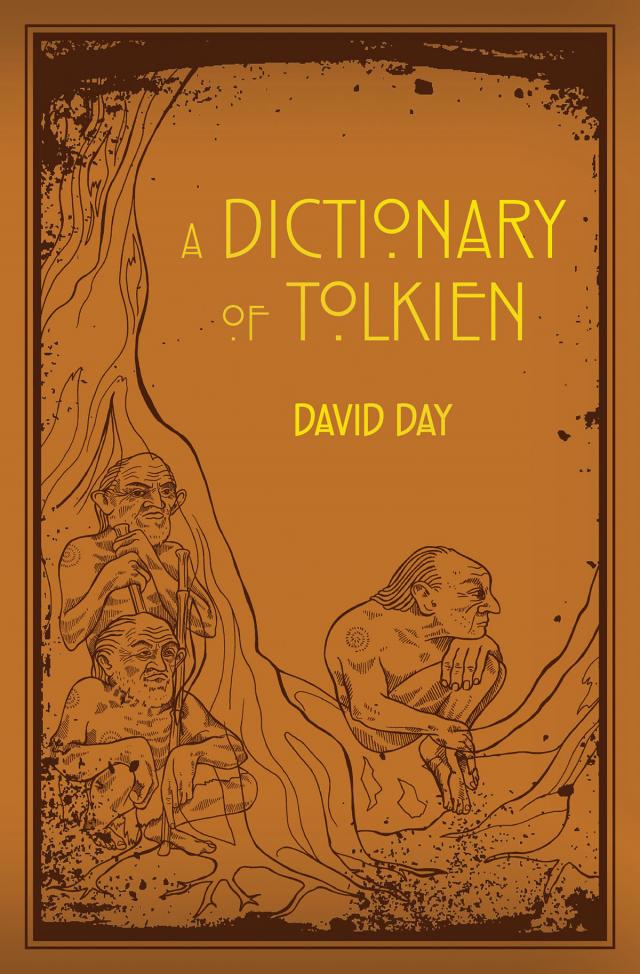
A Dictionary of Tolkien
David Day
Science Fiction & Fantasy / Poetry / Outdoors & Nature
J.R.R. Tolkien is the father of modern fantasy. He created characters and a world so rich with details—and so unique—that it warranted a whole new vocabulary along with it. His creation of language is not surprising, considering his first civilian job following his service during World War I was working on the Oxford English Dictionary as his. Inside, you'll find a chronology of Tolkien's life, along with a short biography and an explanation of his writings. Then flip through the dictionary to discover terms like Aglarond, the great caverns beneath Helm's Deep, or the Black Riders and the mystery surrounding them—among many other terms. This companion serves as a terrific resource for all those in love with Middle Earth and its inhabitants.- Luxurious rich brown flexibound cover.- Perfect for Tolkien fans, linguists, or anyone prone to fantasy.Tolkien: A Dictionary is a beautiful addition to any home library, and makes a great conversation piece.

Lust: A Dictionary for the Insatiable
Adams Media Corporation
The Seven Deadly Sins have sliced up the dictionary and taken what's theirs. No one vice is too greedy as each volume prides itself on having more than 500 entries. Word lovers will lust after these richly packaged volumes—and once you've collected all seven, you'll be the envy of all your friends.
Lust: A Dictionary for the Insatiable
Once just isn't enough. You'll want to ogle these entries multiple times, all night long. Nouns, verbs, adverbs, adjectives, whatever their particular pleasure—or pleasures—they'll find 'em inside.
The Dictionary of Failed Relationships
Meredith Broussard
FROM A TO Z--26 WAYS TO LEAVE YOUR LOVER (OR HAVE HIM LEAVE YOU...)When Meredith Broussard celebrated her 26th birthday and realized that she'd survived exactly 26 failed romantic entanglements, she reckoned it was high time to dissect this topic that had filled her life with so much . . . angst. With the help of 26 of today's hottest young female writers, Broussard gets to the heart of the matter. The Dictionary of Failed Relationships is a hip collection of stories, all shedding light on the wide range of emotions (from anger to melancholy to rage supreme) associated with love gone wrong.Ambivalence by Heidi Julavits • Berniced by Eliza Minot • Call-Hell by Amy Sohn • Dagenham by Anna Maxted • Etiquette by Thisbe Nissen • FAQ by Elizabeth Benedict • Green by Susan Minot • Honeymoon by Mary-Beth Hughes • Islands by Jennifer Macaire • Justice by Kathy Lette • Kid by Martha Southgate • LDR...
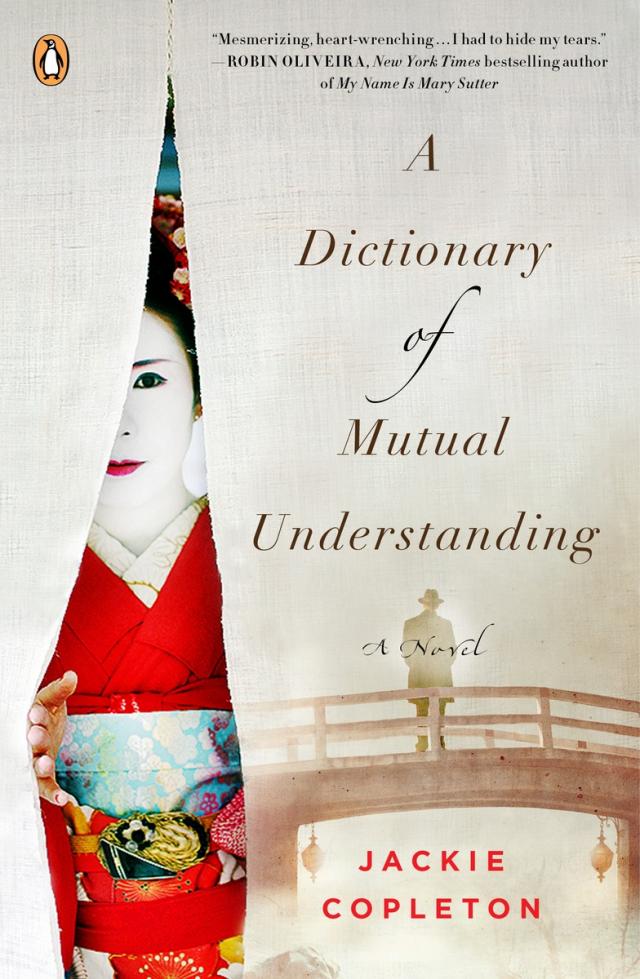
A Dictionary of Mutual Understanding
Jackie Copleton
In the tradition of Memoirs of a Geisha and The Piano Teacher, a heart-wrenching debut novel of family, forgiveness, and the exquisite pain of love When Amaterasu Takahashi opens the door of her Philadelphia home to a badly scarred man claiming to be her grandson, she doesn't believe him. Her grandson and her daughter, Yuko, perished nearly forty years ago during the bombing of Nagasaki. But the man carries with him a collection of sealed private letters that open a Pandora's Box of family secrets Ama had sworn to leave behind when she fled Japan. She is forced to confront her memories of the years before the war: of the daughter she tried too hard to protect and the love affair that would drive them apart, and even further back, to the long, sake-pouring nights at a hostess bar where Ama first learned that a soft heart was a dangerous thing. Will Ama allow herself to believe in a miracle?
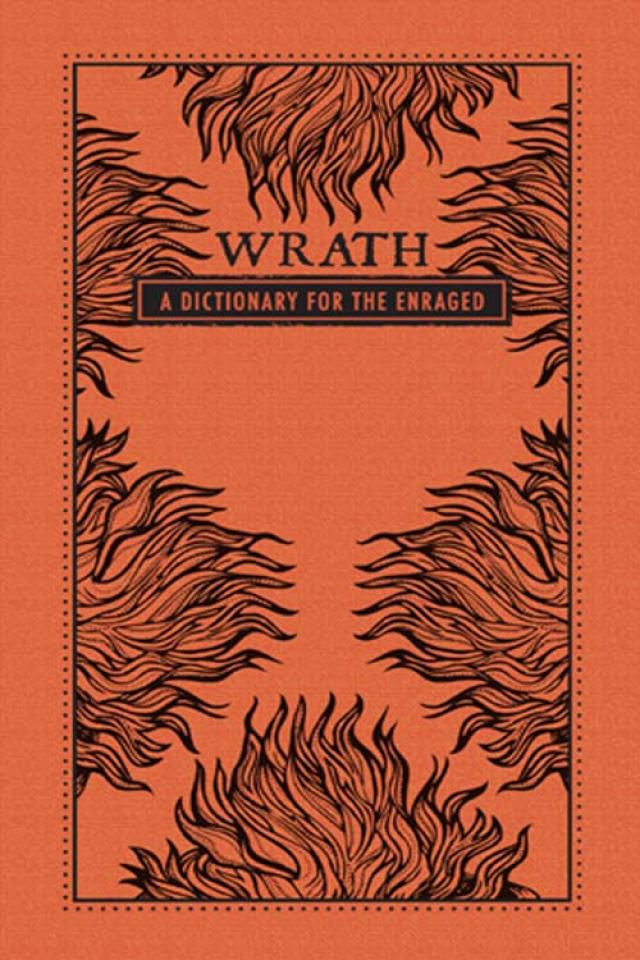
Wrath: A Dictionary for the Enraged
Adams Media
Self Help / Psychology
The Seven Deadly Sins have sliced up the dictionary and taken what's theirs. No one vice is too greedy as each volume prides itself on having more than 500 entries. Word lovers will lust after these richly packaged volumes—and once you've collected all seven, you'll be the envy of all your friends.
Wrath: A Dictionary for the Enraged
Anger will never cause a loss of words again—as long as the Wrathful keep this reference clutched in their fists during their next fit. Speech will be their weapon as they launch a verbal assault on anyone who's wronged them.
A Dictionary of Maqiao
Han Shaogong
From Publishers Weekly Maqiao, a fictitious rural village lost in the vitals of Mao's Communist empire, is to Han's magical novel what Macondo is to One Hundred Years of Solitude-a place in which the various brutalities and advances of contemporary history are transformed within the "fossil seams" of popular myth. Han adopts the rules of the dictionary to the rules of fiction, distributing mini-sagas of rural bandits, Daoist madmen and mixed up Maoists across the definitions of terms with special meaning in Maqiao. Han, narrator as well as author, is sent to Maqiao as part of a cadre of "Educated Youth" during the Cultural Revolution. A sharp, sophisticated observer, he narrates these folkloric tales from the vantage point of contemporary China, situating them within a richly informative historical and philosophical framework. Among the stories that deserve mention are those of Wanyu, the village's best singer and reputed Don Juan, who is discovered to lack the male "dragon"; of "poisonous" Yanzao, so called both because his aged mother has a reputation as a poisoner and because he is assigned to spread pesticides (and in so doing absorbs such a quantity of toxins that mosquitoes die upon contact with him); and of Tiexiang, the adulterous wife of Party Secretary Benyi, who takes up with Three Ears, so called because of the rudimentary third ear that grows under one of his armpits. Flawlessly translated by Lovell, this novel should not be missed by lovers of literature. Review "The best novel of the year isn't that DeLillo-on-automatic-pilot thing that broke out, along with SARS, this spring; nor the smutty anti-Islamic screed by the super-annuated French juvenile delinquent; nor even Jane Smiley's excellent investigation of the unlikely souls of real estate agents. Rather, it is this 'dictionary' of the dialect of a fictitious village, Maqiao, lost in the squat hills of South China." – San Francisco Chronicle Book Review "[A] subtle and smashingly effective critique of the futility of totalitarian efforts to suppress language and thought – and, more to the point, a stunningly imaginative and absorbing work of fiction." – Kirkus Reviews "[A Dictionary of Maqiao] is a magnificent book, epic in its ambitions and sweep without any of the sentimental obfuscation on which that genre so often depends." – The Village Voice "[B]oth fascinating and masterful… Han paints a detailed, intriguing and amusing picture of what happens when Marxism collides with entrenched village beliefs, and how traditional China coexists with modernity. The book is filled with peculiar, beguiling, tragic characters and scenery so real you can touch it… This is an intelligent, amusing, clever, fascinating and well-written view of a China most of us never see, or don't recognize when we do." – Asian Review of Books "To enter [A Dictionary of Maqiao]'s pages is to cross into a world of bandits and ghosts, where 'rude' means 'pretty,' and homosexuals are 'Red Flower Daddies' and people don't die, they 'scatter.'" – The New York Times Book Review " Dictionary of Maqiao is a wonderful, many-layered novel written as a series of definitions which gains further depth from a good translation… Han Shaogong's novel [is] clever, sympathetic and amused… Julia Lovell's translation is an impressive achievement, a fine reflection of a complex book." – Times Literary Supplement "Han Shaogong's novel has won wide acclaim, and deservedly so; through his treatment of language, he not only vividly portrays village life in rural China, but also inspires readers to rethink what they are accustomed to taking for granted." – Persimmon "Sometimes humorous, but crude and grim at other times, the entries all intertwine to give readers a picture of life in this distant region." – Library Journal "The narrator's folkloric stereotypes the provincial simpletons and fools, the cuckolded husbands, the long-suffering wives resolve affectingly into distinct human beings. And the peasant vocabulary vulgar, quaint, superstitious which so perplexesthe earnest young outsider is also revealed to be cunningly subversive, an antidote to the totalitarian imposition of a "reality"irreconcilably at odds with the real thing." – Amanda Heller, The Boston Globe "This is a serious, ground-breaking and finally brilliant novel by one of China's leading authors… The translation is everywhere excellent – fluent, colloquial where appropriate, without being excessively so, learned in places, and without any hint anywhere of 'translationese'… surely destined for classic status." – Bradley Winterton, Taipei Times "In its formal inventiveness, its nuanced depiction of Chinese peasant life, and its speculative explorations into the Chinese cultural psyche, this is one of the finest novels of the post-Mao era to so far make its way into English." – Jeffrey Twitchell-Waas, Review of Contemporary Fiction "Worth reading…fascinating and surprisingly accessible." – Anton Graham, China Economic Review "Han is a good storyteller, ingeniously leading the reader into the heart of his stories… A Dictionary of Maqiao is readable and enjoyable." – Fatima Wu, World Literature Today *** In a country where much can hinge on the written word, Chinese author Han Shaogong gives it the respect it deserves. In a beautiful afterword to his A Dictionary of Maqiao, he writes: “Words have lives of their own. They proliferate densely, endlessly transform, gather and scatter for short bursts, drift along without mooring, shift and intermingle, sicken and live on, have personalities and emotions, flourish, decline, even die out.” Contrary to what the title suggests, A Dictionary of Maqiao is actually a novel, written in an interesting technique, almost through the point of view a spectator. Han spends much of the years of the Cultural Revolution in China, in a small village in the south called Maqiao. He spreads the words of the authority while staying useful and productive in the village. Han knows as well as anybody that the language of a region is an effective mirror of its culture. Through “dictionary entries,” explanations of region-specific terms, a picture of Maqiao (arguably even China) appears. The entries are fascinating some just a paragraph in length, others going for at least a few pages. A single entry can count for larger criticisms or appreciation of culture. For example, an examination of the word, “sweet,” indicates that the word can actually cover a wide spectrum of flavors in Maqiao. Han also makes a beautifully executed leap to generalizations peoples of the world make about each other: “Even today, the majority of Chinese people still have great difficulty in distinguishing the facial types of western, northern, and eastern Europeans, and in making out cultural differences between the British, the French, the Spanish, the Norwegians, the Poles etc. The names of each European people are no more than empty symbols in school textbooks, and many Chinese, when put on the spot, are still unable to make any link between them and corresponding characteristics in facial type, clothing, language and customs. This baffles Europeans, just as it baffles the Chinese that Europeans cannot differentiate clearly between people from Shanghai, Canton, and the Northeast.” Another interesting “entry” is one on science where the residents consider science to be the product of “lazybones” and therefore deride its use. As with any culture, modern values soon make their appearance even in Maqiao. Towards the end, Han explains: “In Maqiao during the 1990s, a lot of new words came into fashion and passed into common usage: 'television,' 'paint,' 'diet,' 'operate,' Ni-Ping (a well-known television host), 'disco dancing,' 'Highway 107,' 'seafood,' 'lottery tickets,' 'build the Great Wall (play Mahjong),' 'bump-the-butt' (motorbike), 'hold the basket' (act as mediator) and so on.” While these dictionary entries make for a fascinating glimpse into China, the book is not easy reading. For one, the very small print creates practical difficulties. This combined with the heft of the material can weigh the reader down significantly. Still, the end result is well worth the reader’s effort. A Dictionary of Maqiao (translated ably by Julia Lovell) emerges as a wonderful, if fractured, portrait of China. Han Shaogong, through his award-winning novel, provides not only a nuanced look into modern China, but also focuses on language as an instrument of keeping culture alive. “Strictly speaking, what we might term a 'common language' will forever remain a distant human objective,” he says, “providing we don’t intend exchange to become a process of mutual neutralization, of mutual attrition, then we must maintain vigilance and resistance toward exchange, preserving in this compromise our own, indomitable forms of expression.” A Dictionary of Maqiao establishes wonderfully, the vital link between language and culture. In a world of rapid globalization, the subtle warning about the increasing loss of languages is only too timely and important. Reviewed by Poornima Apte
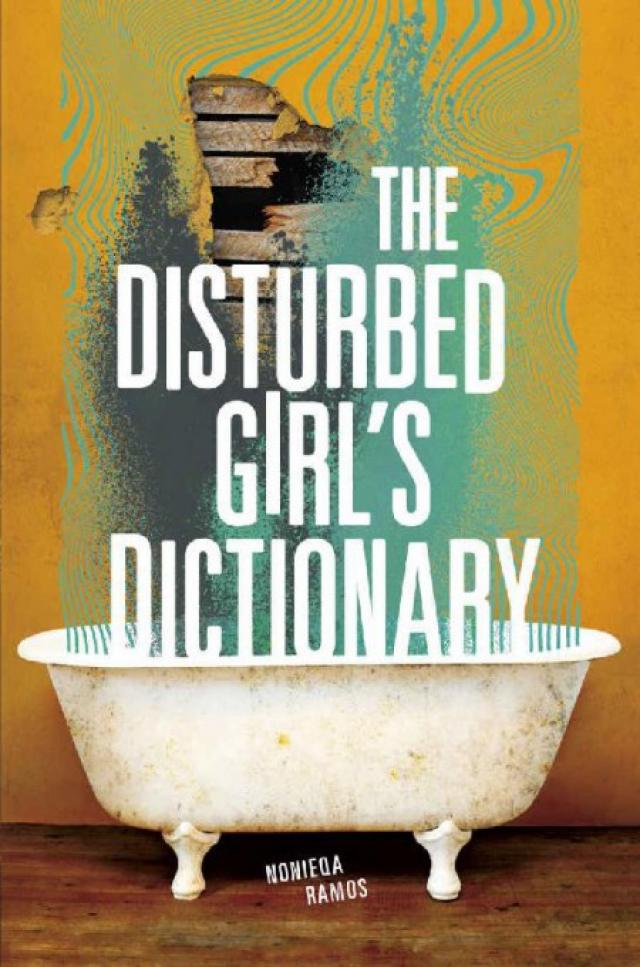
The Disturbed Girl's Dictionary
Nonieqa Ramos
Macy's school officially classifies her as "disturbed," but Macy isn't interested in how others define her. She's got more pressing problems: her mom can't move off the couch, her dad's in prison, her brother's been kidnapped by Child Protective Services, and now her best friend isn't speaking to her. Writing in a dictionary format, Macy explains the world in her own termscomplete with gritty characters and outrageous endeavors. With an honesty that's both hilarious and fearsome, slowly Macy reveals why she acts out, why she can't tell her incarcerated father that her mom's cheating on him, and why her best friend needs protection . . . the kind of protection that involves Macy's machete.

The American Heritage Dictionary of Idioms
Christine Ammer
From "all systems go" to "senior moment"—a comprehensive reference to idiomatic English. The American Heritage® Dictionary of Idioms explores the meanings and origins of idioms that may not make literal sense but play an important role in the language—including phrasal verbs such as kick back, proverbs such as too many cooks spoil the broth, interjections such as tough beans, and figures of speech such as elephant in the room. With extensive revisions that reflect new historical scholarship and changes in the English language, this second edition defines over 10,000 idiomatic expressions in greater detail than any other dictionary available today—a remarkable reference for those studying the English language, or anyone who enjoys learning its many wonderful quirks and expressions. "Invaluable as a teaching tool." —School Library Journal



Gluttony: A Dictionary for the Indulgent
Adams Media Corporation
The Seven Deadly Sins have sliced up the dictionary and taken what's theirs. No one vice is too greedy as each volume prides itself on having more than 500 entries. Word lovers will lust after these richly packaged volumes—and once you've collected all seven, you'll be the envy of all your friends.
Gluttony: A Dictionary for the Indulgent
Readers can devour word after word after word until they've had their fill. And then they can have some more. This bite-size book serves up a hefty sampling of juicy words. It's a wonderful treat for the Gluttonous.

Byrne's Dictionary of Irish Local History
Joseph Byrne
What was a mark? Livery of seisin? Letters patent? This remarkable Dictionary of Irish Local History will be able to tell you. Entries are fully cross-referenced and come replete with full biographical paraphernalia to enable readers to engage in further reading. Primarily intended for local historians, but the interconnectedness of the local and wider worlds is recognised by the inclusion of a range of entries relating to national institutions, religion, archaeology, education, land issues, lay associations and political movements. It is an indispensable work, which will enable local historians to make better sense of the evidence for the past.
Bryson's Dictionary For Writers And Editors (v5.0)
Bill Bryson
Travel / Nonfiction
Book DescriptionFrom one of America's most beloved and bestselling authors, a wonderfully useful and readable guide to the problems of the English language most commonly encountered by editors and writers.What is the difference between “immanent” and “imminent”? What is the singular form of graffiti? What is the difference between “acute” and “chronic”? What is the former name of “Moldova”? What is the difference between a cardinal number and an ordinal number? One of the English language's most skilled writers answers these and many other questions and guides us all toward precise, mistake-free usage. Covering spelling, capitalization, plurals, hyphens, abbreviations, and foreign names and phrases, Bryson's Dictionary for Writers and Editors will be an indispensable companion for all who care enough about our language not to maul, misuse, or contort it.This dictionary is an essential guide to the wonderfully disordered thing that is the English language. As Bill Bryson notes, it will provide you with “the answers to all those points of written usage that you kind of know or ought to know but can’t quite remember.”From the Inside FlapWhat is the difference between cant and jargon, or assume and presume? What is a fandango? What’s the new name for Calcutta?How do you spell supersede? Boutros Boutros-Ghali? Is it hippy or hippie? These questions really matter to Bill Bryson, ever since his days as a rookie subeditor on The Times back in the 1970s; and they matter to anyone who cares about the English language. Originally published as The Penguin Dictionary for Writers and Editors, Bryson’s Dictionary for Writers and Editors has now been completely revised and updated for the twenty-first century by Bill Bryson himself. Here is a very personal selection of spellings and usages, covering such head-scratchers as capitalization, plurals, abbreviations and foreign names and phrases. Bryson also gives us the difference between British and American usages, and miscellaneous pieces of essential information you never knew you needed, like the names of all the Oxford colleges, or the new name for the Department of Trade and Industry – or the correct spelling of Brobdingnag. An indispensable companion to all those who write, work with the written word, or just enjoy getting things right, it gives rulings that are both authoritative and commonsense, all in Bryson’s own inimitably good-humoured way.

The Biographical Dictionary of Literary Failure
C. D. Rose
A darkly comic, satirical reference book about writers who never made it into the literary canonA signal event of literary scholarship, The Biographical Dictionary of Literary Failure compiles the biographies of history's most notable cases of a complete lack of literary success. As such, it is the world's leading authority on the subject.Compiled in one volume by C. D. Rose, a well-educated person universally acknowledged in parts of England as the world's pre-eminent expert on inexpert writers, the book culls its information from lost or otherwise ignored archives scattered around the globe, as well as the occasional dustbin.The dictionary amounts to a monumental accomplishment: the definitive appreciation of history's least accomplished writers. Thus immortalized beyond deserving and rescued from hard-earned obscurity, the authors presented in this historic volume comprise a who's who of the talentless and deluded, their stories timeless...
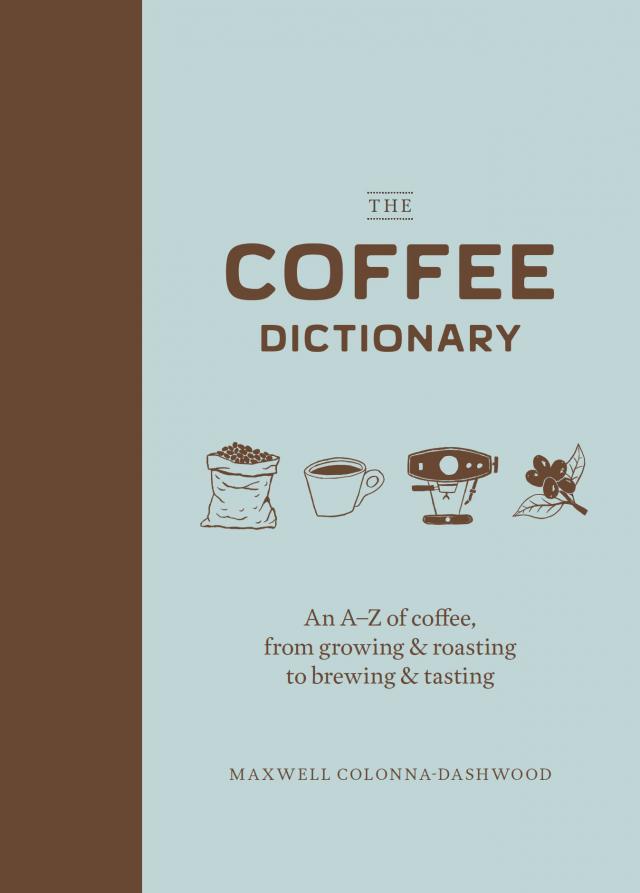
The Coffee Dictionary
Maxwell Colonna-Dashwood
Here is the ultimate Arabica to Zambia guide to all things coffee. Informative and handily sized, this eminently giftable package covers everything that goes into brewing the perfect cup. There's something new to learn on every page! More than 200 entries, colorfully illustrated with artwork throughout, expertly explain everything from terms and techniques, beans and roasts, to equipment and methods. Newbies and connoisseurs will while away the hours "pouring" over the amazing amount of information in this chic and essential reference—a perfect brew for coffee lovers!
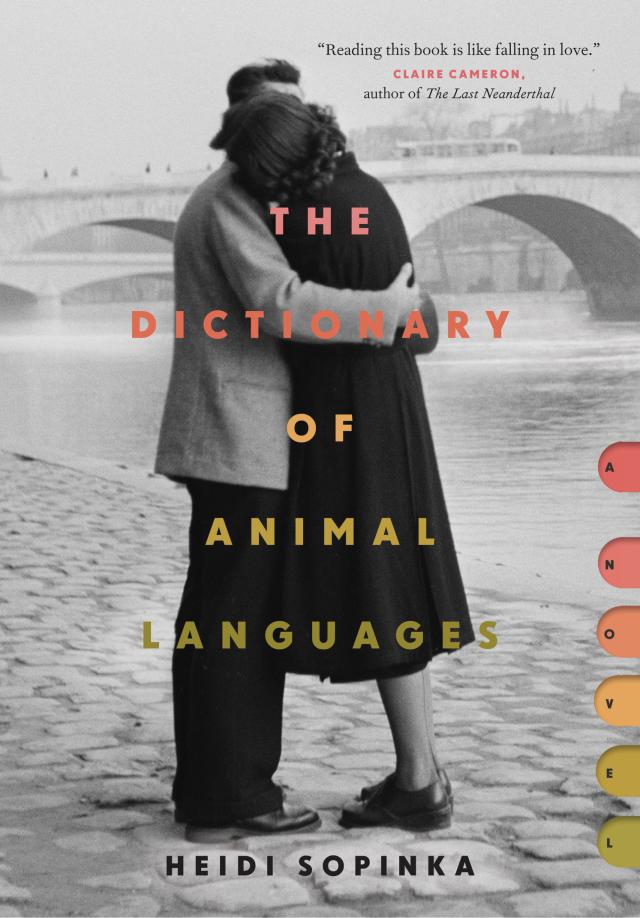
The Dictionary of Animal Languages
Heidi Sopinka
A novel of love, longing, and art set in interwar Paris, The Dictionary of Animal Languages will appeal to readers of All the Light We Cannot See and The Disappeared.Ivory Frame is a renowned artist. Now in her nineties, the famously reclusive painter remains devoted to her work. She has never married, never had a family, never had a child. So when a letter arrives disclosing that she has a granddaughter living in New York, her world is turned upside down and the past is brought painfully to life. Disowned by her bourgeois family, the young Ivory had gone to interwar Paris to study art, and quickly found her true home among the avant-garde painters and poets who crowd the city's cafes. In fellow painter Tacita, she finds the sister she never had. In the Zoological Gardens, she finds a subject for her art capable of fascinating her endlessly. And in Lev, thebrooding, haunted Russian émigré...

Sloth: A Dictionary for the Lazy
Adams Media Corporation
The Seven Deadly Sins have sliced up the dictionary and taken what's theirs. No one vice is too greedy as each volume prides itself on having more than 500 entries. Word lovers will lust after these richly packaged volumes—and once you've collected all seven, you'll be the envy of all your friends.
Sloth: A Dictionary for the Lazy
The real dictionary? Yawn. Too long. Don't bother tirelessly working through all those boring pages. The important stuff is rolled up right here in a collection perfect for the nightstand.