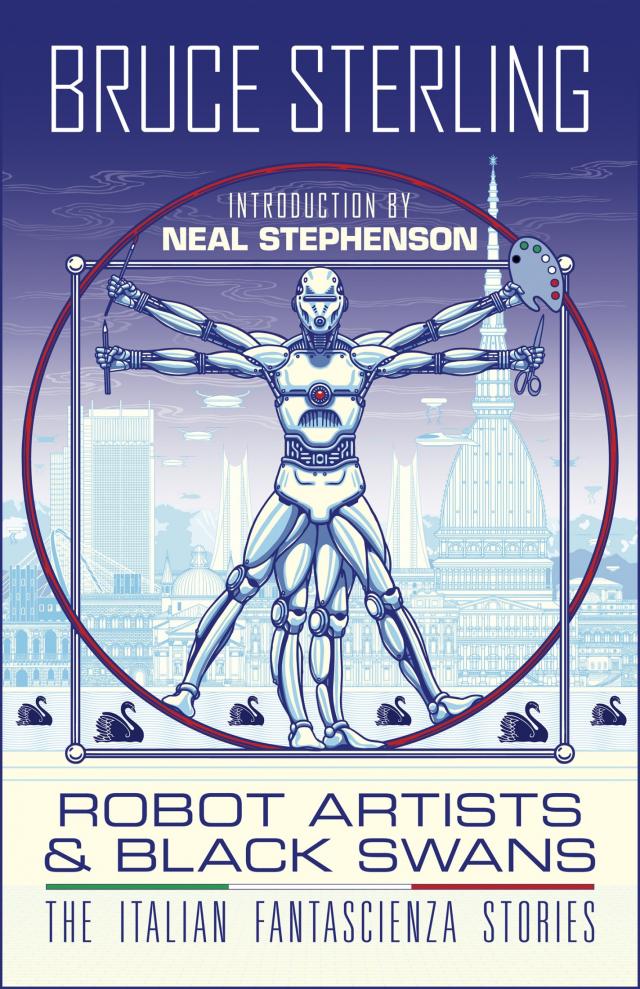
Robot Artists & Black Swans, page 1


PRAISE FOR BRUCE STERLING
“[Sterling’s] highly caffeinated energy is hard to resist.”
—Publishers Weekly
“Climb aboard Sterling’s speculative roller coaster; a dazzling, eye opening ride through the modern world.”
—The Village Voice
“He understands technology’s present and future better than anyone in the field.”
—Cory Doctorow, author of Little Brother
“Science fiction that makes the rest of near-future SF look toylike by comparison. It’s as if Sterling is the only writer paying attention to what’s happening in the real world.”
—Locus
“Love him or hate him, Bruce Sterling always has something important to say.”
—Bookmarks Magazine
“Sterling’s cutting-edge knowledge of cultural movements, emerging and dead technologies, conspiracies, and tipping points makes Zeitgeist a powerful, poignant, and hilarious read as the twentieth century gives way to the new millennium.”
—Booklist, on Zeitgeist
“Turn-of-the-millennium spectacular… Y2K’s Catch 22!”
—Kirkus, starred review on Zeitgeist
“Breathtaking.”
—New York Times Book Review, on The Difference Engine (with William Gibson)
“Gleeful, shrewd, speculative, cynical, closely observed… The Zenith Angle offers wisdom and solace, thrills and laughter.”
—Washington Post, on The Zenith Angle
“Why not a flying pontoon boat with which to sail off to Chicago, and why not a partnership with Houdini to combat world communism? A kind of Ragtime for our time: provocative, exotic, and very entertaining.”
—Publishers Weekly, starred review, on Pirate Utopia
“The best of their brilliant generation, Sterling and his collaborator[s] have produced a book to treasure. Bravo!”
—Michael Moorcock, author of the Elric of Melniboné series, on Pirate Utopia
“Bruce Sterling has managed to pen a delivery vessel for a futuristic, anarchistic dystopian idea of human potential. And in the end, Gothic High-Tech leaves the reader with the notion that even with all this mess, there are ways out of every quandary—even if those ways are unimaginable now or far different than we’d hoped.”
—New York Journal of Books, on Gothic High-Tech
“A tour de force… Of all the horde of SF novels about clones written since that trope was pulled mewling from its artificial womb, The Caryatids is the first one that nails it.”
—Benjamin Rosenbaum, author of The Ant King and Other Stories, on The Caryatids
“A comedic thriller for the Homeland Security era.”
—Entertainment Weekly, on The Zenith Angle
“A haunting and lyrical triumph”
—TIME, on Holy Fire
“Written with humor and intelligence, this book is highly recommended.”
—Library Journal, on The Hacker Crackdown
— ALSO BY BRUCE STERLING —
Novels
Involution Ocean (1977)
The Artificial Kid (1980)
Schismatrix (1985)
Islands in the Net (1988)
The Difference Engine (with
William Gibson) (1990)
Heavy Weather (1994)
Holy Fire (1996)
Distraction (1998)
Zeitgeist (2000)
The Zenith Angle (2004)
The Caryatids (2009)
Love Is Strange: A Paranormal
Romance (2012)
Pirate Utopia (novella, 2016)
Collections
Crystal Express (1989)
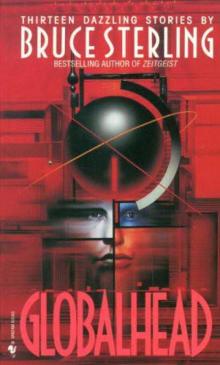
Globalhead (1992)
Schismatrix Plus (1996)
A Good Old-Fashioned Future (1999)
Visionary in Residence (2006)
Ascendancies: The Best of
Bruce Sterling (2007)
Gothic High-Tech (2012)
Edited By
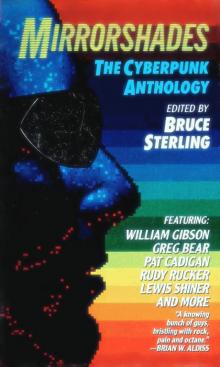
Mirrorshades: The Cyberpunk
Anthology (1986)
Twelve Tomorrows (2014, 2015)
Nonfiction
The Hacker Crackdown:
Law and Disorder on the
Electronic Frontier (1992)
Tomorrow Now: Envisioning
the Next Fifty Years (2002)
Shaping Things (2005)
The Epic Struggle of the
Internet of Things (2014)
Robot Artists & Black Swans Copyright © by Bruce Sterling
This is a collected work of fiction. All events portrayed in this book are fictitious and any resemblance to real people or events is purely coincidental. All rights reserved including the right to reproduce this book or portions thereof in any form without the express permission of the author and the publisher.
Introduction: “Storia, Futurità, Fantasia, Scienza, Torino” copyright © 2021 by Bruce Sterling
Introduction copyright © 2021 by Neal Stephenson
Afterword: “Bruce Sterling, Erudite Dreamer and Pirate” copyright © 2021 by Dario Tonani
Cover and interior art and design by John Coulthart
Tachyon Publications LLC
1459 18th Street #139
San Francisco, CA 94107
415.285.5615
www.tachyonpublications.com
tachyon@tachyonpublications.com
Series Editor: Jacob Weisman
Project Editor: Rick Klaw
Print ISBN 13: 978-1-61696-329-3
Digital ISBN: 978-1-61696-330-9
Printed in the USA by Versa Press, Inc.
First Edition: 2021
9 8 7 6 5 4 3 2 1
“Kill the Moon” © 2009. Originally published as “Italia 2061: Uccidiamo la Luna” in Wired Italia #4, 2009.
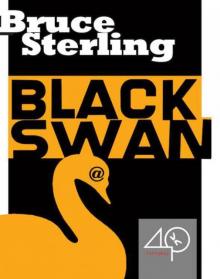
“Black Swan” © 2009. Originally published as “Cigno Nero” in Robot: Rivista di Fantascienza, Spring 2009. First English language publication in Interzone #221, March–April 2009.
“Elephant on Table” © 2017. Originally published in Chasing Shadows: Visions of Our Coming Transparent World edited by David Brin and Stephen W. Potts (Tor Books, 2017.)
“Pilgrims of the Round World” © 2014. Originally published in Subterranean Online, Winter 2014.
“The Parthenopean Scalpel” © 2010. Originally published as “Il Bisturi Partenopeo” (40K Books). First English language publication in Gothic High-Tech (Subterranean Press, 2012).
“Esoteric City” © 2009 Mercury Press. Originally published in The Magazine of Fantasy and Science Fiction, August/September 2009.
“Robot in Roses” © 2017. Originally published as “Robot tra le Rose” in Nuove eterotopie: la antologia definitive del Connettivismo edited by Sandro Battisti and Giovanni De Matteo (Delos Digital).
Dear Reader,
Thank you so much for purchasing this book. We hope you enjoy it. Please absolutely do not share, reproduce, post, or resell this e-book. Piracy is illegal. This book is protected by international copyright law; all rights are reserved without the express permission of the author and the publishers.
Most importantly, piracy keeps authors from getting paid. It also keeps publishers from putting out more great books like this. If you have any questions about copyright, or if you think this copy was pirated, please immediately contact us at tachyon@tachyonpublications.com.
Thank you,
Tachyon Publications LLC
1459 18th Street #139
San Francisco, CA 94107
415.285.5615
tachyon@tachyonpublications.com
— CONTENTS —
Introduction by Neal Stephenson
Storia, Futurità, Fantasia, Scienza, Torino by Bruno Argento
KILL THE MOON
BLACK SWAN
ELEPHANT ON TABLE
PILGRIMS OF THE ROUND WORLD
THE PARTHENOPEAN SCALPEL
ESOTERIC CITY
ROBOT IN ROSES
Afterword: Bruce Sterling, Erudite Dreamer and Pirate by Dario Tonani
About the Author
Introduction
by Neal Stephenson
BRUCE STERLING can do something I cannot, which is write short fiction. Just now it is an enviable superpower for a writer to possess. The last few years have been infamously challenging for anyone trying to write a long document with any pretensions of carrying a futuristic payload. We long-form authors, our noses pressed up against the glass of the short-fiction writing world, can only hunker down on the throne and endlessly doom scroll, flinching every few minutes as the real world kicks the props out from under our architectonic lucubrations.
Accordingly, this introduction will be short, in the hopes that I can squirt it out before it is rendered sadly obsolete by whatever has happened the next time I check Twitter.
The primary job requirement of a cyberpunk has always been to pay attention; to notice things in a fine-grained way. It turns out that Bruce Sterling has never stopped doing that. Nothing helps you notice things like being a stranger in a strange land, and ever since Bruce decamped from his native Austin to southern Europe he has remained an avid noticer, enabling him to write sentences like “ The Vatican wheelchair was a rolling mass of embedded electronics. The Shadow House rejected this Catholic computational platform as if it were a car bomb.”
So, relieved of the staggering burden of predicting the future, what we used to call cyberpunk has not merely clung to life, but flourished like the radioactive roses of post-atomic Rome (as Bruce describes in one of these stories). But it has long been the case that if you scrape away the shiny chrome plating on a science fiction writer’s mirrored shades you’ll find, just below, a historical fiction writer, and now we learn that Bruce Sterling is no exception; the longest piece in this book reads like it could be a condensed first volume of a longer historical epic, which I would gladly devour.
Long live Bruno Argento!
Neal Stephenson
Storia, Futurità, Fantasia, Scienza, Torino
by Bruno Argento
DEAR AMERICAN READERS, I am as surprised as you to find my modest collection of Italian science fiction stories published in your United States. I confess to you: by the professional standards of American science fiction writers, Bruno Argento is simply one of the European literary amateurs.
Here in my city of Turin, our refined and delicate writers will rarely thrive. We Turinese writers seem to be a fragile group, haunted and persecuted by esoteric shadows. Sometimes we are famous—even outside Italy—but, in daring to write fiction here in Turin, we rarely end well.
Our greatest adventure fantasy novelist here in Turin, Captain Emilio Salgari, was a contemporary of Jules Verne. Salgari has written many fantastic geographic fantasies that are far less boring than Verne’s similar books. But unlike Jules Verne, Emilio Salgari committed suicide with a Japanese sword.
The German Federico Nietzsche was our most famous philosopher here in Turin, but he suffered a complete madness in Turin while hugging a horse on the street.
The great Turin novelist Cesare Pavese, at the height of his fame, ended his life with sleeping pills because of a bad love affair with a movie actress.
As for Primo Levi, he is the most authoritative science fiction writer ever seen in Turin. Primo Levi had a high literary reputation throughout the world, so he had to blush to write any science fiction. So Levi wisely invented a new, imaginary alter-ego, “Damiano Malabaila.” Damiano Malabaila wrote all the science fiction for Primo Levi. This scheme worked well, until Primo Levi threw himself to his death down a stairwell in Turin.
However, despite the perishing of Levi, the work of “Malabaila” has survived. I always learn from Turinese history, so when I myself decided to become a Turinese fiction writer, I took careful note of the many difficulties. That is why I have survived to write this introduction for you. Also, my health so far is excellent!
In order to write fiction here in Turin, Bruno Argento, too, is well disguised as my pseudonym, just like Primo Levi did. But, instead of inventing “Damiano Malabaila,” I invented “Bruce Sterling.”
To tell the story, it was my best friend in Turin, Bruno Bruni, who first teasingly nicknamed me “Bruce Sterling” (for this is the rough English translation of Bruno Argento). Mr. Bruni is our most famous science fiction translator here in Turin, and a colleague of Giuseppe Culicchia, the most famous novelist who is currently surviving in Turin. (It was probably Culicchia who first fully described this ridiculous Bruce Sterling figure, an unlikely “cyber-punk” Texan who somehow decides to become Turinese, like some American clown from commedia dell’arte.)
Obviously this “Bruce Sterling” can never really exist, but my fellow Italian science fiction writers have cordially accepted this necessary deception of mine. The other Italians know about the life for writers here in Turin; they can follow my reasoning; they sympathize. Also, they are very erudite people, so they can see that the Argento / Sterling duality is a literary game, inspired by Italo Calvino’s famous fantastic novel The Cloven Viscount, which was written and published in Turin in 1952.
It took me many years to become a published writer, and I have never been prolific. My career in Turinese science fiction, like life in Turin itself, has been rather slow-paced and majestic.
In my normal daily life, I am a technical professional, but my inspiration is history. Like most Europeans, I consider science fiction to be a form of philosophical struggle. Back in my student days, one of my wise professors at the Turin Polytechnic first took me under his wing. He told me this important matter:
“The task of the historian is to reconstruct and to depict the comprehensive epochal design in which every single human fact fits and can be explained in relation to the others.”
Most professors here in Italy speak just like this. European historians are deep, profound thinkers, and not joking around, like us pop science fiction writers. But I could not understand the nature of history when I first heard this profound statement from him. On the contrary, I was just a university student in computer science who wanted to get a real job. However, I quickly wrote that impressive statement in my most special Fabriano notebook with my best Aurora fountain pen, made here in Turin.
What a grand task that was for a creative writer: to reconstruct, describe, and be so complete! How can any writer ever design an era in which all human facts are connected? How can a writer include the passage of time so intensely that every human breath, act, and thought is incorporated into one historical narrative? This problem is deep!
I was much impressed with this challenging literary problem, although I didn’t know why. For years I thought about it, while I graduated from the Turin Polytechnic, got a rather well-rewarded job in high technology, got married, bought a house, and had children.
As a young member in good standing of Turin’s vibrant technical elite, I lacked much time for my creative writing, although I continued my extensive weekend readings in the Italian translations of Lovecraft, Ballard, William Gibson, and Philip K. Dick.
But then, one day, while I was wistfully attending the Stranimondi science fiction literary conference in nearby Milan, I finally realized my observation. While mulling over the many used paperbacks written by Italian science fiction writers ever since the year 1957 (when the word “fantascienza” was first invented), suddenly I had my creative turn.
This activity of the “historian’s task”—to write about the past in a way that connects every human effort to everything else at the time—was actually a statement about science fiction, and not about history. No historian can ever build and describe a world so orderly and complete, but surely a science fiction writer can do that!
In fact, it is only through fantasy science that such “comprehensive epochal designs” can ever take full control of all other written forms of reality! Historians will always be defeated when they aspire to this excellent result. But we science fiction writers can always achieve it—if we try sincerely.
Furthermore—although, metaphysically—this historical aspiration applies to the world, and also the solar system, the galaxy, the cosmos—no book has enough words and pages for all that space and time. The writer cannot “represent” all space and even all time, too. Therefore, this “comprehensive epochal design” should be applied to many different times within one town.