

Murder at the Bridge (Detective Inspector Skelgill Investigates Book 20), page 1


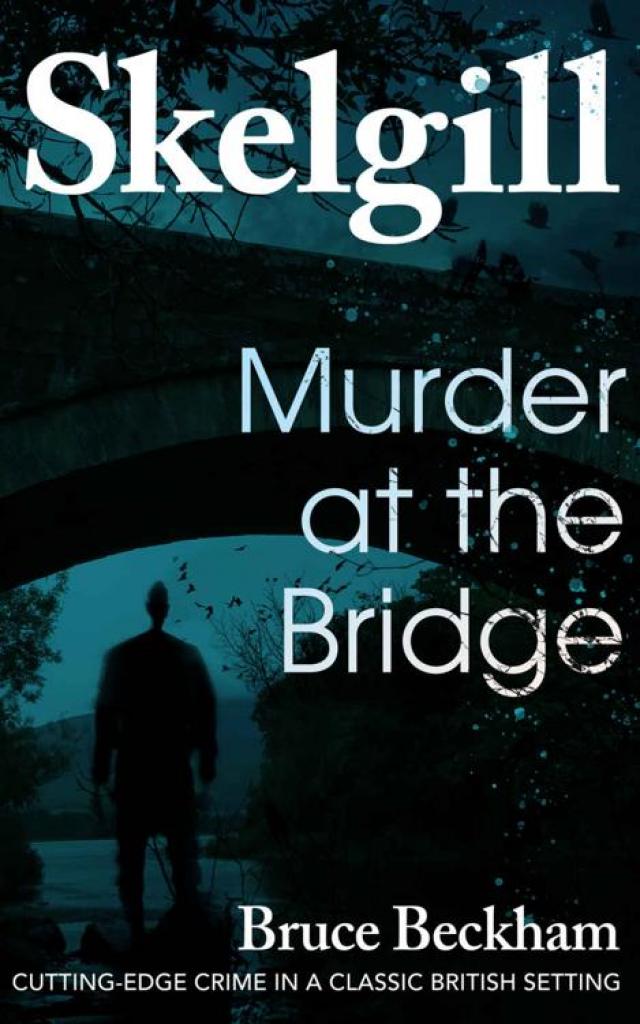
MURDER AT THE BRIDGE
Detective Inspector Skelgill Investigates
Bruce Beckham
Lucius
Copyright © 2023 BRUCE BECKHAM
All rights reserved. Bruce Beckham asserts his right always to be identified as the author of this work. No part may be copied or transmitted without written permission from the publisher.
This is a work of fiction. Names, characters, places and incidents either are the product of the author’s imagination or are used fictitiously. Any resemblance to actual persons, living or dead, events and locales is entirely coincidental.
Kindle edition first published by Lucius 2023
Paperback edition first published by Lucius 2023
Hardcover edition first published by Lucius 2023
For more details and Rights enquiries contact:
Lucius-ebooks@live.com
Cover design by Moira Kay Nicol
United States editor Janet Colter
Contents
Title Page
Copyright
TROUBLED WATERS
EDITOR'S NOTE
THE DI SKELGILL SERIES
GLOSSARY
QUOTATION
THE DAA COMMITTEE
PROLOGUE
1. DEDICATION TO DUTY
2. THE PROFESSOR
3. MRS BETONY
4. POST MORTEM
5. MONTY
6. WITNESSES
7. RECAP
8. RABBIT HOLES
9. WONDERING WITH ALICE
10. DYNAMITE
11. NEWS
12. LEADEN SKIES
13. ELIMINATION
14. THE LOCUS
15. THE BRIDGE
16. IDENTITY
Next in the series ...
FREE BOOKS, NEW RELEASES, THE BEAUTIFUL LAKES ... AND MOUNTAINS OF CAKES
Books By This Author
TROUBLED WATERS
AN ATTEMPTED MURDER in the United States … a tragic road death in a Cumbrian forest … an old photograph stolen from an ancient coaching inn. Unrelated events – until a midnight drowning below Ouse Bridge exposes a connection. After two decades, has a killer returned to Cumbria to ply their trade? Does a suspect hide in plain sight among loose acquaintances? Who is truthful and who is lying? Skelgill must patiently circle … until finally he picks up the scent.
BRUCE BECKHAM is an award-winning author and copywriter. A resident of Great Britain, he has travelled and worked in over 60 countries. He is published in both fiction and non-fiction, and is a member of the UK Society of Authors.
His series ‘Inspector Skelgill Investigates’ features the recalcitrant Cumbrian detective Daniel Skelgill, and his loyal lieutenants, long-suffering Londoner DS Leyton and local high-flyer DS Emma Jones.
Set amidst the ancient landscapes of England’s Lake District, this expanding series of standalone murder mysteries has won acclaim across five continents, with over 1 million copies downloaded, from Australia to Japan and India, and from Brazil to Canada and the United States of America.
"Great characters. Great atmospheric locale. Great plots. What's not to like?"
Amazon reviewer, 5 stars
EDITOR'S NOTE
Murder at the Bridge is a stand-alone mystery, the twentieth in the series ‘Detective Inspector Skelgill Investigates’. It is set in the English Lake District, at an ancient coaching inn on the shore of Bassenthwaite Lake, close to the outfall of the River Derwent, and its crossing point known locally as Ouse Bridge.
If you are familiar with the exploits of Daniel Skelgill, you may notice some allusions to his emergence; a score of adventures later (an anniversary of sorts), a journey of justice and discovery, your loyal company is wholeheartedly appreciated.
And, please be assured, Skelgill has not yet reached his destination; he has more lakes to paddle, more fells to climb, more crooks to catch.
THE DI SKELGILL SERIES
Murder in Adland
Murder in School
Murder on the Edge
Murder on the Lake
Murder by Magic
Murder in the Mind
Murder at the Wake
Murder in the Woods
Murder at the Flood
Murder at Dead Crags
Murder Mystery Weekend
Murder on the Run
Murder at Shake Holes
Murder at the Meet
Murder on the Moor
Murder Unseen
Murder in our Midst
Murder Unsolved
Murder in the Fells
Murder at the Bridge
GLOSSARY
SOME of the Cumbrian dialect words, abbreviations, British slang and local usage appearing in Murder at the Bridge are as follows:
Ah – I
Alan Whickers – knickers (Cockney)
Arl – old
Arl fella – father
Arl lass – mother
Alreet/areet – alright (often a greeting)
Any road – anyway, besides
Barney – argument, trouble (Cockney: Barney Rubble)
Bathers – swimming costume
Beck – mountain stream
Bleaberry – bilberry
Blow the gaff – reveal a secret
Bookie – bookmaker
Chore – steal
Deek – look
Donnat – idiot, good for nothing
Dwam – trance, reverie (Scots)
Fell – hill
FLO – Family Liaison Officer
Gattered – inebriated
Gill – ravine on fellside, a gully
GP – General Practitioner (doctor)
Gubbins – paraphernalia
Guddle – feel for fish with bare hands
Hank Marvin – starving (Cockney)
Happen – maybe
Haver – talk foolishly (Scots)
Hefted flock – sheep habituated to a certain fellside
Hikey-dykey – hedge-hopping
Hoik – uproot, pull
Hoying – throwing (heavy rain)
Howay – come on
Hump (take the) – to be offended
Int’ – in the/into
Jug – ear (Cockney: jug of beer)
Lamp – punch
Mash – tea/make tea
Marra – mate (friend)
Mithering – annoying
Monkey suit – man’s dress suit
Neb – nose; pry
Nicht – night (Scots)
Nobbut – only
Nowt – nothing
Oor – our
Owt – anything
PHV – private hire vehicle
Pike – prominent peak
Playing away – having an affair
PM – post mortem
Reet – right
Rod, perch, pole – antiquated surveying measure of 5½ yards
RP – received pronunciation; Queen’s English
RTC – road traffic collision
Scotch (adj.) – inanimate object of Scottish origin
Scran – food
Skel – boundary, divide (Old Norse)
Snout – police informer
Steeyan – stone
Stotting – pelting (rain)
Straight bat – caution
Summat – something
Syling – heavy rain
T’ – the (often silent)
Tapped – crazy
Tarn – mountain lake, usually in a corrie
Thee/thew/thou – you, your
Tod – fox
Us – often used for me/my/our
Willylilt – sandpiper
Yatter – talk
Yersen – yourself
Yin – one/person (Scots)
Yowe – ewe
QUOTATION
“In human affairs of danger and delicacy successful conclusion is sharply limited by hurry. So often men trip by being in a rush. If one were properly to perform a difficult and subtle act, he should first inspect the end to be achieved and then, once he had accepted the end as desirable, he should forget it completely and concentrate solely on the means. By this method he would not be moved to false action by anxiety or hurry or fear. Very few people learn this.”
From East Of Eden by John Steinbeck
THE DAA COMMITTEE
CHAIRMAN, Sir Montague Brash, 58 – married; landowner, Brash Hall Estate.
SECRETARY, Georgina Graham, 43 – divorced; HR director, Servill Consulting; lives Swinside Barn, Derwentwater.
TREASURER, Anthony Goodman, 45 – single; director of finance, Fellview Nursing Home, Bothel; lives Keswick.
Jackie Baker, 37 – married; hotelier, Applethwaite House.
Stephen Flood, 47 – widower; quality supervisor, Cumbria Water; lives Cockermouth.
Ruth Robinson, 39 – married; Kirkthwaite Farm.
Jay Chaudry, 42 – single; IT entrepreneur; lives Salford Quays, Manchester & Castle How Farm, Orthwaite.
Kyle Betony, 45 – married; independent financial advisor; works & lives Cockermouth.
Lucy Bedlington, 37 – single; general medical practitioner, Keswick; lives Bewaldeth.
Professor Jim Hartley – retired historian; Braithwaite.
Alice Wright-Fotheringham, KC – retired barrister and judge; Keswick.
; PROLOGUE
Article in ‘TRUE CRIME HUNTERS MONTHLY’ magazine
WHERE ARE THEY NOW?
WOULD-BE KILLERS
WHO MIGHT BE YOUR NEIGHBOUR
FEATURED THIS MONTH
SUSPECTED WIFE-POISONER
TOBIAS JUBB
When Jolene Jubb woke in the passenger seat of her husband’s pickup she couldn’t believe her eyes. Deep in mountainous Missouri woodland, the vehicle teetered on the edge of a ravine. Crazily perched on the hood was a four-gallon jerry can with its screw cap dangling loose. Beyond, through blurry eyes she glimpsed the figure of her husband Tobias, hunched over their child’s buggy, pushing it hurriedly away, up and out of sight along the dry track. Jolene tried to call out, to move – but her voice would not come and her limbs felt heavy, her muscles numbed. Her nostrils were filled with the pungent smell of gasoline.
What was happening to her? To her child?
Slowly, laboriously, Jolene’s survival instincts kicked in.
Somehow, she managed to push open the door.
She tumbled out and half-crawled, half-scrambled away from the vehicle.
Fighting a yearning to sleep, battling dizziness and stupor, she lurched drunkenly in the direction her husband had taken their daughter.
Reaching a bend, she heard voices. She froze, clinging to a tree for support, her breath coming in erratic gasps, her heart pounding in her chest.
‘Where’s Momma?’
‘She’s coming sweetie, Daddy’s just going back for her now.’
‘I want Momma!’
‘You’re safe here – Daddy’s going to fetch Momma from the fire.’
‘I don’t like fire!’
Jolene crept closer, and watched from cover as her husband wedged the buggy between two saplings and checked that the straps holding the child were secure. He took from his pocket the multitool cigarette lighter she had given him for his thirty-fifth birthday. Then he jogged back down the hill.
There was no time to lose.
No animal in the jungle is more determined than a mother with her cubs – and Jolene reached deep into her reserves of will power.
She staggered across the track, unclipped her daughter, lifted her free … and plunged into the brush.
At the wheel of the truck, Tobias came roaring back.
He slewed the automobile to a halt in a great cloud of dust.
Jolene did not wait to watch what happened next.
Imploring her child to stay silent she pushed on into the thick understorey – her babe in arms she bore insect bites and stings, and thorns and briars to escape the terror that lay behind, that filled her mind with dread. Despite her debilitated state, Jolene was sure of one thing: she could not trust Tobias.
She toiled on, tired, thirsty, unnaturally weary – but eventually she came upon a clearing – and a small isolated homestead. A middle-aged woman was sweeping the porch. Exhausted by her ordeal, Jolene could only hand up the child to the surprised countrywoman. She collapsed. But they were safe. The woman’s husband was the local deputy.
The county sheriff was doubtful at first – he believed he had a garden variety family tiff on his hands. But when Tobias Jubb never turned up at the family house that evening – suspicion began to shift. And when Tobias Jubb never reappeared at all, and his pickup was found abandoned next day at St Louis Lambert International Airport – alarm bells began to ring. And when it was discovered a few weeks later that Tobias Jubb had, without his wife’s knowledge, taken out a multi-million-dollar insurance policy on her life – the police began to take notice. And when, in searching his personal possessions left at the family home, the police found a supply of a strongly sedative benzodiazepine – the FBI were called in. And when Jolene Jubb began to relate the strange sicknesses she suffered, and her inexplicable tiredness sometimes lately when they went out for family picnics, often falling asleep before they arrived at their destination – the FBI notified Interpol. And when a hunter came forward, remembering he had seen a man fitting Tobias Jubb’s description looking into the ravine a week earlier – Interpol issued a worldwide Red Notice for his arrest.
And where is Tobias Jubb now?
A decade has elapsed and no trace has been found of him. Jolene Jubb says he was British – and she wonders if he has returned to his native land.
Perhaps one of our readers holds a clue to the answer.
IN NEXT MONTH’S EDITION: an exclusive interview with the estranged wife of disappeared British murder mystery writer Hugh Dunnett, who tells how she almost became the real-life victim of one of his fictional plots, Dead Reckoning, a nautical tale of a sabotaged lifejacket.
1. DEDICATION TO DUTY
Bassenthwaite Lake – 6.04 a.m., Sunday, 19th September
‘Wakey wakey, Skelly – six a.m. alarm call.’
‘George – I’m in the middle of Bass Lake. It’s Sunday. Tell me you’re just bored.’
‘Sorry, lad.’ The desk sergeant’s disembodied voice softens: as a fellow fisherman, there is a note of compassion in his tone. ‘You’ve got another body on your patch. Possible drowning. Suspicious circumstances, by all accounts.’
There is a long pause, in which the solitary sound in the still morning air, heard but ignored by both parties to the telephone call is the cackle from the reeds of a drake mallard, only now it seems getting last night’s joke.
For his part, Skelgill does not look amused.
Sergeant George Appleby breaks the silence.
‘Owt you want to know?’
Skelgill stares at his left hand, his long fingers splayed.
‘Where. When. Who. What. Why.’
He intones flatly, as though to himself, no question marks needed; a practical version of Kipling’s six honest serving-men, in which ‘what’ puts in a double shift on behalf of ‘how’. The detective’s rap.
The sergeant emits a half laugh.
‘I can give you the ‘where’ – starter for ten. The rest’s above my pay grade.’
‘Very funny, George.’
But Skelgill’s inflection invites his associate to be forthcoming.
‘Washed up at the Colonel’s Pool – just above Isel Bridge, if I recall. You could probably row there quicker – if you can get yersen under Ouse Bridge.’
Skelgill makes an indeterminate noise. Maybe not in the dark; although dawn is breaking. And he has done it before in this boat, albeit with saving a life in mind.
The sergeant adds a rider.
‘Oh, aye – and it’s a male in his forties.’
‘Why suspicious?’
The operative word earlier uttered has not escaped Skelgill’s attention.
‘Apparently, he’s wearing a dinner suit.’
Skelgill takes the point. A Barbour jacket, say, like his own, though probably in better condition, would seem more apposite; an angler who put a foot wrong and tumbled into the rushing river.
‘Any cause for urgency?’
It seems Skelgill is hedging his bets; his colleague understands.
‘I can raise Alec Smart, if you like. Ruin his lie-in – hah! But I thought you’d want first dibs. I hear young Emma’s on her way.’
There is a note of advisory caution in the desk sergeant’s voice.
‘Nay.’ Skelgill’s response is a little abrupt. ‘Like you say, George, it’s a stone’s throw. Who needs a double-figure pike on this cracking morn?’
George Appleby produces a sympathetic intake of breath.
‘Caught owt, yet?’
‘Reckon I was just about to.’
‘Ah well, bigger fish to fry now, lad.’
Skelgill reels in and turns his boat. He takes a bearing off Skiddaw Little Man; keeping the false summit dead astern will send him arrowing into Peel Wyke, the tiny hidden wooded inlet that has echoes of the wild oarsmen that once ruled these parts, literally the ‘Wyke-ings’, the Norse ‘baymen’, who left their mark on today’s maps with descriptors that abound, like beck and dale, fell and pike, gill and skel.
*
When Skelgill slows to cross Isel Bridge he sees a lanky uniformed constable, bent over in close confab with a fair-haired young woman, strikingly dressed, and who looks out of place – so it takes him a moment to realise it is DS Jones – perhaps the sight of her distinctive yellow hatchback tucked into the verge behind a marked patrol car is what brings her into focus. Skelgill gives a pap of his horn, although there are no two cars in Cumbria like his. He catches a glimpse of blue-and-white police tape stretched across a stile. He passes the pair and shunts his shooting brake into the rear of the line; the lane is narrow and bordered by a dressed stone wall that is a continuation of the bridge parapet.


