

The Desert Swimmer, page 1


About the Authors
© Royal Flying Doctor Service
Brendan Cullen manages Kars sheep station located 65 km east of Broken Hill. He has lived in the Broken Hill district for most of his life and shares his love of the land with his wife Jacinta and three adult children.
Brendan unknowingly suffered severe depression over many years before he took the first steps to seek help. He began sharing with others his story of battling depression, which led him to become an ambassador for Lifeline Regional SA & Far West NSW in 2017. His role with Lifeline then eventuated in Brendan becoming a peer-support mental health champion for rural people through the We’ve Got Your Back initiative, a partnership between Lifeline and the Royal Flying Doctor Service.
Another of Brendan’s many passions in life is fitness and health, as he likes to live by ‘fit body, fit mind’. This mindset led to Brendan swimming the English Channel in 2022, covering a total distance of 64 km in 17 hours. Brendan repeated this the following year, swimming the channel this time with a team of like-minded individuals. In 2024 Brendan accomplished his first ultramarathon (100 km), held on Kars Station. In 2025 he completed the Catalina Channel Swim off the coast of California.
Brendan had the honour of representing Rebel for their ‘Sport Is Calling’ campaign in 2024. He is grateful for the opportunities that have been bestowed upon him as he continues to support the community through his roles in peer mental health and wellbeing initiatives.
Paul Mitchell is a Melbourne-based writer. His works include the novel We. Are. Family., and a collection of non-fiction, Matters of Life and Faith. His fiction, poems and essays have appeared in The Age, The Australian, The Big Issue, Eureka Street, The Guardian, Heat, Island, Meanjin, Overland and Westerly. He also writes for stage and screen, including his 2025 play, The Ballad of Dan O’Malley: A Football Tragedy.
First published in 2026
Copyright © Brendan Cullen and Paul Mitchell 2026
All rights reserved. No part of this book may be reproduced or transmitted in any form or by any means, electronic or mechanical, including photocopying, recording or by any information storage and retrieval system, without prior permission in writing from the publisher. The Australian Copyright Act 1968 (the Act) allows a maximum of one chapter or 10 per cent of this book, whichever is the greater, to be photocopied by any educational institution for its educational purposes provided that the educational institution (or body that administers it) has given a remuneration notice to the Copyright Agency (Australia) under the Act.
Allen & Unwin
Cammeraygal Country
83 Alexander Street
Crows Nest NSW 2065
Australia
Phone: (61 2) 8425 0100
Email: info@allenandunwin.com
Web: www.allenandunwin.com
Allen & Unwin acknowledges the Traditional Owners of the Country on which we live and work. We pay our respects to all Aboriginal and Torres Strait Islander Elders, past and present.
ISBN 978 1 76147 238 1
eISBN 978 1 92349 255 4
Map courtesy of the Channel Swimming Association
Typeset by Midland Typesetters, Australia
Cover design: Alex Ross Creative
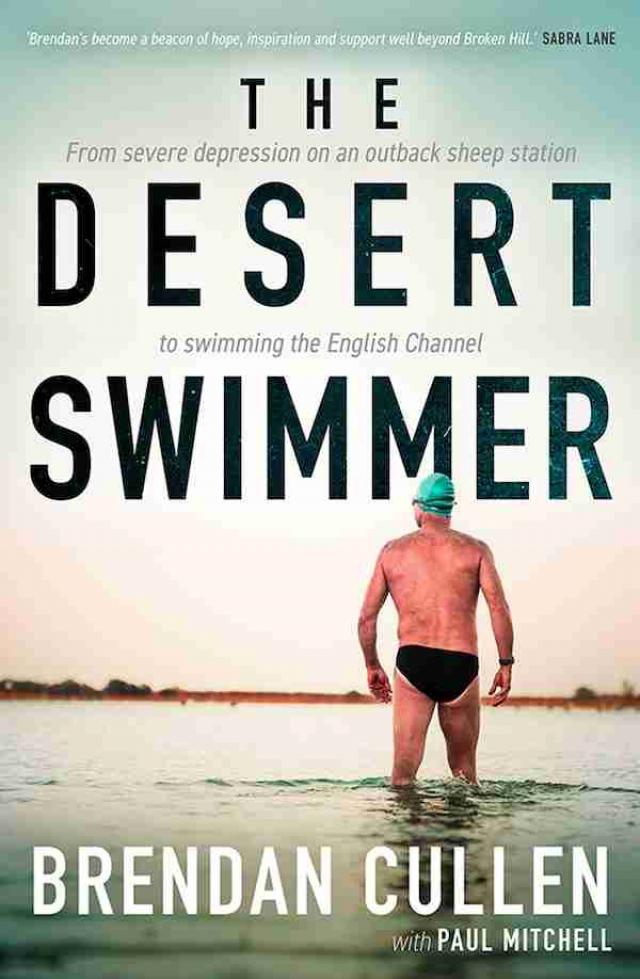
Cover photograph: Tony Berlangieri, Lake Speculation, Menindee Lakes
This book is dedicated to my wife Jacinta and our most-loved treasures—Emma, Charli and Darcey
xxx
Create your own paths with courage and always be you!
B.C.
Contents
1 Swim until you hit something
2 My backyard
3 I chose this channel
4 School and other bruises
5 Head down, budgies up
6 Stairway to recovery
7 In the mind of a swimmer
8 Back on red dirt
9 Keep your head in the game
10 Know when to walk away
11 Solo swims are team sports
12 Work–life unbalanced
13 Watery graveyard
14 My awakening
15 Swim for the light
16 Paying it forward
17 Energy burst or I’m done
18 Baby bird in a boat
19 What the hell just happened?
20 Broken Hill proud
Acknowledgements
Map
Resources
1
Swim until you hit something
It’s a mild day in England, July 2022. I’m on the London to Dover train, kicking back and enjoying watching the rolling hills and little villages flick past. I could be any Aussie tourist until the very end of the one-hour ride, when I become a wild mix of nervous and excited—just from seeing through the window Dover’s famous white cliffs and, beyond them in the distance, the shores of France. Because, after three years of training—in the murky Menindee Lake system for a lot of it—I’ll be attempting to swim the English Channel in a few days’ time.
In the past 150 years, about 50 per cent of the 1800 people who have tried have actually gone on and completed the Channel swim. But none have lived more than 600 kilometres from their nearest beach, or been a 49-year-old sheep station manager who lives 65 kilometres outside Broken Hill, New South Wales.
It’s a bit of a shock to find that, with my wife, Jacinta, and adult daughter Emma, I’m staying in Kevin Murphy’s apartment in Dover, overlooking a body of water called Swimmer’s Beach. Murphy’s name isn’t one that will mean much to non-swimmers, but the bloke has swum the Channel a lazy nineteen times. He’s an absolute legend so, yeah, no pressure for this sheep station manager to get the job done!
Once all of the team are settled into their various digs, it’s time to sit back and wait. Yes, we’ve got the job of buying food for me and everyone else to tuck into during the swim, but largely we just have to wait until the weather is right and for our captains, Stuart Gleeson and Sean Marsh of Sea Leopard Charter, to get in touch with us and tell us it’s game on.
Basically, the Channel Swimming Association (CSA) gives you a swim window and you better hope it opens. My coach, Mike Gregory—‘the Tractor’ as he’s known—has told me that plenty of hopeful swimmers come to Dover, having spent the money and the time, and done all the training, and then go home without putting a toe in the water because the conditions were crap in their swim window.
Mike drummed into me before we arrived—and he repeats it over the next couple of days—that I can’t control any of this. All I can do is keep myself focused and be ready to go when we get the call. It could be any time, day or night. So, I follow his advice and keep to a routine of staying prepared. Mentally, that means blocking out thoughts of what might or might not happen; physically, it means doing brief swims in the chilly harbour waters to acclimatise to the cold.
I trust Mike’s advice completely. It’s hard not to—he’s a renowned open-water swimmer and member of the Triple Crown Club. That means he’s swum the English Channel, the Catalina Channel between Santa Catalina Island and mainland USA, and done the Manhattan Island Marathon Swim. You couldn’t ask for a better mentor. Mike has kept me motivated through the grind of training, often over the phone from Melbourne. There were plenty of days when I didn’t want to get out of bed and plunge into cold lake water, but I did it anyway because, in Mike’s words, when you say you can’t do it is when your training really begins.
There’s an old saying in England: ‘I’m over Dover.’ They think that once you’ve seen the white cliffs there’s not much else to do there. A couple of days into our wait for the right conditions, two members of my team, Craig Lang and Adrian Evans, decide they’re ‘over Dover’ and it’s time to enjoy a few pints at the local pub in the arvo. They’ve been told Channel conditions are no good and it will likely be 24 hours before there’s more news.
Like everyone in my team, Craig and Adrian are people I trust with my life. Craig is a great family friend of the Cullens, whom I’ve got to know and love over many years of yarning at family gatherings. And Adrian is also a great mate who lives in Adelaide. I don’t see him very much these days, but we’re a pair of soulmates.
Another team member—my brother-in-law, Trent Casson, whom I’ve known since I met Jacinta when I was fourteen, heads down for a couple of drinks with the fellas but leaves early.
Any other time I’d be in the pub with them, but I want to keep myself cherry ripe for the swim.
Deep into the night, Adrian and Craig have drunk nearly enough beer to sink our boat. And that’s when Mike gets the call from our captain that it’s all systems go: window’s open, time to swim. Mike, of course, has no trouble finding me, but he can’t get hold of Craig or Adrian on the phone. I go into a mild panic—I can’t do this swim without my team—but Mike takes it in his stride. ‘Don’t stress, mate. We’ll find them.’
And we do—they’ve made it home from the pub and they’re asleep in their beds! We wake them, and we all go to the harbour to meet the captain. Standing to attention, Adrian and Craig are doing the full teenage attempt to not look drunk in front of Stuart or Mike, both of whom are quite literally wanting to run a tight ship. The fellas are trying to stand steady—and failing. They’re trying not to slur their words. It’s not working. Because they’re hammered—and now they’ve got to get on a boat in the dark and motor for God knows how long while their mate swims alongside them. It’s hard to see how this is going to work out too well for anyone.
‘False alarm, sorry,’
The looks on Craig and Adrian’s faces: like the school principal has let them off from the strap in the bad old days! They thank their lucky stars, head back to their apartments and lock themselves away to sleep it off—phones by their sides.
To this day, Craig and Adrian think Mike called the false alarm as a way of keeping their minds off the idea of being on holiday and on the job of being crew members. But Mike remains adamant there was a genuine change of weather, and the fellas missed their chance to be drunken sailors!
When the real call comes, early on the morning of 29 July, everyone is well slept and ready. It’s about 15 degrees outside as we all pile onto the boat in Dover harbour. It’s CSA rules that every Channel attempt must begin on terra firma, so we have to make a twenty-minute boat ride to Shakespeare Beach, just outside the harbour, for me to start my swim.
I check my phone for any last-minute messages. There’s one from my younger brother, Lachlan, back in Australia: it’s a link to an app showing that he’s just done a half marathon in my honour. The bloody legend! He’d be on the boat today but for the fact he gets really seasick. Still, he got out there and supported my mission by busting his arse on a run.
Inspired, I shuffle into a seat in the open back of the boat and nod to Deborah Vine, an ocean swimmer who is the CSA’s observer for my attempt. Beyond my team onboard, I would love to have more people with me today, especially my younger kids, Darcey and Charli, but they had to keep going to school back home, much to their disappointment. It would have been great to have Jacinta and Emma on board too, but, like Lachlan, they get seasick so couldn’t risk being part of the crew. Plenty of Channel swimmers have been stroking along beautifully only to have to turn around and head back to Dover because a support crew member has been too crook to keep going. I know I wouldn’t be too rapt to be one of those swimmers—so any seasick-prone mates and family are cheering me on from Australia, while Jacinta and Emma—and my sister-in-law, Julie—will see me off from Shakespeare Beach.
Captain Gleeson decides it’s time to check that we all have our passports. We are, after all, hopefully making an international trip to France today. The crew and my mates all find their passports and flash them. I dip my hand into my trusty purple Speedo bag—and I can’t find my passport anywhere. A chill goes through me and I almost shit myself.
Mike has banged away at me for days about making sure I have my passport with me because, if I don’t, the swim’s off. I rummage and panic and carry on until, finally, I remember that I stowed it away in a little pocket in the bag. So that I wouldn’t forget it.
Crisis averted and blood returning to my face, we’re clear for international travel. With my focus back on the task at hand, I stand up and give my team the little speech I’ve been rehearsing in my head for days:
‘I don’t care what you say to me today; I won’t take it personally. Just make sure you do everything in your power to get me across to the other side. What happens out there, stays out there.’
I sit back down. They nod and say they’re in it for the long haul, and the long haul begins: we have to wait in the harbour for more than two hours due to an issue with the tides, which is keeping us locked behind the harbour gates.
Members of my crew argue with port officials and get cranky, but I let it all wash over me. Basically, I allow them to do the worrying on my behalf. I’m not listening closely, but I find out later that Craig is doing a lot of talking on my team’s behalf. He’s a boating man, and has with him his Navionics tide-tracking system that he uses when he’s out on the ocean. He can see that the time it’s taking for us to leave is going to make it very hard for me to catch a tide near France that will make my swim a hell of a lot shorter. So, he’s in the captain’s ear, as respectfully as he can manage, to get us shunting out of the harbour as soon as possible—or sooner.
But the discussion is truly just background for me. I don’t care when we leave. And I don’t care how long it takes. My job is simply to swim, and that’s what I keep in mind. Along with the good fortune that’s come my way in that my window has opened. A lot of poor buggers don’t even see that happen when they come this far.
In the time we’re languishing in the boat, I check my goggles and swimming cap plenty of times and just try to keep my house in order, while Mike takes the chance to rub Vaseline all over my body. Up under my armpits and shoulders it goes, in between my groin—yep, you can only wear budgie smugglers to swim the Channel, no wetsuit—and all over my legs. Depending on what the conditions throw at you, the Channel can take between seven and 30 hours to swim, and that’s a whole lot of chafing if I’m not smothered in Vaseline. London’s recent heatwave has unfortunately disappeared for my swim, but I’m still going to need a decent layer of sunscreen, too, so that I don’t end up looking like a lobster on the shores of France.
I’m sunscreened and lathered up when we finally get word that we can go. The gates that have been blocking our exit are opened, and we’re steaming away under overcast skies and through choppy waters to Shakespeare Beach.
I’m pretty quiet during the twenty-minute boat ride, mainly sitting with my own thoughts—and there are plenty of them, including the big one: have I done enough work to have a crack at the English Channel? I don’t want to let myself down, or my team down, or anyone else—my family on shore, or my family and friends in Australia, who all want to see me get to the end of this swim.
Mike has been saying to me for weeks—and especially the last few days—‘Mate, you’ve done all the work.’ But for someone who has never attempted anything like this, I don’t actually know in my bones whether I have done enough.
Mike’s still giving me words of advice as the boat shunts along. And so is co-captain Gleeson, who’s talking to me about practical stuff such as how we’ll need to change course from time to time according to weather and tidal conditions. It’s all fairly basic, things like the captain is in charge and what he says goes, but my head’s full as I take in as much as I can.
Now, I’m proper nervous—yet after an extra year of training due to the delay of Covid I can honestly say I’m well and truly ready to get into this swim today. I remember just for a second how I had to drive in and out of Broken Hill to train in the pool, that 130-kilometre round trip, how bloody boring it was. But I had to stay committed to jumping in that car. And then there was the fun of dodging Covid in the final weeks before coming to England, hoping that I wasn’t going to get a bout and end up not even getting on the plane. Charli got Covid in the last couple of weeks before I left, so the disease was in the house and I was beside myself with worry that I’d catch it too. I’d have hidden in a rabbit hole to avoid it if I could have found one big enough—because by then I’d expanded from my normal weight of 85 kilograms to 97 so that I would have enough blubber on me to keep warm during the swim. But thankfully the bug missed me so I can sit here today, nervous but ready to roll my arms over—and over and over.
Finally, the captain powers down the motor and throws anchor about 500 metres from Shakespeare Beach. It feels like I’m about to get badly ripped off because now I have to swim that distance in the opposite direction to France so that I can take off from the beach. I dive in, hit the water and take a few strokes. Straight away, one of my goggle lenses fills up with water and I think, Well, this is going to be interesting if that’s how the day is starting!
The water isn’t clear, but it’s turquoise and cool; colder than I thought it would feel, even though my practice runs in the harbour were at the same temperature as it is today, 18 degrees. Maybe it’s just my nervousness that’s making the water feel a bit chillier than expected, so I keep on and soon I’m crawling my way from pretty deep water up onto the steep slope of Shakespeare Beach, and all its pebbles. There’s not an ounce of sand anywhere. Jacinta, Emma and Julie, all rugged up from the cold, start running towards me. Through my earplugs I hear shouting, and suddenly my well-wishers stop in their tracks and take photos of me from a distance. When they’re a bit closer they let me know that the team were shouting from the boat, ‘Don’t touch him!’


