

Cold Fear, page 1


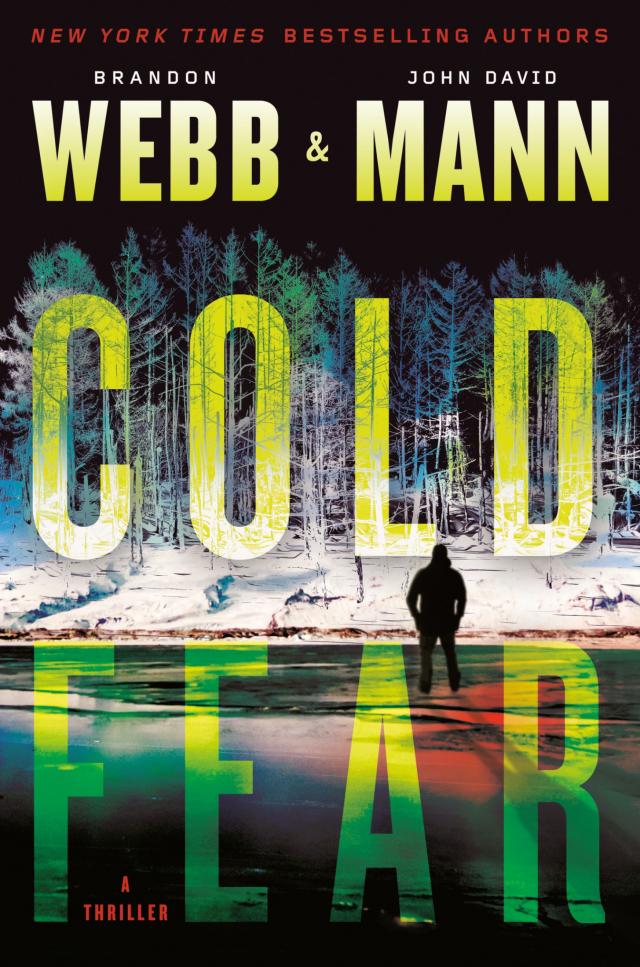
Cold Fear is a work of fiction. Names, characters, places, and incidents are the products of the authors’ imagination or are used fictitiously. Any resemblance to actual events, locales, or persons, living or dead, is entirely coincidental.
Copyright © 2022 by Brandon Webb and John David Mann
All rights reserved.
Published in the United States by Bantam Books, an imprint of Random House, a division of Penguin Random House LLC, New York.
Bantam Books is a registered trademark and the B colophon is a trademark of Penguin Random House LLC.
Library of Congress Cataloging-in-Publication Data
Names: Webb, Brandon, author. | Mann, John David, author.
Title: Cold fear : a thriller / Brandon Webb & John David Mann.
Description: First edition. | New York : Bantam Books, [2022]
Identifiers: LCCN 2022000433 (print) | LCCN 2022000434 (ebook) | ISBN 9780593356319 (hardcover ; acid-free paper) | ISBN 9780593356326 (ebook)
Subjects: LCGFT: Novels.
Classification: LCC PS3623.E3913 C65 2022 (print) | LCC PS3623.E3913 (ebook) | DDC 813/.6—dc23/eng/20220105
LC record available at https://lccn.loc.gov/2022000433
LC ebook record available at https://lccn.loc.gov/2022000434
Hardback ISBN 9780593356319
Ebook ISBN 9780593356326
randomhousebooks.com
Book design by Virginia Norey, adapted for ebook
Title-page and part-title-page art from an original photograph from freeimages.com/ayla 87
Map design by John David Mann
Cover design: Carlos Beltrán
Cover images: Getty Images
ep_prh_6.0_140165841_c0_r1
Contents
Cover
Title Page
Copyright
Map: Reykjavik City Center
Prologue
Sunday
Chapter 1
Chapter 2
Chapter 3
Chapter 4
Chapter 5
Chapter 6
Chapter 7
Monday
Chapter 8
Chapter 9
Chapter 10
Chapter 11
Chapter 12
Chapter 13
Chapter 14
Chapter 15
Chapter 16
Chapter 17
Chapter 18
Tuesday
Chapter 19
Chapter 20
Chapter 21
Chapter 22
Chapter 23
Chapter 24
Chapter 25
Chapter 26
Chapter 27
Chapter 28
Chapter 29
Chapter 30
Chapter 31
Wednesday
Chapter 32
Chapter 33
Chapter 34
Chapter 35
Chapter 36
Chapter 37
Chapter 38
Chapter 39
Chapter 40
Chapter 41
Chapter 42
Chapter 43
Thursday
Chapter 44
Chapter 45
Chapter 46
Chapter 47
Chapter 48
Chapter 49
Chapter 50
Chapter 51
Friday
Chapter 52
Chapter 53
Chapter 54
Chapter 55
Chapter 56
Chapter 57
Chapter 58
Chapter 59
Chapter 60
Chapter 61
Chapter 62
Chapter 63
Chapter 64
Chapter 65
Saturday
Chapter 66
Chapter 67
Chapter 68
Chapter 69
Chapter 70
Chapter 71
Chapter 72
Chapter 73
Chapter 74
Chapter 75
Chapter 76
Chapter 77
Chapter 78
Chapter 79
Chapter 80
Chapter 81
Chapter 82
Chapter 83
Chapter 84
Chapter 85
Chapter 86
Chapter 87
Chapter 88
Chapter 89
Chapter 90
Chapter 91
Chapter 92
Chapter 93
Chapter 94
Chapter 95
Monday, January 2
Chapter 96
Chapter 97
Chapter 98
Epilogue
Dedication
Note from the Authors
A Guide to Pronunciation
By Brandon Webb & John David Mann
About the Authors
Prologue
A deserted city street. The distant ruckus of drunken revelers, laughter, Christmas carol fragments. Under the faint glow of streetlights a flurry of snowflakes drifts to the frigid cobblestone surface, then swirls aside as a girl sprints past.
Bare feet. No coat. Mid-twenties.
She darts through an intersection. Then another. Street names she can’t pronounce. On a wild guess she takes a left at the next corner and runs another block before stopping, bent over, hands on knees, breathing like a trapped animal.
There’s nothing but the silence of the snow and her own rapid panting. She looks around, frantic.
Has she gone too far?
Takes off running again. Squinting at the street signs, pleading for them to make sense. Fighting back the urge to stop and scan the darkness behind her.
The sound of her feet slapping the slick street surface drums against her ears…images explode through her mind—
the mines…the Englishman…the lake house—
She pushes them away. Her feet are bleeding, but she has to keep going. She has to—
Wait.
Was that a glimpse of someone passing on the far side of the street?
She slows long enough to peer back through the murk. No one there.
She spat out the last pill, but the drugs are still too strong. She can’t tell what is hallucination and what is real.
Keep going.
Her feet slapping the cobblestones…the mines…the Englishman…
She won’t make it. It was a crazy idea. Should have known it was pointless to try. She reaches the next corner—
And there it is. Spread out before her like a banquet.
She stops again, hands on knees, gasping, the Arctic air searing her lungs. Squints into the dark and feels a rush of bitter relief. Not a hallucination. Really there.
A patch of open water.
The driver told her about this the day she arrived. In December the pond is covered in ice, he said, ice so thick they hold hockey matches on it. Except right here, at this spot. The city keeps this northeast corner heated year-round. “For the ducks!” he chortled.
And sure enough, through the gloom she can see their little bodies, tucked into themselves for warmth, still and silent. Living, breathing ducks, asleep on the water.
How do they survive the winters here?
How does anyone survive the winters here?
She whips her head around, suddenly alert, eyes and ears straining in the dark. There’s no one behind her. The only sounds she hears are her own hard breath and the faint splish-splash as she steps into the shallow.
From her pocket she pulls a stick of lipstick, blood-red.
Stares at it, her heart pounding.
She isn’t supposed to know.
Isn’t supposed to know about any of it.
But she does.
Hands trembling from the cold, she twists the lipstick open, pulls up her shirt with one hand and with the other scrawls a single word upside-down across her abdomen.
Then lets the lipstick fall from her fingers.
She strips out of her clothes, tossing each item behind her. Stark naked, she takes a few more steps into the water. Another flurry of snowflakes falls around her, the air a blast freezer on her skin. Teeth chattering, she kneels. Places her palms down against the shallow pond floor. Slides down onto her stomach and pushes herself away from the edge with her feet, propelling with her arms, each stroke drawin
She slips underneath the ice, then twists around so that her back is to the pond floor, her face to the ice above. Stretches out her arms as wide as she can.
And pushes farther in.
Sunday
Temperatures in the low twenties (F°), snow flurries; bitter winds.
1
Gunnar slipped out of his family’s townhouse and closed the front door, soft as a spy. He wasn’t supposed to be out there on his own, but his parents wouldn’t notice. And anyway, he’d be back inside in just a few minutes. Quick as a flash.
It was past ten in the morning but still dark out. The sun wouldn’t come up for another hour. He looked around at their street. It snowed in the night! Only a little dusting, but snow was snow. It looked just like the powdered sugar on the Christmas cookies his Danish au pair made the day before, on Christmas Eve.
Gunnar descended the steps and trudged around the corner, scooted across the street and out onto the ice. He knew it was safe. In fact, he’d be out there later that day with his parents to watch the college kids play hockey. Right now, though, there was no one on the pond, no cars on the streets. Christmas Day. Everyone was at home eating oatmeal and staying warm, or still in bed (“sleeping it off”) like his parents.
He ventured farther out onto the ice, halfway to the middle of the pond, then lay down on his back, gazing up at the gray clouds against the violet morning sky, imagining bears and dragons and brave men with swords chasing them. He made snow angels. Laughed at the fresh tickle of snowflakes on his face.
After a few minutes of this glorious fun, Gunnar rolled himself over to get up on his feet. Gotta be home before they noticed him gone. He slipped on the ice and fell flat on his front side. Good one, klaufi! That takes talent! That’s what his big brother would say if he saw that clumsy move.
Taking it slow and careful now, Gunnar got back up onto his hands and knees—and stopped.
This couldn’t be real. Could it?
He was looking down at the ice, and someone underneath was looking back up at him.
He stared into the ice.
Into her eyes.
“The Little Mermaid” was Gunnar’s favorite story. His au pair had read him all the Hans Christian Andersen stories, and that was the one he fell in love with. He’d seen the Disney movie, too, but that was different. It felt fake. He liked having the story read to him better. Closing his eyes and hearing the words, in her voice, it all came alive. He never admitted this to his big brother, or to anyone, not even his au pair, but in his heart of hearts Gunnar believed that mermaids were real.
And there was one staring up at him right now from under the ice!
His palms were starting to hurt from the cold, but he couldn’t move a muscle. It was like he was as frozen as the ice.
He wanted this to be real.
He wanted so badly for this to be proof that he was right all along, that his brother and his parents and teachers were all wrong, that there really were mermaids, and that Gunnar—not his brother, not his parents, but Gunnar himself—had found one!
But there was this cold feeling in his tummy, a bad feeling, really bad, bubbling up like Geysir.
He was terrified.
Gunnar knew this was not a mermaid.
He knew this, because the lady in the duck pond wasn’t moving.
Not at all.
Then Gunnar heard a horrible sound, like the shriek of a hockey referee’s whistle, but he didn’t stop to wonder what it was or where it was coming from, didn’t even think to realize it was coming from himself.
Didn’t think at all.
He was too busy running.
2
Krista Kristjánsdóttir stood over the vague form in the ice and cursed a blue streak.
She pulled her phone from her vest and tapped the screen to life. “Surface too opaque to see limbs and torso clearly.” She held the phone close and spoke low and quiet, enunciating each word. “Only the face visible.”
She paused, aware of how inadequate the word sounded. Visible. How about indelible. Haunting.
The police had arrived within minutes of the boy’s first screams, but not before some citizen showed up with his phone and snapped photos, then trotted off to sell them to the city’s daily newspaper. Terrific. By the time the cops had the scene locked down, the dead girl’s face was staring out through iPad screens in households across the country, over the headline LITLA HAFMEYJAN Á ÍS!
The little mermaid on ice!
Krista’s partner, Einar, plodded over, texting as he walked, and relayed a brief from one of the officers on the scene.
No ID in the woman’s clothing. A lipstick that might be hers, might give up prints, might not. No other clues to her identity. A team of divers was slipping in under the ice sheet right now to see if it was possible to pull her free without damaging the body. Otherwise they’d need to cut her out.
They waited in silence, puffing clouds of icy breath.
Moments later the lead diver emerged, looked over at Krista, and shook his head. They’d have to cut out a section of the ice, secure it with a tarp, and transport her to pathology that way. “Like a fly in amber,” murmured Einar, his nimble fat thumbs tap-dancing over his phone again.
Krista glanced at the crowd along the duck pond’s edge, pushing up against the barriers they’d hastily put in place, craning to catch a glimpse.
And cursed again.
Media.
She looked at Einar and nodded in the direction of the little throng of reporters. He stopped texting and grinned. No problem, he mouthed. He turned and trundled over toward the pack to give a statement that would say nothing at all, but say it in the most polite and interesting terms.
Krista hated this part, talking to the press. Always made her feel like a politician. Einar had no problem with it. Which Krista had never understood. It seemed to her that cops and reporters should be natural enemies. Or at least opposites. A detective’s toughest job was getting people to talk. The hardest thing about reporters was getting them to stop talking.
She watched as an officer brought over a blue vinyl tarp and set it down next to her. Another officer with a portable saw kneeled at the foot of the young woman’s frozen crypt and lowered the spinning blade to the ice.
Like a bone saw at an autopsy, its metal edge let out a scream that sliced through the brittle morning air.
Krista winced.
3
At the back of the crowd, a squarish face with oversize eyes watched from under its hooded parka as the little knot of police officers instinctively took a step backward from the scream of the saw. Their elongated shadows stretching out over the duck pond’s frozen surface reminded the hooded man of the strange statues of Easter Island. Silent sentinels, watching over their people, keeping them from harm.


