The Joy of Funerals, page 14
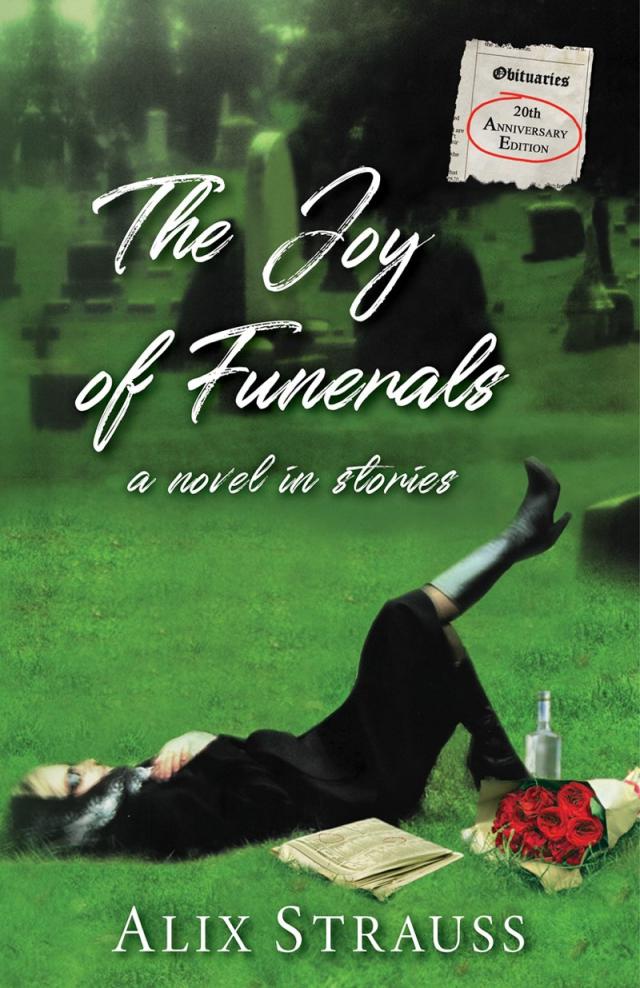


She had dressed incognito, scarf tied around her head and large, dark sunglasses over her eyes as she wandered down the aisles of the stores.
“Which one is best?” she asked the saleswoman in a fake French accent at the first store. The girl didn’t know and called her friend over. The two talked loudly, asking other workers their opinions. The second drugstore kept the tests behind the counter. Like illegal paraphernalia, they stood alongside condoms and cigarettes, making Natalie feel as though she needed a written note from her gynecologist in order to purchase one. The third and final stop was the worst. She was in the middle of pulling out her wallet when a friend walked by.
“Nat? Is that you?” Kelly said. “I almost didn’t recognize you with the scarf. Bad hair day?”
Natalie saw Kelly’s eyes move from her to the test lying on the counter.
“For you?” She beamed.
“No, my sister, Lena.”
“Oh.”
“She’s been feeling sick all week and hasn’t had a chance to run out. She didn’t want to get Richard’s hopes up, so … ”
“Oh, of course.” Kelly winked. “Your secret’s safe with me.”
She enters their apartment and stands in the doorway, frozen. She hates this room. Hates the first moment when she walks in, the hard objects, the unsettling feeling that something terrible has taken place without her knowledge. Even hates the smell of the housekeeper’s cheap perfume.
Before they officially moved in, a decorator was hired at Ruthann’s forceful suggestion. Natalie had wanted the job. Wanted the chance to use her skills, show off her talents, but Brandon said she was doing them a favor. Ruthann, too, said Natalie would be silly not to agree.
They had fought about it for a few minutes, Ruthann’s face getting red, Natalie swearing she would be strong and not back down. She reminded Ruthann her degree was in design. Ruthann made a tsking noise with her tongue which sounded like air escaping from a tire.
“What woman wouldn’t jump at the chance to have someone else handle everything? Besides, Natalie, you know, problems arise and you’re not very confrontational. You don’t want someone to take advantage of you. That’s why you need a decorator.”
And so it was decided. The apartment took six months longer than intended and after the unveiling, she realized that nothing she and the decorator had agreed upon was in the room. Now everything seemed unfamiliar. The paint, the furniture, even the moldings looked foreign.
She runs her fingers over the Baccarat vases and Christofle water bucket—gifts from Brandon’s business associates and friends of his parents—wishing she could replace them with sharp marble sculptures, ugly and noxious.
She unwraps each test, revealing long thermometer wands, small plastic cups, and cardboard discs. While she waits for her results, Natalie paces, flips on the TV, takes a Valium.
When she first met Brandon, he was wearing a white shirt, khakis, and suspenders which hung off his pants. He shook her hand, then put his left one on top of hers, like a warm cheese sandwich. She fell in love with him right there in the dorm room. With a little coercing, he would model for her. One time she talked him into posing naked in the TV lounge, his sleek, lanky body leaning up against the vending machine.
She loved to make him laugh, loved watching his muscular body move. He would tell her stories—some real, some not—and make her guess which were truths while she painted. For a treat, and when Brandon was very well behaved, she would feed him M&M’s and Raisinets from the very machine he was hugging. No one had told her people change. And she’s learned memories are no longer enough to hold on to. Even though she has tried, her picture has blurred. So slowly that it’s tricked her.
She is rummaging through Brandon’s desk drawers for cigarettes and is about to light one when the clock beeps. She hurries into the bathroom and sees the tests aligned like estate items at Sotheby’s. Two pink lines, indicating “yes,” appear brightly on the middle test. As she tries to catch her breath, a pink “P” emerges on the heart-shaped cardboard disc closest to the window. Natalie doesn’t even bother to wait for the third. She walks hurriedly to the incinerator and tosses them down the chute, wishing she could hurl herself along with them.
Hours later, she and Brandon eat dinner. Over the Zabar’s food she swears she can hear the baby breathing between bites of chicken and the clicking of the fork on Brandon’s perfect teeth. She wants to reach for his hand, look into his face for redeeming qualities and see the boy he was in college. lf he smiles at me, she thinks, if he asks me how my day was, I’ll tell him about the baby. She pretends to reach for the salt, hoping he will cup her hand in his, kiss it gently the way he used to, or pass the salt without her having to reach too far for it. She almost cries when her fingers feel the cool metal and her hand wraps around the shaker. She grunts slightly, falling back into her chair, her husband never taking his eyes off the TV.
Natalie has a recurring nightmare where she cuts Brandon open, hoping his former, younger self will pop out like Athena exploding from Zeus’ head. ln her dream, he is on an operating table. Natalie is dressed in one of his Armani suits, a mask on her face, large metal clamps in her hands. She cracks open his chest, spreads his rib cage apart, and reaches deep inside his body. She removes paint brushes, swatches of canvas, scholarship letters, and awards she won in college. Last to come out is a part of her own heart. All things Brandon has digested.
Now, unable to sleep, she lies awake at night, listening to Brandon’s even breathing. It’s his harsh voice, the way he sounds like his father on the phone so that Natalie can’t tell if it’s her husband or her father-in-law calling, that keeps her awake.
The sky is overcast when Natalie meets Lena and her three nieces in Central Park. Rather than run into Natalie’s arms, they head for the swings and the slide. Lena gives her sister a cumbersome hug, her arms laden with diaper bags, juice boxes, and toys. She feels smothered in between them.
Natalie knows she is flawed. Realizes she is missing a Mommy gene as she observes her nieces, their blond hair bouncing up and down, their tiny, lean bodies running back and forth, chasing each other. They are so very breakable. One wrong move, one small mistake, and Natalie’s damaged them for life.
Lena was always more maternal, even as children, almost as if she got Natalie’s share in the womb. When they played house, Lena always wanted to have four kids, two girls, two boys. Or Lena would be the mom, Natalie her child. Natalie preferred chemistry sets, Legos, and Smurfs. Boyish things, her mother would call them.
She’s tried to bond with her nieces, has spent hours playing tea party and Candyland, hoping a maternal instinct would emerge, wet and glowing, ready for caretaking. But it never did. The girls would eventually cry over something and Natalie would feel utterly helpless.
She watches Lena, looks at her enviously, desperate to understand, even share the secret of motherhood. She wants to tell her sister about the thing growing inside her, explain why she cannot keep it, and ask that she accompany her to the 4:15 p.m. appointment with Dr. Briskel, the kindly old man who delivered both of them.
Brandon is wearing the new suit he bought last week at Paul Stuart. He looks like a brown pear. Natalie thinks about this as she is introduced to Mr. and Mrs. Sager, client friends of her husband. He is an investment banker; she owns a stationery boutique. They have just had a baby boy. Pictures of him are everywhere, artsy black-and-whites, and bright colors: him sleeping, nursing, drooling.
The Sagers’ home, a grand duplex on the Upper East Side, is decorated in whites and creams. White marble on the floor, cream couch, ivory walls, even milky-white lamps. The only color in the apartment is from the beautiful paintings. Natalie aches to touch them, run her fingers over the raised paint, talk about the artists, but every time she starts to use her voice, another overlaps hers.
They sit down for dinner. A white walkie-talkie device is on the table next to cream placemats, bone plates, and a small crystal bell used to summon the server. The gentle hum coming from the speaker suddenly turns to staticky crying.
“Guess who’s up?” Mrs. Sager excuses herself and after a moment, returns with a small bundle in her arms wrapped in a white blanket.
“There’s my boy,” Mr. Sager exclaims. “Who’s Daddy’s best boy?”
“Say, ‘I am,’” Mrs. Sager says, her voice high-pitched and singsongy. It reminds Natalie of the way Brandon’s mother talks to her.
“Do you have any children?” he asks, lighting a cigar.
“Not yet,” Brandon says, answering for his wife, “but soon.”
He winks at Natalie while reaching for a cigar. She nods back.
“Would you like to hold him?” asks Mrs. Sager, putting the child in Natalie’s unprepared arms. It lies uncomfortably on her chest, fidgeting and wet. Her body is so tense she is sure the child can feel this. She wants to stroke the soft, tiny head but is afraid. What if she were to drop it? Break its neck from holding it incorrectly? What if they leave her alone with the infant?
The baby starts to cry.
Mrs. Sager wrinkles her face and leans in to remove the sobbing child, who is instantly put at ease in its owner’s arms.
“He doesn’t take well to other people yet,” she offers apologetically.
Natalie can see the woman is embarrassed for her and for Brandon. What a shame, being married to such an inept girl. She visualizes this episode being spread in their social circles. Brandon is not happy, either. He rolls his eyes to show his disappointment in his wife, the one who cannot hold an infant, the one who is barely functioning herself.
Opting not to go to her gynecologist, Natalie sits in an abortion clinic with three young women, or children, she can’t decide which. Posters that shout free choice and safe sex hang all around her. The walls, which look as if they were once white, have now turned into a dull yellow as if they started out entirely different and have faded little by little, becoming something else entirely. Like the mommies in the restaurant, if Natalie stares long enough, she can just make out the original color, find small patches of white behind a couch.
She fills out several forms while seated in the nondescript chrome chairs with gray padded seats. Magazines—Parenting, Parents, and Child—form a patchwork of color as they mix with informational pamphlets on VD, STD, AIDS, and other diseases.
Natalie reminds herself not to touch anything and to use her own pen rather than the one attached to the clipboard. There are to be no fingerprints. Nothing to prove she was here. Like her trips to the museum, there will be no evidence. Her receipts and admission tickets are always thrown out on her way home.
She is in the middle of writing down the name Jane Summer and creating a phony family history when she notices one of the girls is crying quietly to herself. Her long, dark hair hides most of her face, but Natalie can still see her eyes, red and glassy. Natalie aches to sit beside her, hold her hand, stroke her hair and tell her not to worry, that she is doing the right thing, that she is being responsible. She longs for the someone to say these same words to her.
Natalie finds herself towering over the girl, extending a pretty flowered handkerchief she has retrieved from her purse. “Here you go,” Natalie says, smiling softly. Before the surprised child has a chance to thank her, Natalie is out the door. She can just hear the receptionist call her phony name as the door closes behind her.
During the cab ride home, she shakes uncontrollably. She watches the meter jump every few blocks as she tries to catch her breath.
At home she changes out of her carefully chosen “abortion outfit” (brown cardigan sweater set and gray flannel pants) and into one of Brandon’s white oxfords.
On days when she feels most detached from Brandon, she lights his cigar, parades around the house in his trousers and tie, stands in his loafers, and pretends to be him. Today, she retrieves her old jeans smattered with paint from the suitcase in the closet and slips them on. They fit snugly over her abdomen. She lights a cigarette and puts her hair up in a ponytail secured by a rubber band found in the kitchen drawer. She then asks Jose, her most favorite of the porters, to escort her down to the storage room in the basement.
They ride the elevator in silence. Natalie smells the sweat on him, longs to run her hands over his muscular body. Have him hold her in his thick arms.
“Are you and Mr. Finer taking a trip?” he says, unlocking the door.
The room is musty and dank. “No, I’m redecorating and wanted to see what we had down here.”
He nods and pushes the metal luggage rack toward a large, narrow rectangular box marked Property of 12E, Finer, in bright red marker.
Natalie opens the box carefully, removing the first object. She gently tears off the plastic and tissue paper to reveal an oil painting of a dilapidated farmhouse in a handsome silver frame. She repeats this motion, feeling empowered by the repetition, by the heat of the storage room, by the way Jose is helping her.
It doesn’t take long for them to remove the eight pictures from their temporary home and set them gently on the rack. Jose looks at the one positioned nearest to him. It’s an abstract painting of a face. The long nose, angry eyes, pale colors make the ghostly image seem to pop off the canvas. Another reveals a woman’s face, eyes sad, mouth hanging open, as if she is screaming. Last is a painting of Brandon. He is naked and lying on a sofa. In one hand, he holds a newspaper, a lit cigarette in the other. An ashtray is balanced on his stomach.
“I like this one, Mrs. Finer,” he says, taking a step back to admire the work. “He looks half dead, half living.”
He stares at her and Natalie can feel herself blush. She nods and thanks him.
Upstairs, she puts on the stereo, removing Brandon’s Best of: Famous Instrumental Hits of the ’90s and inserting Fleetwood Mac’s Rumors. She lets the velvety music carry her back to her Vassar days while she carefully takes down the expensive artwork which dominates their walls. She uproots the Warhol, the Max, the Haring, signed lithographs, and originals of useless objects: a can of soup, a building, an orange figure. All that remain are black outlines. Natalie runs a finger over the marks. Then, slowly, purposely, she replaces the empty spots with the paintings that are leaning against the front door.
She stands in the middle of the room, looking at her life. Each wall bears a small piece of her soul, a fingerprint. She looks from wall to wall, making quick, swift movements as her head snaps from one side to the next. Before she knows it, she is turning, fast, like when she and Lena were little and would have contests to see who could spin the most without falling down. She spins until the apartment becomes a dizzying blur of her work and the carefully chosen items that have been intentionally placed around the apartment. Her masterpieces merge with coffee-table books on boats, dead presidents, architecture. With furniture she hates. With everything that doesn’t belong to her. They all congeal, fusing into unrecognizable shapes. When she has had enough, she walks drunkenly to the terrace, desperate for air, steadying herself as she makes her way past the swirling room, forcing her eyes to focus.
She slides open the glass door, walks out feeling the cold breeze and the aroma of winter. She leans over the railing and peers down. She spits, watching her saliva as it travels through the air, free-falling to the cement, leaving a small speck of wetness.
Natalie spots twelve children waiting on the street corner with their teacher for the light to change. Dressed in their school uniforms, standing in two perfect rows, they look like the little girls in the Madeline books. She sticks a foot through the thick bars and pushes herself up for a better look. If it’s a girl, she would read those books to her daughter like her mother did to her and Lena. Natalie leans out a little further, still dizzy, hands wet with sweat. Desperate to catch a glimpse of her future, she slopes her body forward. She can just make out the name of their school. She smiles, comfort moving through her as her hand slips from the brass railing.
The Joy of Funerals
I’m in the elevator looking as if I’m having a panic attack.
I press the first-floor button, knowing that it won’t make me drop down any faster, but it gives me something to do. Next, I race out of the building and run across Fifth Avenue and head west, faces turning as I brush past them. I can tell they’re wondering if an emergency has occurred, if something’s the matter. I weave my way through the swarm of people, maneuvering in and out like a cockroach running alongside the linoleum in someone’s kitchen. I dart into the subway, retrieve my MetroCard from my bag, swipe it through the turnstile, and jump into the car as the doors start to close.
I’m a pro by now. Got it down to a science.
On the train I calculate the number of stops and the fastest plan. If I see the uptown express, I’ll transfer cars and get out at 72nd Street, then walk the five blocks to the chapel. If I stay on the local, I’ll exit on 79th and walk two blocks back.
Moments later, I snap my head out from the underworld, shooting up like a groundhog looking for its shadow, and enter the coffee shop on the corner. I make a beeline for the bathroom, the aroma of french fries and grilled cheese triggering hunger pangs, reminding me I’ve not eaten this morning.
I slip into the empty stall and pull off my shirt. Beads of sweat drip down my back as l remove a fresh linen one from my tote. I dry my underarms with the first, then seal it in the Ziploc bag I’ve brought along. I strip off my stockings, toss them in the trash, put my shoes back on, and tuck my new shirt into my skirt. I shove a piece of gum in my mouth and chew for a few seconds before spitting it out. Breathe. Breathe. Foundation, lipstick, and powder are applied and hair is smoothed out. I glance at my watch. “Not bad,” I say to my flushed reflection. Nothing in my teeth, hair looks decent. Not perfect, but passing. Dab a little perfume under each ear and— voila!