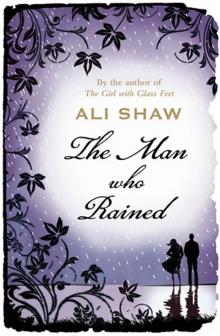
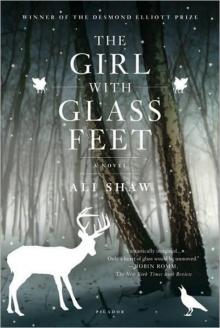
The Girl With Glass Feet, page 11



‘Are you saying this will happen to Ida?’
Henry looked grave. ‘You mean you hadn’t thought of that already?’
Midas nodded feebly. He felt aches all over from the hard walk here. ‘Why is this in the bog?’
Henry shrugged. ‘As good a grave as any.’
‘You put it here?’
‘No. I stumbled upon it while collecting toad spawn. I don’t know who he was or how long he’s been here. Could be years, could be hundreds. I’ve found glass hands in the bog, and a glass shape like a model of a glacier that turned out to be the hind leg of a fox or a dog. This bog is a glass graveyard. Sift the sediment from the bottom of these pools and you’ll see flecks sparkling in your pan.’
‘When can I bring Ida to see you?’
He’d thought Henry would accept without hesitation. Instead he fidgeted with the toggles of his cagoule. ‘The thing is, Midas… The reason I brought you here…’
Midas closed his eyes and tried to expunge the sulphuric stink from his insides. ‘You can’t cure her can you?’
Henry picked a bulrush and started tearing it into strips. ‘No. No one can cure her, because she’s not ill. This isn’t a disease. The glass is now a part of her, if you will. Like fingernails or the hair on her head.’
‘Then can’t she just… cut it out?’
‘It would do no good. It would only grow back.’
Henry scattered the pieces of torn bulrush into the pool. Midas thought he saw a fish rise to the surface to gulp at them.
Henry sighed. ‘I’m sorry, Midas.’
Things moved in Midas’s gut: tectonic feelings he had never known. He spluttered all of a sudden at the idea of losing Ida before the two of them had even…
He glared at the caged black of the water. For a second time he saw widening gums break the surface.
‘You can find a way to help. You said yourself you had unique insights.’
Henry shrugged. ‘I would only be wasting your time and giving her hope where really there’s none.’
Midas clasped his muddy hands together. ‘My mother,’ he said, ‘what about my mother? I know all about it! I know she wants to be with you and I’ll help you be with her. But you have to help Ida.’
Henry hung his head. ‘I can’t, Midas, don’t you see? It’s simply not possible. In fact, it’s the perfect analogy. I can no more do one thing than I can the other.’
‘Why didn’t you go to her, after my father died?’
Henry looked pale. ‘Where was she, Midas?’
‘In our house! And now in Martyr’s Pitfall.’
Henry shook his head. ‘She had already left before your father died.’
In a flash of anger, Midas grabbed a sod of earth and hurled it at the water, which broke into a hundred chained circles. Picturing Ida like the body in the bog made his heart seem to wilt and blow away. His face screwed through expressions. He turned to Henry and for a bleary-eyed moment saw him as that other lonely academic. How could he shirk the idea of helping Ida? Had he considered it even for a millisecond?
‘So what now?’ he demanded.
‘There isn’t anything we can do now, except console ourselves that there never was.’
‘Never was? You’re just going to give up? Even now, when we’ve seen here what’s to become of her?’
Birds laughed elsewhere in the bog. Midas’s anger left him abruptly like electric earthing in the glade around the pool. He was left feeling cold and inanimate. Insects buzzed and reeds quivered.
They walked back to Henry’s cottage and Midas’s car without speaking and with a stone’s throw distance between them. Henry stood in his cottage doorway. Midas left the borrowed wellington boots to weep mud on the path, got into his car and drove away.
16
Midas’s father sat in his study, bent over a heavy book. He licked his fingers before turning each thick page. Midas knocked on the open door, waited, then knocked again. He was a small boy and the door handle was at head height.
Slowly, his father’s eyelids closed. He drew a long breath. His shoulders sagged. A weary expression seeped across his face.
When he acknowledged Midas with a protracted, ‘Hmm?’ it sounded like the groan of a branch in a forest.
‘Mother’s crying.’
He sighed. ‘What do you mean?’
‘Mother’s crying. In your bedroom.’
‘Oh God, Midas…’
‘Sorry… Have I done something wrong?’
‘Did you ask her what the trouble was?’
‘You said I wasn’t to enter the bedroom. You said I wasn’t…’
‘Yes, yes. Oh, Midas, I was reading.’
He rubbed his moustache with one long, clean finger, then looked longingly down at the pages on his lap. ‘Didn’t she see you?’
‘The door’s closed.’
‘Mm. Why were you listening?’
‘She… She was crying quite loudly.’
There was a photograph in his father’s book. Midas moved to try and glimpse it, but his father pulled it shut, his thumbs wedged between the pages.
‘You didn’t knock?’
‘I did. I got no answer.’
His father stared down at the closed book. It was a different sort of book to the ones he normally read. A large anatomy book with a diagram of a cross-sectioned ribcage on its cover.
‘Midas?’
‘Yes.’
‘Tell her… Tell her I’ve got six pages. Then I’ll go up and comfort her.’
Nodding, Midas left him alone and went upstairs. The door to his parents’ bedroom was taller than the other doors in the house. It looked like a stone door, with slate-blue paint, dented and chipped.
‘Mother?’
He heard a sob and pushed open the door. Light fell through a chink in the heavy net curtains, drawing a dazzling white bar down his mother. She sat facing a full-length mirror on the other side of the bed. She wore her hair loose, fine ivory locks hanging to the shoulders of a cardigan.
In the mirror, her reflection held a photo to her stomach and stared at it. Her. As a young woman, not so thin or slouched. Posing on a river-bank, one hand in her hair, tangled branches above and behind her. A reflection (not hers) broken on the water. In the foreground white blurs, although they couldn’t be snow for this was a summer scene. Blossom perhaps. Midas fancied they were fairy-shaped.
‘Son,’ she sniffed when she saw him, ‘these photos are your mother. When she was younger. Would you like to look?’
She picked up more prints from the bed. There were five in all, each a slightly different pose behind a different configuration of white blurs. Midas took one from her.
‘Careful,’ she said, ‘these were all that were sent to me. I don’t have the negatives.’
Even so young, he’d begun to think of negatives as light snares: the light burns in a negative as a physical remnant of the past. Memories made of light. A print was a wonderful thing, but it was the negative that should be treasured. Without them you held only a simulacrum; with them he would have held a fragment of his mother’s past, as real as a piece of recovered hair or nail.
‘Midas!’ she hissed.
She was wild-eyed. He quickly realized what was wrong: footfalls coming up the stairs. Before she could do anything his father was in the bedroom and for a moment all three of them were frozen and white-faced. Then his father darted forward and snatched the photos from his mother’s lap.
His eyes roved over them, back and forth, as if they were words. Then he made a choking noise. He hadn’t noticed the photo Midas held because the boy had slipped it under his shirt.
‘Out, please, Midas.’ He tugged the door shut behind him. But Midas listened.
‘Darling…’ said his father, ‘what are these? What can these be? You told me you’d destroyed these. You made assurances.’
‘But… darling, it’s not that he took them. It’s not that at all. It’s me. These photos are me.’
Midas heard the tearing of paper. Again. Over and over again. When the door swung open he pressed himself to the wall. His father swept past, cupping a pile of white shreds in his hands. When he’d gone downstairs, Midas peered around the door frame.
She held a thumbnail-sized scrap in her palm. Midas watched her shoulders shaking, then tapped gingerly on the door until she looked up. He offered her the photo he’d hidden up his shirt.
Her mouth twitched at the corners and she stifled a noise. He watched her pupils widen as she saw herself in the image, their lenses adjusting like the lens of his camera.
‘Keep it, Midas,’ she said. ‘So your father never finds it.’
And he did.
17
A wind was coming from the north, blowing rain clouds like dust until they coated the sky grey. Henry sat on his cottage doorstep, the wind filling his mouth and nostrils, blowing the compost smells of the bog into his stomach.
He couldn’t help Ida. He knew it in the same guts squeezed tight by the frustration it caused. He couldn’t help her, and the Crook boy’s demand that he should had been unfair. Of all the sacrifices he’d made to earn his privacy, the biggest was turning his back on the woman he had loved. So it was also unfair that her son had emerged fully grown from the sealing bog mists, demanding help and answers Henry didn’t have.
In the distance the rain was a grey woollen join between the land and the sky. He couldn’t help Ida, but… He covered his face with his hands. He hadn’t been entirely straight with Midas.
As a boy, Henry had sold his bicycle for a chemistry set. It had seemed like a sensible idea at the time, putting childish things behind him in the name of mature study. Then he saw the boy who bought his bicycle pedalling gleefully in the evenings, while he poked crystals between Petri dishes with a spatula. It seemed that there were two Henry Fuwas inside him. Henry Fuwa the scientist, living in his head and aspiring to read biology and anatomy, and another Henry Fuwa sheltering somewhere beneath his ribcage, curling up remorsefully at the sight of that bicycle ridden by another boy, longing only for the push and give of pedals circling in time with feet.
Years later he had left Osaka with only a small pack and a feel for lifting the right stone to find an undiscovered bug. The Henry Fuwa who had pined for the bicycle feared leaving, but the other Henry Fuwa had always known there was no future in living above his parents’ restaurant near Dotonbori, where he woke every day to the smell of steamed rice and felt his lungs starched. He knew he was making no mistake by leaving, that an isolated life among reeds and swamp lilies, where he could study in peace and diligence, was the right life for him. Only, when news filtered through of his mother’s death, he was amazed at how peaceful he remained. He’d looked then for that boyish Henry Fuwa curled up in his chest, hoping he could help choke out some grief at her passing, but he couldn’t find him. In truth, he had not been able to find him for some time. Perhaps in the course of the great journey over the oceans he had been lost or forgotten, in an airport terminal among unclaimed suitcases or misdirected airmail. And so Henry felt nothing at the death of the woman who had raised him in Osaka. He couldn’t even remember what it had been like being her son. Bog life continued its cycles: mustard flowers made a yellow cosmos across marsh soil in spring, summer heat made viscous skins on pools, autumn birthed a million insects and sticky beetles.
But one afternoon, after many such cycles, that other Henry Fuwa came back, and he was now fully grown, and he had become something insatiable. He had ambushed him. Taken revenge. Overpowered him.
He had set eyes on Evaline Crook.
That summer’s day he had been catching eels upriver, enjoying the way they slithered and thrashed in his bucket. Once caught he photographed them, took notes on coloration and size, then poured them back into the water, where they shimmered away like living liquids.
The day was pleasant and he walked aimlessly along the river-bank. Newly winged gnats and crane-flies in their thousands hopped out of the grass and bumbled around his ankles. In the river, dark dashes flickered: newborn fish ready to be gobbled by scaled pike and greedy toads. He sauntered along beside the water and was led, by meanders and turns, into deep woodland.
And then he saw her up ahead, sitting cross-legged on the bank in a beige summer dress and Panama hat with a fabric rose stitched to its brim. She sprang up when she saw him, but didn’t say anything. She had a fine skeleton, lean limbs and hair floating around her head as if underwater. Her fingers toyed nervously with the lap of her dress, scrunched it into handfuls then let go, scrunched handfuls again, let go. He watched her repeat the action and repeat it until he remembered it wasn’t acceptable to admire women as you would an excitable gnat or a mercurial eel. He bowed his head and apologized for his rudeness.
She laughed and introduced herself. He knew he would never forget her name. He asked her what brought her into the woods. Just wandering, she said. Her family were somewhere nearby, snoozing in a glade. ‘Parents?’ he enquired with hope. No. Son and husband, both dressed in long sleeves and trousers as a precaution against wasps and nettles.
She laughed sadly, then returned the question. ‘What brings you here?’
He shook the bucket of eels as explanation.
When she asked him if he’d mind her company he nearly burst. He kept admiring the way dapples of sunlight through the leaves caught her hat and thin forearms. Her fingers couldn’t keep still, whether illustrating a point or fidgeting in silences. They walked along the river-bank. She walked with a limp.
Suddenly he turned abruptly one hundred and eighty degrees. He shot out an arm and yanked her hat down over her face. She shrieked and leapt fearfully away from him.
He dared a glance over his shoulder.
It had vanished.
It had been kneeling to lap water from the stream. A coarse white coat and a domed head with a flat face pressed against the water’s surface. Its large eyes, thank heavens, had been closed as it drank. What surprised him only slightly less than the sight of it had been its size: barely bigger than a lamb.
He asked Evaline if she had seen it too. She admitted (setting her hat back firmly on her head) seeing something. But had she met its eyes? How could she, with its head bowed? He hopped across the stream to the point where the creature had knelt. Green stalks poking out of the water were laddered with dragonfly nymphs, fully developed and clinging to the greenery. They were all as white as snowflakes. He sat down hard on the bank and bit his lip. He explained to her that the nymphs should be a sooty colour, ideal camouflage in the waters from which they had climbed. Now that they were white they would be easy targets for birds, their legs locking their motionless bodies in place on the stalks while their skin dried out in preparation for transformation into adults.
‘Then we’ll guard them,’ said Evaline, sitting down on the bank opposite, kicking off her shoes and dangling her toes in the cool water. He did the same. His heart beat like crazy because she wanted to do this with him. She told him he was funny, but she liked that about him. They sat in comfortable quiet and watched the white exoskeletons of the nymphs split slowly open, starting behind their eyes. Chalk-coloured heads and thoraxes forced themselves out of the cracks in the skin and dangled half-emerged from their old bodies.
‘If you concentrate,’ said Henry, ‘you can see them breathing. The air swells them up while the sunlight dries them out. Then they’re ready to push clear.’
As if to demonstrate, one of the hatching dragonflies suddenly bent back on its nymph shell and tugged its tail and legs free. Its wings stuck to its back like shrivelled paper. It hung there hugging its wrinkled old body in stillness while other nymphs on other stalks did the same.
Henry and Evaline looked on in amazed silence while pairs of wings dried out and slowly expanded among the stalks like blooming petals.
The sun was hot on the back of Henry’s neck. From the corner of his eye he watched Evaline enrapt. Light dappled the water. A white newt plopped up for breath between lily pads. Evaline was beautiful, he thought, more beautiful than any of this.
The expanded wings of the nearest dragonfly suddenly fanned out and were held stretched to their limit. The light picked out their crizzled facets. Other dragonflies did the same. The plant stalks were hung with glossy flakes.
A few minutes later the first one took off. It shot up vertically, then zigzagged around their heads. Evaline gasped and covered her mouth. Henry watched her. More dragonflies flung themselves free of their petrified former selves, fizzing into the air like white sparks.
Balls of hard rain dropped through the air around him, bringing him back to the swamp and the present. He closed his eyes while the raindrops squelched against the muddy grass. He adored and feared that memory’s occurrence because although it had been a moment of promise, and the first time in his life he’d been in love, it had turned over the years into the aptest metaphor because he did not know where the Evaline of that day had gone. All that remained of her in Martyr’s Pitfall was a dragonfly’s abandoned nymph skin.
And here he was, standing sodden in the rain, feeling guilty that he’d not been entirely straight with her boy, as if the whole truth could do anyone any good.
He was suddenly outraged. A garden rock was acting as a summit for a meeting of slugs, and he clawed it out of the caked mud and cast it into a puddle. Lurking beneath, among the scrambling pill bugs and lice, was a beetle like a dot of jade. He drew air into his lungs and stamped on it.
He dropped immediately to his knees beside its pulped remains, choking and scratching his beard so hard that when he regained self-control he saw blood on his fingernails. Getting to his feet he felt monstrously tall. His shoes looked like a giant’s, his hands gnarled and cumbersome.
Nothing was as it should be, because of the Crook boy’s appearance.
‘All right!’ he yelled into the bog, ‘I’ll tell you!’ At once his lungs felt bruised for the shouting, it had been so long since he had raised his voice. He held his sides as he stomped indoors and boiled water in a bubbling saucepan. Then he carried the pan outside where the cold air showed up the steam. Frozen worms of rainwater cracked under his wellington boots as he carried it into the swamp, hot water spilling over its sides and pattering to the ground to fizz in the mud. When he came to a pool the length and shape of a sarcophagus, he used the hot underside of the pan to melt a circle through the ice on its surface, then tipped the hot water on the weeds and dunked the pan into the pond as a kind of fishing net, scraping it along the slushy bottom. Water numbed his fingers. He could feel ice closing up around his wrist. He pulled the pan out of the pool. It was filled with dirty water and a hard lump swaddled in slime.
Henry looked grave. ‘You mean you hadn’t thought of that already?’
Midas nodded feebly. He felt aches all over from the hard walk here. ‘Why is this in the bog?’
Henry shrugged. ‘As good a grave as any.’
‘You put it here?’
‘No. I stumbled upon it while collecting toad spawn. I don’t know who he was or how long he’s been here. Could be years, could be hundreds. I’ve found glass hands in the bog, and a glass shape like a model of a glacier that turned out to be the hind leg of a fox or a dog. This bog is a glass graveyard. Sift the sediment from the bottom of these pools and you’ll see flecks sparkling in your pan.’
‘When can I bring Ida to see you?’
He’d thought Henry would accept without hesitation. Instead he fidgeted with the toggles of his cagoule. ‘The thing is, Midas… The reason I brought you here…’
Midas closed his eyes and tried to expunge the sulphuric stink from his insides. ‘You can’t cure her can you?’
Henry picked a bulrush and started tearing it into strips. ‘No. No one can cure her, because she’s not ill. This isn’t a disease. The glass is now a part of her, if you will. Like fingernails or the hair on her head.’
‘Then can’t she just… cut it out?’
‘It would do no good. It would only grow back.’
Henry scattered the pieces of torn bulrush into the pool. Midas thought he saw a fish rise to the surface to gulp at them.
Henry sighed. ‘I’m sorry, Midas.’
Things moved in Midas’s gut: tectonic feelings he had never known. He spluttered all of a sudden at the idea of losing Ida before the two of them had even…
He glared at the caged black of the water. For a second time he saw widening gums break the surface.
‘You can find a way to help. You said yourself you had unique insights.’
Henry shrugged. ‘I would only be wasting your time and giving her hope where really there’s none.’
Midas clasped his muddy hands together. ‘My mother,’ he said, ‘what about my mother? I know all about it! I know she wants to be with you and I’ll help you be with her. But you have to help Ida.’
Henry hung his head. ‘I can’t, Midas, don’t you see? It’s simply not possible. In fact, it’s the perfect analogy. I can no more do one thing than I can the other.’
‘Why didn’t you go to her, after my father died?’
Henry looked pale. ‘Where was she, Midas?’
‘In our house! And now in Martyr’s Pitfall.’
Henry shook his head. ‘She had already left before your father died.’
In a flash of anger, Midas grabbed a sod of earth and hurled it at the water, which broke into a hundred chained circles. Picturing Ida like the body in the bog made his heart seem to wilt and blow away. His face screwed through expressions. He turned to Henry and for a bleary-eyed moment saw him as that other lonely academic. How could he shirk the idea of helping Ida? Had he considered it even for a millisecond?
‘So what now?’ he demanded.
‘There isn’t anything we can do now, except console ourselves that there never was.’
‘Never was? You’re just going to give up? Even now, when we’ve seen here what’s to become of her?’
Birds laughed elsewhere in the bog. Midas’s anger left him abruptly like electric earthing in the glade around the pool. He was left feeling cold and inanimate. Insects buzzed and reeds quivered.
They walked back to Henry’s cottage and Midas’s car without speaking and with a stone’s throw distance between them. Henry stood in his cottage doorway. Midas left the borrowed wellington boots to weep mud on the path, got into his car and drove away.
16
Midas’s father sat in his study, bent over a heavy book. He licked his fingers before turning each thick page. Midas knocked on the open door, waited, then knocked again. He was a small boy and the door handle was at head height.
Slowly, his father’s eyelids closed. He drew a long breath. His shoulders sagged. A weary expression seeped across his face.
When he acknowledged Midas with a protracted, ‘Hmm?’ it sounded like the groan of a branch in a forest.
‘Mother’s crying.’
He sighed. ‘What do you mean?’
‘Mother’s crying. In your bedroom.’
‘Oh God, Midas…’
‘Sorry… Have I done something wrong?’
‘Did you ask her what the trouble was?’
‘You said I wasn’t to enter the bedroom. You said I wasn’t…’
‘Yes, yes. Oh, Midas, I was reading.’
He rubbed his moustache with one long, clean finger, then looked longingly down at the pages on his lap. ‘Didn’t she see you?’
‘The door’s closed.’
‘Mm. Why were you listening?’
‘She… She was crying quite loudly.’
There was a photograph in his father’s book. Midas moved to try and glimpse it, but his father pulled it shut, his thumbs wedged between the pages.
‘You didn’t knock?’
‘I did. I got no answer.’
His father stared down at the closed book. It was a different sort of book to the ones he normally read. A large anatomy book with a diagram of a cross-sectioned ribcage on its cover.
‘Midas?’
‘Yes.’
‘Tell her… Tell her I’ve got six pages. Then I’ll go up and comfort her.’
Nodding, Midas left him alone and went upstairs. The door to his parents’ bedroom was taller than the other doors in the house. It looked like a stone door, with slate-blue paint, dented and chipped.
‘Mother?’
He heard a sob and pushed open the door. Light fell through a chink in the heavy net curtains, drawing a dazzling white bar down his mother. She sat facing a full-length mirror on the other side of the bed. She wore her hair loose, fine ivory locks hanging to the shoulders of a cardigan.
In the mirror, her reflection held a photo to her stomach and stared at it. Her. As a young woman, not so thin or slouched. Posing on a river-bank, one hand in her hair, tangled branches above and behind her. A reflection (not hers) broken on the water. In the foreground white blurs, although they couldn’t be snow for this was a summer scene. Blossom perhaps. Midas fancied they were fairy-shaped.
‘Son,’ she sniffed when she saw him, ‘these photos are your mother. When she was younger. Would you like to look?’
She picked up more prints from the bed. There were five in all, each a slightly different pose behind a different configuration of white blurs. Midas took one from her.
‘Careful,’ she said, ‘these were all that were sent to me. I don’t have the negatives.’
Even so young, he’d begun to think of negatives as light snares: the light burns in a negative as a physical remnant of the past. Memories made of light. A print was a wonderful thing, but it was the negative that should be treasured. Without them you held only a simulacrum; with them he would have held a fragment of his mother’s past, as real as a piece of recovered hair or nail.
‘Midas!’ she hissed.
She was wild-eyed. He quickly realized what was wrong: footfalls coming up the stairs. Before she could do anything his father was in the bedroom and for a moment all three of them were frozen and white-faced. Then his father darted forward and snatched the photos from his mother’s lap.
His eyes roved over them, back and forth, as if they were words. Then he made a choking noise. He hadn’t noticed the photo Midas held because the boy had slipped it under his shirt.
‘Out, please, Midas.’ He tugged the door shut behind him. But Midas listened.
‘Darling…’ said his father, ‘what are these? What can these be? You told me you’d destroyed these. You made assurances.’
‘But… darling, it’s not that he took them. It’s not that at all. It’s me. These photos are me.’
Midas heard the tearing of paper. Again. Over and over again. When the door swung open he pressed himself to the wall. His father swept past, cupping a pile of white shreds in his hands. When he’d gone downstairs, Midas peered around the door frame.
She held a thumbnail-sized scrap in her palm. Midas watched her shoulders shaking, then tapped gingerly on the door until she looked up. He offered her the photo he’d hidden up his shirt.
Her mouth twitched at the corners and she stifled a noise. He watched her pupils widen as she saw herself in the image, their lenses adjusting like the lens of his camera.
‘Keep it, Midas,’ she said. ‘So your father never finds it.’
And he did.
17
A wind was coming from the north, blowing rain clouds like dust until they coated the sky grey. Henry sat on his cottage doorstep, the wind filling his mouth and nostrils, blowing the compost smells of the bog into his stomach.
He couldn’t help Ida. He knew it in the same guts squeezed tight by the frustration it caused. He couldn’t help her, and the Crook boy’s demand that he should had been unfair. Of all the sacrifices he’d made to earn his privacy, the biggest was turning his back on the woman he had loved. So it was also unfair that her son had emerged fully grown from the sealing bog mists, demanding help and answers Henry didn’t have.
In the distance the rain was a grey woollen join between the land and the sky. He couldn’t help Ida, but… He covered his face with his hands. He hadn’t been entirely straight with Midas.
As a boy, Henry had sold his bicycle for a chemistry set. It had seemed like a sensible idea at the time, putting childish things behind him in the name of mature study. Then he saw the boy who bought his bicycle pedalling gleefully in the evenings, while he poked crystals between Petri dishes with a spatula. It seemed that there were two Henry Fuwas inside him. Henry Fuwa the scientist, living in his head and aspiring to read biology and anatomy, and another Henry Fuwa sheltering somewhere beneath his ribcage, curling up remorsefully at the sight of that bicycle ridden by another boy, longing only for the push and give of pedals circling in time with feet.
Years later he had left Osaka with only a small pack and a feel for lifting the right stone to find an undiscovered bug. The Henry Fuwa who had pined for the bicycle feared leaving, but the other Henry Fuwa had always known there was no future in living above his parents’ restaurant near Dotonbori, where he woke every day to the smell of steamed rice and felt his lungs starched. He knew he was making no mistake by leaving, that an isolated life among reeds and swamp lilies, where he could study in peace and diligence, was the right life for him. Only, when news filtered through of his mother’s death, he was amazed at how peaceful he remained. He’d looked then for that boyish Henry Fuwa curled up in his chest, hoping he could help choke out some grief at her passing, but he couldn’t find him. In truth, he had not been able to find him for some time. Perhaps in the course of the great journey over the oceans he had been lost or forgotten, in an airport terminal among unclaimed suitcases or misdirected airmail. And so Henry felt nothing at the death of the woman who had raised him in Osaka. He couldn’t even remember what it had been like being her son. Bog life continued its cycles: mustard flowers made a yellow cosmos across marsh soil in spring, summer heat made viscous skins on pools, autumn birthed a million insects and sticky beetles.
But one afternoon, after many such cycles, that other Henry Fuwa came back, and he was now fully grown, and he had become something insatiable. He had ambushed him. Taken revenge. Overpowered him.
He had set eyes on Evaline Crook.
That summer’s day he had been catching eels upriver, enjoying the way they slithered and thrashed in his bucket. Once caught he photographed them, took notes on coloration and size, then poured them back into the water, where they shimmered away like living liquids.
The day was pleasant and he walked aimlessly along the river-bank. Newly winged gnats and crane-flies in their thousands hopped out of the grass and bumbled around his ankles. In the river, dark dashes flickered: newborn fish ready to be gobbled by scaled pike and greedy toads. He sauntered along beside the water and was led, by meanders and turns, into deep woodland.
And then he saw her up ahead, sitting cross-legged on the bank in a beige summer dress and Panama hat with a fabric rose stitched to its brim. She sprang up when she saw him, but didn’t say anything. She had a fine skeleton, lean limbs and hair floating around her head as if underwater. Her fingers toyed nervously with the lap of her dress, scrunched it into handfuls then let go, scrunched handfuls again, let go. He watched her repeat the action and repeat it until he remembered it wasn’t acceptable to admire women as you would an excitable gnat or a mercurial eel. He bowed his head and apologized for his rudeness.
She laughed and introduced herself. He knew he would never forget her name. He asked her what brought her into the woods. Just wandering, she said. Her family were somewhere nearby, snoozing in a glade. ‘Parents?’ he enquired with hope. No. Son and husband, both dressed in long sleeves and trousers as a precaution against wasps and nettles.
She laughed sadly, then returned the question. ‘What brings you here?’
He shook the bucket of eels as explanation.
When she asked him if he’d mind her company he nearly burst. He kept admiring the way dapples of sunlight through the leaves caught her hat and thin forearms. Her fingers couldn’t keep still, whether illustrating a point or fidgeting in silences. They walked along the river-bank. She walked with a limp.
Suddenly he turned abruptly one hundred and eighty degrees. He shot out an arm and yanked her hat down over her face. She shrieked and leapt fearfully away from him.
He dared a glance over his shoulder.
It had vanished.
It had been kneeling to lap water from the stream. A coarse white coat and a domed head with a flat face pressed against the water’s surface. Its large eyes, thank heavens, had been closed as it drank. What surprised him only slightly less than the sight of it had been its size: barely bigger than a lamb.
He asked Evaline if she had seen it too. She admitted (setting her hat back firmly on her head) seeing something. But had she met its eyes? How could she, with its head bowed? He hopped across the stream to the point where the creature had knelt. Green stalks poking out of the water were laddered with dragonfly nymphs, fully developed and clinging to the greenery. They were all as white as snowflakes. He sat down hard on the bank and bit his lip. He explained to her that the nymphs should be a sooty colour, ideal camouflage in the waters from which they had climbed. Now that they were white they would be easy targets for birds, their legs locking their motionless bodies in place on the stalks while their skin dried out in preparation for transformation into adults.
‘Then we’ll guard them,’ said Evaline, sitting down on the bank opposite, kicking off her shoes and dangling her toes in the cool water. He did the same. His heart beat like crazy because she wanted to do this with him. She told him he was funny, but she liked that about him. They sat in comfortable quiet and watched the white exoskeletons of the nymphs split slowly open, starting behind their eyes. Chalk-coloured heads and thoraxes forced themselves out of the cracks in the skin and dangled half-emerged from their old bodies.
‘If you concentrate,’ said Henry, ‘you can see them breathing. The air swells them up while the sunlight dries them out. Then they’re ready to push clear.’
As if to demonstrate, one of the hatching dragonflies suddenly bent back on its nymph shell and tugged its tail and legs free. Its wings stuck to its back like shrivelled paper. It hung there hugging its wrinkled old body in stillness while other nymphs on other stalks did the same.
Henry and Evaline looked on in amazed silence while pairs of wings dried out and slowly expanded among the stalks like blooming petals.
The sun was hot on the back of Henry’s neck. From the corner of his eye he watched Evaline enrapt. Light dappled the water. A white newt plopped up for breath between lily pads. Evaline was beautiful, he thought, more beautiful than any of this.
The expanded wings of the nearest dragonfly suddenly fanned out and were held stretched to their limit. The light picked out their crizzled facets. Other dragonflies did the same. The plant stalks were hung with glossy flakes.
A few minutes later the first one took off. It shot up vertically, then zigzagged around their heads. Evaline gasped and covered her mouth. Henry watched her. More dragonflies flung themselves free of their petrified former selves, fizzing into the air like white sparks.
Balls of hard rain dropped through the air around him, bringing him back to the swamp and the present. He closed his eyes while the raindrops squelched against the muddy grass. He adored and feared that memory’s occurrence because although it had been a moment of promise, and the first time in his life he’d been in love, it had turned over the years into the aptest metaphor because he did not know where the Evaline of that day had gone. All that remained of her in Martyr’s Pitfall was a dragonfly’s abandoned nymph skin.
And here he was, standing sodden in the rain, feeling guilty that he’d not been entirely straight with her boy, as if the whole truth could do anyone any good.
He was suddenly outraged. A garden rock was acting as a summit for a meeting of slugs, and he clawed it out of the caked mud and cast it into a puddle. Lurking beneath, among the scrambling pill bugs and lice, was a beetle like a dot of jade. He drew air into his lungs and stamped on it.
He dropped immediately to his knees beside its pulped remains, choking and scratching his beard so hard that when he regained self-control he saw blood on his fingernails. Getting to his feet he felt monstrously tall. His shoes looked like a giant’s, his hands gnarled and cumbersome.
Nothing was as it should be, because of the Crook boy’s appearance.
‘All right!’ he yelled into the bog, ‘I’ll tell you!’ At once his lungs felt bruised for the shouting, it had been so long since he had raised his voice. He held his sides as he stomped indoors and boiled water in a bubbling saucepan. Then he carried the pan outside where the cold air showed up the steam. Frozen worms of rainwater cracked under his wellington boots as he carried it into the swamp, hot water spilling over its sides and pattering to the ground to fizz in the mud. When he came to a pool the length and shape of a sarcophagus, he used the hot underside of the pan to melt a circle through the ice on its surface, then tipped the hot water on the weeds and dunked the pan into the pond as a kind of fishing net, scraping it along the slushy bottom. Water numbed his fingers. He could feel ice closing up around his wrist. He pulled the pan out of the pool. It was filled with dirty water and a hard lump swaddled in slime.