In the Shadows of Children, page 4


The dog hit the door again, snapping Aaron’s perspective down out of the infinite and into his own body. He turned to the window, thinking it might be better to avoid the dog altogether. He dismissed the idea, because he didn’t know if he could get the window shut again from the outside, and so far he hadn’t left any clue of his illegal entry. As he turned back the way he’d come, he unconsciously took in the cacophony of red and blue of Spider-Man’s costume until his eyes stopped on blackness. His heart thudded hard enough to knock his vision blurry around the edges, and he reached for the small desk.
He lifted a sheet of paper with a shaking hand. A crudely drawn Spider-Man stood in a child’s bedroom, blasting a web at a huge, clawed hand as it reached from the closet.
Aaron waited for his heart to slow, for his vision to clear, but it didn’t. Something in his mind was crumbling.
The dog hit the door again, more frantically, barking louder, and louder, and louder.
Aaron threw the door open and ran down the hall. He felt a tug on his pant leg, followed by a rhythmic jerking and blessed silence. He dragged the dog to the back door, opened it, pulled himself through it except for his right leg, closed it most of the way behind him, then pulled his right leg through, shutting it on the fabric of his pants. On the other side, the tugging continued for a moment before the dog gave up with the frayed scrap it had worried half to death and Aaron was able to walk away with nothing worse than ruined pants and a feeling of dread like nothing he’d experienced since Bobby’s last phone call some fifteen years ago.
As calmly as he could, Aaron walked back to his car. When a cold wind gusted into his back, he felt it crawl up his leg. Looking down, he saw that his pants had ripped up past his calf. Still, he continued walking leisurely until he made it to the safety of his car.
He accidentally sat down before removing his keys from his pockets, and the struggle to remove them nearly drove him to the brink of insanity. They were like a hook stuck all the way in the stomach of a trout, and by the time he’d extracted them his forehead was beaded with sweat. He tried to separate out the car key, but eventually had to set down the crumpled child’s drawing he hadn’t even remembered taking with him to free both hands for a task that had for some reason become as difficult and precise as cracking a safe.
Aaron was just about to attempt to put the key into the ignition when a knock on his window made him drop the ring onto the floorboard. With a curse, he turned and looked out his driver’s-side window.
His heart thudded again, but this time his vision didn’t just go blurry around the edges, it closed in until he was looking at the police officer as though down the wrong end of a telescope. The man spoke, but all Aaron could hear was a tsunami closing in, roaring as if it were rushing down the street, seconds from washing them all away.
It was only his blood.
He breathed. Breathed. Rolled down his window.
“Hello, sir. Can I see your license and registration?”
“What’s this about?” Aaron asked as he again began the delicate process of trying to extract something else from his pocket. Luckily, his wallet seemed not to have the treble-hook properties of his keys, and didn’t resist much.
“We had a call from the school. There’s a park a block over. Several children told their teacher they saw a man sitting in the lot in a blue car with a pair of binoculars.” The cop looked around the interior of Aaron’s car. He thanked God he’d been paranoid enough to hide the binoculars in the center console beneath a pile of CDs. “I see you have California plates. Can I ask what you’re doing here?”
“I’m from here, originally. I came back for my mother’s funeral.” Aaron tried not to look like a psycho as he handed the cop the requested papers.
“Oh? And what are you doing here, on this street?” He looked at the license.
“Visiting a family friend.”
“You appear agitated.”
“My mother just died.”
The cop looked at him, then looked at his license. Then an expression of surprise crossed his previously blank expression. “Was your mother Phyllis Conlin?”
“Yes. Did you know her?”
“I was first on the scene, after the neighbor called.”
Aaron sat there totally stunned until the cop reached through his window, making him flinch.
“I’m Office Cole. I’m very sorry for your loss.”
Aaron shook the thick-fingered hand. “Thank you.”
“It must be especially hard when something like that happens so unexpectedly.”
Aaron nodded, still disoriented, staring straight ahead down the road but seeing the foyer of his mother’s house, the base of the stairs. “Did she look…?” He’d almost said “sad,” or “lonely,” but stopped when he heard how strange it sounded in his own head. He didn’t bother finishing the question.
Still, Officer Cole said, “Scared.”
Aaron looked up into the man’s eyes, and found them focused somewhere else, too, somewhere inside. “What?”
“I’m sorry,” Cole said, shaking his head as if coming back to himself. “You asked how she looked?”
Aaron didn’t say anything.
With a distracted air, as if the memory of that horrible morning wouldn’t let him go, Officer Cole handed him back his license and registration. “Again, I’m very sorry for your loss.” He took a few steps, then returned. “But you should go on home.”
He finally walked back to his cruiser. The man had found his mother. Even in a small town, Aaron supposed that Officer Cole had seen a lot of bad things in his time.
Did she look…?
Scared.
Aaron started his car with a shaking hand. He knew it wasn’t what Officer Cole meant, but he seriously considered going home, just putting the car in drive and heading for the highway and California.
What happened to me is going to happen to Elijah, unless you stop it.
With still shaking hands, Aaron drove to his childhood home.
* * *
It had been a long time since he’d eaten, and after staying up all night his acidic stomach churned. Sitting at the same yellow Formica kitchen table that he’d eaten breakfast at as a child, Aaron methodically shoveled globs of a rice casserole into his mouth. His mind was elsewhere, everywhere. It raced around with nowhere to go, hurling itself back and forth like a wild animal with its leg caught in a snare. And just like that snare, there was a fixed point at the center.
The closet.
When he couldn’t stomach any more casserole, he went upstairs. He peeked into his bedroom, into the closet, at clothes and board games, not into an endless darkness.
In the bathroom he raided his mother’s prescriptions. Even as exhausted as he was, he wouldn’t be able to sleep if he didn’t take something. He found a bottle of hydrocodone, only two years expired. He thought back to three years ago, when his mother had thrown out her back gardening. Sarah had suggested that he go spend a week at home, since his poor mother could barely move.
He’d offered to pay for a nurse. Meredith Jackman volunteered to help instead.
Aaron took three pills, swallowed them with a handful of water from the tap.
He started back downstairs, because no way in hell was he sleeping in his old bedroom, or any room on the second floor, or with a closet. He might never sleep in a room with a closet again.
He stopped halfway down the stairs and looked at the bottom, where he knew his mother had landed.
Aaron skirted the area. It felt disrespectful to keep striding over it, like walking over a grave.
In the living room, he pulled all the blinds. The room wasn’t dark, but he already felt the pills beginning to work, felt a warmth spreading from the base of his skull as he curled up on the flower-print couch and pulled an afghan over himself.
After hours of dreamless sleep, Aaron awoke in a stupor and dragged himself to the downstairs bathroom. He pissed, gulped down two glasses of water, then dragged himself back to the couch. His head felt like it weighed a hundred pounds, and he let it drop to the cushion, staring over the side at the floor, where, on a sheet of paper, Spider-Man shot a web at a huge, clawed hand extending from a closet. The jolt of fear couldn’t counteract the leaden weight of the pills for long, and Aaron quickly slipped beneath the surface, drowning in sleep without any struggle.
But this time it wasn’t dreamless.
* * *
Eight-year-old Aaron pushed spaghetti around on his plate. He usually loved spaghetti, but he wasn’t hungry. His stomach hurt. It had hurt ever since first recess.
“Aaron, why aren’t you eating?” his mother asked. “Spaghetti is your favorite.”
“I’m just not hungry.”
“Look at how good Bobby is eating.”
Bobby sat in his booster seat, face covered in spaghetti sauce up to just below his eyes. Aaron took a small bite and chewed slowly.
“Out with it,” his dad said. “What’s up?”
“At recess, Ryan told us about something scary that happened to him last night.”
Both his parents put down their silverware. Their focus was too intense, and Aaron wished he hadn’t said anything.
“What did he tell you?” his father asked.
Aaron didn’t want to answer. His parents looked angry already, and he didn’t know why.
“Aaron…” his father said in a warning tone.
“He said that last night a tall, weird man-monster thing came out of his closet, that he had a big bag and he wanted to put Ryan in the bag, but Ryan hid under his blankets.”
Their dad laughed. “That’s just the boogeyman.”
Aaron had been worried by Ryan’s story. Some of the kids had called him a liar, had said he was just trying to scare them, and some of them had been scared, including Aaron. But Ryan had looked the most scared of all.
“Is he real?” Aaron asked.
“Yes, but he only comes for bad children.”
“John! No, the boogeyman isn’t real.”
“Don’t coddle them. They need to know.” Aaron’s dad turned to him. “The boogeyman looks like a man, but he’s a monster. He comes for children who disobey their parents, stuffs them in his sack and steals them away. So you’d better eat your spaghetti.” He spoke with total seriousness until their mother yelled at him again, which made him laugh again for some reason.
“That’s not true, boys,” their mother said. “Your father’s just being naughty.”
Aaron looked across the table at Bobby, who’d stopped chewing, his mouth hanging partway open to show a mouthful of spaghetti mush.
“John, look at how much you’ve scared them. Tell them the truth.”
“They’re good boys. Why should they be scared?”
Aaron looked to his mother, who put her hand on his.
“No boogeyman is coming to get you. Tell them, John. It’s not funny anymore.”
“The boogeyman isn’t coming to get you, Aaron,” his father said, rolling his eyes. As soon as Aaron’s mother turned to tend to Bobby, though, he opened his eyes wide and mimed shoveling food into his mouth.
Aaron got the message loud and clear. The boogeyman wouldn’t come and get him if he finished his spaghetti. Even though it felt like trying to swallow dry flour—which he had once attempted—Aaron began to wolf down his dinner.
It didn’t matter.
Later that night, after Aaron had been tucked in and read a bedtime story by his mother, and a second, and been denied a third, she finally shut out the light, leaving only the small night light to battle the darkness spreading from the corners of the room.
Bobby had gone to sleep hours before and breathed deeply from his bed. Aaron tried to listen to that comforting sound and not think of the story Ryan had told and that his father had confirmed. But the harder he tried not to, the more he did, and the more he did, the harder he tried not to.
He hadn’t asked his mother to close the closet door, had never felt a need to. Now he wished he had. The night light didn’t shine directly into the closet, partially illuminating one side but leaving the other in complete darkness.
Then the darkness began to spread.
Aaron pulled his blanket over his head and curled into a ball. But he had to look. He had to know.
Opening a tiny gap, Aaron peeked out, and saw that the closet was now perfectly black.
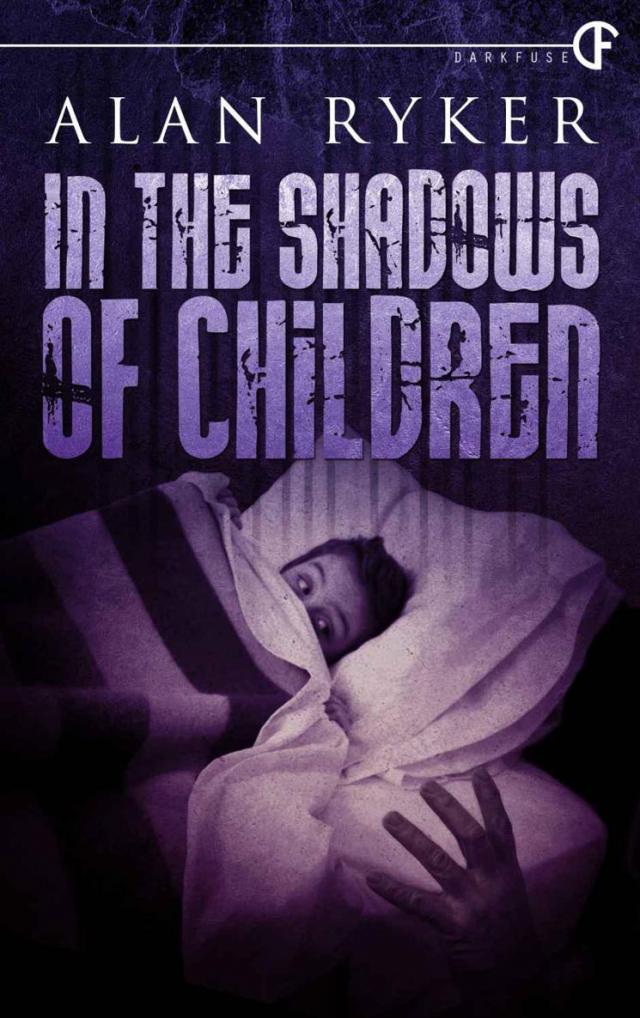
He stared without blinking, unable to understand what he was seeing. It was as if a black sheet hung over the entrance to his closet, hiding all the board games and clothes, and then a hand emerged from the center.
It was huge, bigger than his father’s, and gnarled with clawlike fingers. Aaron squeaked, but then shut his mouth tight, afraid to make another sound. The hand felt along the ground, grasping at the floor, trying to find purchase, slipping, but then shooting out farther so that Aaron could see a long, spindly arm in a filthy sleeve.
Aaron took air in tiny sips and watched as the boogeyman emerged, crawling along the floor, slowly pulling away from the darkness of the closet. It peeled off him reluctantly, clinging like tar and then snapping back into place. He was of the darkness and the darkness didn’t want to let him go.
But finally he emerged in full and rose up. Even with his stooped shoulders and rounded back he stood almost to the ceiling. His arms dangled nearly to the floor. He wore a long, filthy coat and dragged a filthier burlap sack an inch at a time into the room.
But the scariest parts of him were the ones that weren’t there. His eyes and mouth were yawning black chasms, the same stuff as the closet, and the sack opened into a dark tunnel leading to the same place.
The sack slowed the creature, but Aaron could still tell where he was going. Slowly, inch by inch, dragging the darkness with him, he progressed toward Bobby’s bed.
“Bobby! Bobby, wake up!” Aaron screamed in a whisper that whistled out of his constricted throat.
Bobby didn’t wake up at first, but Aaron kept making noises until his little brother finally groaned, rolled over and looked at him.
Barely shoving his quivering hand from beneath the blanket, Aaron pointed to the monster emerging from their closet.
Bobby turned and hesitated for only the moment necessary to draw in a huge lungful of air before letting it out as a piercing scream.
The boogeyman kept coming, kept dragging his sack, kept stretching his arm out, swiping closer and closer to Bobby’s bed.
“Come here,” Aaron said, but Bobby curled up against the wall and screamed.
Without thinking about what he was doing, Aaron jumped out of bed and ran to Bobby. The boogeyman looked at him, reached for him, so that even though his long, clawed hand futilely raked the air from several feet away, Aaron threw himself back and collided with their dresser.
Scrabbling across the floor now on all fours, Aaron reached Bobby’s bed and grabbed him by the hand. He pulled, and Bobby came with him. He didn’t seem to want to at first, but Aaron was twice his size and powered by terror, and he dragged his little brother back to his bed and wrapped them both in his blanket. There was nowhere else to go. The closet was too near the door. The creature had them trapped.
Bobby had stopped screaming. He sobbed and quaked, holding Aaron tightly.
Then the light came on and the boogeyman instantly disappeared, not leaving behind even a puff of smoke.
“What’s wrong?” their mother asked, rushing into the room.
“The boogeyman!”
She soothed them and put them back in their beds, though as soon as she left the room Bobby sprinted across the gap and jumped beneath Aaron’s blankets.
From down the hall, Aaron could hear his mother talking in her punishment voice.
* * *
Aaron tumbled off the couch, tangled in the afghan, barely managing to land on his hands and knees. He fought his way out, unsure of where he was or if he were safe. The room was dark, and darkness held danger. Now he remembered what kind.
Drenched in sweat, he finally emerged from his cocoon, stood, oriented himself. He was in his parents’ living room. He made his way to a light switch, flipped it on, felt a bit safer.
But not much.
Looking at his watch, he found that it was just after seven. Exhausted and drugged, he’d slept soundly for nearly ten hours. His tongue felt covered in glue, and as soon as some of the adrenaline receded, his thoughts began to stream by in doped slow motion. Like fish in an aquarium, he had time to watch each one pass. And then came the shark, with its dead eyes and lethal maw.
The boogeyman had taken his brother.
It had emerged from the closet many nights, and together they’d fought it off, but then Aaron had left, had forgotten, and Bobby faced it alone.
The memories didn’t flood back, but the brick wall that separated him from his childhood was crumbling, losing structural integrity.
Aaron peered out the window. Night had fallen. He looked to the stairs, walked out in the foyer.
Upstairs, his brother lurked in the darkness, waiting for him. He’d somehow escaped the boogeyman. Not fully. If he were free, he’d step out of the darkness and reclaim his life. Aaron wondered why he didn’t.
It was time to find out.
He climbed the stairs, keeping his eyes on the doorway to his old bedroom. He was afraid. Afraid of the lurking boogeyman and afraid of Bobby, or what his brother had become.
At the top of the stairs he flipped on the hall light, forced himself to breathe, stared into the shadows of his old room.
“Bobby, are you there?” Still standing on the upper landing, Aaron’s voice echoed through the house.
“You know it.”
Aaron took a deep breath, stepped forward and reached for the switch on the wall. Then he remembered, and with only a moment’s hesitation, walked into the shadows.
Bobby sat in what Aaron was beginning to think of as his normal place in the closet. Aaron walked past him and sat on the foot of his old bed.