

Treacle Walker, page 1


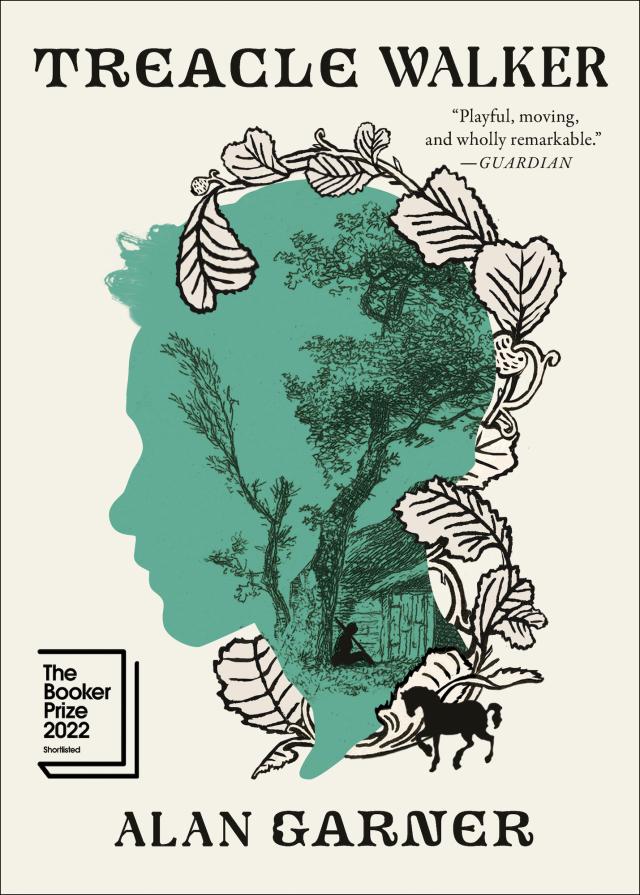
Praise for Treacle Walker:
‘It’s a glimpse of a world suff used with magic, of which our own day-to-day experience seems to be a flickering instantiation’
Daily Telegraph
‘Treacle Walker is a remarkable achievement, somehow encapsulating… a long lifetime’s work’
CAROLYNE LARRINGTON, TLS
‘A glorious wonder in its own right. Here is real magic’
ERICA WAGNER, New Statesmen
‘Mesmerising’
Literary Review
‘More ideas and imagination than most authors manage in their whole careers’
Observer
Thank you for downloading this Simon & Schuster ebook.
Get a FREE ebook when you join our mailing list. Plus, get updates on new releases, deals, recommended reads, and more from Simon & Schuster. Click below to sign up and see terms and conditions.
CLICK HERE TO SIGN UP
Already a subscriber? Provide your email again so we can register this ebook and send you more of what you like to read. You will continue to receive exclusive offers in your inbox.
For MGS
Il tempo è ignoranza
Time is ignorance
Carlo Rovelli, L’ordine del tempo
I
‘Ragbone! Ragbone! Any rags! Pots for rags! Donkey stone!’
Joe looked up from his comic and lifted his eye patch. Noony rattled past the house and the smoke from her engine blew across the yard. It was midday. The sky shone.
‘Ragbone! Ragbone! Any rags! Pots for rags! Donkey stone!’
Quick, Joe. Now, Joe.
Joe pulled the patch down, got off his mattress on the top of the chimney cupboard and stood at the big window.
The last of Noony’s smoke curled through the valley and along the brook. He could see no one in Barn Croft or Pool Field or Big Meadow or on the track between the top and bottom gates; and trees hid the way up from there to the heath. He went back to bed.
‘Ragbone! Ragbone! Any rags! Pots for rags! Donkey stone!’
The voice was below the window. He climbed down again.
There was a white pony in the yard. It was harnessed to a cart, a flat cart, with a wooden chest on it. A man was sitting at a front corner of the cart, holding the reins. His face was creased. He wore a long coat and a floppy high-crowned hat, with hair straggling beneath, and a leather bag was slung from his shoulder across his hip.
‘Ragbone! Ragbone! Any rags! Pots for rags! Donkey stone!’ He looked up at Joe.
Joe opened the window. Even from there he saw the eyes. They were green violet.
‘What do you want?’ he said.
‘Rag and bone,’ said the man. ‘And you shall have pot and stone. That’s fair. Or isn’t it?’
‘Wait on,’ said Joe. ‘I’m coming.’ He rummaged in the cupboard and found an old pair of pyjamas. He ran downstairs to his museum and raised the glass lid. There was his collection of birds’ eggs and a lamb’s shoulder blade he had picked from a mole hill by the railway embankment. He took the shoulder blade, opened the door and went into the yard.
‘I’ve got these.’
‘Come aboard, buccaneer,’ said the man.
Joe put his foot on a wheel spoke and climbed onto the cart. The man made room for him at the corner, and Joe sat down. He turned his face away.
‘What is wrong?’ said the man.
‘You smell.’
‘Not I, Joseph Coppock,’ said the man. ‘You smell that I stink. Let words be nice.’
‘How do you know my name?’ said Joe.
‘ “More know Tom Fool than Tom Fool knows,”’ said the man. ‘Or don’t they?’
Joe jumped from the cart.
‘Cob you! Cob you, then!’
‘Master Coppock. Come up.’
Joe climbed back, but sat further along the cart.
‘What have you brought to market?’ The man took the pyjamas. ‘These are yours? Your own? You have worn them?’
‘They’ve got holes in.’
The man put the pyjamas to his face and sniffed.
‘They’ve not been washed,’ said Joe.
‘And what bone?’
‘I found this down the banking, near the brook. It’s a lamb.’
‘Well cleaned, scapulimancer.’
‘Are you daft?’ said Joe.
‘ “As Dick’s hatband”, as they used to say. Open the chest. And choose.’
Joe got up and went to the chest. He lifted the lid.
‘Heck!’
The chest was full. Bedded in layers of silk, there were cups, saucers, platters, jugs, big and small: coloured, plain, simple, silvered, gilded, twisted; scenes of dancing, scenes of killing; ships, oceans, seas; beasts, birds, fishes, whales, monsters, houses, castles, mansions, halls; cherubs, satyrs, nymphs; mountains, rivers, forests, lakes, fields and clouds and skies.
‘Choose,’ said the man. ‘One.’
‘They’re worth loads, this lot,’ said Joe.
‘Choose.’
‘More than jamas and bones.’
‘Choose.’
Joe took out every piece and laid them on the cart.
‘This,’ said Joe.
‘That is the least,’ said the man.
‘It’s the bestest.’
Joe held a round jar no bigger than his hand.
‘It is small,’ said the man.
‘I don’t care.’
‘Of little price.’
‘I don’t care. It’s grand. Grand as owt.’
The jar was white, glazed, and chipped. Under the rim was painted in blue: ‘Poor Mans Friend’, and beneath, ‘price 1/1 ½’. On the other side was: ‘Prepared only by Beach & Barnicott, SUCCESSORS TO THE LATE Dr. Roberts, Bridport.’
‘It’s old,’ said Joe.
‘As some would reckon.’
The man put everything back in the chest and closed the lid. There was an oval brass plate in the middle of the lid, and on it Joe saw a name engraved in flowing letters.
‘Blinking heck!’
‘What is wrong?’ said the man.
‘My name! That’s my name! My own name! There! And Real Writing! See at it!’
‘At this time all is yours. You have chosen. Next, you shall have this.’
‘Blinking heck.’
The man opened his bag and took something out. ‘Here.’ It was a stone, rough and grey, the size and shape of a bar of soap.
‘Blinking heck.’
He put the stone into Joe’s hand. One side was plain; on the other was cut the outline of a horse, legs and tail outstretched, head forward, long.
‘We are equal. The trade is done.’
‘And what am I supposed to do with this effort?’ said Joe.
‘Use it.’
‘How?’
‘As you have need.’
‘You’re twitting me,’ said Joe. ‘I’m going in. I mustn’t catch the sun.’
‘You would be swift to outrun that one,’ said the man. ‘The craven nidget who flees the dark and will not come back till morning.’
‘I’ve been poorly,’ said Joe.
‘Then I shall bid you good day; but have shade here under your pear. Heat and old meat don’t marry. And the leaves of pear are cold, its virtues earthy.’
‘You can come inside, if you want,’ said Joe. ‘It’s cooler.’
‘Since I may.’
‘Suit yourself. I’m not bothered,’ said Joe.
He went into the house. The man followed, but paused and looked at the step as he crossed the threshold.
The house was three rooms parted by timber-framed walls and joined by open doorways. A round iron fire basket was in the base of the chimney, which was a room of itself, made of the same timbers, walked through from two opposite sides.
Joe and the man went into the chimney and sat on the oak sill of the base, facing each other across cold ashes. Joe put the pot and the stone next to him on the sill. The man took his bag from his shoulder and set it on the floor.
‘Why the patch, buccaneer?’ said the man.
‘I’ve got Lazy Eye,’ said Joe. ‘I must wear the patch over the good one so the other will catch up. But it’s not doing owt. It gives me headaches. And I can’t see proper.’
‘ “What the eye doesn’t see,”’ said the man, ‘ “the heart doesn’t grieve for.” Or does it?’
‘It’s a flipping nuisance,’ said Joe. ‘Eh, but my name… And Real Writing.’
‘Patience, my amblyopic friend. Patience.’
‘Oh ha ha ha. Hee hee hee. Elephant’s eggs in a rhubarb tree.’
The man sat and did not speak. Everything about him was poor. His shoes were hard leather and too big and were fastened with a strap, and there were open splits across the tops, as if they had been slashed. He wore no socks.
Joe shifted to the side, and back. ‘Your face,’ he said. ‘One road, it’s old. The other, it’s not. Straight, it’s all sorts. Same as them knacky postcards change when you look. It’s this blooming eye.’
‘Wellaway.’ The man gazed into the tapering stack above.
‘Who are you?’ said Joe.
‘Who? What?’ said the man. ‘Is there a difference?’
‘Can you not talk sense? What’s your name?’
Outside, the iron ring handle of the door banged on the wood three slow times, sounding through the house.
Joe went to the small window by the door and looked. He saw no one. Only the pony under the tree; and the bleach of heat.
&n
‘Then no body wishes to come in,’ said the man.
Bang. Bang. Bang.
Joe felt the door shake.
‘What must I do?’ he said.
Bang. Bang. Bang.
Joe looked again. The pony. The tree. The heat.
He lifted the latch.
A wind threw the door onto him, shoving him against the stack. And night spilled in. Snow stung his face. He forced the door against the wind and the latch clanged shut. He clung to the chimney post. But night was in the room, a sheet of darkness, flapping from wall to wall. It changed shape, swirling, flowing. It dropped to the ground and ruckled over the floor bricks; then up to the joists and beams of the ceiling; hung, fell, humped. It shrieked, reared against the chimney opening, but did not enter. It surged through the house by cracks and gaps in the timbers, out under the eaves. There was a whispering, silence; and on the floor snow melted to tears.
‘My name,’ said the man, ‘is Treacle Walker.’
II
‘Cripes!’
Joe let go of the post. He flung himself against the stench, the sour, into the coat, onto the vile beneath. And the man opened his arms to let him in, but did not hold him.
Joe roared. He yelled. He retched. Then he pushed himself away and crawled to the opposite sill, and sat, his wrists on his knees, shaking; his head drooped.
‘It was a hurlothrumbo of winter,’ said the man. ‘A lomperhomock of night. Nothing more.’
Joe could not speak.
‘But summer is nearly come.’
Joe lifted his head. ‘Treacle.’
‘Treacle.’
‘Walker.’
‘Treacle Walker I have in this land.’
‘What sort of a name is that?’
‘I heal.’
‘Heal. Make better.’
‘All things; save jealousy. Which none can.’
He opened his bag, and took out a bone. It was a shin; narrow; old; hollow; yellow; crazed with black lines; polished; and holes cut in, and a slit at one end.
‘What’s that?’ said Joe.
‘I made it from a man that sang.’
‘Can I have a see?’
Treacle Walker passed the bone to Joe. He held it and felt its shape.
‘What’s it for?’
Treacle Walker took back the bone, put his mouth to the slit, his fingers on the holes, closed his eyes, and played. The chimney filled with tune.
It was a tune with wings, trampling things, tightened strings, boggarts and bogles and brags on their feet; the man in the oak, sickness and fever, that set in long, lasting sleep the whole great world with the sweetness of sound the bone did play.
Joe sat and did not speak. The chimney was silent.
‘It is the way for him to sing now,’ said Treacle Walker.
‘Can I have a go?’
Treacle Walker passed the bone across the fire basket.
‘What must I do?’
‘Hold. And breathe.’
Joe put the bone to his lips. ‘Like this?’ He blew. The notes came, pure; the call of a cuckoo.
Across the valley, a cuckoo answered.
‘Did you hear that? Cuckoo!’
‘Unfound bones sing louder. Draw a pail of water.’
‘You what?’ said Joe.
‘Draw a pail of water.’ Treacle Walker held out his hand for the bone.
‘You’re daft. You are. Daft.’
‘Joseph Coppock. Draw the pail.’
‘That’s you. Daft. Right enough.’ But Joe went out to the well and pumped a bucket of water. He came back and banged it down. ‘You and your hurlolomperjobs. I near cacked me.’
‘Stone the step,’ said Treacle Walker.
‘How do you mean, “stone”?’
‘Put the donkey stone to the water, then rub the step.’
‘All of it?’
‘All.’
‘Why?’
‘To keep the house.’
‘I don’t get you,’ said Joe.
‘Do it.’
‘Show me.’
‘Not I. The stone is yours,’ said Treacle Walker.
‘Oh, ta very much I’m sure.’
Joe opened the door, and knelt. The stone fitted his hand, the horse against his palm, and he dipped it in the water.
‘Eh up!’
‘What is it?’ said Treacle Walker from inside the chimney.
‘My name again! On the stone! Silver! Letters! At the side. All round! My name!’
‘The stone is for you. You are for the stone.’
‘They’ve gone. I can’t see them.’
‘And why should you, once you know?’
‘But they were there.’
‘Do it.’
‘They were. You’re daft. Like I said.’
‘Do it.’
‘Daft as a brush.’
Joe rubbed the donkey stone on the step. The grey left a white mark. He dipped and rubbed, dipped and rubbed, until the step was all over white and shining.
‘Is it done?’ said Treacle Walker.
‘Yes.’
Treacle Walker came from the chimney and looked at the step.
‘Keep it so.’
‘Why?’
‘ “Every why has its wherefore.” Or hasn’t it?’
‘Get away with your bother,’ said Joe.
Treacle Walker looked out across the valley.
‘ “Iram, biram, brendon, bo,
Where did all the children go?
They went to the east. They went to the west.
They went where the cuckoo has its nest.”’
He looked down.
‘Such tarradiddles, Joseph Coppock. Such macaronics. Such nominies for a young head. And if I had been young? If. If I had been. If I had.’
III
Joe pushed himself up on the mattress. ‘Treacle Walker!’
Noony rattled past the house and the smoke from her engine blew across the yard. The sky shone.
He climbed down to the floor and stood at the window.
The last of Noony’s smoke curled through the valley and along the brook. He could see no one in Barn Croft or Pool Field or Big Meadow or on the track between the top and bottom gates; and trees hid the way up from there to the heath.
He went downstairs and opened the door. The step gleamed white.
‘Treacle Walker!’
Joe went to his museum. There was his egg collection, but no lamb’s shoulder blade. Instead there was a grey stone, and next to it a round jar no bigger than his hand. The jar was white, glazed, and chipped. Under the rim was painted in blue: ‘Poor Mans Friend’, and beneath, ‘price 1/1 ½’. On the other side was: ‘Prepared only by Beach & Barnicott, SUCCESSORS TO THE LATE Dr. Roberts, Bridport.’
IV
Joe lifted the jar out.
It was clean, but the chips had dirt in them, as if the jar had been in the earth. There were traces of green violet paste inside on the base. He wiped off the dirt with his handkerchief and spit and rubbed the paste with his finger. The paste was sticky and marked his skin. He smelt it. The smell was warm and harsh. He put the jar back in the museum.
He picked up the stone. The cut horse stretched. The line of the body, tail and legs was made of five curves; the head square, the eye a dot, the ears two spikes, the muzzle an open beak.
He turned the stone over.
There was nothing on the other side; just the plain, rough surface. Joe looked closer. He went to the door and the light. The step glistened, still wet from the whitening; but the stone was grey, unmarked, unworn, and dry.
Down the field a cuckoo called. It was near: in a copse of alder bog by the brook.
Joe put the stone in his pocket and ran across the yard to the gate for a better view over Big Meadow to the brook. The cuckoo called again, from the edge of the copse. He looked, but the leaves were thick and were blurred by his eye. He lifted his patch to see better. Nothing. The bog was silent.
The sun was on his neck, and he began to feel dizzy. He had been out too long, and should not have run. Light glared, and he pulled the patch down. The elastic slipped and he moved it and wiped the sweat from below the band. His finger touched his eyelid, and jagged light and pain filled his head.
Joe zigzagged back to the house, covering half his face with his hands. He fell onto a wooden settle, pressing his head against a cushion, but the pain and the light still flashed, making him cry out.


