Notes from the Cévennes, page 18


If nothing is done, and the dishonesty, stupidity and plain ignorance of certain of the world’s most powerful leaders and industrialists continue to hold sway over common sense and the underlying innovative brilliance of humankind, then this book will turn out to have been not so much a memoir as a memorial. Climate change is as the Black Death was in the fourteenth century: it respects no borders, travels shockingly fast and touches every class of person – most especially the poor. A plague is temporary; climate change will spread on into the future, touching generations to come. Perhaps when civilisation breaks down under its pressure, the oceans will restock and cool, the forests spread, the ice reform, the wild creatures multiply. But such panoptic, biblical predictions are hard to feel good about. We work on much smaller, domestic, personal scales. Calamity is only meaningful to us when it rips off our roof, reduces our vegetable patch to a dustbowl, sends us running from the waters, drowns our streets and fields.
I like the fact that, in the hardened ash of that Tanzanian site at Laetoli, there are impressions of raindrops. They look like dents alongside the traces of countless animals – including the upright hominids, who may have lifted their faces to catch the cooling water on their tongues.
Ephemerality and permanence.
Except that, by all accounts, the ash-rock itself is now as fragile as a biscuit, and has been hidden again under earth, like all memories.
FOOTPRINTS
for Sacha
We’re walking over the highest hills of France,
my son on my shoulders, and he’s on to footprints now,
the prints of boots and dogs in the path’s slough
between the stunted pines and heather and flung grass.
He wants to know where ours are. ‘Ours are behind.’
‘Why aren’t our footprints there in front?’ ‘Because
we’re not there yet. Footprints come out from us.’
‘Footprints aren’t ever where you haven’t been’d?’
‘No.’ My wife carries our seven-week-old daughter
in a sling. He wants to see his sister make some.
‘She’s much too young.’ ‘She’ll make them soon!’
‘You’re aching my shoulders – make some now instead of later.’
He says ‘Oh yes’ and I let him down. He runs
ahead, then turns and looks. Beyond is already
what has and has not been : the light fading,
the wind that over the hill-tops sweeps this rain.
ACKNOWLEDGEMENTS
It would be impossible to thank personally all those who have, over the last twenty-seven years, contributed to this book (whether knowingly or not), but I am deeply grateful for their help, generosity and, in many cases, friendship. Most names have been changed out of respect to the living as well as the dead.
A special thanks to Bill Homewood and Estelle Kohler for their invaluable counsel, to Stephen Marsden for the moulds and to Michelle Jolly for the sherds and stories. Thank you to André Mourizard for the swingle tree and to David Crackenthorpe for guidance on the Camisard rebellion. I am grateful to the Houix family for their help in the early days and in particular to the late Sébastien Houix.
Many of these chapters started life as a ‘Freelance’ column in the Times Literary Supplement, where they were superbly edited by James Campbell. Subsequently, Jamie Birkett at Bloomsbury Continuum suggested that I adapt and add to them for a book, happily under his equally fine editorship. Thank you to both and to my agent Lucy Luck for accompanying the transition, and to Neil Gower for the illustrations.
Once again, my wife Jo made crucial suggestions and generally jogged my faulty memory, as well as managing our lives here in true Cévenol fashion. Thank you also to my children, Josh, Sacha and Anna (a Nîmoise by birth), for going along with their parents’ whim and accepting to be nurtured by the southern hills without complaint.
Among the numerous books I have consulted over the years, I owe a particular debt to the beautiful if hefty second volume (Les activités agricoles) of Le temps cévenol, la conscience d’une terre, by Jean-Noël Pelen and Daniel Travier (Sedilan, 1984), edited and printed locally and now classified as rare. Although I first read it several years after beginning my own ‘notes’, Geoffrey Grigson’s Notes from an Odd Country (Macmillan, 1970) proved a quiet inspiration.
A NOTE ON THE AUTHOR
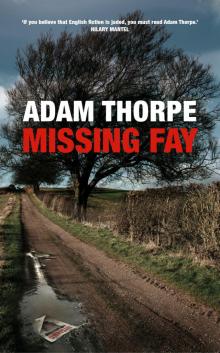
Adam Thorpe was born in Paris and brought up in India, Cameroon and England. His first collection of poetry was published in 1988 and was shortlisted for the Whitbread Poetry Award. His first novel, Ulverton, was published to critical acclaim in 1992 and is now a Vintage Classic. He has since published ten novels, five collections of poetry and two books of short stories, as well as writing numerous radio plays. His first work of non-fiction, On Silbury Hill, was BBC Radio 4’s Book of the Week. He has also published new translations of Flaubert’s Madame Bovary and Zola’s Thérèse Raquin. His latest novel, Missing Fay, was a Guardian and a Sunday Times Book of the Year in 2017. He has lived in France with his family since 1990.
BLOOMSBURY CONTINUUM
Bloomsbury Publishing Plc
50 Bedford Square, London, WC1B 3DP, UK
BLOOMSBURY, BLOOMSBURY CONTINUUM and the Diana logo are trademarks of Bloomsbury Publishing Plc
First published in Great Britain 2018
Copyright © Adam Thorpe, 2018
Illustrations © Neil Gower, 2018
Adam Thorpe has asserted his right under the Copyright, Designs and Patents Act, 1988, to be identified as Author of this work.
Lines from The Scapegoat by Daphne du Maurier reproduced with permission of Curtis Brown Group Ltd, London on behalf of The Chichester Partnership Copyright © The Chichester Partnership, 1957.
‘Footprints’ by Adam Thorpe first published in From The Neanderthal (London: Jonathan Cape, 1999).
All rights reserved. No part of this publication may be reproduced or transmitted in any form or by any means, electronic or mechanical, including photocopying, recording, or any information storage or retrieval system, without prior permission in writing from the publishers.
A catalogue record for this book is available from the British Library.
Library of Congress Cataloguing-in-Publication data has been applied for.
ISBN: HB: 978-1-4729-5129-8; EPDF: 978-1-4729-5131-1; EPUB: 978-1-4729-5130-4
To find out more about our authors and books visit www.bloomsbury.com and sign up for our newsletters.
Adam Thorpe, Notes from the Cévennes