Adult Assembly Required, page 21


When Bob reached his door, he turned to look at Laura. “Uh, do you still want to watch a game?”
She shook her head. “No. I was thinking I would go and pull the bedcovers over my head.” She hesitated. “How long till we can pretend that didn’t happen?”
“That what didn’t happen?” Bob grinned at her, and Laura was relieved. She hated scenes and avoided confrontation of any kind. She wasn’t wired for it and definitely wasn’t armed for it. Growing up she’d sit on the sidelines of spirited debates, occasionally being called on to give an opinion, an opinion she took too long to form, making her brothers throw up their hands and interrupt whatever stuttering attempt she was making. So she stayed out of the fray, which led friends to call her aloof and family members to call her a chicken.
She smiled at Bob and opened her bedroom door. “Another night, maybe?” she said.
“Definitely,” he replied, giving a final friendly wave as he disappeared. Laura could hear Polly and Asher talking upstairs and quickly went into her room, in case they started fighting, too.
As it happened, Polly and Asher weren’t fighting. Asher had reached the landing first, and turned to Polly, still angry.
“I’m sorry you had to see that. My sister is kind of . . . difficult.” He was flushed, upset, and Polly shook her head.
“All families fight. But you were kind of a dick.”
Asher was surprised. “She started it.”
Polly shook her head again. “Nope. I was there for the whole thing and you definitely had a hand in it from the beginning. Sorry not sorry, that’s the truth.”
He stared at her. “You’re very blunt, aren’t you?”
“Only about other people,” she said. “I’m completely in denial about my own shortcomings.” She stopped abruptly. “Oh crap, the burgers.”
Asher was calming down and realized hunger might have had something to do with the scene in the kitchen. “I can still go.”
“Are you hungry?”
“Very,” he replied. “And my mom definitely wants a strawberry shake.”
Polly turned to go back downstairs. “Well then, let’s go. I can point out more of your character defects on the way.”
“Do you have to?” asked Asher, following her. “I’m already feeling bad for losing my temper. Maybe I should call Sarah and apologize.”
“Eat first,” said Polly wisely. “Blood sugar is your ally.” She’d reached Laura’s door and paused to knock on it.
Laura opened the door a sliver and peeped out. “Hi there,” she said.
“Still hungry?” said Polly. “In all the excitement we forgot we were going to get food.” Asher was standing close behind her, and Laura smiled at both of them.
“Yes,” she said gratefully, “I’m starving. Do you need money?”
“You can send it to me after,” said Polly, going to knock on Bob’s door. Asher looked at Laura and smiled nervously.
“Sorry about that,” he said. “Family stuff, you know . . .”
Laura nodded. “No worries,” she said, catching Bob’s eye across the hallway as he opened his door. “Forget it.” Bob gave her a fleeting half wink as he confirmed his order for Polly, then disappeared back into the safety of his room. Laura abruptly remembered the cigarette on the kitchen floor, and her desire to be helpful overcame her need to hide. She went to clean it up.
What had been tobacco and paper was now dog vomit, and Herbert was sitting under the kitchen table regretting his life choices. Laura grabbed handfuls of paper towel and tackled the mess, pointing out to Herbert that smoking was very bad for you and she hoped he’d learned from this experience. But her voice was kind, and Herbert felt a little better. He was still a good boy.
After Laura had left the kitchen, Herbert walked over to the foot of the back stairs and tipped his head to one side, listening to the distant sound of Maggie crying. He looked around for a shoe, or something else she might enjoy. Finally settling on a circular from the AARP, which he pulled from a pile of papers on a kitchen chair, he grasped it firmly in his teeth and headed upstairs to see if there was anything he could do.
* * *
• • •
When Asher and Polly came back to the house and yelled, “Food’s here!” it was like hitting reset. Maggie had washed her face and changed her shirt, and walking into the kitchen was like entering a totally different place and time. Polly, Asher, Bob, Laura, Anna, and Libby were all bustling around getting plates and napkins, speaking in that chirpy tone of voice that brooks no rehashing of recent arguments, old scores, or anything controversial at all. Everything is fine, the tone says. I’m fine, you’re fine, we’re all fine. Maggie sighed inwardly; from years of professional experience and personal failure, she knew the argument would lurk like old laundry until it was properly aired. Then she spotted her strawberry milkshake and decided to let it lie for now. The argument, not the milkshake; the milkshake she was going to suck down with no hesitation at all.
Polly was in charge, pulling burgers from the bag and announcing each like the guy in a white wig at the doorway to a ball. Caramelized onions and bacon! Veggie burger with cheese! Major Onion Rings and the Right Honorable Lavinia Fries! Laura took her veggie burger and turned to Bob, who was about to start dividing their sides. She lowered her voice.
“Game?” she whispered, and he looked up quickly. Barely nodding, he turned and carried his plate away, thanking Asher and Polly as he went. Laura lingered for a few minutes, chatting to Polly about the bill, and what to do if there was another earthquake. Maggie advised her to put a pair of shoes under her bed and a flashlight in the shoes, then headed off to her private aerie, clutching her dinner. Smiling around the group, Laura turned and left, congratulating herself on her subtlety. Once clear of the kitchen, she dashed to Bob’s door and found it ajar. Pushing through, she saw he was already pulling up a game. She sat down ready to say very little and eat quite a lot.
He grinned at her. “Clean getaway?”
She nodded, reaching for an onion ring. “Is it bad we didn’t invite everyone?”
Bob shrugged. “Believe me, no one else in the house cares about baseball. I’ve tried.”
Laura nodded, comforted. She didn’t want to leave anyone out, but it wouldn’t be the same if she had to make conversation. With Bob all she had to do was watch and bicker pointlessly about the referee. It was peaceful, like being home with her grandmother, not that she was going to mention that. Bob might be mellow as all get-out, but no guy likes to be told he reminds you of your granny. Besides, Polly would never let her hear the end of it, however much she explained she and Bob weren’t interested in each other that way. She looked over at him now, and waved her onion ring.
“These are good, you were right.”
He nodded, picked up a handful of fries, and started making fun of the Yankees’ starting pitcher.
It was heaven.
* * *
• • •
Back in the kitchen, Polly watched Laura leave and then turned to Anna and said, “A hundred bucks says Laura and Bob are hanging out.”
Anna made a face. “Why wouldn’t they hang out here?”
Polly shrugged. “Because they’re both irritatingly private? Who knows?” She sighed. “I’m starting to realize not everyone likes to live their life out loud like I do.” She frowned. “I’m not even sure if I do.”
Anna was confused and looked it. Polly smiled. “How’s your food?”
“Insanely delicious,” said Anna, reaching for a napkin to wipe her chin. She turned to Libby. “How much longer till we leave?”
Libby had his mouth full and held up both hands, fingers spread wide.
Asher said, “Leave for what?”
“Bridge tournament,” said Anna, chewing the last bite of her burger while attempting to cover her mouth and talk at the same time. “It’s the semifinals and I think we’ve got a pretty good chance.” She went over to the sink to wash her hands.
Libby nodded and finished up his chocolate shake. “Of runner-up, maybe. I think the Deadly Armenian Duo will be there.”
Anna turned off the faucet and frowned at him. “Crap.”
Asher laughed. “The Deadly Armenian Duo?”
Libby nodded earnestly. “Well, that’s what we call them. They’re a telepathic married couple from Glendale, the Markaryans. They never speak, they never smile, and they never, ever lose.” He looked at Anna. “Maybe one day we’ll be that good.”
Anna grinned. “What am I thinking now?”
Libby stared at her and closed his eyes. “Three of clubs.”
Anna shook her head.
“Four of spades.”
Anna shook her head again. “No, and we need to leave if we’re going to get there in time.”
Libby jumped to his feet and ran upstairs. Anna looked around for the shoes she’d kicked off earlier, and a jacket.
Polly looked at her. “I can guess what you were thinking,” she said.
Anna finished shrugging on her coat. “I doubt it,” she said.
“Why don’t you tell him?” Polly asked.
Anna looked surprised and opened her mouth to speak, but Libby reappeared, coated and ready to go.
“All good?” he asked, rubbing his hands together.
Anna nodded, still looking at Polly. “You don’t play bridge, do you?” she asked her.
“No,” said Polly.
“Good thing,” said Anna, walking out of the kitchen.
TWENTY-NINE
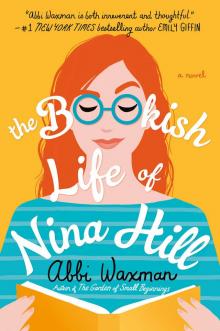
The next day was Monday, and Laura dropped by the bookstore on her way to the library. She found Nina and Liz reshelving earthquake-toppled books. Most of the shelved books were fine, held in place by their colleagues, but the displays on top of the bookshelves had been universally trashed. Liz was smoothing covers and reassuring the books they were still beautiful, and Nina was tutting over imperfect alphabetization.
“The question is,” she said to Laura, who was trying not to look at Liz, who was making faces behind Nina’s back, “whether you should subalphabetize books by their title, having already alphabetized them by author, or”—and she stressed this—“if you should suborganize by date of publication so people can read them in order.”
Liz gave up making faces and said bluntly, “Neither. You should shelve them with the author’s other books and not worry beyond that.” She had decades more experience than Nina, and occasionally brought it to bear. “What about authors who write a series but occasionally write a stand-alone?”
Nina was ready. “You shelve the series in order, and the stand-alones separately.”
“So you ignore the date of publication?”
“Yes, in that case.”
Liz’s expression made it clear she thought Nina was nuts. “So what about, for example, the Who Was? series?” This was a long-running series of nonfiction children’s books, covering historical figures and events, places of interest, and natural phenomena. Liz pulled one at random from a nearby shelf: Who Was Alexander Hamilton? “Am I supposed to shelve these in historical order? What about the What Was–es? How do I shelve those? Do volcanoes go next to hurricanes, or next to mountains?” She plucked another volume in the same series and waved it. “What about Where Is–es? Do I provide a map? They publish two dozen books in the series every year, they’ve been going for nearly twenty years, and they’ll never stop because history keeps on happening!” Liz looked triumphant as she held up the two books with their bobble-headed portraits of Hamilton and—incongruously—Elton John. “What do I do with these, Nina Hill?”
Nina looked at her and opened her mouth and closed it a few times. Then she shrugged. “This is why you’re in charge of children’s books.”
Laura started to back out of the store: This was clearly an argument with a lot of legs, and both women seemed to be enjoying the debate rather than trying to win. She was familiar with this kind of argument; she’d had a very similar one with Bob the previous evening about the placement of outfielders. Her parents had one about talon evolution that no one else understood but that broke out anytime either of them had more than one glass of wine. And those were the arguments about relatively neutral topics; most families have several long-running, highly personal arguments . . . She wondered what the fight between Asher and Sarah had really been about.
“Wait!” said Nina, who had excellent peripheral vision and could see her slinking away. “You remember the trivia thing is this Friday, right?”
“Yes,” said Laura. “I’m going to read widely at the library, I promise.”
“Good,” said Nina. “No pressure. It will be fun. Unless we lose.”
“No pressure then.”
“None at all.”
* * *
• • •
The semifinals of the East Los Angeles Pub League were being held—this year—at a bar called Donut Shoppe, which might in other contexts be ironic but which in Silver Lake meant a bar that sold donuts. Microbrew artisanal donuts.
The bar smelled of burnt sugar, and the floor was a multicolored oil slick of spilled beer and sprinkles. Nina handed Laura a cruller and took her over to meet QuizDick, Master of Trivia Ceremonies and stakeholder in one of the more successful YouTube trivia shows (you’d be surprised). His real name was Howard, but nobody called him that.
QuizDick looked at Nina suspiciously; she and he had history. However, Nina was determined not to be combative this year. She wanted to be more grown up, despite the streak of purple frosting on her chin.
QuizDick held up his hands. “I’m not cutting you any slack this year, Hill. Last year’s finale was a fiasco, and your team wasn’t even competing.”
“What happened?” said Laura to Nina, who shook her head.
“It’s a whole other story,” she said. “Don’t worry about it.” She smiled peacefully at QuizDick. “I’m not here to fight, I’m letting you know we have a new team member.”
QuizDick looked at Laura and transferred his suspicion to her. “Did you change your team details on the website?”
“Yes,” said Nina.
“Did you order her a T-shirt in the correct size?”
“Yes,” said Nina, “but it’s ugly, and she refuses to wear it.”
“And did you receive a new, printable team list to sign and submit today?”
Nina brandished a piece of paper and smiled an almost believably angelic smile. “Here you are, Quizmaster, all ready to go.”
“I’ll be the judge of that,” he said crossly, taking the paper and checking it over. “Hmm, seems in order.” He folded it and put it in his pocket. “You’re up against Victorious Secret, another all-girl team.” He leered at Laura. “Winner takes all . . . their clothes off?”
“Super doubtful,” said Nina emphatically, “and unless you stop staring at our new player, I’ll tell Leah you made that comment and she’ll respect you even less than she does now.”
QuizDick had a deep and abiding passion for Nina’s friend Leah, whose knowledge of European history was the stuff of his wildest fantasies.
“No,” he said quickly, “please don’t.” He turned to Laura. “I apologize if I offended you.”
Laura shrugged. It was very loud in the bar and she’d had two donuts; the combination of noise and unusually high blood sugar meant she hadn’t really heard him.
QuizDick turned back to Nina. “I love the way she says . . . Plantagenet.”
Nina patted him on the shoulder. “I know.”
Then she whirled around, gathered Laura, and headed back to their table.
Behind them QuizDick gathered his sheets of paper and tried not to think about Leah dressed as the many wives of Henry VIII.
* * *
• • •
Back at the table, Nina’s boyfriend, Tom, had arrived and was debating the relative merits of donut holes and mini-donuts. Leah and Lauren both had strong feelings.
“It’s a question of proportion,” said Lauren. “A donut hole is mostly glaze, whereas a mini-donut preserves the ratio of glaze to donut. It’s not so much a miniature donut as it is a donut in miniature.” She said this last part sagely, as if she weren’t actually paraphrasing a popular children’s cartoon. (She was hoping no one else got the reference.)
Nina looked at her narrowly. “Did you just . . . ?”
“No,” said Lauren quickly.
“Well, that’s my point,” said Tom. “I’m a glaze guy, which is why the hole is better than the mini.”
Nina opened her mouth to weigh in on this vital topic, when her attention was drawn to the door. “Wait, isn’t that Polly and Bob?”
Laura nearly twisted her neck to see that Nina was, indeed, correct. Not only Polly and Bob, but also Asher, Libby, and Anna. All five were headed in their direction.
Laura turned to look at Nina. “What if I mess up?”
Nina shrugged. “They’re cheerleaders, not a hit squad.” She waved at the newcomers, then turned back to her boyfriend. “Hey, Tom, have you met Bob before?”
Tom stood up and held out his hand to Bob. “I think so . . . didn’t we meet at Clare’s birthday party?”
Bob frowned, then his expression cleared. “Were you the one who made her the tiny bookcases for her fairy house?”
Tom blushed. “Yes.” He looked at Nina. “Somebody made a good suggestion.” He nodded at Bob. “And I believe you were the one who took her on a tractor, because that’s how she introduced you.”
“This-is-Bob-who-lets-me-drive-a-tractor? Yes, that’s me.”
The two men grinned at each other, then Tom said, “Shall we get some more beers while the nerds prepare themselves?” He looked past Bob to where Asher and Libby were standing, and leaned forward to extend his hand. “Hi, I’m Tom.”